

High-Speed Fabric Door vs Spiral Door: Cost and Applications
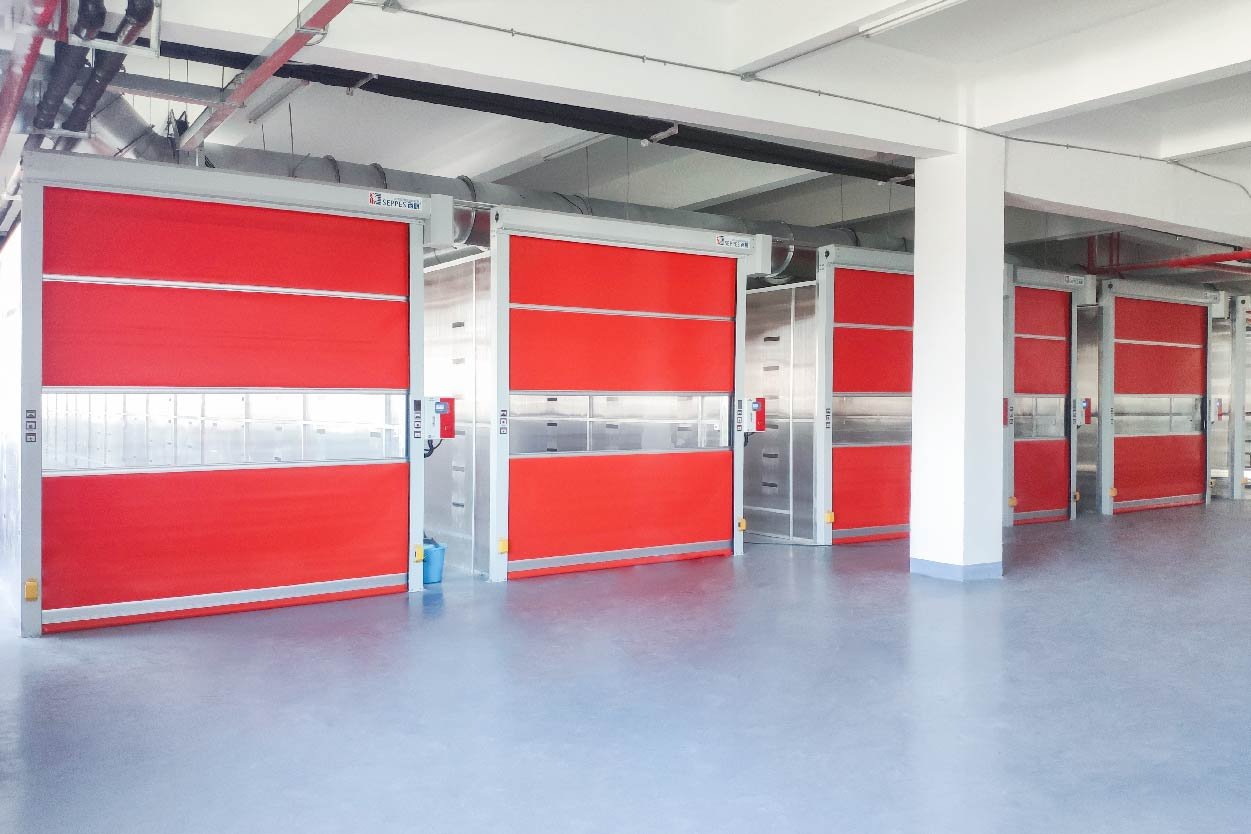
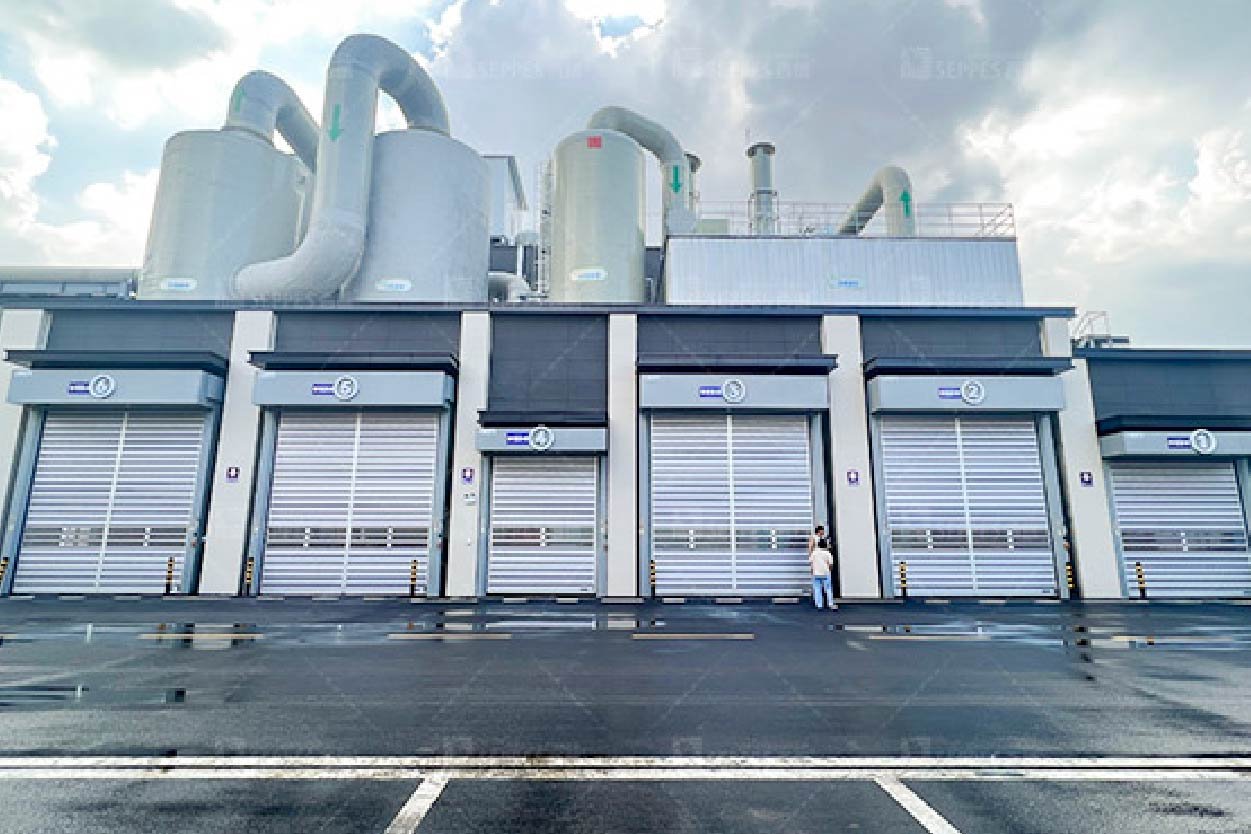
Fabric door vs spiral door is an important comparison for industrial buyers looking for the best balance of price, operating speed, insulation, security, and maintenance.
Both high speed fabric doors and high speed spiral doors provide automatic access for warehouses, logistics centers, and manufacturing facilities. However, their construction and operating characteristics are very different.
Consider two entrances in the same factory. The first is an indoor passage connecting production and packaging areas, where forklifts move through frequently. The second is an exterior warehouse entrance exposed to wind, weather, and temperature changes.
Although both openings require fast operation, they may need different door designs.
A flexible PVC fabric door is often an economical solution for frequent internal traffic. A rigid spiral door may be better suited to exterior locations requiring insulated panels, stronger structural performance, and security.
This buying guide compares 7 key differences between fabric and spiral doors, explains their cost and performance considerations, and provides application recommendations for industrial facilities.
What Is a High Speed Fabric Door?
A high speed fabric door uses a flexible curtain, generally manufactured from reinforced PVC-coated fabric.
Unlike rigid metal doors, the curtain can roll around an upper shaft or operate through a specialized guiding system.
These doors are commonly used in warehouses, manufacturing workshops, food processing facilities, cleanrooms, and logistics passages.
Main Advantages of Fabric High-Speed Doors
- Lower purchase cost: Standard PVC fabric doors are usually less expensive than rigid spiral doors.
- Frequent operation: Designed for high-cycle industrial access.
- Compact installation: Many roll-up designs require comparatively little headroom.
- Flexible configuration: Options may include windows, sensors, colors, and different frame materials.
- Environmental separation: Suitable curtains and seals help reduce dust and unwanted air exchange.
- Impact recovery options: Certain zipper-type doors can automatically re-engage after specified accidental impacts.
Limitations of Fabric Doors
A conventional single-layer PVC curtain usually has lower closed-door thermal insulation than a rigid insulated metal panel.
Fabric doors also generally provide less resistance to physical intrusion than rigid metal doors.
However, exterior reinforced fabric doors and stacking doors can be engineered for demanding wind conditions. Buyers should evaluate the actual wind-load rating rather than assuming all fabric doors have the same limitations.
For available designs, visit the SEPPES Fabric Roll Up Door product page.
What Is a High Speed Spiral Door?
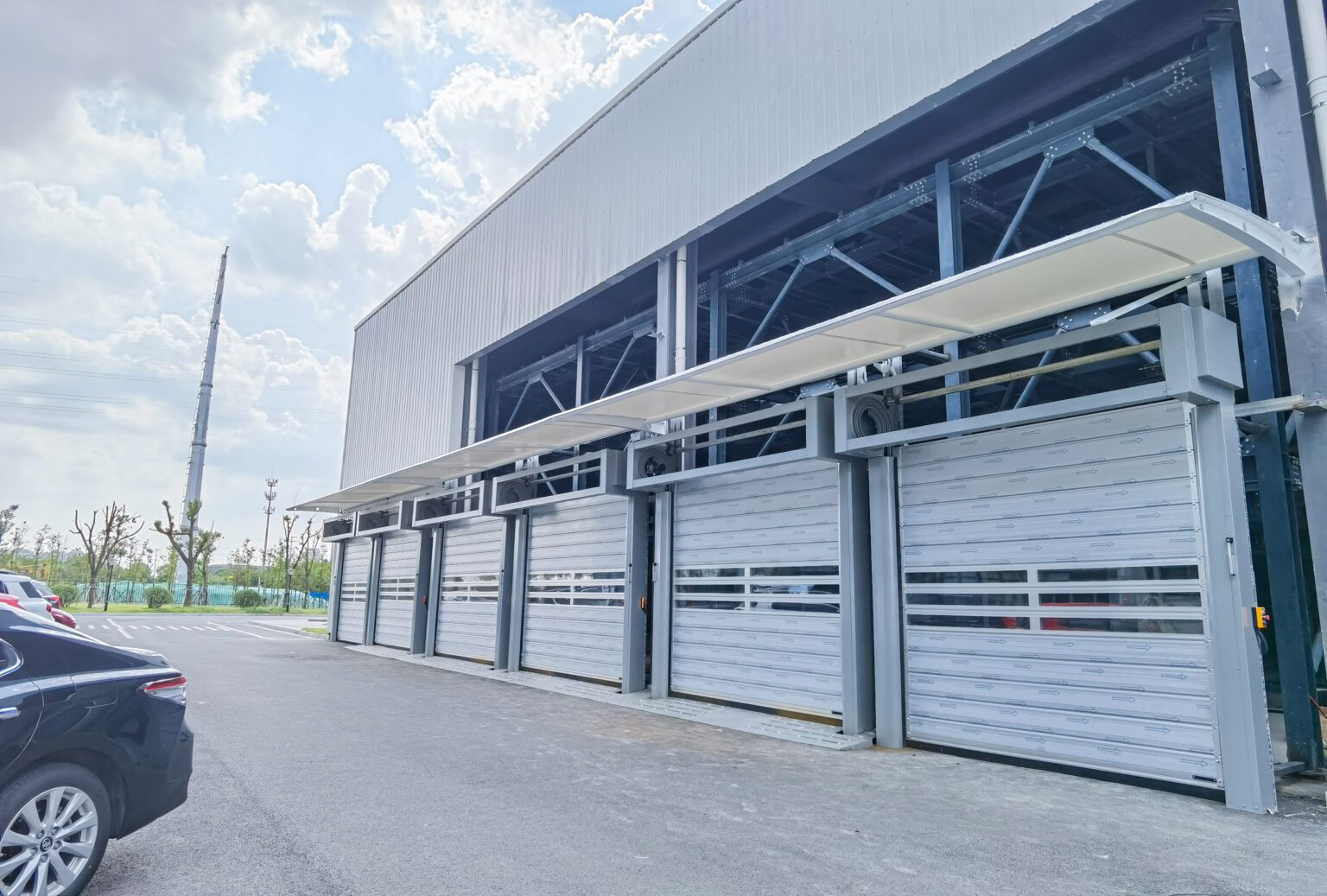
A high speed spiral door is a rigid industrial door using insulated metal panels that travel through a specialized spiral track arrangement.
Many spiral door models use aluminum-alloy panels filled with polyurethane foam, combining physical strength with thermal insulation.
The spiral guide allows the panels to move through a controlled path during opening.
Rigid spiral doors are frequently considered for factory entrances, warehouses, distribution centers, automotive facilities, and other industrial openings.
Main Advantages of Spiral Doors
- Rigid insulated panels: Improve closed-door conductive thermal resistance compared with standard single-layer PVC fabric.
- Structural strength: Appropriate configurations can meet demanding exterior requirements.
- Security: Rigid metal construction provides a stronger physical barrier.
- Rapid operation: Supports efficient vehicle access.
- Environmental protection: Suitable sealing systems help limit air and weather infiltration.
- Industrial automation: Compatible configurations support automatic activation and control interfaces.
Limitations of Spiral Doors
Rigid spiral doors normally cost more than standard fabric doors because of the insulated panels, specialized track system, and drive equipment.
They also require more detailed evaluation of installation space, frame support, and maintenance access.
Damaged rigid panels or specialized track components may require professional replacement.
SEPPES High Speed Spiral Door Technical Specifications
SEPPES publishes a spiral door configuration using aluminum panels with polyurethane insulation.
Its product information includes:
- 40 mm insulated panel thickness, with other options
- Servo motor drive
- Model-dependent maximum opening speed up to 2.0 m/s
- Photoelectric protection
- Wireless safety bottom edge protection
- Customizable dimensions and configurations
These specifications are based on published product information. The exact speed, wind pressure rating, opening dimensions, and installation clearances must be confirmed for the selected model.
Explore the SEPPES High Speed Spiral Door for technical information.
Fabric Door vs Spiral Door: 7 Key Differences
1. Door Material and Construction
Fabric doors use flexible PVC-coated curtains, while spiral doors generally use rigid metal panels.
Flexible curtains are relatively lightweight and can provide efficient internal separation.
Rigid panels can provide additional structural resistance, insulation, and physical security.
2. Initial Purchase Cost
Standard PVC fabric doors generally have lower factory prices than comparable rigid spiral doors.
Spiral doors usually require a larger initial investment because of their insulated panels, specialized tracks, and supporting hardware.
However, the best value depends on the actual operating environment and lifecycle costs.
3. Thermal Insulation and Air Exchange
Rigid spiral doors with polyurethane-filled panels generally provide better conductive insulation when closed than conventional single-layer PVC curtains.
However, total thermal performance also depends on:
- Door operating frequency
- Opening duration
- Air leakage
- Temperature difference
- Perimeter sealing
- Automatic activation settings
A door with excellent closed-door insulation may still allow significant air exchange if it remains open unnecessarily.
Therefore, facility managers should compare complete operating cycles rather than panel insulation alone.
4. Wind Resistance and Exterior Performance
Exterior industrial entrances must resist relevant wind loads and weather conditions.
Rigid spiral doors are often suitable for demanding exterior installations, subject to the selected model's tested performance.
Reinforced fabric stacking doors may also provide suitable wind-load resistance for larger industrial openings.
Manufacturers should confirm design pressure, door dimensions, anchoring requirements, and installation conditions.
5. Security and Impact Recovery
Rigid spiral doors offer a stronger physical barrier than a conventional PVC fabric curtain.
However, fabric doors may offer benefits in areas with frequent forklift impacts.
For example, compatible self-repairing zipper doors can re-engage their curtains after certain impacts, reducing the need for manual resetting.
This function does not repair torn curtains or damaged structures.
Learn more about SEPPES Self-Repairing High-Speed Zipper Doors.
6. Maintenance and Repair
Fabric door maintenance typically includes checking the curtain, guides, motor, sensors, and sealing components.
Spiral door maintenance also requires attention to rigid panels, spiral tracks, guide components, drive systems, and supporting hardware.
Repair costs depend on damage severity, available spare parts, operating cycles, and manufacturer requirements.
7. Installation Space and Automation
Many fabric roll-up doors have compact upper curtain rolls.
Spiral doors use specialized rigid-panel tracks and may require additional clearance above and beside the opening.
Both may support radar sensors, push buttons, photoelectric protection, and compatible PLC control.
For automated warehouses, operators should verify interface compatibility, position feedback, interlocking, and required safety functions.
Fabric Door vs Spiral Door Comparison Chart
| Comparison | High Speed Fabric Door | High Speed Spiral Door |
|---|---|---|
| Door material | Flexible PVC-coated fabric | Rigid insulated metal panels |
| Initial price | Generally lower | Generally higher |
| Opening speed | Fast, model-dependent | Fast, model-dependent |
| Thermal insulation | Depends on curtain structure | Insulated panels provide stronger closed-door resistance |
| Wind resistance | Depends on reinforcement | Often suitable for demanding exterior openings |
| Security | Basic environmental separation | Stronger physical barrier |
| Impact recovery | Self-repairing zipper options | Rigid components may require repair |
| Maintenance | Curtain, guides, motor, sensors | Panels, tracks, motor, hardware |
| Typical application | Indoor warehouses and workshops | Exterior industrial entrances |
High Speed Fabric Door vs Spiral Door Cost Comparison
Purchase price is an important factor for industrial buyers, but the cheapest door is not necessarily the most economical over its operating life.
Indicative Factory Prices
| Door Type | Indicative Price Range | Typical Application |
|---|---|---|
| Standard PVC high-speed door | US$990–1,390 | Indoor industrial traffic |
| Self-repairing zipper high-speed door | US$1,190–1,590 | Frequent forklift passages |
| Rigid high-speed spiral door | Quotation required | Insulated exterior industrial access |
What Determines the Final Price?
- Clear opening width and height
- Door curtain or panel construction
- Required wind-load performance
- Motor and controller
- Insulation and sealing
- Safety sensors
- Automatic activation
- Quantity and shipping terms
For international procurement, buyers should specify whether they require EXW, FOB, CIF, or DDP quotations.
Compare Total Cost of Ownership
Total cost should consider equipment purchase, installation, energy use, maintenance, spare parts, and downtime.
An economical fabric door may be the right choice for indoor high-frequency access.
A more expensive spiral door may justify its cost where insulated construction, wind resistance, and physical security have measurable value.
Fabric and Spiral Door Structural Differences

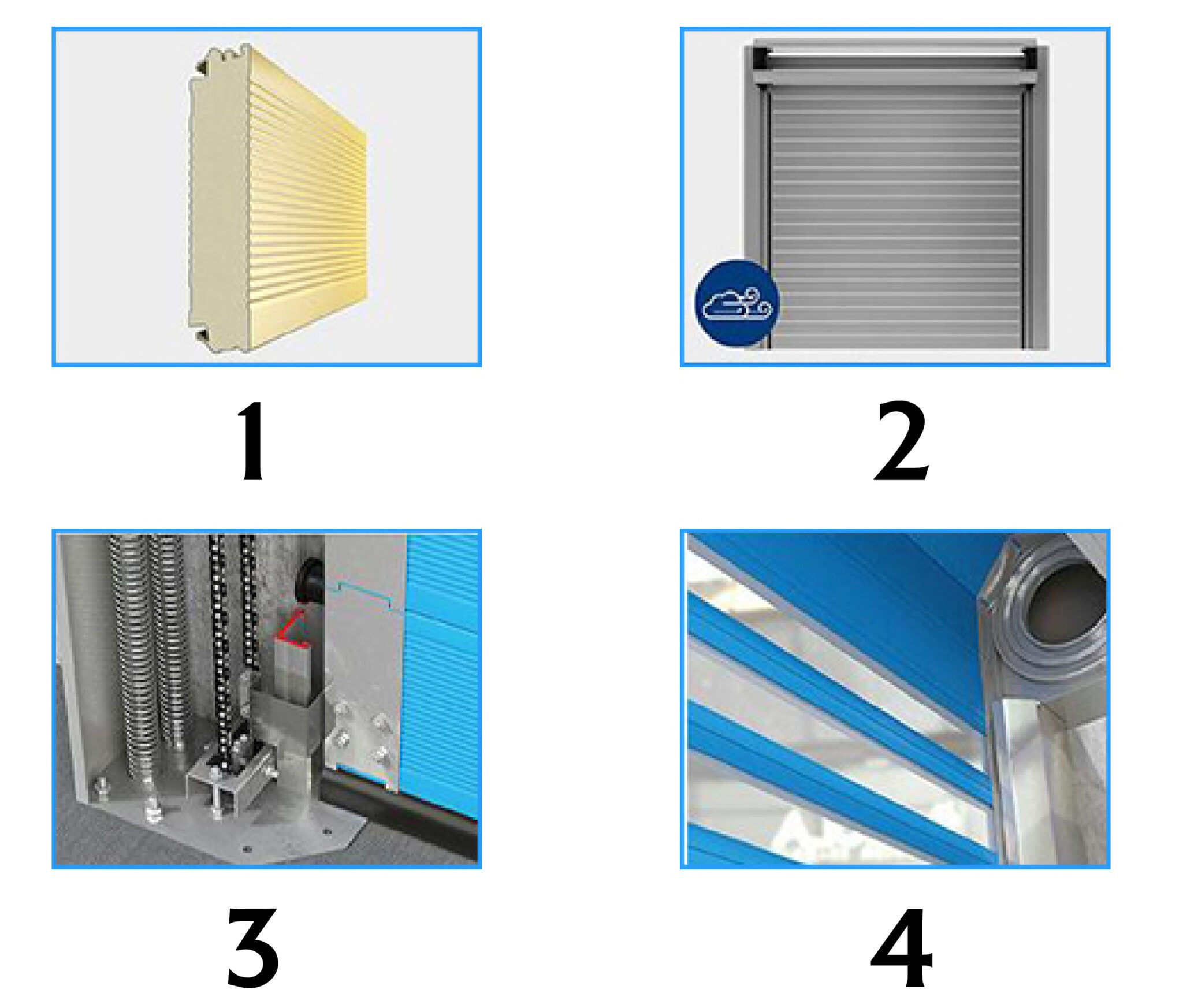
The structural differences affect door weight, repair methods, insulation, installation requirements, and suitability for certain industrial conditions.
Which High Speed Door Is Best for Different Applications?
Indoor Warehouses and Logistics Centers
Standard fabric high-speed doors are often suitable for internal passages with frequent forklift movement.
They provide rapid access and practical environmental separation at a relatively economical equipment cost.
Exterior Factory Entrances
Rigid spiral doors may be preferable when wind exposure, insulation, and stronger physical security are important.
The final model should be selected according to actual wind pressure and environmental requirements.
Food Processing Facilities
Food production areas may require frequent operation, easy cleaning, suitable sealing, and controlled separation between work zones.
Fabric high-speed doors can be suitable for many internal applications.
Where temperature differences are significant, insulated configurations should be evaluated.
Cold Storage Warehouses
Cold storage applications require attention to condensation, frost, insulation, and operating temperature ratings.
A conventional spiral door is not automatically suitable for a low-temperature freezer.
For temperature-controlled applications, review SEPPES Insulated High-Speed Doors.
Automated Production Lines
Both fabric and spiral high-speed doors may be integrated into automated production facilities.
Depending on their controllers, they may accept external opening requests and provide door-position feedback.
PLC, conveyor, or AGV integration must be designed with appropriate operating sequences and safety interlocks.
2026 Industry Trends: Energy Efficiency and Automation
Energy Efficiency and Industrial Operating Costs
The International Energy Agency's Energy Efficiency 2025 report, published in November 2025, examines energy efficiency across major economic sectors.
For industrial door buyers, the practical implication is that operating efficiency should be evaluated using real building conditions.
Door opening frequency, duration, air leakage, and closed-door insulation all affect the overall thermal performance of an entrance.
Warehouse Automation
MHI and Deloitte's 2026 Annual Industry Report discusses technology and automation developments across supply chains.
For warehouse construction and equipment procurement, this makes control-system compatibility an important part of door selection.
When designing an automated facility, confirm required PLC inputs, outputs, safety interlocks, and door-status signals before purchasing equipment.
Reference: MHI Supply Chain Industry Resources.
Why Choose SEPPES Industrial High-Speed Doors?
SEPPES manufactures customizable industrial high-speed doors for warehouses, manufacturing facilities, logistics centers, food processing plants, and automated production environments.
Its product portfolio includes flexible PVC roll-up doors, self-repairing zipper doors, rigid spiral doors, insulated doors, and stacking doors.
Product selection can be evaluated according to opening dimensions, traffic frequency, environmental conditions, wind exposure, automation requirements, and available installation space.
Explore the SEPPES High-Speed Industrial Doors collection.
Industrial High-Speed Door Buying Checklist
| Project Requirement | Information to Provide |
|---|---|
| Door size | Clear width × height in mm |
| Installation | Indoor or outdoor |
| Application | Warehouse, factory, food processing, cold storage |
| Traffic type | Forklift, pedestrian, AGV or conveyor |
| Operating frequency | Estimated cycles per day |
| Wind exposure | Site conditions and design requirements |
| Temperature | Inside and outside temperatures |
| Insulation | Thermal performance requirements |
| Clearances | Available headroom and sideroom |
| Automation | Radar, PLC, access control or other interfaces |
| Power supply | Voltage and frequency |
| Quantity | Number of doors |
| Shipping destination | Country and preferred delivery terms |
Frequently Asked Questions About Fabric and Spiral Doors
What is the difference between a fabric door and a spiral door?
A fabric door uses a flexible PVC curtain, while a spiral door uses rigid insulated metal panels moving through a specialized track system. Their main differences include structure, insulation, wind resistance, security, and cost.
Which is cheaper, a fabric door or a spiral door?
Standard PVC fabric doors generally have lower initial purchase costs. Spiral doors typically require a greater investment because of their insulated panels and specialized hardware.
Are spiral doors faster than fabric doors?
Not necessarily. Both types are available with high-speed operating systems. Actual speed depends on the selected model, door size, motor, and configuration.
Which door is better for outdoor applications?
Rigid spiral doors are often suitable for demanding exterior applications. Reinforced fabric doors may also be appropriate when their verified wind-load performance meets project requirements.
Which door provides better thermal insulation?
Insulated rigid spiral panels generally provide better closed-door conductive insulation than standard single-layer PVC curtains. Total energy performance also depends on opening time and air leakage.
Which is better for frequent forklift traffic?
For indoor passages with accidental impact risks, a self-repairing fabric zipper door may be practical. For exterior entrances requiring stronger structural protection, a suitable spiral door may be preferable.
Can fabric doors be used in cold storage?
Specialized insulated fabric doors may be suitable when their temperature ratings match the application. Standard PVC roll-up doors are not automatically freezer-rated.
Can fabric and spiral doors integrate with PLC systems?
Compatible models may support PLC integration. Buyers should confirm control interfaces, position feedback, safety devices, and operating logic.
How do I choose the right industrial high-speed door?
Compare opening dimensions, operating frequency, environmental conditions, wind resistance, insulation, maintenance requirements, and total operating costs.
Conclusion: Fabric Door vs Spiral Door — Which Is Better?
There is no universal winner in the fabric door vs spiral door comparison.
High-speed fabric doors are often economical for frequent indoor traffic, environmental separation, and production passages.
High-speed spiral doors may provide important advantages where rigid insulated construction, exterior durability, wind resistance, and security are required.
The best solution depends on actual facility requirements rather than purchase price alone.
Industrial buyers should compare documented product specifications, installation requirements, and lifecycle costs before making a decision.
Get a Customized High-Speed Door Solution from SEPPES
SEPPES provides high-speed fabric doors and rigid spiral doors for industrial warehouses, factories, logistics facilities, and automated production environments.
Share your required door width and height, installation environment, operating frequency, temperature conditions, wind requirements, and preferred controls.
Our team can review your project and recommend an appropriate configuration.
Request a High-Speed Door Quotation