
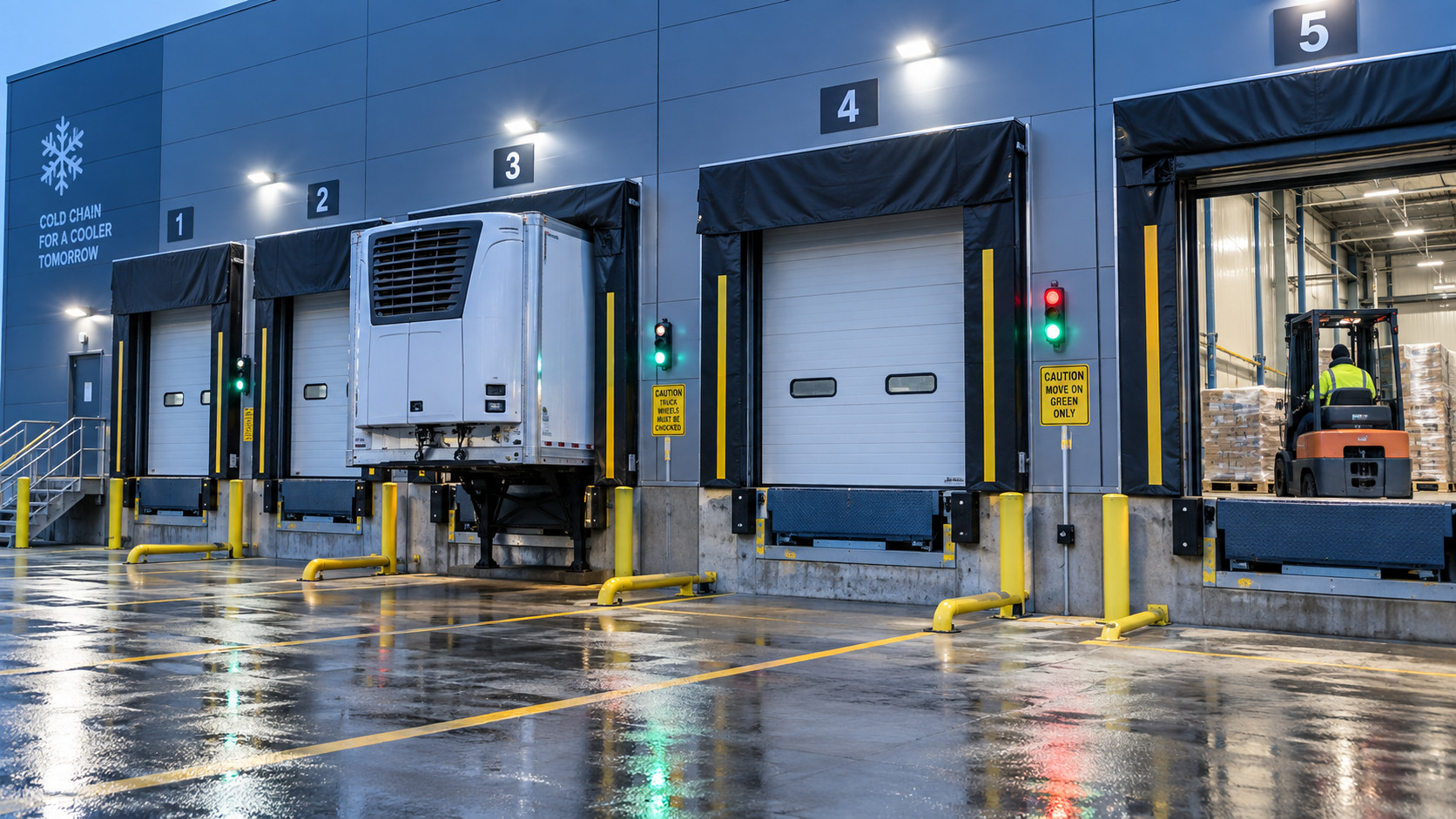
Loading Dock Sealing Solutions
Loading Dock Seals and Shelters
Reduce rain, wind, dust and uncontrolled air exchange around parked trucks. Compare dock shelters and dock seals for different vehicle ranges, sealing targets and loading environments.
Designed Around the Loading Bay
Dock Seals and Shelters Collection
Compare Loading Dock Seals and Shelters for Different Loading Bay Needs
Mechanical dock shelters, foam dock seals and inflatable dock shelters all help reduce rain, wind, dust and outside-air exchange around a parked truck. The main difference is how each system contacts the vehicle, the truck-size range it can accommodate and the level of sealing control required.

Mechanical Dock Shelters
Flexible head and side curtains surround the rear of the truck while keeping the trailer opening relatively accessible. This is a practical, unpowered solution for warehouses and logistics bays serving a varied vehicle fleet.
Helps limit rain, wind and dust entering through the open loading bay during routine truck loading.
Offers more vehicle-size tolerance than compression foam pads, but normally provides less close sealing than an inflatable system.

Foam Dock Seals
Foam-filled side pads and a head pad compress directly against the truck body. These foam dock seals are also used as dock door seals for loading bays serving a relatively consistent vehicle range and requiring straightforward sealing without powered inflation.
Closes the side and top gaps to help reduce weather exposure, drafts and temperature exchange at regular truck bays.
Creates direct compression around the vehicle, but requires a closer match to truck dimensions and can reduce some trailer-opening clearance.

Inflatable Dock Shelters
Powered side and top airbags inflate after the truck is positioned, creating a closer seal around the vehicle. This option is suited to cold-chain, food, pharmaceutical and controlled loading areas with higher environmental-separation requirements.
Helps reduce outside-air exchange, temperature loss, rain, dust and insects around temperature-sensitive or cleaner loading zones.
Provides more adaptable sealing control than mechanical curtains or fixed foam pads, but requires powered inflation and an operating sequence.
Cold Storage Installation Case
Loading Dock Seals and Shelters
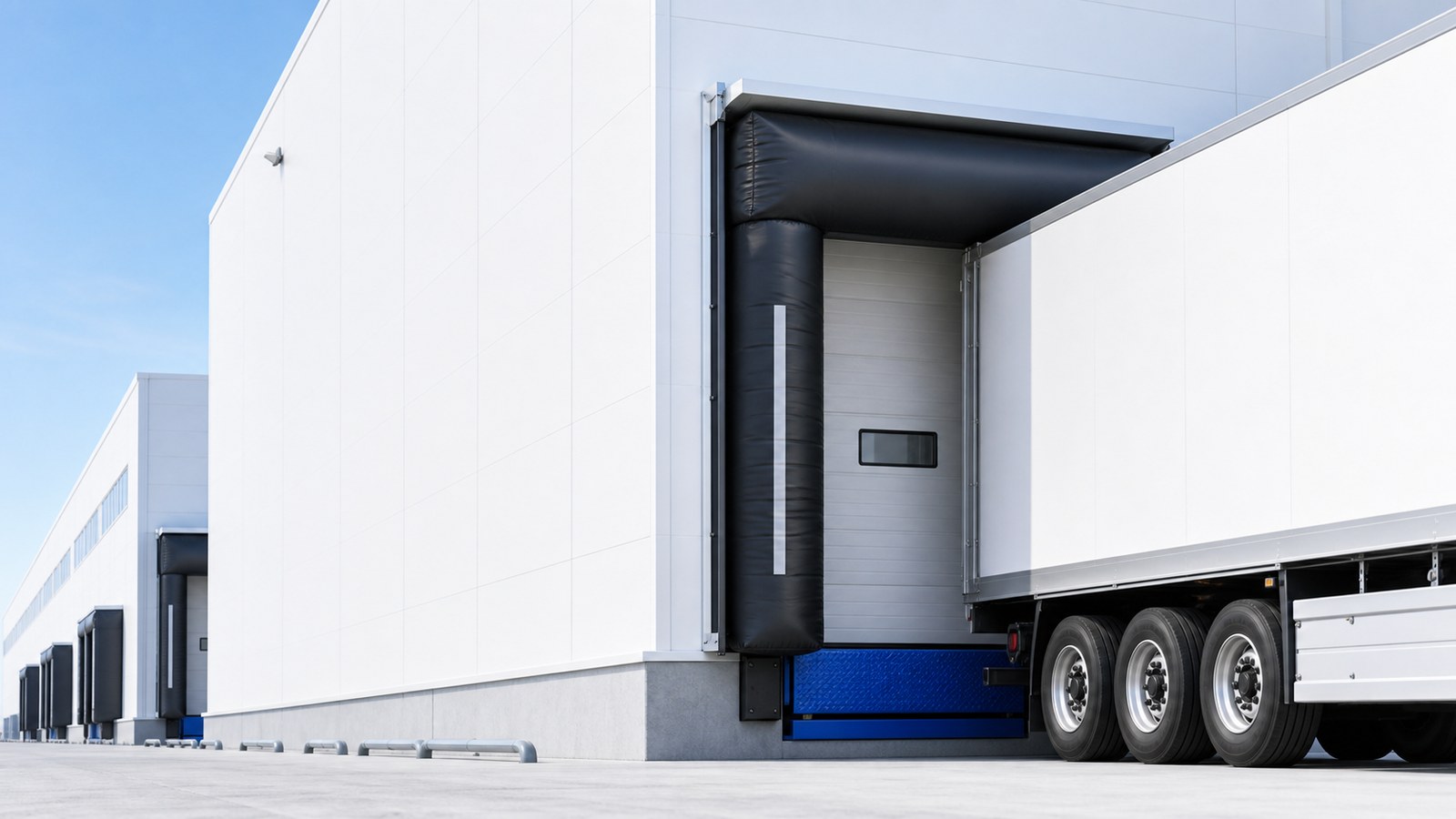
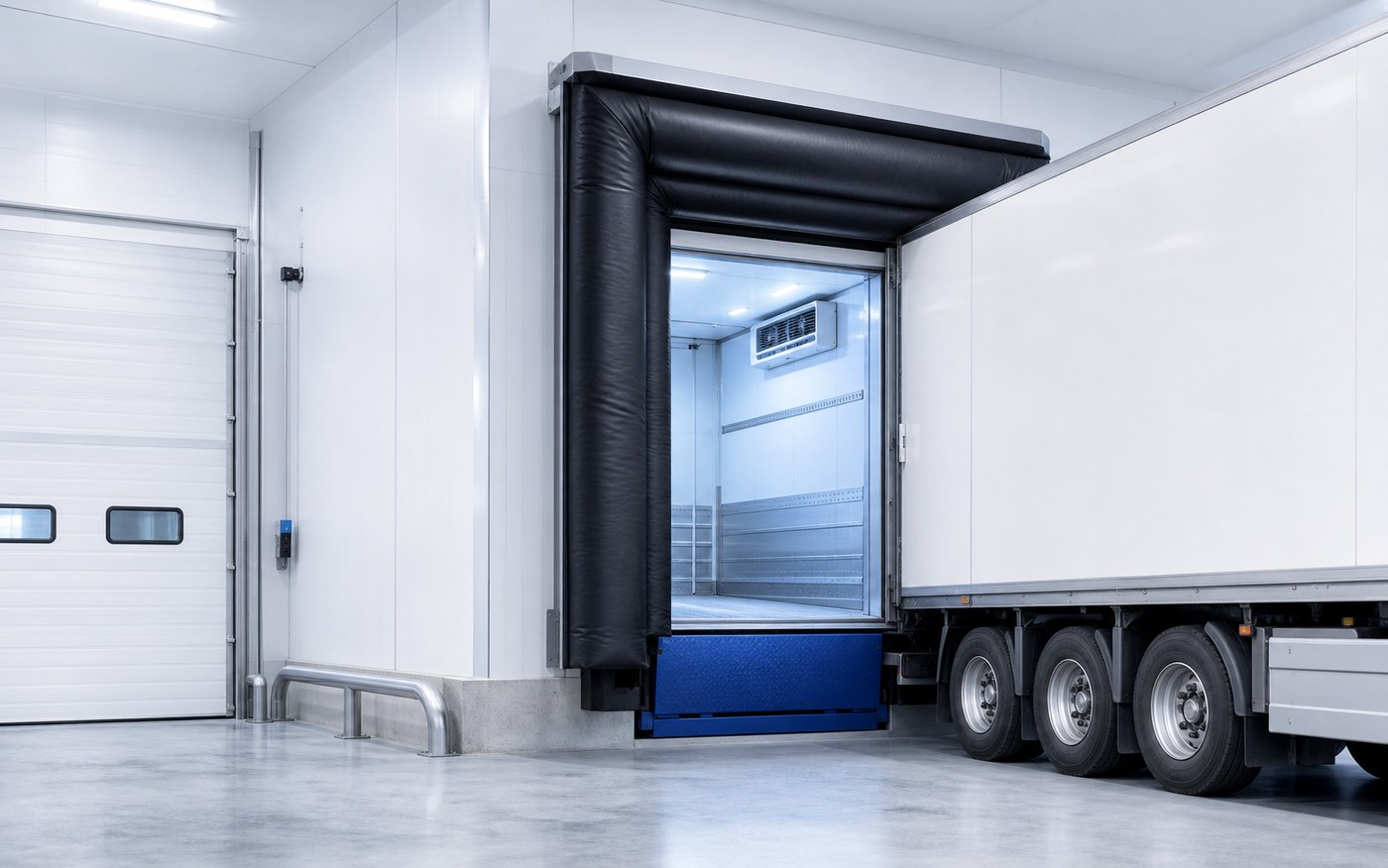
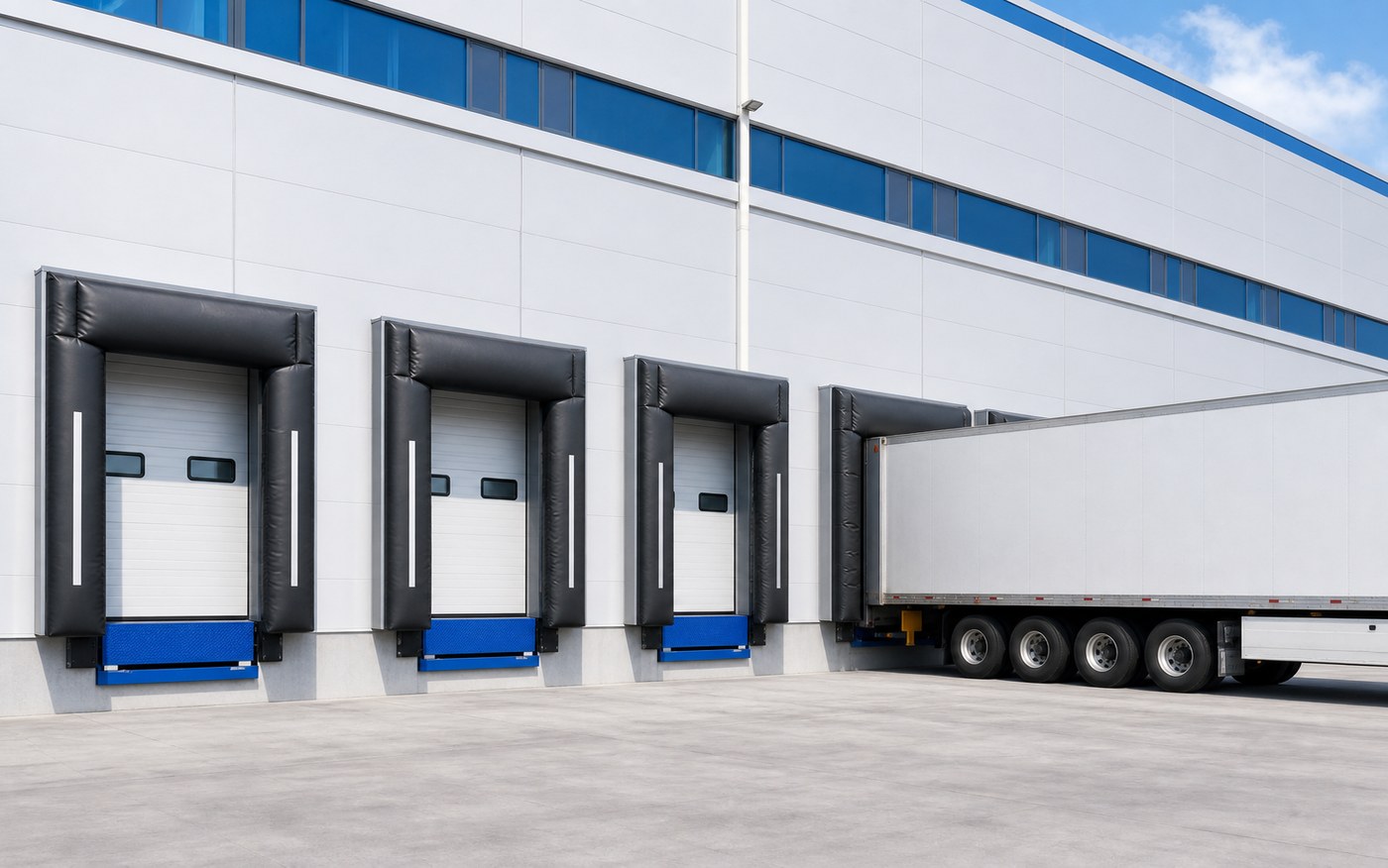
This cold storage warehouse project uses an inflatable dock shelter to close the truck-to-building gap and support controlled loading operations. It demonstrates how loading dock seals and shelters can be matched to a 3400 × 3400 mm loading-bay opening.
 01
 02
 03
 04
 05
Cold Storage Project
Inflatable Dock Shelters for a Cold Storage Warehouse
Inflatable side and top airbags seal around the parked refrigerated vehicle, helping reduce uncontrolled air exchange, rain, dust and wind exposure during loading. The 3400 × 3400 mm configuration was coordinated for this warehouse loading bay.
WhatsApp: +86 180 2021 6635
Industry Applications
Where Dock Shelters and Dock Seals Protect Loading Bays
Loading dock seals and shelters help reduce rain, wind, dust and outside-air exchange around parked vehicles. Match mechanical dock shelters, foam dock seals or inflatable dock shelters to the vehicle range, loading frequency and environmental requirements of each facility.
Logistics & Distribution
Support frequent truck arrivals while helping reduce weather exposure around active loading dock openings.
View Logistics Solution
Factory Warehouses
Use mechanical shelters or foam dock seals for routine receiving, storage and finished-goods dispatch.
View Warehouse SolutionCold Storage & Frozen Food
Use closer vehicle sealing to help limit outside-air exchange around refrigerated and temperature-sensitive loading positions.
View Cold Storage Solution
Manufacturing Plants
Protect raw-material receiving and finished-product shipping from rain, wind and dust during truck transfer.
View Manufacturing SolutionFood & Pharmaceutical
Create a more controlled truck-to-building transition where cleanliness, insects and outside-air exchange matter.
View Pharmaceutical Solution
E-commerce Fulfillment
Protect high-volume inbound and outbound dock positions used throughout daily receiving and dispatch operations.
View Fulfillment Solution
Loading Dock Sealing Solutions
Loading Dock Seals and Shelters
Reduce rain, wind, dust and uncontrolled air exchange around parked trucks. Compare dock shelters and dock seals for different vehicle ranges, sealing targets and loading environments.
Designed Around the Loading Bay