
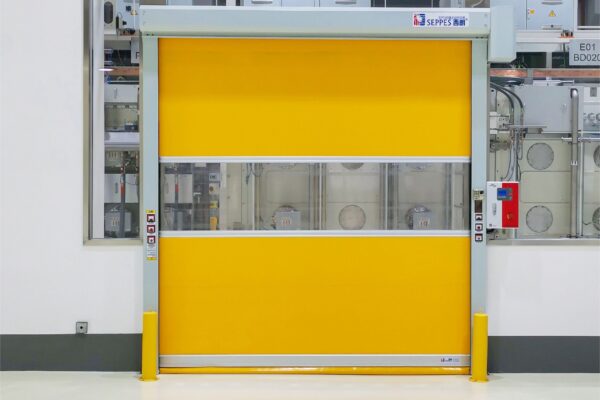
High Speed Doors for Food Processing Washdown Areas
High speed doors for food processing facilities must support efficient traffic while meeting the practical demands of cleaning, moisture exposure and sanitation. For washdown areas, corrosion resistance, hygienic design, PVC curtain compatibility and electrical protection are essential selection factors.
A door installed in a dry packaging corridor may have very different requirements from one exposed to frequent water spray and chemical cleaning in a meat, seafood or beverage processing plant. This guide explains how to specify a suitable high speed door and avoid common purchasing mistakes.

1. What Makes Washdown Areas Different?
Food processing washdown areas are exposed to regular cleaning procedures that may involve water, detergents, disinfectants and changing temperatures. These conditions can affect door frames, curtains, seals and electrical equipment.
The most important risks include:
- Corrosion: Repeated moisture exposure and aggressive chemicals can affect metal components.
- Water ingress: Motors, controllers and sensors may be damaged if their protection is insufficient.
- Hygiene: Difficult-to-clean joints and inaccessible cavities may retain residues.
- Traffic: Frequent forklift movement requires reliable opening, closing and safety protection.
2. Hygienic Design Requirements
Hygienic high speed doors should help maintenance and sanitation teams clean and inspect door surfaces without unnecessary difficulty.
Easy-to-Clean Construction
Smooth and accessible surfaces simplify routine cleaning. Buyers should examine guide covers, fasteners, structural joints and areas where water could accumulate.
Side Guides and Bottom Seals
Side guides maintain curtain movement, while bottom seals help limit gaps around the opening. Both should be accessible for inspection and made from materials compatible with the environment.
Floor Drainage
Floor slope and drainage must be considered during installation. Persistent standing water can create maintenance and sanitation problems even when corrosion-resistant materials are used.
For additional information about industrial door construction, see the High Speed Door Selection Guide.
3. Stainless Steel 304 vs 316 for Washdown Doors
Stainless steel is commonly considered for food processing door frames because it offers good corrosion resistance and cleanable surfaces. However, the grade must match the actual operating conditions.
| Selection Factor | 304 Stainless Steel | 316 Stainless Steel |
|---|---|---|
| General moisture resistance | Good in many conditions | Good in many conditions |
| Chloride-related corrosion | More susceptible | Generally better resistance |
| Cleaning chemicals | Compatibility check needed | Compatibility check needed |
| Material cost | Generally lower | Generally higher |
| Typical consideration | Moderate washdown exposure | More corrosive environments |
When Is 304 Stainless Steel Suitable?
304 stainless steel may be appropriate in indoor facilities where moisture exposure and cleaning chemicals are compatible with the material. It is often a practical starting point for moderate wet-cleaning conditions.
When Should Buyers Consider 316?
316 stainless steel contains molybdenum, improving resistance to chloride-related pitting and crevice corrosion in many environments. It may be preferable when chloride exposure is significant, but it is not immune to corrosion.
Before choosing either grade, assess the cleaning chemical, concentration, temperature, exposure duration and water composition.
For additional technical guidance, consult Outokumpu's Stainless Steel Corrosion Tables.
4. Choosing the Right PVC Door Curtain
PVC curtains are widely used for industrial high speed doors because they are flexible and suitable for frequent operation. However, curtain formulations are not identical.
When selecting a curtain for a food processing washdown area, consider:
- Compatibility with cleaning detergents and disinfectants.
- Operating temperature and repeated bending.
- Surface cleanability and maintenance procedures.
- Vision window requirements for forklift safety.
- Replacement options for damaged curtain sections.
Self-Repairing Zipper Doors
Some zipper-style high speed doors have guide systems designed to return the curtain to its track after certain accidental impacts. This may reduce recovery time in busy production areas.
However, impact recovery and washdown suitability are separate technical characteristics. Both must be confirmed when specifying the door.
Explore the SEPPES High Speed Door Product Range for available door configurations.
5. Electrical Protection and Pressure Washing
Electrical protection is particularly important when a door is exposed to direct cleaning water. A stainless steel frame does not make the motor, controller, sensors or connectors waterproof.
| Protection | General Meaning | Limitation |
|---|---|---|
| IP65 | Dust-tight and protected against water jets | Not automatically suitable for high-pressure cleaning |
| IP66 | Dust-tight and protected against powerful water jets | Actual cleaning conditions still matter |
| NEMA 4X | Enclosure protection including hose-directed water and corrosion protection | Does not certify the complete door assembly |
IP and NEMA systems use different testing methods and should not be treated as equivalent.
Before ordering, confirm the cleaning pressure, water temperature, spray direction and chemicals. Where practical, vulnerable electrical components may be positioned outside the direct washdown zone.
Reference: NEMA Enclosure Types.
6. Food Safety and Cleaning Requirements
Food processing facilities must maintain appropriate sanitation practices to help prevent contamination. The applicable requirements depend on the facility and the products being handled.
In the United States, 21 CFR 117.35 addresses sanitary operations in food facilities.
For industrial door selection, this reinforces the importance of cleanability, maintenance access and suitable sanitation procedures.
The regulation does not automatically certify a specific industrial door or provide a universal FDA approval for the complete door assembly.
7. Which Door Configuration Fits Each Food Processing Area?
Different food production zones require different door specifications. The following table identifies common engineering priorities.
| Application | Main Risk | Selection Priority |
|---|---|---|
| Meat processing | Frequent wet cleaning | Corrosion resistance and electrical protection |
| Seafood processing | Moisture and chloride exposure | Material selection and drainage |
| Dairy and beverage | Chemical cleaning | Compatible materials and cleanable construction |
| Dry packaging | Frequent material movement | Door speed, sensors and sealing |
| Refrigerated processing | Temperature differences | Insulation, sealing and condensation control |
For refrigerated seafood operations, see our Cold Storage Doors and Loading Dock Equipment for Seafood Processing guide.
8. SEPPES Food Processing Applications
SEPPES supplies industrial high speed door solutions for production, temperature-controlled and other industrial environments. Food processing applications may require fast access, suitable sealing and materials chosen for the working conditions.
The company's Asian Market Project Overview provides examples of industrial door installations in regional production facilities.
These applications illustrate industrial door selection for different operating requirements. They should not be interpreted as proof of high-pressure washdown certification unless the specific project's cleaning and protection specifications are documented.
Example: Wet Processing Passageway
Consider a proposed doorway between a wet food processing room and an internal logistics corridor. This is an illustrative design scenario, not a completed customer case study.
The project engineer should identify the cleaning method, chemicals, traffic frequency, temperature and available installation clearances.
A suitable proposal may then consider a corrosion-resistant frame, compatible PVC curtain, appropriate safety sensors and protected electrical equipment. The complete system must be reviewed before approval.
9. Technical Purchasing Checklist
Before requesting a quotation for high speed doors for food processing, provide the following project information:
| Item | Required Information |
|---|---|
| Door opening | Clear width × height in mm |
| Quantity | Number of door sets |
| Industry | Meat, seafood, dairy, beverage or other |
| Cleaning method | Splashing, hose washing or pressure cleaning |
| Chemicals | Product names and concentrations |
| Temperature | Operating and cleaning temperatures |
| Traffic | Forklifts, personnel and daily cycles |
| Electrical | Voltage, frequency and protection needs |
| Installation | Site pictures, clearances and drainage |
For international projects, the installation country and nearest destination port can also help the supplier prepare a suitable proposal.
10. Frequently Asked Questions
Are high speed doors suitable for food processing plants?
Yes, provided that the materials, seals, cleaning access and electrical protection are suitable for the actual working environment.
What is the best stainless steel for washdown doors?
304 stainless steel may suit moderate conditions, while 316 generally offers better resistance to chloride-related corrosion. The final choice depends on cleaning chemicals and exposure.
Can PVC high speed doors be washed with water?
Some PVC curtains are compatible with water and suitable cleaners. However, the complete door, including electrical components, must be checked before direct washing.
Are stainless steel high speed doors waterproof?
Not necessarily. Corrosion resistance and water ingress protection are different performance characteristics.
What makes a high speed door hygienic?
Appropriate materials, accessible surfaces, cleanable joints, suitable seals and practical maintenance procedures all contribute to hygienic door design.
What details are needed for a quotation?
Provide the door size, quantity, industry, cleaning method, chemical exposure, temperature, traffic frequency and electrical requirements.
Request a High Speed Door Solution
Planning a food processing facility or replacing doors in an existing production area? Share your door dimensions, quantity and washdown conditions with SEPPES. Our team can review suitable configurations for your application.
Request a Project Quote