
Overhead garage doors are widely used in residential garages, warehouses, and commercial buildings.
Daily operation may cause problems such as abnormal noise, slow opening, door stuck, or opener failure.
Understanding common issues helps homeowners and businesses solve problems quickly.
Table of Contents
ToggleWhat Is an Overhead Garage Door?
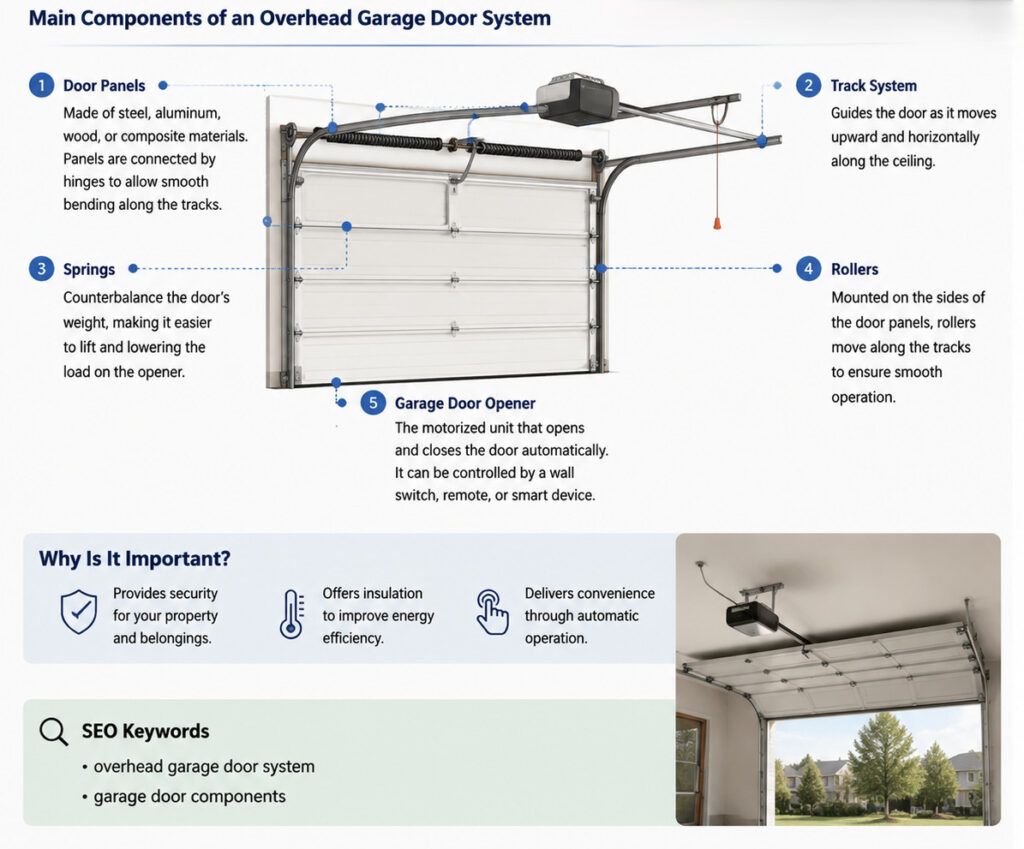
An overhead garage door is a type of sectional door that opens upward and moves along a track system installed on the ceiling. Instead of swinging outward like a traditional garage door, it lifts vertically and then slides horizontally to rest above the opening.
Common Overhead Garage Door Problems
3.1 Garage Door Won’t Open or Close
If your overhead garage door won’t open or close, the problem may be caused by either a mechanical failure or an electrical issue. Before calling for repair, it is important to identify the source of the problem to avoid unnecessary damage.
Common Causes
- Broken springs – The springs can no longer support the weight of the door.
- Motor failure – The garage door opener may not be providing enough power.
- Sensor problems – Misaligned or blocked safety sensors can prevent the door from operating.
- Remote control issues – Dead batteries or programming errors may stop the remote from communicating with the opener.
What to Check
Start by checking the power supply, remote batteries, safety sensors, and the condition of the springs. If the door feels unusually heavy or the opener struggles to lift it, avoid forcing the system and contact a professional technician.
3.2 Broken Garage Door Springs
Garage door springs are one of the most important components of an overhead garage door system. They counterbalance the weight of the door, making it possible to open and close smoothly with minimal effort.
After thousands of opening and closing cycles, springs gradually lose tension and may eventually break. A broken spring often causes the door to become extremely heavy or prevents it from opening completely.
Signs of a Broken Spring
- Loud snapping noise
- Door only opens a few inches
- Uneven or crooked door movement
- Visible gap in the torsion spring
Solution
Garage door spring replacement should always be performed by trained professionals, as the springs are under high tension and can be dangerous to repair without the proper tools.
3.3 Noisy Garage Door Operation
A garage door that produces grinding, squeaking, or rattling noises usually indicates worn or poorly maintained components. While minor noise may seem harmless, it can lead to more serious mechanical problems if ignored.
Common Causes
- Worn rollers that no longer move smoothly
- Lack of lubrication on rollers, hinges, or springs
- Loose hardware such as bolts, brackets, or hinges
Solution
Inspect all moving parts regularly, tighten loose hardware, and apply a garage door lubricant to rollers, hinges, and springs. If the noise continues after maintenance, replacing worn rollers or damaged components may be necessary.
3.4 Garage Door Moves Slowly or Unevenly
If your garage door opens slowly, jerks during movement, or becomes uneven, the problem is usually related to the track system or moving hardware.
Common Causes
- Track misalignment causing excessive friction
- Damaged rollers preventing smooth movement
- Motor problems reducing lifting performance
What to Check
Inspect both vertical and horizontal tracks for bends or obstructions. Check whether the rollers rotate freely and whether the opener is operating normally.
Solution
Minor track adjustments and roller replacement can restore smooth operation. However, severely damaged tracks or opener failures should be repaired by an experienced technician.
3.5 Garage Door Remote or Opener Problems
If the garage door opener does not respond to the remote control, the issue may not be with the door itself but with the control system.
Common Causes
- Dead remote batteries
- Lost remote programming
- Faulty garage door opener
- Signal interference
Troubleshooting Steps
- Replace the remote batteries.
- Test the wall-mounted control panel.
- Reprogram the remote according to the manufacturer’s instructions.
- Inspect the opener for flashing indicator lights or error codes.
If the opener still fails to respond, professional inspection or replacement of the opener system may be required.
How to Troubleshoot an Overhead Garage Door Before Repair
Before contacting a professional repair service, you can perform several basic checks to identify common overhead garage door problems.
Many garage door issues are caused by simple problems such as power failure, remote control errors, sensor misalignment, or blocked tracks. Following these troubleshooting steps can help you quickly determine the possible cause.
However, some components, especially garage door springs, operate under high tension and require professional handling.
Step 1: Check Power Supply
The first step is to check whether the garage door opener is receiving power.
Check the following:
- Make sure the opener is plugged in properly.
- Check whether the circuit breaker has tripped.
- Confirm that the garage lighting or electrical outlet is working.
If the opener has no power, the garage door will not respond to remote controls or wall switches.
Step 2: Inspect Remote Control
If the garage door does not respond to the remote, the issue may be related to the remote control system.
Common checks:
- Replace the remote battery.
- Make sure you are within the operating range.
- Check whether the remote needs to be reprogrammed.
- Test the wall-mounted control button.
If the wall switch works but the remote does not, the problem is likely related to the remote or signal connection.
Step 3: Check Safety Sensors
Modern overhead garage doors use safety sensors to prevent the door from closing when an object is detected underneath.
Inspect the sensors:
- Make sure both sensors are aligned.
- Remove dust or obstacles from the sensor lenses.
- Check whether the indicator lights are working properly.
Misaligned sensors are a common reason why a garage door opens normally but refuses to close.
Step 4: Inspect Tracks and Rollers
The track system and rollers guide the movement of the garage door.
Check for:
- Dirt or debris blocking the tracks.
- Bent or damaged tracks.
- Worn rollers causing uneven movement.
- Loose brackets or hardware.
Keeping tracks clean and rollers properly lubricated can help maintain smooth operation.
Safety Warning: Do Not Repair High-Tension Components Yourself
Garage door springs store a large amount of energy and can be dangerous if handled incorrectly.
Garage door springs are under high tension and should only be handled by trained professionals.
If you notice a broken spring, damaged cable, or major mechanical failure, contact a qualified garage door technician for inspection and repair.
When Should You Repair or Replace an Overhead Garage Door?
Overhead garage doors can often be repaired when the problem is limited to individual components. However, when the door system becomes outdated, repeatedly fails, or has major structural damage, replacement may be a more cost-effective solution.
Understanding the difference between repair and replacement can help you choose the right option based on safety, performance, and long-term cost.
Garage Door Repair vs Replacement
| Repair | Replace |
|---|---|
| Minor damage or isolated problems | Severe structural damage |
| Broken springs | Old garage door system |
| Sensor issues | Poor insulation performance |
| Damaged rollers or small components | Frequent repairs and high maintenance costs |
| Remote or opener problems | Door panels are damaged or worn out |
When Garage Door Repair Is a Better Choice
Repair is usually suitable when:
1. The Damage Is Minor
Examples:
- Broken rollers
- Loose hardware
- Sensor alignment problems
- Remote control failure
These issues can usually be fixed without replacing the entire door system.
2. Only One Component Has Failed
If the main structure of the door is still in good condition, replacing individual parts can restore normal operation.
Common repairs include:
- Garage door spring replacement
- Roller replacement
- Track adjustment
- Garage door opener repair
When Garage Door Replacement Is Recommended
Replacement is usually a better option when:
1. The Door Has Severe Damage
Examples:
- Bent or damaged panels
- Broken structural components
- Corrosion affecting the door frame
2. The Garage Door System Is Old
Older garage doors may have:
- Lower safety standards
- Poor insulation
- Outdated operating systems
- Higher maintenance costs
3. Repairs Become Too Frequent
If you constantly repair the same door, replacement may reduce long-term costs and improve reliability.
A new overhead garage door can provide:
- Better insulation
- Improved security
- Quieter operation
- Higher energy efficiency
How Much Does Overhead Garage Door Repair Cost?
The cost of repairing an overhead garage door depends on several factors, including the type of door, the extent of damage, required replacement parts, and labor costs.
Since every garage door system is different, there is no fixed repair price. A professional inspection is usually required to determine the exact repair solution.
Factors That Affect Overhead Garage Door Repair Cost
1. Door Type
Different garage doors have different structures and repair requirements.
For example:
- Sectional garage doors may require panel, spring, or track repairs.
- Older garage door systems may require more replacement parts.
- Commercial overhead doors may involve more complex components.
2. Damage Level
The severity of the problem directly affects repair costs.
Minor issues:
- Remote control problems
- Sensor alignment
- Loose hardware
- Lubrication issues
These repairs are usually simpler and require less time.
Major issues:
- Broken springs
- Damaged tracks
- Motor failure
- Broken door panels
These problems may require professional repair or component replacement.
3. Parts Needed
The cost also depends on which components need replacement.
Common replacement parts include:
- Garage door springs
- Rollers
- Cables
- Hinges
- Tracks
- Garage door opener components
Higher-quality replacement parts may provide:
- Longer service life
- Smoother operation
- Better reliability
4. Labor Cost
Professional repair costs also vary depending on:
- Repair complexity
- Service location
- Technician experience
- Required working time
Complex repairs involving springs, motors, or structural components usually require professional technicians.
How to Reduce Garage Door Repair Costs?
Regular maintenance can help prevent unexpected repairs.
Recommended maintenance:
- Inspect springs and rollers regularly
- Keep tracks clean
- Lubricate moving parts
- Check safety sensors
- Repair small issues before they become major failures
Why Professional Inspection Is Recommended
Although some basic checks can be completed by homeowners, major components such as springs and lifting systems require professional handling.
A proper inspection can help identify the real cause of the problem and prevent unnecessary replacement costs.
Maintenance Tips to Avoid Garage Door Repair
Regular maintenance is one of the best ways to prevent unexpected overhead garage door repairs and extend the service life of your door system.
Like any mechanical system, overhead garage doors include many moving components that experience daily wear and tear. Simple maintenance checks can help improve safety, reduce noise, and prevent expensive repairs.
1. Lubricate Moving Parts Regularly
Moving components such as rollers, hinges, springs, and tracks require proper lubrication to operate smoothly.
Regular lubrication helps:
- Reduce friction
- Minimize operating noise
- Prevent premature wear
- Improve door movement
Use a garage door lubricant designed for mechanical components and avoid using products that attract dust or dirt.
2. Check Garage Door Balance
A properly balanced garage door can reduce stress on the opener and other components.
To check the balance:
- Disconnect the automatic opener.
- Manually lift the door halfway.
- Observe whether the door stays in position.
If the door moves upward or falls quickly, the spring system may need adjustment.
An unbalanced door can cause:
- Motor overload
- Uneven movement
- Faster component wear
3. Inspect Seals and Weather Stripping
The seals around the garage door help prevent:
- Air leakage
- Dust entry
- Water penetration
- Energy loss
Regularly inspect:
- Bottom seals
- Side seals
- Top weather strips
Damaged seals should be replaced to maintain insulation performance.
4. Test Safety Sensors
Safety sensors are essential for preventing accidents.
Regularly check that:
- Sensors are properly aligned
- Indicator lights work correctly
- No objects block the sensor path
A faulty sensor may cause the door to stop closing or reverse unexpectedly.
5. Schedule Regular Maintenance
Professional inspection can identify potential problems before they become major failures.
Regular maintenance should include checking:
- Springs
- Cables
- Rollers
- Tracks
- Opener system
- Safety devices
For frequently used garage doors, scheduled maintenance can significantly improve reliability and service life.
FAQ About Overhead Garage Door Repair
Q1: How long does an overhead garage door last?
An overhead garage door typically lasts 15–30 years, depending on the door quality, usage frequency, maintenance level, and operating environment.
Regular maintenance, including lubricating moving parts, checking springs, and inspecting safety components, can help extend the lifespan of the door system.
High-quality materials and professional installation also play an important role in long-term performance.
Q2: Can I repair an overhead garage door myself?
Some basic maintenance tasks, such as replacing remote batteries, cleaning sensors, or lubricating moving parts, can be completed by homeowners.
However, major repairs involving garage door springs, cables, tracks, or opener systems should be handled by trained professionals because these components may store high tension and create safety risks.
Professional repair ensures the door operates safely and reliably.
Q3: Why is my overhead garage door making noise?
A noisy overhead garage door is usually caused by worn or poorly maintained components.
Common reasons include:
- Worn rollers
- Lack of lubrication
- Loose hardware
- Damaged hinges or springs
Regular inspection and lubrication can reduce noise and improve operation. If unusual sounds continue, professional inspection is recommended to identify possible mechanical problems.
Q4: How often should a garage door be serviced?
A garage door should generally be inspected and maintained at least once a year.
For doors with frequent daily operation, such as commercial or high-use garage doors, more frequent maintenance may be required.
Regular servicing should include checking:
- Springs
- Rollers
- Tracks
- Safety sensors
- Opener system
- Door balance
Scheduled maintenance helps prevent unexpected failures and extends the service life of the garage door.
Q5: What are the signs that my garage door needs repair?
Common signs that your overhead garage door needs repair include:
- Slow or uneven movement
- Unusual noises during operation
- Door cannot open or close completely
- Broken springs or cables
- Remote control failure
- Increased vibration
Early inspection can prevent minor problems from becoming expensive repairs.
Q6: Should I repair or replace my overhead garage door?
Repair is usually suitable when the problem involves individual components, such as springs, rollers, sensors, or the opener.
Replacement may be a better choice when:
- The door is severely damaged
- The system is outdated
- Repairs are becoming frequent
- Insulation performance is poor
A professional evaluation can help determine the most cost-effective solution.
Contact SEPPES for Reliable Overhead Garage Door Solutions
If you are looking for reliable overhead garage door solutions, SEPPES provides high-quality garage door systems and components designed for residential and commercial applications.
With professional manufacturing experience, SEPPES offers solutions including:
- Garage Door Remote – Reliable remote control solutions for convenient operation.
- Garage Door Parts – Durable components for maintenance and replacement.
- Overhead Door Components – Complete system components to ensure smooth and stable performance.
Whether you need replacement parts, a complete overhead garage door system, or technical support, our team can provide suitable solutions based on your application requirements.