

Clean room doors play an important role in maintaining controlled environments across the pharmaceutical, biotechnology, semiconductor, healthcare, and food-processing industries. Choosing the right clean room door manufacturer requires evaluating more than product appearance or price. Materials, cleanability, sealing performance, safety, documentation, and customization capabilities all influence the suitability of a door for a particular facility. This guide compares five clean room door manufacturers and solution providers: SEPPES, MECART Cleanrooms, RAX Door, Cleanrooms By United, and E-ZONG. Each company offers different product capabilities and approaches to controlled-environment applications. Whether you are planning a new pharmaceutical facility, upgrading a biotechnology laboratory, or choosing doors for a modular cleanroom, use this comparison to shortlist suppliers, identify appropriate door types, and prepare a consistent request for quotation. The guide distinguishes complete cleanroom systems providers from standalone industrial door manufacturers so buyers can compare like-for-like project responsibilities.
Key Takeaways
- Different cleanroom applications require different door designs. There is no single door type suitable for every cleanliness classification or industrial process.
- SEPPES, MECART, RAX Door, Cleanrooms By United, and E-ZONG offer different combinations of industrial doors, cleanroom doors, customization, and project integration.
- Buyers should evaluate door materials, sealing design, cleaning compatibility, opening frequency, and installation conditions before selecting a manufacturer.
- ISO 14644 cleanliness classification, GMP requirements, quality-management certification, and product conformity documentation serve different purposes and should not be treated as interchangeable.
- Project-specific technical drawings, product specifications, test documentation, and maintenance instructions are important for supplier evaluation.
- For international B2B purchases, confirm the scope of supply, shipping terms, local installation responsibilities, and engineering support.
How We Selected These Clean Room Door Manufacturers
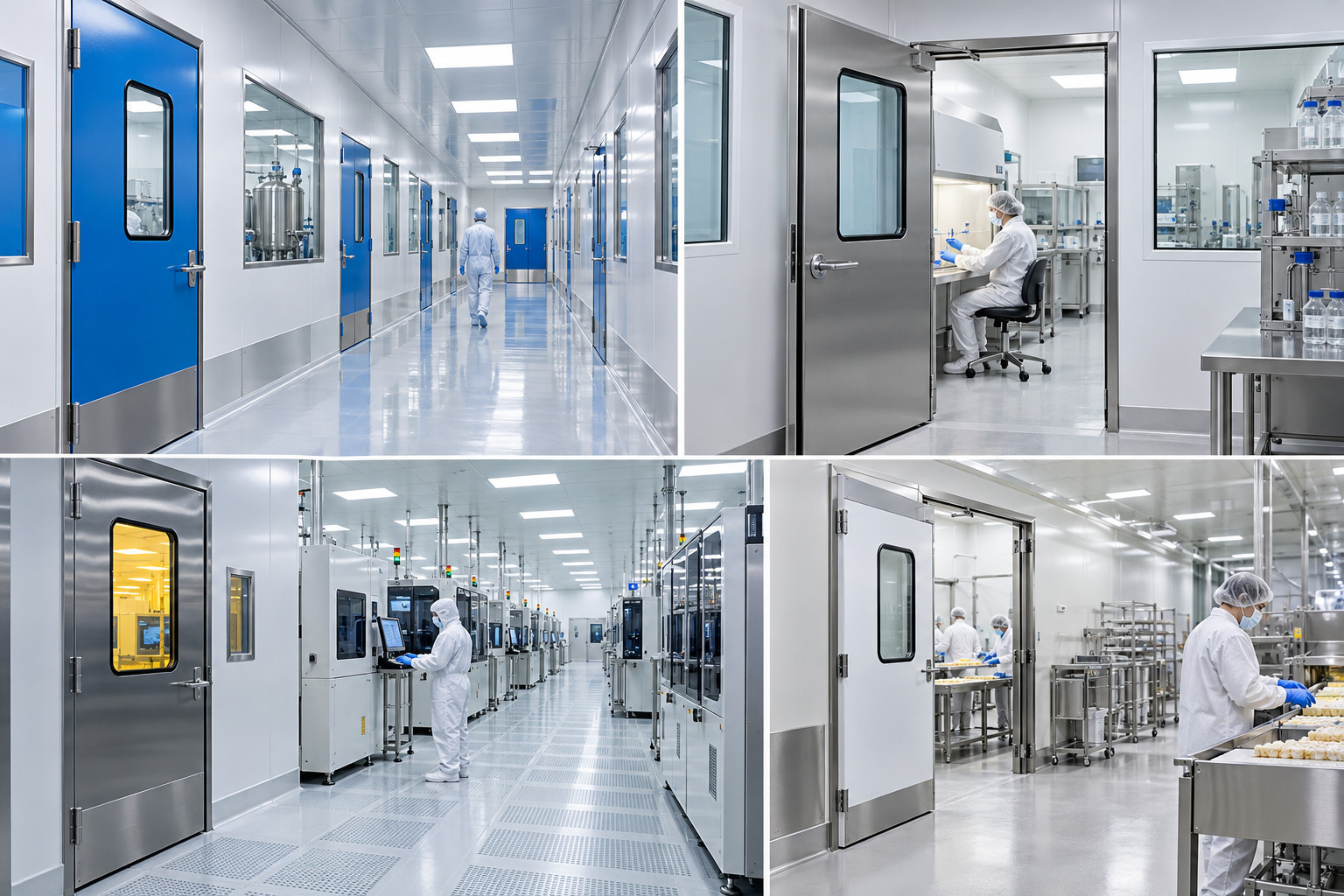 This comparison highlights five manufacturers and cleanroom solution providers with relevant products or experience in controlled-environment applications. The selection considers publicly described product portfolios, available door configurations, customization capabilities, target industries, and relevance to international cleanroom projects. The companies are presented for buyer comparison rather than ranked by independently verified revenue, market share, product testing, or customer satisfaction scores. Editorial disclosure: SEPPES publishes this guide and is included as one of the compared manufacturers. Product claims and project-specific capabilities should be verified through the relevant manufacturer’s current technical documentation.
What to Compare Before Shortlisting a Clean Room Door Manufacturer
A supplier can specialize in a standalone door assembly, or provide doors as part of an integrated modular cleanroom package. Before comparing quotations, ask each manufacturer to identify the exact door model and scope of supply. Evaluate five practical factors: door-to-wall compatibility, sealing evidence, surface cleanability, controls and safety, and post-sale documentation.
For modular cleanroom doors, confirm the wall-panel thickness, required frame connection, whether the opening is pre-prepared or retrofitted, and which contractor is responsible for perimeter sealing. A supplier that provides the cleanroom enclosure may offer a different project scope from a manufacturer supplying doors only.
Leading Clean Room Door Manufacturers and Their Offerings
1. SEPPES: Customized Industrial and Clean Room Door Options

Key Product Offerings
SEPPES is a China-based manufacturer specializing in customized industrial doors and loading dock equipment for manufacturing plants, warehouses, logistics facilities, and selected controlled-environment applications. Its product range includes steel swing doors, high-speed zipper doors, and other industrial door configurations. For cleanroom projects, steel swing doors may be considered for personnel access and controlled room separation, while selected zipper-type high-speed doors may suit high-frequency material transfer openings. Available options depend on the chosen model and may include customized dimensions, frame materials, finishes, viewing windows, sealing arrangements, and compatible control functions.
Unique Features and Technologies
SEPPES steel swing door configurations include galvanized or stainless steel construction, optional vision windows, and different hardware or access-control arrangements. According to its published product information, selected steel swing doors are available with configurable door closers and interlocking options. Powered high-speed door systems are a separate product category and may offer photoelectric sensors, safety edges, and automatic activation options depending on the selected configuration. These features should not be assumed to be standard equipment on a manually operated steel swing door. For pharmaceutical or cleanroom applications, the project team should confirm surface cleanability, chemical compatibility, perimeter sealing, operating sequence, and any specified air-leakage requirements.
Industry Reputation and Certifications
SEPPES supplies customized industrial door products to international buyers and provides project-specific manufacturing and technical support. Its published materials describe international customers and quality-related documentation. However, buyers should request the current certificates, declarations, and test records applicable to the exact product model and destination market. An ISO 9001 quality-management certificate does not independently establish the cleanroom suitability or airtightness of a specific door. Similarly, CE marking, where applicable, concerns relevant product legislation rather than certification of an entire pharmaceutical cleanroom. Best For: International industrial buyers requiring customized door dimensions, selected cleanroom-related configurations, and coordinated industrial door procurement. Official Website: workshopdoor.com
2. MECART Cleanrooms: Innovative Clean Room Solutions

Key Product Offerings
MECART Cleanrooms specializes in modular cleanroom solutions and offers door systems designed for integration with controlled-environment facilities. Its published door options include single and double swing doors, sliding doors, and integrated high-speed roll-up door configurations. The company’s cleanroom swing doors are available in different dimensions and configurations to accommodate personnel access, equipment transfer, and room layout requirements. Learn more from the MECART official cleanroom door options.
Unique Features and Technologies
MECART emphasizes integration between cleanroom doors, wall systems, and the overall facility layout. Its published swing door options include galvannealed steel construction and selectable manual or motorized arrangements. Depending on the design, sealing and air-balancing arrangements may be specified to support the pressure-control requirements of adjacent rooms. Buyers should confirm whether a proposed door provides a particular leakage performance rather than assuming all MECART configurations are fully airtight.
Industry Reputation and Certifications
MECART is established in the cleanroom systems market and serves sectors requiring controlled manufacturing and research environments. Its cleanroom systems experience may be relevant where doors form part of a wider modular enclosure project. Any required material specifications, environmental performance, or qualification documentation should be confirmed for the specific project. Best For: Cleanroom projects requiring coordinated doors and modular cleanroom enclosure systems. Official Website: mecart-cleanrooms.com
3. RAX Door: Durable and Customizable Clean Room Doors

Key Product Offerings
RAX Door supplies industrial and specialty door solutions, including products marketed for controlled-environment applications. Its cleanroom-related offerings emphasize configurable door materials, finishes, and structural arrangements for different facility requirements. Before procurement, buyers should request the relevant model specifications and confirm whether the proposed product is suitable for the intended pharmaceutical, food-processing, laboratory, or industrial environment.
Unique Features and Technologies
RAX Door emphasizes durable construction and configurable product designs. For applications requiring controlled contamination risks, relevant considerations include surface smoothness, cleaning compatibility, hardware design, and perimeter sealing. The appropriate level of corrosion resistance or chemical compatibility depends on the selected materials and the actual cleaning agents used at the facility. Where a defined airtightness performance is required, suppliers should provide suitable model-specific information or test evidence.
Industry Reputation and Certifications
RAX Door participates in the industrial door supply market and offers products for a range of building and operating environments. Buyers should distinguish between general supplier experience, individual product specifications, and documentary evidence of regulatory suitability. References to FDA, USDA, or cGMP requirements do not automatically mean that a complete door assembly holds a universal certification covering every cleanroom application. Best For: Buyers comparing customizable industrial and specialty door options for controlled-environment projects. Official Website: raxdoor.com
4. Cleanrooms By United: Custom Clean Room Design and Build

Key Product Offerings
Cleanrooms By United specializes in cleanroom design and construction, with an emphasis on modular controlled-environment facilities. Door solutions form part of the wider cleanroom enclosure and are selected according to project layout, personnel movement, material transfer, and environmental requirements. The company’s system-oriented approach may be appropriate for buyers planning an integrated cleanroom rather than purchasing standalone doors only.
Unique Features and Technologies
Modular cleanroom design allows doors, wall panels, and access arrangements to be coordinated during facility planning. For controlled environments, important design considerations include smooth and cleanable surfaces, suitable door-to-wall interfaces, access-control arrangements, and maintainable hardware. Buyers should review the exact door specifications and installation interfaces included in a proposed modular cleanroom package.
Industry Reputation and Certifications
Cleanrooms By United serves controlled-environment projects across industrial and research-related markets. Where a project requires cleanroom qualification, buyers should clarify the responsibility of the cleanroom designer, installation contractor, equipment supplier, and validation team. The suitability of individual doors depends on the specified design and the overall facility requirements. Best For: Projects requiring cleanroom design, modular construction, and integrated door solutions. Official Website: cleanroomsbyunited.com
5. E-ZONG: Comprehensive Clean Room Door Portfolio

Key Product Offerings
E-ZONG offers cleanroom door products for industrial and controlled-environment applications. Its published portfolio includes cleanroom door configurations using materials such as stainless steel and aluminum, along with different swing and sliding arrangements. These options can serve facilities where door dimensions, surface finish, access requirements, and cleaning procedures influence product selection.
Unique Features and Technologies
E-ZONG promotes smooth surfaces, cleanable door construction, and material options for controlled environments. Selected configurations may include customizable frames, vision panels, sealing systems, and access-control functions. For regulated applications, buyers should specify the required door materials, cleaning compatibility, leakage performance where relevant, and the project documentation needed.
Industry Reputation and Certifications
E-ZONG is a China-based cleanroom door supplier with a product portfolio directed toward controlled-environment projects. Its offerings may be considered by buyers requiring specialized door configurations or material selections. Claims regarding fire rating, airtightness, chemical resistance, or compliance should be verified against the documents supplied for the exact model rather than assumed for the complete product range. Best For: Buyers seeking a selection of cleanroom door materials, configurations, and project-specific options. Official Website: cleanroomsdoors.com
Comparison Table of Top Clean Room Door Manufacturers
The following table summarizes the primary positioning of the five companies. It is intended to help buyers identify suitable suppliers for further technical evaluation rather than establish an independently tested performance ranking.
| Manufacturer | Main Focus | Relevant Door Solutions | Best For | Scope to Verify Before Ordering |
|---|---|---|---|---|
| SEPPES | Customized industrial door manufacturing | Steel swing doors, high-speed zipper doors | Custom door configurations and international sourcing | Door model, dimensions, control interfaces, site installation scope |
| MECART Cleanrooms | Cleanroom systems and modular integration | Swing, sliding, and high-speed door options | Integrated cleanroom enclosure projects | Door-to-wall interface, package boundaries, qualification responsibility |
| RAX Door | Industrial and specialty doors | Configurable cleanroom-related door solutions | Industrial buyers evaluating specialty door options | Exact cleanroom model, seals, cleaning compatibility, supporting documents |
| Cleanrooms By United | Modular cleanroom design and construction | Doors integrated with cleanroom systems | Complete modular cleanroom projects | Door specifications within cleanroom package and installation scope |
| E-ZONG | Cleanroom door product portfolio | Steel, stainless steel and aluminum door configurations | Specialized cleanroom door procurement | Selected material, finish, seals and applicable test documents |
This is a purchasing comparison, not a performance ranking. The last column lists questions to verify; it does not claim that a supplier has or lacks particular certifications or test results.
Request a project-specific cleanroom door quotation with your opening dimensions, number of doors and required controls, or continue reading the technical checklist below.
Key Features Compared
Product Range
SEPPES focuses on customizable industrial doors, including selected steel swing and high-speed zipper doors. MECART and Cleanrooms By United offer cleanroom-related systems in which door selection forms part of a wider enclosure or facility design. RAX Door provides industrial and specialty door options, while E-ZONG offers a cleanroom-oriented portfolio with different materials and configurations. For procurement, compare actual product models and documentation rather than general supplier descriptions.
Certifications and Technical Documentation
Cleanroom door buyers should distinguish between standards that classify cleanroom environments, requirements governing pharmaceutical manufacturing, quality-management certifications, and product-specific conformity documents. ISO 14644: Addresses cleanrooms and associated controlled environments. Cleanroom classification does not automatically certify an individual door. GMP: Applies to the manufacture and quality control of regulated products. Door selection should support the facility’s contamination-control strategy where relevant. ISO 9001: Concerns an organization’s quality-management system and does not independently demonstrate a particular door’s airtightness or hygienic performance. CE Marking: Applies where relevant EU product legislation requires it. The applicable declarations and supporting documents depend on the particular product. For pharmaceutical projects, buyers can consult the European Commission’s EudraLex Volume 4 GMP guidance.
Customization Options
Manufacturers may offer customization of dimensions, door materials, finishes, seals, observation windows, hardware, and automation features. For automated or interlocked doors, the specification should identify required controller functions, door-position feedback, access signals, and emergency operating conditions. Not every optional feature is compatible with every door model. Confirm the available configurations during technical review.
Industry Applications
Different industries place different demands on cleanroom door systems. Pharmaceutical facilities may prioritize surface cleanability, contamination-control procedures, airlock operation, and documentation. Biotechnology laboratories may require suitable access arrangements, defined pressure relationships, and cleaning compatibility. Semiconductor and electronics production facilities may emphasize material movement, environmental control, and integration with cleanroom operations. Food-processing facilities may prioritize washdown compatibility, hygiene requirements, and frequent personnel or material movement.
Best Clean Room Door Options for Biotech Facilities
When evaluating the best clean room doors for biotech laboratories and production facilities, start with how the opening is used rather than selecting a door based on a cleanliness class alone. Personnel access, trolley movement and material transfer place different demands on the door. The facility’s contamination-control and HVAC teams should approve the selected configuration.
Personnel Entrances and Gowning Areas
A hinged cleanroom door may be suitable for personnel access where adequate swing clearance is available. Check door-closing hardware, vision-panel requirements, surface finish, frame detailing and the facility’s cleaning protocol. For regularly disinfected areas, obtain written material and chemical-compatibility guidance for the proposed hardware, seals and panel surfaces.
High-Frequency Material Transfer
For carts or frequent equipment movement, a powered high-speed zipper door can be evaluated where its selected construction, clear opening, safety devices and cleaning requirements match the application. Confirm the operating sequence, opening frequency and door-control interfaces. Fast operation alone does not demonstrate a specified air-leakage rate or cleanliness classification.
Biotech Airlocks and Pressure-Controlled Rooms
For airlocks between rooms with different pressure or hygiene requirements, specify door-position feedback, interlocking logic and emergency operation before ordering. A door interlock can help coordinate movement, but does not replace HVAC balancing, filtration or facility qualification. See our cleanroom door interlock system guide for the control sequence and interfaces.
Questions Biotech Buyers Should Ask
- What cleaning agents, humidity and environmental exposures must the door withstand?
- Is a measured air-leakage requirement specified, and what evidence is available for the exact model?
- How are door frames connected to existing modular wall panels?
- Who supplies and commissions the access controls, interlock controller and safety devices?
- Which installation, maintenance and project documentation is included in the quotation?
How to Choose the Right Clean Room Door Manufacturer
Before selecting a supplier, evaluate the actual operating conditions of the door and the documentation required for your project.
1. Identify the Required Door Type
Common options include steel swing doors, sliding doors, and high-speed flexible-curtain doors. Hinged doors may suit controlled personnel access, while powered high-speed doors can be considered for selected material transfer openings with frequent traffic. Selection should follow the room layout, contamination-control assessment, and application requirements.
2. Evaluate Materials and Cleanability
Consider whether galvanized steel, stainless steel, aluminum, or suitable flexible curtain materials are appropriate for the intended environment. The cleaning procedures, chemicals, humidity, and corrosion exposure should be considered when specifying door surfaces and hardware. 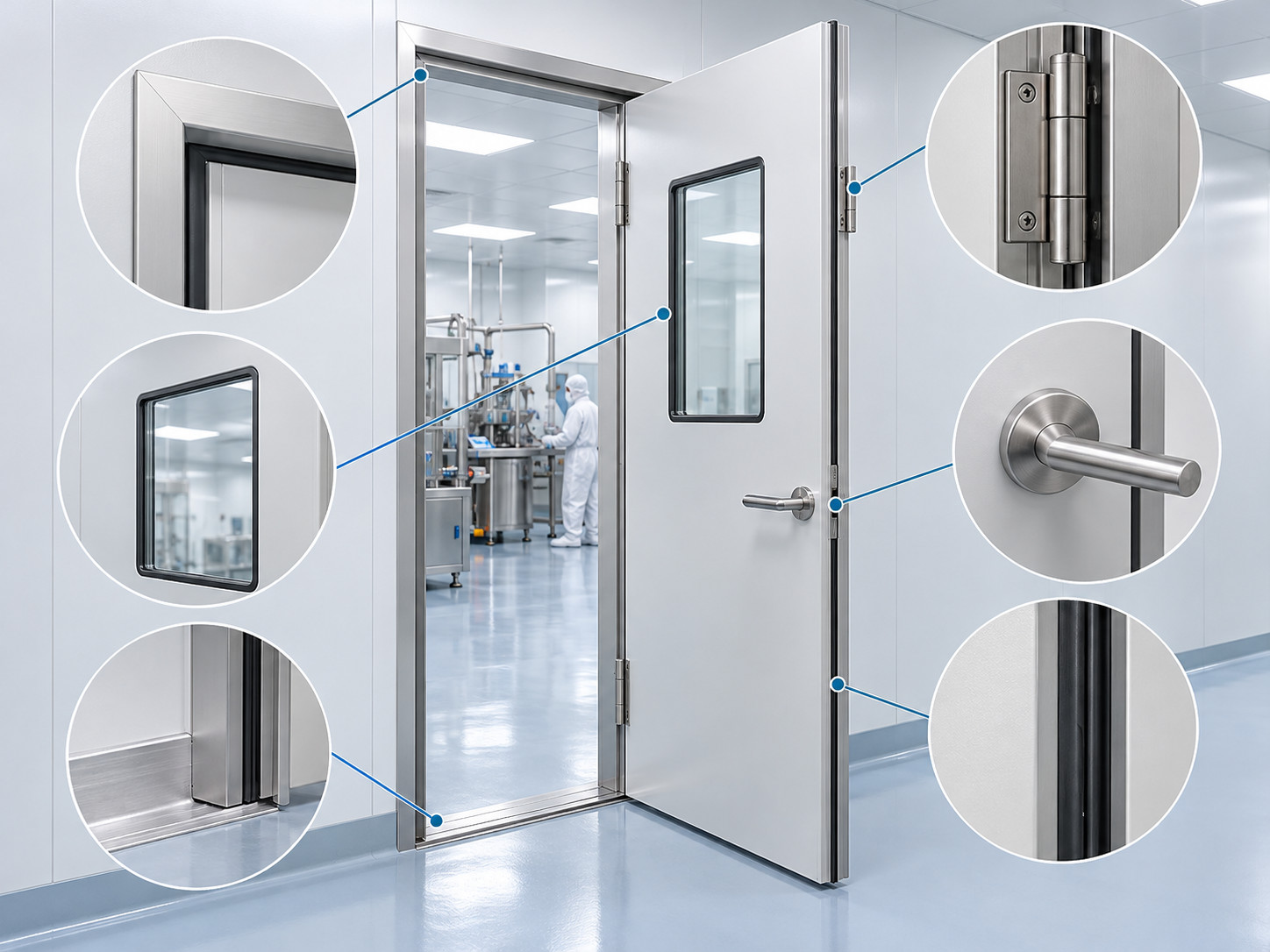
3. Confirm Sealing and Pressure Requirements
Doors may contribute to controlled room separation, but the required air-leakage performance depends on the facility’s HVAC and pressure-control design. Where a measurable airtightness requirement exists, request suitable test information for the proposed configuration.
4. Check Safety and Interlocking Options
Powered doors may require sensors, protective devices, and appropriate controls. For airlocks, the project engineer should define the required operating sequence, door interlocks, emergency access provisions, and fault response. An interlock should use the required door-position feedback and agreed controller logic rather than assume that a closing timer proves the door is shut. See how cleanroom door interlocks work.
5. Confirm Documentation and Delivery Scope
International buyers should request available drawings, specifications, installation manuals, applicable product documents, and maintenance instructions. Clarify whether the supplier provides products only, technical support, or any additional services. Local installation responsibilities should be defined before ordering.
Clean Room Door Technical Specification Checklist
Use the following checklist when requesting quotations from different clean room door manufacturers.
| Specification | Information to Confirm |
|---|---|
| Opening Dimensions | Clear width × height in mm |
| Quantity | Number of doors required |
| Door Type | Swing, sliding, zipper or other configuration |
| Door Material | Steel, stainless steel, aluminum, PVC or other material |
| Cleanroom Conditions | Room classification and relevant process requirements |
| Pressure Conditions | Pressure differential and sealing requirements |
| Surface Finish | Required finish and cleaning compatibility |
| Operating Frequency | Expected door cycles, traffic type and required opening speed for powered models |
| Electrical Supply | Voltage and frequency for powered doors |
| Safety Equipment | Required protective functions and access controls |
| Interlocking | Airlock sequence and required system interfaces |
| Installation | Wall structure, available side/headroom clearances, door-to-wall sealing and site conditions |
| Documentation | Drawings, specifications, manuals and relevant test records |
| Shipping | Destination country, port and preferred trade terms |
Clean Room Door Types for Different Applications
| Application | Door Type to Consider | Important Requirements |
|---|---|---|
| Pharmaceutical Personnel Access | Steel or stainless steel swing door | Cleanability, seals, hardware and access control |
| Frequent Material Transfer | High-speed zipper door | Operating frequency, safety devices and sealing |
| Modular Laboratory | Swing or sliding door | Wall integration, access and cleaning requirements |
| Cleanroom Airlock | Compatible swing or automatic door system | Door interlock sequence, pressure and emergency operation |
| Temperature-Controlled Area | Suitable insulated door design | Temperature difference, condensation and insulation |
For further information on pharmaceutical applications, see our pharmaceutical clean room door selection guide and cleanroom door applications.
Common Clean Room Door Purchasing Mistakes
Purchasing decisions can be delayed when quotations use different door specifications. Avoid comparing a manually operated swing door with an automated zipper door solely on price; omitting wall-opening details; assuming every cleanroom door is airtight; or treating a facility cleanliness classification as a certificate for a door assembly. Clarify whether electrical wiring, access controls, installation and commissioning are included, and request written confirmation of the warranty and replacement-part arrangements.
Frequently Asked Questions
Who makes modular cleanroom doors?
Modular cleanroom system providers may offer doors integrated with their wall and enclosure packages; specialist door manufacturers may instead supply a compatible door assembly. When evaluating a modular cleanroom doors manufacturer, ask who is responsible for wall-interface details, frame seals, installation drawings and the completed room’s qualification.
Which clean room door is suitable for a biotechnology laboratory?
Hinged doors may suit controlled personnel access, while suitable sliding or powered high-speed doors may be evaluated for large openings or frequent material transfer. The decision depends on required cleanability, traffic, pressure relationships, door controls and site dimensions—not on the industry label alone.
What is the importance of choosing the right clean room door manufacturer?
Choosing a suitable manufacturer helps ensure that the proposed door matches the facility’s functional requirements, including materials, cleaning procedures, operating frequency, sealing arrangements, and documentation. The final suitability of a door should be confirmed against the actual project specification.
How do clean room doors prevent contamination?
Cleanroom doors may support contamination control through suitable sealing, cleanable surfaces, appropriate opening procedures, and integration with the facility’s environmental systems. They do not independently guarantee contamination prevention or cleanroom classification.
What certifications should I look for in clean room doors?
Request the documents applicable to the specific model, destination market, and project requirements. ISO 9001 relates to quality management, ISO 14644 concerns cleanroom environments, GMP addresses regulated manufacturing practices, and CE marking concerns relevant EU product legislation. None should be treated as a universal substitute for product-specific test evidence.
Can clean room doors be customized to fit specific needs?
Yes. Depending on the manufacturer and model, options may include dimensions, materials, surface finishes, windows, sealing arrangements, locks, access controls, and automation functions. Confirm the proposed configuration with the supplier before ordering.
What materials are commonly used in clean room doors?
Common options include galvanized steel, stainless steel, aluminum, and suitable flexible curtain materials. The appropriate material depends on cleaning chemicals, humidity, corrosion exposure, traffic conditions, and the intended cleanroom application.
How do I determine which clean room door is best for my industry?
Start by defining the room function, personnel or material traffic, cleanliness requirements, cleaning procedures, pressure relationships, and available installation space. Then compare the manufacturer’s technical documentation against these requirements.
Are clean room doors energy-efficient?
Selected insulated doors and appropriate sealing arrangements can help manage heat transfer and air exchange. Actual energy performance depends on the door construction, opening frequency, temperature difference, and facility HVAC system.
How do manufacturers ensure the durability of clean room doors?
Durability depends on material selection, structural construction, suitable hardware, correct installation, and maintenance. Buyers should ask about corrosion resistance, expected operating conditions, replacement components, and model-specific maintenance instructions.
What industries benefit most from clean room doors?
Cleanroom door systems are relevant to pharmaceuticals, biotechnology, electronics, semiconductor manufacturing, healthcare, research facilities, and selected food-processing environments. Each industry has different operating and contamination-control requirements.
How do I maintain clean room doors for long-term performance?
Follow the manufacturer’s maintenance guidance and the facility’s approved cleaning procedures. Inspect seals, hinges, guides, frames, operating mechanisms, and safety devices as applicable. Use compatible cleaning agents and arrange qualified servicing for electrical or safety-related faults.
Request a Customized Clean Room Door Quote from SEPPES
Looking for a clean room door manufacturer for your pharmaceutical facility, laboratory, food-processing plant, or controlled production area? SEPPES provides customized industrial door solutions, including selected steel swing doors and high-speed zipper doors, according to project requirements. For a technical review and project quotation, please share:
- Opening width × height and quantity.
- Door type and installation environment.
- Cleanroom classification and operating conditions, if applicable.
- Preferred material, surface finish, and sealing requirements.
- Cleaning and disinfection requirements.
- Required safety, access-control, and interlocking functions.
- Electrical supply for powered door configurations.
- Destination country or nearest port.
- Preferred trade terms: EXW, FOB, CIF, or DDP.
Contact SEPPES to discuss your project, request relevant product specifications, and obtain a customized quotation. Note: Product selection and any required facility qualification should be confirmed by the responsible project engineering and quality teams.