
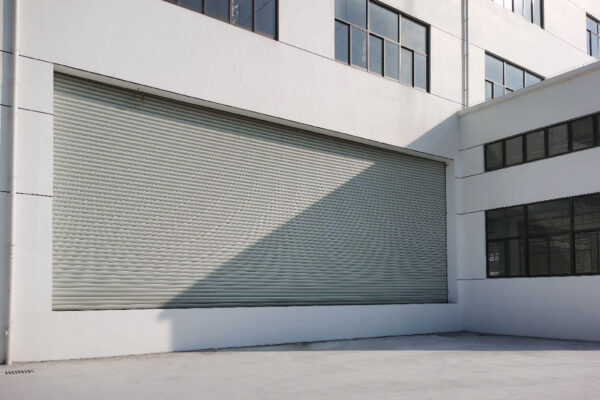
Rolling steel shutters are often used to protect openings in industrial and commercial buildings. In fire-protection applications, specially tested and rated rolling steel fire doors may be used to protect openings in fire-rated walls. In everyday industrial applications, steel rolling shutters are commonly installed at warehouses, factories, loading areas, storefronts, service entrances, garages, and restricted-access areas.
Their vertically coiling design requires little floor space while providing a strong physical barrier when closed. Depending on the application, rolling steel shutters can be manually operated or motorized and customized for opening size, operating frequency, security requirements, wind exposure, and access-control needs.
How Are Rolling Steel Shutters Often Used?
The most common uses of rolling steel shutters include fire-wall opening protection with appropriately rated fire doors, warehouse and factory entrances, commercial security, loading and logistics areas, service counters, storage areas, and other openings where durability and space efficiency are important.
It is important to distinguish between a standard rolling steel shutter and a rolling steel fire door. A standard steel shutter should not automatically be considered fire-rated. Where fire protection is required, the complete door assembly must meet the applicable fire-rating, testing, labeling, installation, and inspection requirements.
1. Protecting Openings in Industrial Fire Walls
One of the recognized applications of rolling steel fire doors is protecting openings in fire-rated walls and other fire-resistance-rated assemblies.
When closed, an appropriately tested and rated rolling steel fire door helps maintain the required opening protection and limit the spread of fire through the opening.
However, not every rolling steel shutter is a fire door. Projects requiring fire protection should specify a properly tested, labeled, and approved fire-door assembly according to the applicable building and fire-safety requirements.
2. Warehouses and Distribution Centers
Rolling steel shutters are commonly installed at warehouse entrances, storage zones, vehicle access points, and loading areas.
Because the curtain coils vertically above the opening, the door does not require the swing space needed by conventional hinged doors. This makes rolling steel shutters particularly useful where floor space needs to remain available for forklifts, vehicles, racking, or material-handling operations.
For warehouse projects, buyers should consider opening size, operating frequency, security requirements, wind conditions, available installation space, and whether manual or motorized operation is more suitable.
3. Factories and Manufacturing Plants
Factories often use rolling steel shutters to secure external entrances, equipment areas, storage rooms, production zones, and restricted-access openings.
The steel curtain provides a durable barrier for industrial environments where impact resistance, security, and long service life are important.
Motorized operation can also make larger openings easier to manage, especially when doors are opened and closed regularly during daily production.
4. Storefronts and Commercial Buildings
Rolling steel shutters are frequently used to protect storefronts, shopping facilities, service entrances, and commercial premises outside business hours.
When closed, the steel curtain provides a physical barrier against unauthorized access and helps protect doors, windows, merchandise, and interior areas.
Perforated or specially designed curtain options may also be considered where visibility or ventilation is required.
5. Loading and Logistics Areas
Industrial facilities may use rolling steel shutters around loading areas, vehicle entrances, dispatch zones, and goods-transfer points.
The compact vertical opening design helps keep the surrounding working area clear while providing a secure closure when loading operations have finished.
For high-traffic logistics environments, operating frequency should be considered carefully. Where very frequent or very fast opening is required, a high-speed industrial door may be more appropriate than a conventional steel rolling shutter.
6. Service Counters and Smaller Openings
Smaller rolling shutters can be used at service counters, concession areas, internal storage openings, pharmacies, parts counters, and other controlled-access locations.
These applications benefit from the same compact coiling design while using a smaller shutter assembly suitable for counter-height or internal openings.
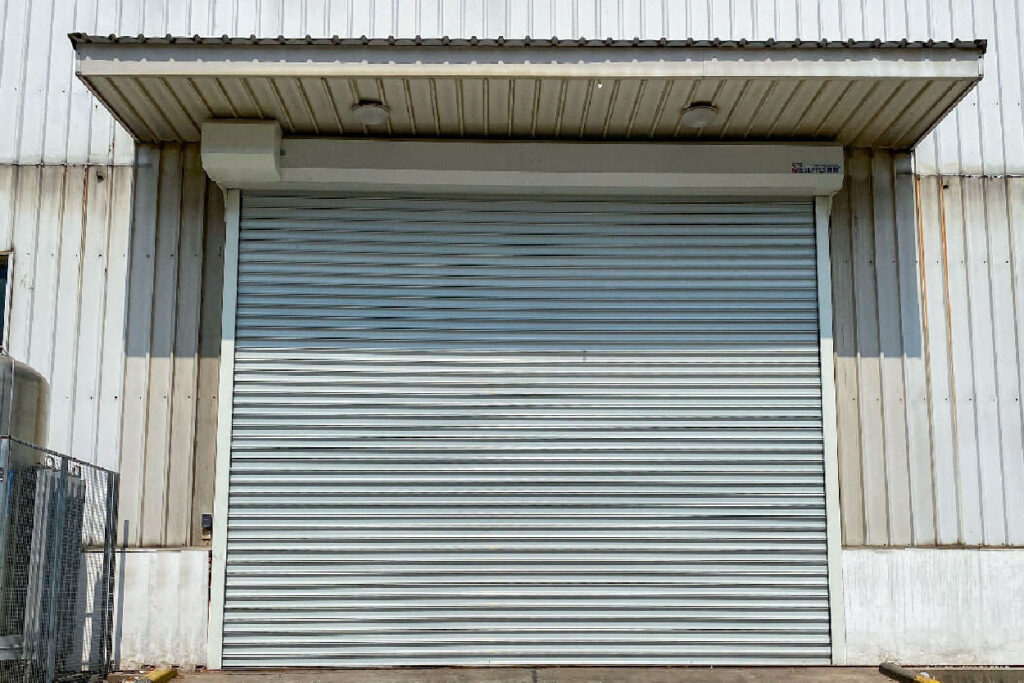
Definition and Basic Concept
Steel roller shutters are specialized doors or window shutters made from galvanized steel, designed to roll up and down for security and space-saving purposes
Primary Functions and Features
Steel roller shutters are appreciated for their durabilityas well as their functionality. Below are the most important features and functions that they offer.
Enhanced Security
Steel roller shutters offer an effective defense against unauthorized entry, vandalism, and theft. As such, they serve as a dependable security measure for both residential and commercial properties.
Weather Protection
These shutters offer protection to buildings from severe weather conditions such as torrential rainfall, gusty winds, and even intense sunlight, thereby helping to preserve the interiors and providing comfort.
Noise and Thermal Insulation
A number of steel shutters roller shutters come equipped with insulating materials. These shutters help to reduce the transfer of heat as well as minimize noise from the outside, which increases energy efficiency as well as overall comfort.
Design That Saves Space: The innovative design of overhead shutters can help maximize usable space in any area.
Their particular rolling mechanism saves space and allows for simple and effortless opening and closing without the need to clear the surrounding area which is advantageous for constrained spaces.
Customizable Options
Steel roller shutters offer customization that caters to different needs such as size, color, finish, and even the mode of operation, making them suitable for various users objectives.
Key Application Sectors
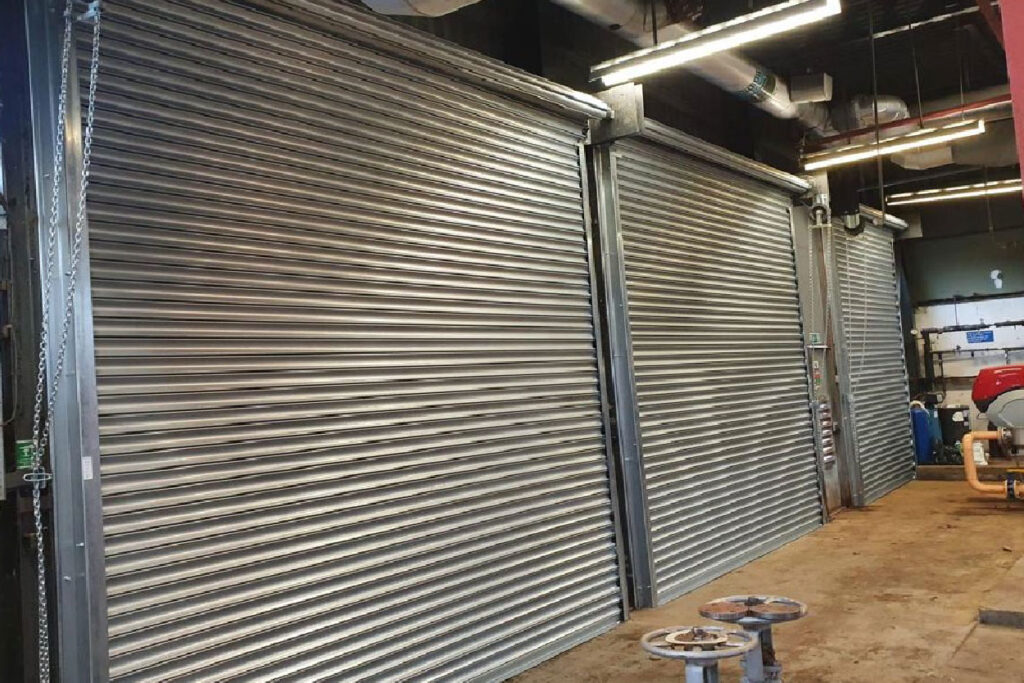
Steel roller shutters are functional and commonly used across the different industries and sectors. The following are five important sectors with a description for each:
Commercial Establishments
Usage: Retail shops, shopping malls, and office complexes are protected from unauthorized access after working hours.
Data: About 65 % of retail shops located in the metropolitan areas have roller shutters for additional protection.
Industrial Warehouses
Usage: Convenient protection for large entrance gates, loading docks, and storage areas including effortless access for vehicles and goods.
Data: More than 70 % of warehouse facilities widely adopt the use of steel roller shutters because of the durability and energy efficiency.
Residential Properties
Usage: Strengthened protection and privacy for garages and windows, as well as for storage spaces.
Data: Increased demand in suburbs as 40 % of new houses are fitted with roller shutters on garages.
Healthcare Facilities
Usage: Control access to restricted areas with sensitive storage spaces, machinery rooms, and protected zones.
Data: About 30 % of hospitals and clinics install roller shutters to protect sensitive equipment, safeguarding the wards from contamination and preserving cleanliness in the critical areas.
Educational Institutions
Usage: Protect value added assets like laboratories and libraries after hours.
Data: Approximately 45 % of schools and universities enhance security with the use of roller shutters.
Rolling Steel Shutters vs. Rolling Steel Fire Doors
Although the terms are sometimes used interchangeably, a standard rolling steel shutter and a rolling steel fire door do not necessarily serve the same purpose.
A standard rolling steel shutter is primarily selected for security, access control, durability, and space-saving operation. A rolling steel fire door, by contrast, is specifically designed and tested as part of a fire-protection strategy for an opening in a fire-rated assembly.
| Feature | Standard Rolling Steel Shutter | Rolling Steel Fire Door |
|---|---|---|
| Primary purpose | Security and access control | Protecting openings in fire-rated assemblies |
| Typical applications | Warehouses, factories, storefronts, storage areas | Fire-rated wall openings and other specified fire-protection locations |
| Fire rating | Not automatically fire-rated | Requires an appropriate tested and labeled assembly |
| Closing requirements | Based on normal operating needs | Must comply with the specified fire-door system and applicable requirements |
| Selection priority | Security, size, operation, environment | Fire rating, listing, installation and code compliance |
This distinction is important when selecting a door for an industrial project. The fact that a shutter is manufactured from steel does not by itself make the door fire-rated.
If the project requires protection of an opening in a fire-rated wall, confirm the required fire rating and applicable standards before selecting the door.
Why Are Rolling Steel Shutters Popular in Industrial Buildings?
Strong Physical Security
Steel slats create a durable physical barrier that can help restrict unauthorized access to warehouses, factories, storage areas, and commercial facilities.
Space-Saving Vertical Operation
Unlike swing doors, rolling shutters travel vertically and coil above the opening. This leaves the surrounding floor area available for vehicles, equipment, storage, and pedestrian movement.
Suitable for Large Industrial Openings
Rolling steel shutters can be manufactured for a wide range of opening dimensions, making them suitable for industrial entrances, storage areas, garages, and commercial openings.
Manual or Motorized Operation
Depending on door dimensions and operating frequency, rolling steel shutters can use manual or electric operation. Motorized systems are often more practical for large or regularly operated industrial doors.
Customizable for Different Environments
Door dimensions, curtain design, controls, finishes, and other features can be selected according to the installation environment and operational requirements.
Comparison with Other Industrial Doors
Steel vs. Aluminum Roller Shutters
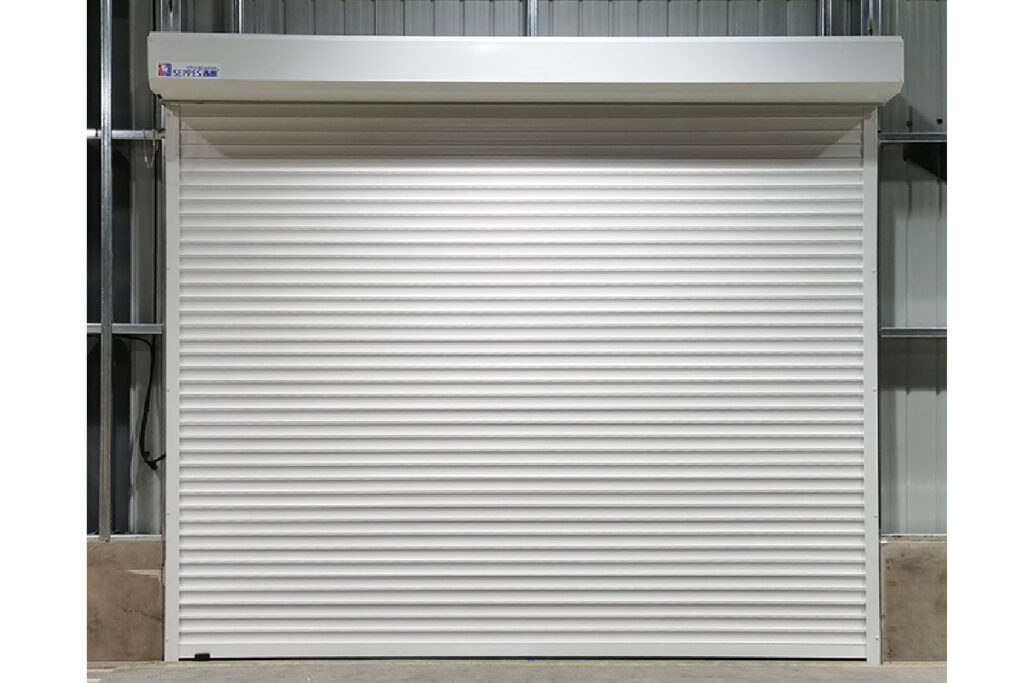
| Parameter | Steel | Aluminum |
| Strength | High | Moderate |
| Durability | High | Moderate |
| Weight | Heavy | Light |
| Cost | High | Low maintenance is a key feature of roller shutters for homes, providing convenience and efficiency. |
| Aesthetics | Limited | Versatile |
| Fire-Rated Applications | Requires an appropriately tested and rated assembly | Depends on the tested and approved door system |
| Noise | Moderate | Quiet |
| Maintenance | Moderate | Low |
Durability and Maintenance Considerations
When weighing the options of steel versus aluminum roller shutters, the factors of durability and maintenance differ sharply for each shutter type. Steel roller shutters are a go-to choice for critical protection and security due to their exceptional durability and ability to withstand damage. Reports indicate that with the right maintenance, steel shutters can last between 20 and 30 years. This is due to their strong internal structure and coatings that protect against rust and corrosion.
On the other hand, aluminum roller shutters are a popular option due to their lightweight characteristics as well as their corrosion resistance to moisture and humidity. Although aluminum shutters are not as strong as steel shutters, their resistance to rust and oxidation lowers wear and tear in maintenance over time. Regular maintenance such as cleaning and oiling of moving parts can allow aluminum shutters to function for 15 to 25 years.
Steel shutters, on the other hand, may require a greater maintenance burden in rust inspections or protection in denting in fluctuating temperature conditions. Aluminum shutters require less attention to their mechanisms but may require more attention to moving parts stiffening over time due to bending under pressure.
Ultimately, the selection on steel or aluminum roller shutters is guided by specific requirements like security, exposure to the environment, and maintenance preferences. Carefully balancing these factors enables informed decisions by businesses and homeowners based on their needs.
Cost Analysis of Different Materials
Understanding the cost of roller shutters involves the consideration of the purchase price and maintenance cost. Steel roller shutters are arguably the most expensive, and their price varies between $25 and $45 per square foot, depending on the thickness and grade of steel used. However, their maintenance needs are low, which makes the long-term cost less and often makes steel roller shutters a better investment among the types of roller shutters available. Steel shutters are particularly better for high security environments or heavy-duty usage.
Aluminum roller shutters are less expensive, and their price ranges from $20 to $35 per square foot. Aluminum is lightweight, which makes it corrosion resistant and a popular choice for various types of roller shutters. This makes the shutters ideal for places with moisture or for residential places. Aluminum shutters, although cheaper, can be more expensive long term because they are more prone to damage from impacts, and thus more prone to the need of repairs to fix dents and bends.
Polycarbonate is newer emerging materials with roller shutters which offer cost-efficient solutions for certain uses. Polycarbonate roller shutters are between $30 and $40 per square foot and are transparent, UV resistant, and reasonably durable. Their uses are in the commercial sector which prioritize visibility and aesthetics.
For businesses and homeowners, considering these expenses in conjunction with other factors like energy consumption, durability, and the environmental conditions the shutters will encounter helps to arrive at the most suitable value.
Selection and Customization Options
Framework for Selection Criteria
The framework for selecting steel roller shutters involves evaluating security needs, durability, cost, aesthetics, fire resistance, and compatibility with existing systems.
| Parameter | Description |
| Security | High protection level |
| Durability | Long-lasting and robust |
| Cost | Higher initial expense |
| Aesthetics | Limited customization |
| Fire Safety | Excellent resistance |
| Compatibility | Integrates with systems |
Customization Options Available
Steel roller shutters offer extensive customization options, including material types, operation modes (manual or motorized), foam insulation, color choices, slat designs, and additional features like storm bars and obstacle detection
Industry-Specific Customization Requirements
Industry-specific customization for steel roller shutters includes tailored materials, advanced security features, noise insulation, energy efficiency, and aesthetic designs to meet the unique needs of sectors like retail, industrial, and hospitality
Installation and Maintenance Best Practices
Pre-Installation Considerations
Prior to putting up steel roller shutters, make sure to crosscheck all measurements and that the installation area is clean, aligned, and unobstructed. Confirm the selected shutter type is functional and compatible with the site’s structural parameters. Check the mounting surface for alignment to avoid unnecessary challenges during the installation. Also, make sure that all local compliance documents such as permits and approvals that need to be acquired have been taken.
Best Practices for Installation
Use High-Quality Materials: Select shutters made from materials such as galvanized steel or aluminum which are strong and able to withstand elements like rust or corrosion.
Measurement Accuracy: Check and verify all dimensions before purchasing or installing the shutters to avoid operational inefficiencies or gaps that compromise security.
Manufacturers Guidelines Compliance: Assemble and affix all structural components according to the installation manual to prevent mechanical failures caused by incorrect component assembly.
Using incorrect anchors and fasteners for the specific wall or mounting surface causes bolts and anchors to lose their tightening, weakens the structural integrity, and leads to loosening over time.
Operational Testing: Conduct thorough testing before finalizing the shutters for installation, and adjust balance, alignment, and tension to ensure operational reliability.
Safety Accessories: Install seals anti water tamper locks for enhanced security and to keep water out and comply with local codes to reduce overall liability.
Integrating the latest information afforded by Google’s search engine, regular maintenance checks, and steam cleaning of Shutter’s moving parts are necessary to ensure the longevity of the Shutter parts. As noted by Google trends, removing a certain period of time between servicing a Shutter tends to significantly lower the overall spending on repairs, while at the same time actively improving the user’s perception of the Shutter’s reliability.
Maintenance Guidelines for Longevity
According to Google’s search engine, users should maintain window shutters every three to six months, depending on usage and the surrounding environment. Shutters exposed to harsh outdoor conditions require more frequent servicing.Such basic servicing must consist of cleaning, lubricating with oil moving components, tightening of any fittings that are loose, and checking for any wear and tear. Performing these routine tasks helps in attaining ideal operation, minimizes expensive repairs, and prolongs the shutters lifespan.
Common Problems and Troubleshooting
Common Operational Issues
An example of an operational problem with shutters is an irregular opening and closing motion of the blades. This can often be solved looking removing foreign objects in the tracks or making sure washing the moving parts is done. Another problem can be the vertical or horizontal offset of parts of the shutter with respect to each other. This may be resolved by firming the loose fittings or changing the position of the brackets. In case shutter motor is inoperative, checking the power and the connections will be the first places to look into. Doing regular maintenance is helpful in the above cases, but in case of other problems cropping up, it will be better to take the advice of an expert.
Material-Related Problems
Material-related problems with shutters typically arise from wear and tear, exposure to harsh weather, or the use of subpar materials. If the shutter panels are damaged or warped, I would inspect the material quality to determine if replacement is necessary for the overhead shutters for homes. Corroded metal parts might need cleaning or anti-rust treatment to restore functionality. For wooden shutters, ensuring they are properly treated against moisture can prevent swelling or cracking. Preventive care, like using weather-resistant coatings, is key to avoiding such issues in the future.
Troubleshooting and Preventive Measures
Issues concerning the materials used in question shutters often stem from aging, harsh environmental conditions, or the use of low-grade materials. In the event that shutter panels are broken or contorted, I would check whether the materials used are of good quality and require replacement. A metal section that shows corrosion would have to be cleaned and perhaps treated with anti-rust to enable proper function. Moisture treated the right way will ensure shutters do not swell or crack. In the event that shutters are made out of wood, proper treatment against moisture greatly assists in preventing swelling or cracking. Preventive actions such as the use of weatherproof coatings greatly assist in alleviating these problems.
How to Choose a Rolling Steel Shutter for Your Application
Selecting the right rolling steel shutter starts with understanding how the opening will actually be used. Before requesting a quotation, consider the following factors.
1. Application
Determine whether the shutter will be used for a warehouse, factory, storefront, loading area, storage room, service opening, garage, or another application.
A door used only a few times per day may require a different solution from a high-traffic opening operating continuously throughout a working shift.
2. Opening Size
Measure the clear opening width and height accurately.
The available headroom and side room should also be checked because the barrel, guides, operator, and other components require installation space around the opening.
3. Operating Frequency
Consider how many times the door will open and close each day.
For moderate-frequency security applications, a conventional rolling steel shutter may be suitable. For very frequent traffic or applications where opening speed directly affects production or logistics efficiency, a high-speed door may be a better option.
4. Security Requirements
Consider the level of physical security required for the opening.
Slat design, guide construction, locking options, controls, and door structure can vary depending on whether the shutter is being used for general access control or a higher-security application.
5. Indoor or Outdoor Environment
Outdoor installations should take local wind conditions, moisture, temperature, and corrosion exposure into account.
Coastal, humid, or harsh industrial environments may require additional corrosion protection or alternative materials.
6. Fire-Rating Requirements
If the shutter is intended to protect an opening in a fire-rated wall, do not select the door solely because it is made from steel.
Confirm whether a fire-rated rolling steel door is required and determine the necessary rating, listing, installation conditions, and local compliance requirements.
7. Manual or Motorized Operation
Smaller or infrequently operated shutters may use manual operation, while larger industrial shutters are typically easier to operate with an electric motor.
Control options should be selected according to actual site requirements.
When Should You Choose a Rolling Steel Shutter?
A rolling steel shutter is a practical choice when your project requires a durable, compact, vertically operating closure for security or access control.
It is commonly suitable for warehouses, factories, commercial properties, storage facilities, loading areas, garages, and other industrial openings.
For openings requiring very high operating speeds, environmental separation, frequent automated traffic, or specialized fire protection, another industrial door type may be more appropriate. Matching the door type to the actual operating conditions is more important than selecting a door based only on material or price.
Need a Rolling Steel Shutter for an Industrial Project?
SEPPES provides customized industrial door solutions based on opening dimensions, application, operating frequency, installation conditions, and project requirements.
To determine the appropriate door configuration, provide the opening width and height, quantity, application, installation environment, and preferred operating method when requesting a quotation.
Frequently Asked Questions
How are rolling steel shutters often used?
Rolling steel shutters are often used for warehouses, factories, storefronts, loading areas, storage facilities, garages, service openings, and other commercial or industrial entrances requiring security and space-saving operation. In fire-protection applications, appropriately tested and rated rolling steel fire doors may also be used to protect openings in fire-rated walls.
What are rolling steel shutters used for in warehouses?
Warehouses commonly use rolling steel shutters at vehicle entrances, storage areas, loading zones, and restricted-access openings. Their vertical coiling design leaves surrounding floor space clear while providing a durable physical barrier when the opening is closed.
Are all rolling steel shutters fire-rated?
No. A standard rolling steel shutter should not automatically be considered a fire-rated door simply because it is made from steel. Where fire protection is required, the complete rolling steel fire-door assembly must have the appropriate testing, rating, labeling, installation, and approval for the specified application.
Where are rolling steel shutters commonly installed?
Common installation locations include factories, warehouses, distribution centers, storefronts, shopping facilities, storage rooms, garages, loading areas, service counters, and restricted-access areas. The correct shutter design depends on opening size, traffic frequency, environmental exposure, security requirements, and operating method.
What is the difference between a rolling steel shutter and a roll-up door?
The terms are sometimes used interchangeably, especially in commercial and industrial door markets. Both generally describe a curtain that travels vertically and coils around a barrel above the opening. However, product construction, slat design, duty cycle, security level, fire rating, and intended application can differ between manufacturers and door types.
Are rolling steel shutters suitable for large industrial openings?
They can be suitable for many large industrial openings, but the appropriate dimensions depend on the specific door design, wind conditions, structural support, operating frequency, and manufacturer limitations. Large openings should be evaluated individually before the final door configuration is selected.
Should I choose a rolling steel shutter or a high-speed door?
Choose a rolling steel shutter when security, durability, and compact vertical operation are the main priorities. A high-speed door may be more suitable when the opening experiences frequent traffic and fast opening and closing are important for production flow, temperature control, dust control, or logistics efficiency.