
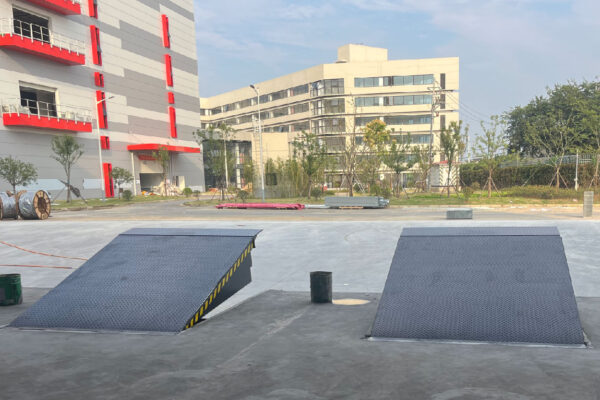
Every warehouse, distribution center, and manufacturing facility depends on safe and efficient loading and unloading operations. A properly selected and installed dock leveler helps bridge the height difference between the loading dock and the trailer bed, creating a smoother path for forklifts, pallet trucks, and other material-handling equipment.
This guide explains the key requirements for dock leveler installation, including site preparation, pit inspection, positioning, securing, utility connections, testing, and commissioning. It also covers common installation mistakes, hydraulic dock leveler installation considerations, installation cost factors, and the information buyers should prepare before requesting a quotation.
Introduction to Dock Levelers
Dock levelers help bridge the gap between a transport vehicle and a loading dock. They accommodate differences in elevation between the dock floor and trailer bed within the equipment’s specified operating range.
Without suitable loading dock equipment, loading and unloading may involve uneven transitions that increase the risk of product damage, equipment problems, or unsafe operating conditions.
Overview of Dock Levelers
The three main operating types are mechanical, hydraulic, and air-powered dock levelers. Edge-of-dock levelers are another commonly used configuration, distinguished primarily by their mounting method.
Mechanical Dock Levelers
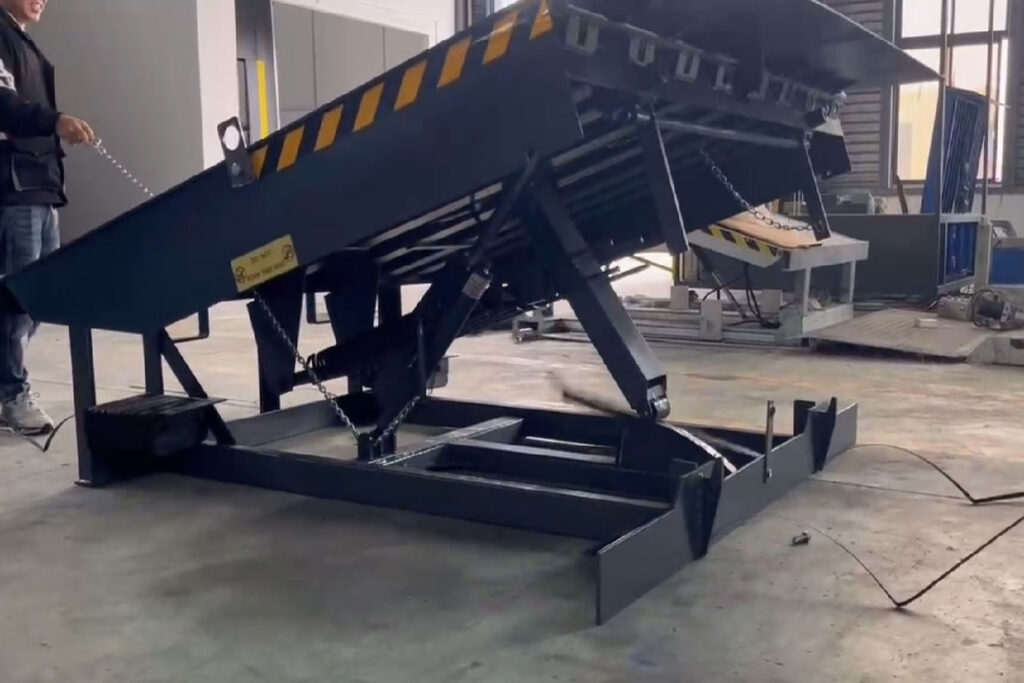
Mechanical dock levelers use a spring-assisted operating system and are activated manually. They may be suitable for loading docks with relatively moderate operating frequency and where a non-powered system is preferred.
Hydraulic Dock Levelers
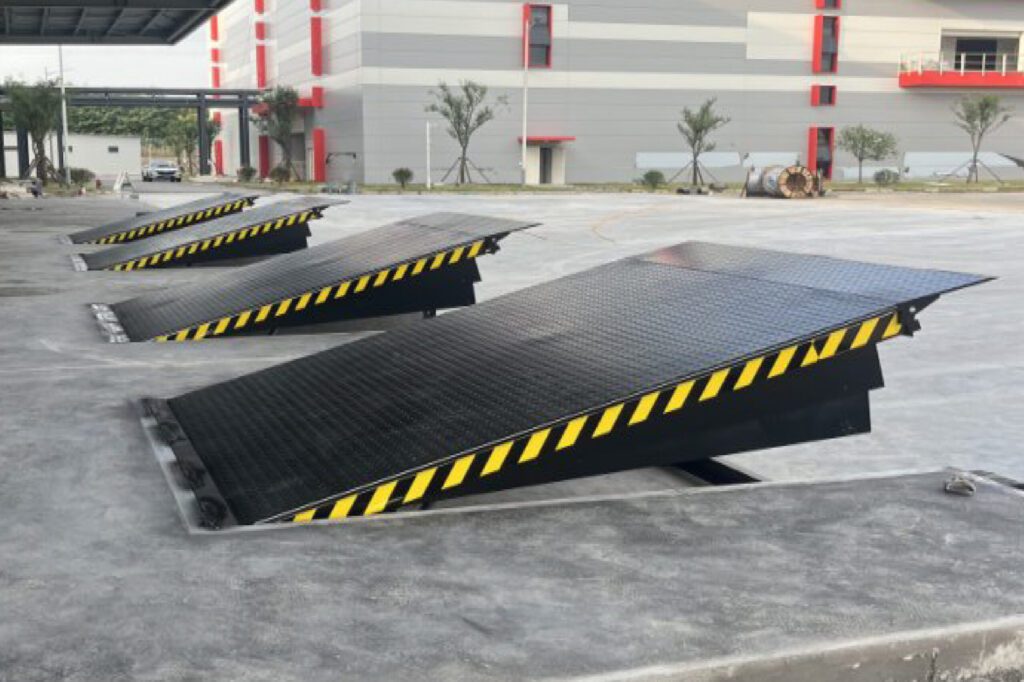
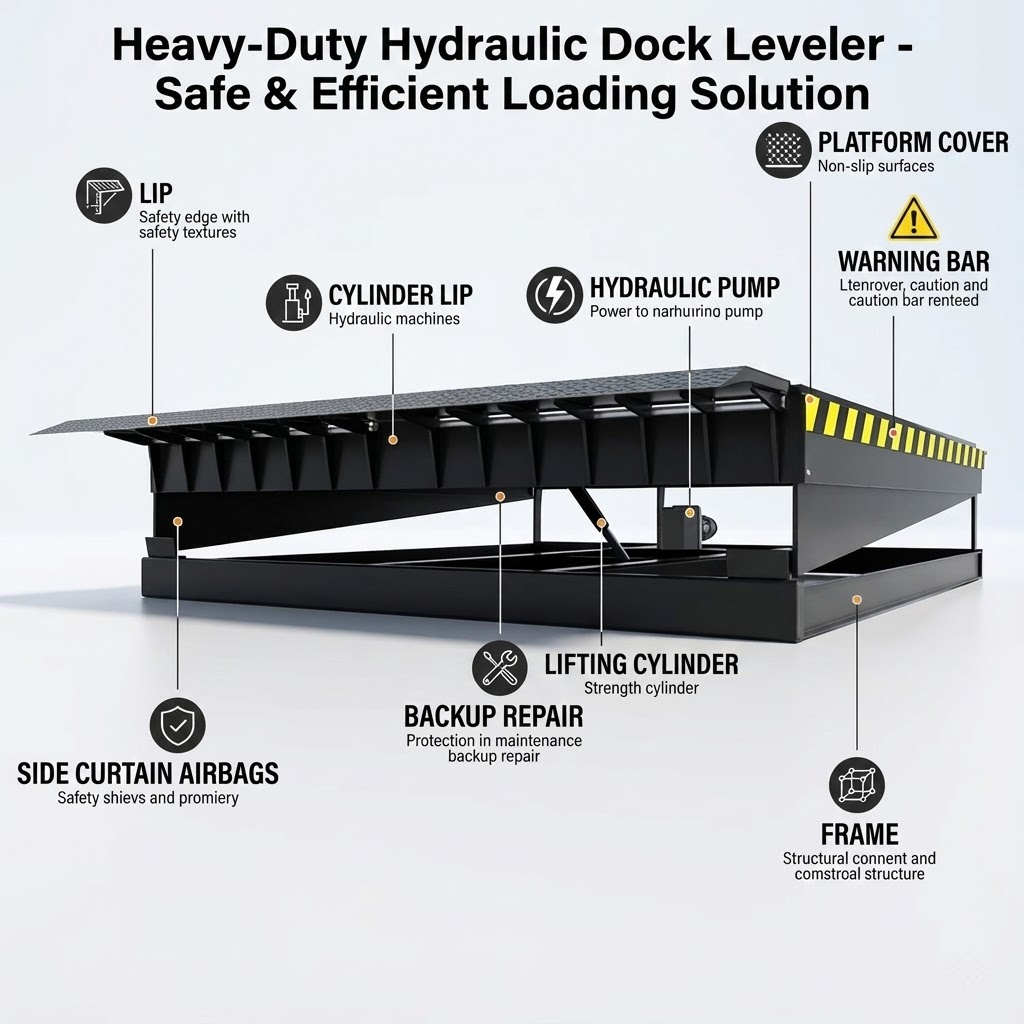
Hydraulic dock levelers use an electrically powered hydraulic system to raise the platform and operate the lip. Push-button operation makes them suitable for warehouses, manufacturing facilities, and distribution centers with frequent loading and unloading requirements.
Selection should be based on rated capacity, platform dimensions, trailer height range, operating frequency, and site conditions.
Air-Powered Dock Levelers
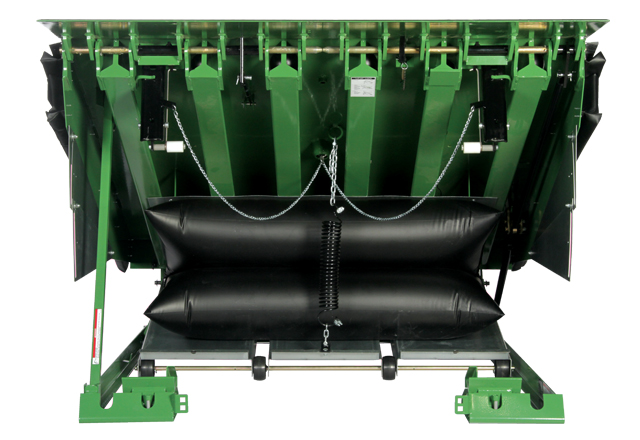
Air-powered dock levelers use an inflatable lifting system to raise the deck. They provide an alternative to conventional mechanical and hydraulic lifting systems.
Importance of Dock Leveler Installation
Accurate dock leveler installation is essential because the equipment must create a stable transition between the loading dock and trailer while operating within its designed range.
Incorrect pit dimensions, poor frame alignment, inadequate support, improper electrical connections, or incorrect commissioning can affect equipment performance, operational safety, and service life.
Benefits of Using Dock Levelers in Logistics
Enhanced Safety
A correctly selected and installed dock leveler provides a more stable transition for forklifts, pallet trucks, personnel, and transported goods. It should be used together with appropriate loading dock safety procedures.
Improved Productivity
A properly installed dock leveler can improve loading and unloading efficiency by providing a smoother path between the warehouse floor and the trailer bed.
For high-frequency loading docks, hydraulic dock levelers can simplify operation through push-button controls.
Adaptability
Dock levelers accommodate differences in trailer bed heights within their specified operating ranges. Before selecting a model, confirm the loading dock height, trailer height range, loading frequency, forklift weight, cargo weight, and platform dimensions.
Reduced Risk of Product and Equipment Damage
Correct installation helps minimize sudden height transitions that may affect forklifts, pallet trucks, or transported goods.
Lower Long-Term Operating Costs
Correct alignment, frame support, hydraulic connections, and commissioning can reduce premature wear and installation-related maintenance problems.
Types of Dock Levelers
Different dock leveler types have different installation requirements, operating systems, and maintenance considerations.
| Type | Operating System | Installation Considerations | Typical Applications |
|---|---|---|---|
| Hydraulic | Electric hydraulic power unit | Pit structure, electrical supply, hydraulic components | High-frequency industrial loading docks |
| Mechanical | Spring-assisted manual operation | Pit structure, mechanical adjustment, frame support | Facilities preferring non-powered operation |
| Air-Powered | Inflatable lifting system | Pit structure, air-lifting components, electrical requirements | Facilities selecting an alternative lifting system |
| Edge-of-Dock | Manual or powered depending on model | Dock-face mounting and structural support | Suitable retrofit projects |
Edge-of-Dock Levelers
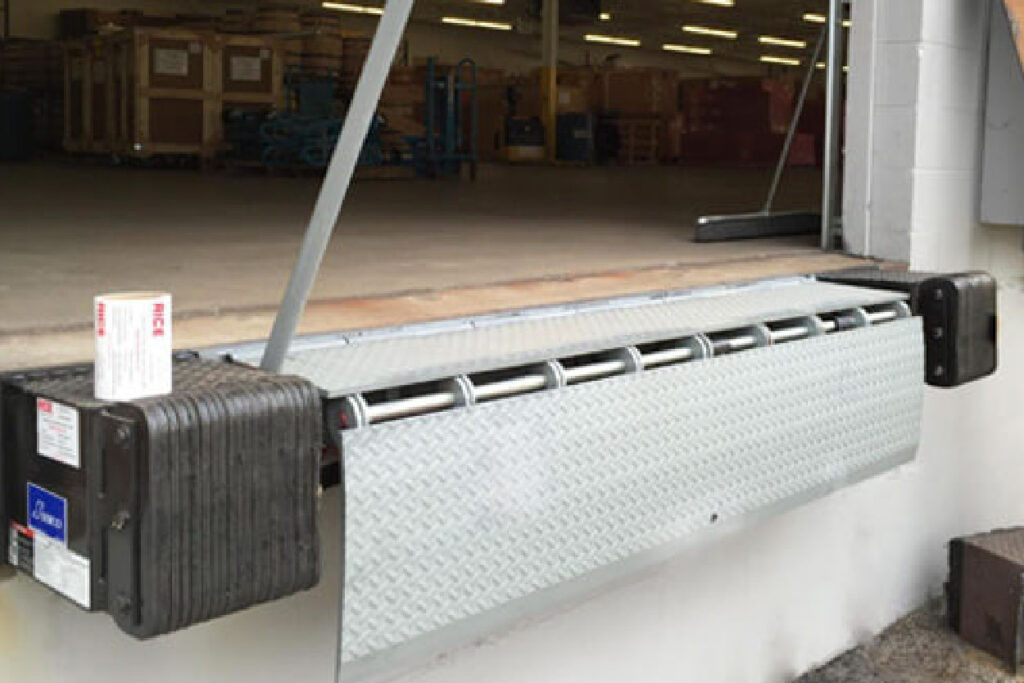
Edge-of-dock levelers are mounted directly to the loading dock face rather than installed inside a recessed pit. They may be useful for retrofit applications where the required operating range is relatively limited and construction of a full pit is not practical.
Pre-Installation Considerations
Site Assessment and Measurements
Proper measurements and site assessments help ensure that a dock leveler fits correctly and operates as intended.
Begin by assessing the dock dimensions, finished dock height, pit condition, and height range of trailers that will use the loading bay.
Also consider:
- Loading frequency
- Forklift type and operating weight
- Maximum cargo weight
- Concrete foundation condition
- Available electrical supply
- Environmental conditions
- Dock bumpers and other loading dock accessories
- Required control and safety functions
Dock Leveler Installation Requirements
Before a loading dock leveler is installed, site conditions should be checked against the approved equipment drawing. Pit dimensions and installation requirements vary between manufacturers, capacities, platform sizes, and equipment designs.
- Dock leveler type and model
- Platform width and length
- Rated capacity
- Pit width, length, and depth
- Finished dock floor elevation
- Trailer bed height range
- Concrete and embedded steel condition
- Electrical supply for powered models
- Hydraulic system requirements
- Dock bumper position
- Drainage conditions
- Forklift and cargo operating weight
- Required control and safety functions
Always Use the Approved Pit Drawing
Incorrect pit width, depth, elevation, embedded angles, conduit position, or bumper arrangement can create installation difficulties and affect the operating range of the equipment.
Dock Leveler Pit Inspection and Construction Checks
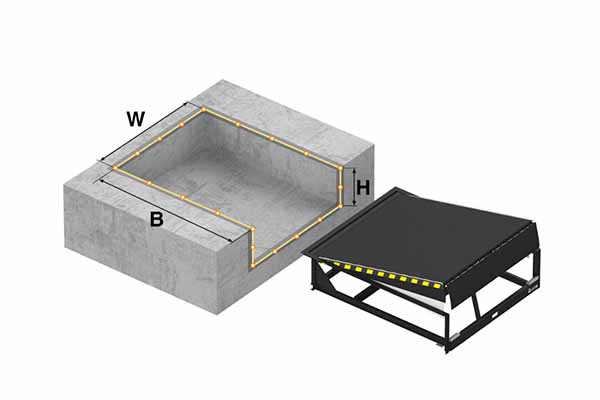
For pit-style dock leveler installation, checking the overall pit width, length, and depth is necessary but not sufficient. The installation team should also inspect the geometry, supporting structure, concrete condition, and utility provisions.
| Inspection Item | What to Check | Why It Matters |
|---|---|---|
| Pit width and length | Measure actual dimensions and compare them with approved drawings. | Helps verify equipment fit and installation clearances. |
| Pit diagonals | Measure both diagonals to identify squareness differences. | Helps detect possible frame alignment problems. |
| Pit depth | Check depth at specified reference points. | Helps establish correct deck elevation and support. |
| Embedded steel angles | Inspect alignment, straightness, and structural condition. | Supports correct attachment where the design requires embedded steel. |
| Concrete foundation | Inspect for cracks, damaged edges, and other visible defects. | Identifies conditions requiring structural assessment. |
| Drainage | Check for standing water and water accumulation risks. | Helps protect equipment and maintain pit conditions. |
| Electrical conduit | Confirm conduit position and routing. | Reduces interference during equipment positioning. |
| Rear and side supports | Verify support points and clearances against the drawing. | Helps prevent unsupported loading and frame distortion. |
If significant dimensional discrepancies, structural damage, or unsuitable support conditions are found, installation should stop until qualified personnel have reviewed the issue.
Dock Leveler Pit Construction Requirements
For new warehouse construction, dock leveler pit details should be coordinated before concrete work begins. The dock leveler supplier, civil contractor, and installation team should confirm the required platform dimensions, pit geometry, embedded steel layout, load-bearing structure, drainage, and utility routing.
For replacement projects, the existing pit must be evaluated against the new equipment drawing. A replacement dock leveler should not be assumed to fit solely because its nominal platform dimensions match the previous unit.
Choosing the Right Dock Leveler Type
Selecting the correct dock leveler depends on loading frequency, rated capacity, trailer height range, site conditions, available utilities, and maintenance requirements.
Mechanical dock levelers use a spring-assisted system. Hydraulic dock levelers use an electrically powered hydraulic system. Air-powered models use an inflatable lifting system, while edge-of-dock levelers are mounted directly to the dock face.
The final selection should be based on actual operating conditions rather than product type alone.
Compliance with Installation Standards
Dock leveler installation should follow the manufacturer’s instructions, approved project drawings, and applicable local safety, electrical, structural, and workplace requirements.
For projects in the United States, applicable equipment standards, occupational safety requirements, and local electrical codes should be verified for the specific installation.
Installers should confirm current requirements with qualified local professionals before installation. The installation should also provide safe access for future inspection and maintenance.
Dock Leveler Installation Process
Preparing the Installation Site
Before installation begins, confirm that the concrete foundation, pit dimensions, mounting points, embedded steel, utilities, drainage, and surrounding loading dock structure match the approved installation drawing.
The installation area should be clean and free of debris, standing water, or obstructions. Electrical conduit, hydraulic components, control locations, and dock bumpers should be checked before the dock leveler is lowered into position.
Dock Leveler Installation at a Glance
| Item | What to Confirm |
|---|---|
| Installation type | New pit installation, replacement, or retrofit |
| Pit dimensions | Width, length, depth, and finished elevation |
| Dock height | Finished loading dock height |
| Trailer range | Minimum and maximum trailer bed height |
| Capacity | Forklift, cargo, and operating load requirements |
| Platform size | Required width and length |
| Power supply | Voltage, phase, and frequency for powered units |
| Structure | Concrete condition and embedded steel |
| Safety | Maintenance support and required safety devices |
| Documentation | Approved installation drawing and manual |

Step-by-Step Dock Leveler Installation Instructions
Step 1: Inspect the Installation Area
Check the pit or mounting area against the approved installation drawing. Confirm pit width, length, depth, finished floor elevation, concrete condition, embedded steel, electrical conduit position, drainage, and dock bumper location.
For recessed pits, measure both diagonals and examine the concrete edges and structural support locations. Remove debris, standing water, or other obstructions before installation.
Step 2: Lower the Dock Leveler Into Position
Use lifting equipment with sufficient rated capacity and follow the designated lifting points specified by the manufacturer.
Lower the dock leveler carefully into the prepared pit while keeping the frame aligned with the pit edges.
Do not lift the leveler using hydraulic hoses, electrical components, the lip, or other points not designed for lifting.
Step 3: Check Alignment and Elevation
Confirm that the dock leveler frame is correctly positioned within the pit and that the deck aligns with the finished dock floor.
Check front, rear, and side clearances before permanently securing the equipment. Any dimensional discrepancies should be resolved before proceeding.
Step 4: Shim and Support the Frame
Where required by the installation instructions, install steel shims at the specified support points.
Proper shimming helps support the frame, maintain correct deck alignment, and prevent movement or distortion during operation.
Step 5: Secure the Dock Leveler
Secure the dock leveler according to the manufacturer’s approved installation procedure.
Depending on the design, this may involve welding the frame to embedded steel, securing designated mounting brackets, or using approved anchors.
Any required welding, anchoring, or structural work should be completed by appropriately qualified personnel.
Step 6: Connect Hydraulic and Electrical Systems
For hydraulic dock levelers, inspect the hydraulic power unit, hoses, cylinders, and fittings before operation.
Connect electrical components according to the supplied wiring diagram and applicable local electrical requirements.
- Verify supply voltage, phase, and frequency.
- Check electrical grounding and protection requirements.
- Confirm that wiring connections are secure.
- Inspect hydraulic hoses and fittings.
- Check power-unit mounting.
- Ensure moving components are unobstructed.
- Verify control-station installation.
Step 7: Install Bumpers and Required Accessories
Install dock bumpers and other specified accessories according to the project drawing.
Depending on the loading dock configuration, the complete system may also include dock shelters or dock seals, vehicle restraints, control panels, warning lights, interlocking controls, or safety barriers.
Step 8: Test and Commission the Dock Leveler
Operate the dock leveler through its intended operating cycle and confirm that:
- The platform raises and lowers smoothly.
- The lip extends and retracts correctly.
- The deck returns to its stored position.
- There is no abnormal binding or interference.
- Control functions respond correctly.
- Hydraulic connections remain leak-free.
- Required safety components function as intended.
Functional testing should follow the manufacturer’s approved procedure. The dock leveler should not enter regular operation until the required commissioning checks have been completed.
Final Commissioning and Handover Records
A documented commissioning process helps facility operators confirm that the dock leveler has been installed, tested, and handed over with the necessary operating and maintenance information.
| Commissioning Item | Required Verification |
|---|---|
| Equipment identification | Record model, serial number, rated capacity, and installation location. |
| Structural installation | Confirm specified frame support, alignment, and attachment. |
| Platform movement | Verify smooth raising, lowering, and return-to-dock operation. |
| Lip operation | Verify correct extension and retraction. |
| Hydraulic system | Inspect for visible leakage and abnormal operation. |
| Electrical system | Verify supply compatibility, controls, and required protection. |
| Safety functions | Test applicable safety devices according to manufacturer instructions. |
| Operating range | Confirm suitability for the intended trailer height range. |
| Operator training | Confirm operating and safety instructions have been provided. |
| Documentation | Provide applicable manuals, drawings, and maintenance instructions. |
Where suitable and permitted by the manufacturer, operation across the intended trailer-bed height range should be verified under controlled conditions. The final handover should record any outstanding issues and their resolution.
Hydraulic Dock Leveler Installation
Hydraulic dock leveler installation includes the same structural and alignment requirements as other pit-style dock levelers, but additional attention is required for the hydraulic power unit, cylinders, hoses, electrical supply, and control station.

- Correct voltage and electrical supply
- Secure power-unit mounting
- Correct hydraulic hose routing
- Tight hydraulic fittings
- No visible hydraulic leakage
- Correct cylinder movement
- Proper lip extension and retraction
- Correct push-button control response
Electrical and Hydraulic Safety Before First Operation
Electrical connections should be completed by qualified personnel according to the manufacturer’s wiring diagram and applicable local regulations.
Before initial operation, installers should:
- Confirm voltage, phase, frequency, grounding, and electrical protection requirements.
- Route electrical cables and hydraulic hoses away from sharp edges and moving components.
- Inspect hydraulic hose fittings, cylinder connections, and power-unit mounting.
- Check for visible damage or improper connections before energizing the equipment.
- Follow appropriate lockout/tagout procedures before servicing or inspecting hazardous energy sources.
- Use manufacturer-approved methods to inspect for leaks. Never use bare hands to search for pressurized hydraulic leaks.
The hydraulic system should not be modified or adjusted outside the manufacturer’s approved procedure.
For international projects, buyers should confirm the required voltage, phase, and frequency before production.
Common Mistakes to Avoid During Dock Leveler Installation
Building the Pit Before Receiving the Final Drawing
A common project mistake is constructing the loading dock pit before the final dock leveler model and dimensions are confirmed.
Different manufacturers and models may use different pit dimensions, embedded steel arrangements, and conduit locations. Always use the approved project drawing.
Incorrect Pit Dimensions or Elevation
A pit that is too wide, narrow, deep, or incorrectly positioned may make it difficult to align the dock leveler properly.
Check all dimensions before equipment delivery whenever possible.
Incorrect Shimming or Frame Support
The dock leveler frame must be properly supported at the required locations.
Incorrect shimming can contribute to misalignment, frame distortion, or uneven operation.
Securing the Unit Before Checking Alignment
Before final welding or anchoring, confirm that the deck is positioned correctly and can move without binding.
Incorrect Electrical or Hydraulic Connections
Incorrect wiring, loose hydraulic fittings, damaged hoses, or incorrect power specifications can prevent the leveler from operating correctly.
Skipping Final Commissioning
A dock leveler should be cycled and inspected after installation. Check deck movement, lip operation, controls, hydraulic components, fasteners, and required safety functions before placing the equipment into regular service.
Benefits of Proper Dock Leveler Installation
Enhanced Safety Features
Correct installation helps the dock leveler maintain proper alignment and operating range.
Depending on the equipment model and project configuration, loading dock systems may also use safety supports, bumpers, restraints, warning systems, or interlocking controls.
Improved Operational Efficiency
Properly installed dock levelers provide a smoother transition between the loading dock and trailer bed.
Hydraulic systems can simplify operation in high-frequency loading areas by reducing manual adjustments during loading cycles.
Longevity and Maintenance Cost Reduction
Correct frame support, alignment, utility connections, and commissioning help reduce premature wear and installation-related problems.
Regular inspection and maintenance remain important throughout the equipment’s service life.
Safety Protocols and Best Practices
Personnel Training Requirements
Personnel responsible for operating or maintaining the dock leveler should receive appropriate instruction before equipment enters regular service.
- Normal operating procedures
- Rated capacity and loading restrictions
- Safe loading and unloading practices
- Control functions
- Emergency shutdown procedures where applicable
- Inspection for visible damage
- Safe use of maintenance supports
- Procedures for reporting faults
- Authorized maintenance and servicing procedures
Operators should never work underneath an unsupported dock leveler platform.
Maintenance and repair work should follow the manufacturer’s instructions and be performed by personnel with appropriate technical qualifications.
Routine Inspection Guidelines
Regularly inspect the platform, lip, hinges, hydraulic hoses, cylinders, electrical components, fasteners, bumpers, and visible structural parts.
Leaks, loose connections, unusual movement, corrosion, and damage should be investigated before the equipment continues operating.
Before, During, and After Installation Checklist
| Installation Stage | Required Checks |
|---|---|
| Before Installation | Approved drawings, pit dimensions, structural condition, equipment capacity, utilities, access, and lifting arrangements |
| During Installation | Frame positioning, alignment, support, approved attachment, electrical connections, and hydraulic components |
| After Installation | Platform movement, lip operation, safety functions, operating range, documentation, and operator training |
Maintenance and Troubleshooting
Regular Maintenance Tasks for Dock Levelers
Regular maintenance is important for reliable dock leveler operation. Maintenance intervals and procedures should follow the manufacturer’s recommendations and reflect actual loading frequency and site conditions.
Inspect Moving Parts
Inspect hinges, pivot points, rollers, bearings, and other moving components for unusual wear, damage, or misalignment.
Lubrication should follow the manufacturer’s maintenance instructions.
Check the Hydraulic System
For hydraulic dock levelers, inspect cylinders, hoses, fittings, and the power unit for signs of leakage, damage, or abnormal operation.
Tighten and Inspect Hardware
Inspect accessible bolts, anchors, brackets, and structural attachment points. Loose or damaged components should be corrected before continued operation.
Clear Debris
Keep the pit and moving components free of packaging material, dirt, and other debris that could interfere with normal movement.
When to Seek Professional Service
Structural Modifications
If the existing pit does not match the new dock leveler, modifications to concrete, embedded steel, bumper positions, or dock-face construction may be required.
Structural changes should be evaluated by qualified personnel before installation.
Electrical Integration
Powered dock levelers require the correct voltage, control system, wiring, and electrical protection.
Electrical connections should be completed according to the supplied wiring diagram and applicable local requirements.
Hydraulic System Problems
Visible leaks, abnormal cylinder movement, insufficient lifting force, or irregular platform operation should be investigated before the leveler is placed into service.
Complex Loading Dock Projects
Projects integrating dock levelers with dock shelters, sectional doors, vehicle restraints, warning lights, or interlocking controls require coordination between multiple systems.
The equipment layout and control logic should be reviewed before installation.
Dock Leveler Installation Cost: What Affects the Price?
The cost of dock leveler installation varies significantly between projects.
A new construction project with a correctly prepared pit may have different installation requirements from a retrofit project where existing concrete or structural components must be modified.
Main Dock Leveler Installation Cost Factors
- New construction or replacement project
- Existing pit condition
- Concrete modifications
- Dock leveler type
- Platform dimensions
- Rated capacity
- Required electrical work
- Welding and structural work
- Lifting equipment
- Dock bumper installation
- Additional loading dock equipment
- Quantity of dock levelers
- Local labor costs
Dock Leveler Installation Cost Breakdown
| Cost Component | What It Includes | Important Considerations |
|---|---|---|
| Equipment | Dock leveler platform, operating system, and supplied accessories | Type, capacity, dimensions, and configuration |
| Civil Work | Pit construction, concrete repairs, structural modifications | New construction versus retrofit |
| Installation Labor | Positioning, alignment, shimming, welding, and anchoring | Local labor availability and site complexity |
| Electrical Work | Power supply, wiring, protection, and control connections | Powered equipment and local electrical requirements |
| Lifting Equipment | Crane, forklift, or other approved handling equipment | Equipment weight and site access |
| Additional Equipment | Dock bumpers, shelters, seals, restraints, and related accessories | Project-specific loading dock configuration |
| Commissioning | Functional checks, safety inspection, and operator handover | Manufacturer and project requirements |
There is no universal installation price because the required work differs by project. Buyers should request equipment pricing and obtain locally applicable installation quotations based on verified site conditions.
Equipment Price Factors
- Platform width and length
- Rated capacity
- Hydraulic or mechanical configuration
- Lip design
- Steel structure
- Control configuration
- Safety options
- Quantity
- Destination country
- Required trade term
For international projects, SEPPES manufactures the equipment according to confirmed specifications and provides relevant technical documentation for installation.
Local installation work should be evaluated according to the actual project location and site conditions.
Information Required for an Accurate Dock Leveler Quotation
To receive an accurate equipment recommendation and quotation, prepare as much of the following information as possible:
- Required dock leveler quantity
- Platform width and length
- Existing pit dimensions
- Loading dock height
- Minimum trailer bed height
- Maximum trailer bed height
- Forklift weight
- Maximum cargo weight
- Required rated capacity
- Loading frequency
- Required voltage
- Site photos
- Project drawings
- Destination country
- Preferred trade term: EXW, FOB, CIF, or DDP
If the pit has not yet been constructed, confirm equipment specifications before finalizing the civil work.
For replacement projects, photos and measurements of the existing dock leveler and pit are particularly useful.
Pit Dock Leveler vs Edge-of-Dock Leveler Installation

Pit-style dock levelers and edge-of-dock levelers use different installation methods and should not be treated as interchangeable solutions.
| Installation Factor | Pit Dock Leveler | Edge-of-Dock Leveler |
|---|---|---|
| Mounting position | Recessed concrete pit | Loading dock face |
| Civil work | Requires prepared pit | Usually requires less civil work |
| Installation complexity | Higher | Generally simpler |
| Operating range | Typically wider | Typically more limited |
| Typical application | Warehouses, factories, distribution centers | Retrofit projects and suitable dock-height applications |
| Hydraulic options | Common | Available on some models |
| Site assessment | Pit dimensions and dock structure | Dock face and mounting structure |
A pit-style loading dock leveler is generally more suitable where trailer heights vary significantly or loading docks operate frequently.
An edge-of-dock leveler may be suitable where a recessed pit is unavailable and the required trailer height range is relatively limited.
The correct option should be selected according to dock height, trailer range, capacity, loading frequency, and site structure.
Conclusion and Next Steps
Key Points Before Installing a Dock Leveler
A successful dock leveler installation begins before the equipment arrives on site.
Confirm the dock leveler model, platform dimensions, rated capacity, trailer height range, pit dimensions, power supply, and approved installation drawing before construction or installation begins.
- Check the pit against the approved drawing.
- Inspect concrete, embedded steel, drainage, and utility locations.
- Position and support the frame correctly.
- Confirm deck alignment before permanent attachment.
- Complete hydraulic and electrical connections correctly.
- Install required bumpers and accessories.
- Test the complete operating cycle before use.
- Document commissioning results and provide operator instructions.
For replacement projects, existing pit conditions should be checked carefully because an older pit may not match the dimensions or mounting requirements of the new dock leveler.
Need a Dock Leveler for Your Loading Dock Project?
SEPPES provides customized loading dock equipment for warehouses, manufacturing facilities, distribution centers, and logistics projects.
To help our engineering team recommend a suitable dock leveler, provide platform or pit dimensions, required quantity, rated capacity, loading dock height, trailer height range, forklift and cargo weight, required voltage, site photos or drawings, destination country, and preferred trade term.
Based on your project information, SEPPES can provide an equipment recommendation, technical configuration, installation drawing, and quotation.
Request Dock Leveler Drawings & QuotationFrequently Asked Questions About Dock Leveler Installation
What dimensions are required for dock leveler installation?
For a pit-style dock leveler, the main dimensions include pit width, pit length, pit depth, finished dock elevation, and the position of embedded steel or mounting points.
Final dimensions should always follow the approved installation drawing for the specific dock leveler model.
Does every dock leveler use the same pit dimensions?
No. Pit dimensions vary according to manufacturer, platform size, rated capacity, structural design, and equipment model.
Do not construct a pit using generic online dimensions without confirming the actual equipment drawing.
How is a hydraulic dock leveler installed?
A hydraulic dock leveler is normally lowered into a prepared pit, aligned, shimmed where required, structurally secured, and connected to its hydraulic and electrical systems.
After installation, the platform, lip, hydraulic system, control station, and required safety functions should be tested before regular operation.
Can a dock leveler be installed in an existing loading dock?
Yes, but the existing pit and dock structure must first be checked.
Important factors include pit dimensions, concrete condition, dock height, embedded steel, electrical supply, bumper arrangement, and compatibility with the replacement dock leveler.
Some retrofit projects may require pit modifications.
What is the difference between pit and edge-of-dock leveler installation?
A pit dock leveler is installed inside a recessed concrete pit, while an edge-of-dock leveler is mounted directly to the loading dock face.
Pit levelers generally provide a larger operating range, while edge-of-dock models may be suitable for retrofit applications where trailer height variation is limited.
How much does dock leveler installation cost?
There is no universal installation price.
Cost depends on pit condition, concrete modifications, electrical work, structural welding, lifting equipment, dock leveler type, accessories, quantity, and local labor costs.
Who should install a dock leveler?
Dock levelers should be installed according to the manufacturer’s approved drawings and installation instructions.
Structural, hydraulic, and electrical work should be performed by personnel with appropriate qualifications required for the project location.
What should be checked before commissioning?
Before commissioning, verify structural attachment, frame alignment, hydraulic connections, electrical compatibility, control operation, lip movement, safety functions, and the complete operating cycle.
Any abnormalities should be corrected before the equipment is released for normal use.
What information should I provide before ordering a dock leveler?
Provide platform or pit dimensions, dock height, trailer height range, rated capacity, forklift and cargo weight, quantity, voltage, site photos or drawings, destination country, and any required loading dock accessories.
This information allows the manufacturer to recommend a suitable configuration.
Reference Sources
- McGuire Dock Leveler Manual — Manufacturer guidance for dock leveler installation and operation.
- Section 11 33 19.13 – Dock Levelers — Project specification guidance covering anchorage, pit dimensions, clearances, and accessories.
- Section 11 13 00 – Loading Dock Equipment — Specification guidance for loading dock equipment, mounting, and capacity considerations.
- OSHA – Applicability of the Confined-Space Standard to Dock-Leveler Pits — OSHA interpretation discussing safety considerations for dock leveler pits.