
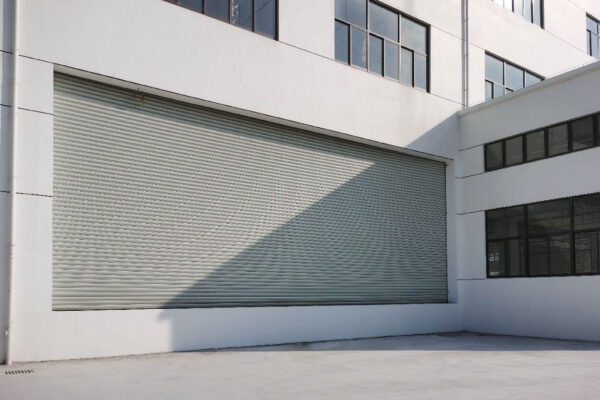
Rolling steel shutters are often used to protect openings in industrial and commercial buildings. In fire-protection applications, specially tested and rated rolling steel fire doors may be used to protect openings in fire-rated walls. In everyday industrial applications, steel rolling shutters are commonly installed at warehouses, factories, loading areas, storefronts, service entrances, garages, and restricted-access areas.
Their vertically coiling design requires little floor space while providing a strong physical barrier when closed. Depending on the application, rolling steel shutters can be manually operated or motorized and customized for opening size, operating frequency, security requirements, wind exposure, and access-control needs.
How Are Rolling Steel Shutters Often Used?
The most common uses of rolling steel shutters include fire-wall opening protection with appropriately rated fire doors, warehouse and factory entrances, commercial security, loading and logistics areas, service counters, storage areas, and other openings where durability and space efficiency are important.
It is important to distinguish between a standard rolling steel shutter and a rolling steel fire door. A standard steel shutter should not automatically be considered fire-rated. Where fire protection is required, the complete door assembly must meet the applicable fire-rating, testing, labeling, installation, and inspection requirements.
1. Protecting Openings in Industrial Fire Walls
One of the recognized applications of rolling steel fire doors is protecting openings in fire-rated walls and other fire-resistance-rated assemblies.
When closed, an appropriately tested and rated rolling steel fire door helps provide the required opening protection and limit the spread of fire through the opening.
However, not every rolling steel shutter is a fire door. Projects requiring fire protection should specify a properly tested, labeled, and approved fire-door assembly according to the applicable building and fire-safety requirements.
2. Warehouses and Distribution Centers
Rolling steel shutters are commonly installed at warehouse entrances, storage zones, vehicle access points, and loading areas.
Because the curtain coils vertically above the opening, the door does not require the swing space needed by conventional hinged doors. This makes rolling steel shutters particularly useful where floor space needs to remain available for forklifts, vehicles, racking, or material-handling operations.
For warehouse projects, buyers should consider opening size, operating frequency, security requirements, wind conditions, available installation space, and whether manual or motorized operation is more suitable.
3. Factories and Manufacturing Plants
Factories often use rolling steel shutters to secure external entrances, equipment areas, storage rooms, production zones, and restricted-access openings.
The steel curtain provides a durable barrier for industrial environments where security, reliable operation, and resistance to normal operating wear are important.
Motorized operation can also make larger openings easier to manage, especially when doors are opened and closed regularly during daily production.
4. Storefronts and Commercial Buildings
Rolling steel shutters are frequently used to protect storefronts, shopping facilities, service entrances, and commercial premises outside business hours.
When closed, the steel curtain provides a physical barrier against unauthorized access and helps protect doors, windows, merchandise, and interior areas.
Perforated or specially designed curtain options may also be considered where visibility or ventilation is required.
5. Loading and Logistics Areas
Industrial facilities may use rolling steel shutters around loading areas, vehicle entrances, dispatch zones, and goods-transfer points.
The compact vertical opening design helps keep the surrounding working area clear while providing a secure closure when loading operations have finished.
For high-traffic logistics environments, operating frequency should be considered carefully. Where very frequent or very fast opening is required, a high-speed roll up door may be more appropriate than a conventional steel rolling shutter.
6. Service Counters and Smaller Openings
Smaller rolling shutters can be used at service counters, concession areas, internal storage openings, pharmacies, parts counters, and other controlled-access locations.
These applications benefit from the same compact coiling design while using a smaller shutter assembly suitable for counter-height or internal openings.
Definition and Basic Concept
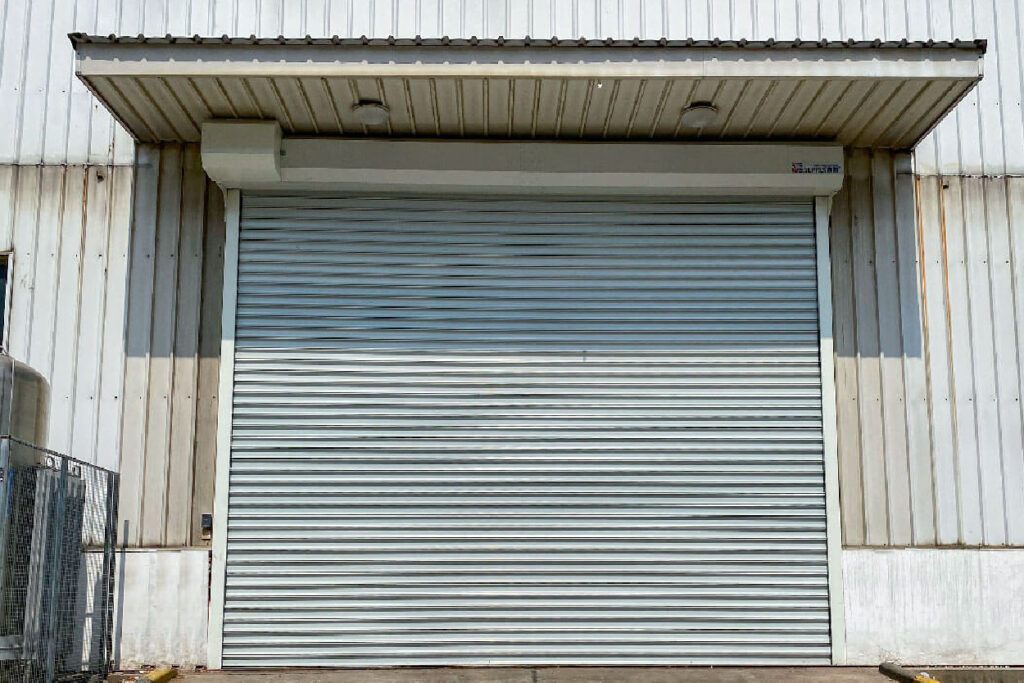
Steel roller shutters are industrial and commercial closures typically made from interlocking steel slats that travel vertically and coil around a barrel above the opening. Commonly manufactured from galvanized steel with optional protective finishes, these shutters provide a compact solution for security, access control, and the protection of industrial openings.
Depending on the application, rolling steel shutters can be manually operated or equipped with electric motors. The appropriate construction depends on opening dimensions, operating frequency, wind exposure, security requirements, and installation conditions.
Buyers evaluating different configurations can explore SEPPES Steel Roll Up Doors for additional product information.
Primary Functions and Features
Rolling steel shutters are widely used in industrial and commercial buildings because they combine durable construction, compact operation, and configurable security features.
Enhanced Security
Interlocking steel slats create a physical barrier that helps restrict unauthorized access to warehouses, factories, storage areas, and commercial premises. The level of protection depends on the curtain design, locking system, guide rails, and overall door construction.
Weather Protection
Rolling steel shutters may provide protection against wind-driven rain, debris, and outdoor exposure when appropriately specified. For external installations, wind-load resistance, corrosion protection, and sealing details must be evaluated against site conditions.
Noise and Thermal Insulation
Selected insulated rolling shutter designs may help reduce heat transfer and noise. However, standard single-skin steel shutters should not be assumed to offer the same insulation performance as purpose-designed insulated doors.
Space-Saving Design
The vertically coiling curtain minimizes the floor space required for door movement. This makes rolling shutters suitable for openings near vehicle routes, storage areas, and industrial equipment.
Customizable Options
Depending on the selected product, rolling steel shutters may be customized with different dimensions, curtain designs, surface finishes, motors, locking arrangements, and control options to meet specific industrial requirements.
Key Application Sectors
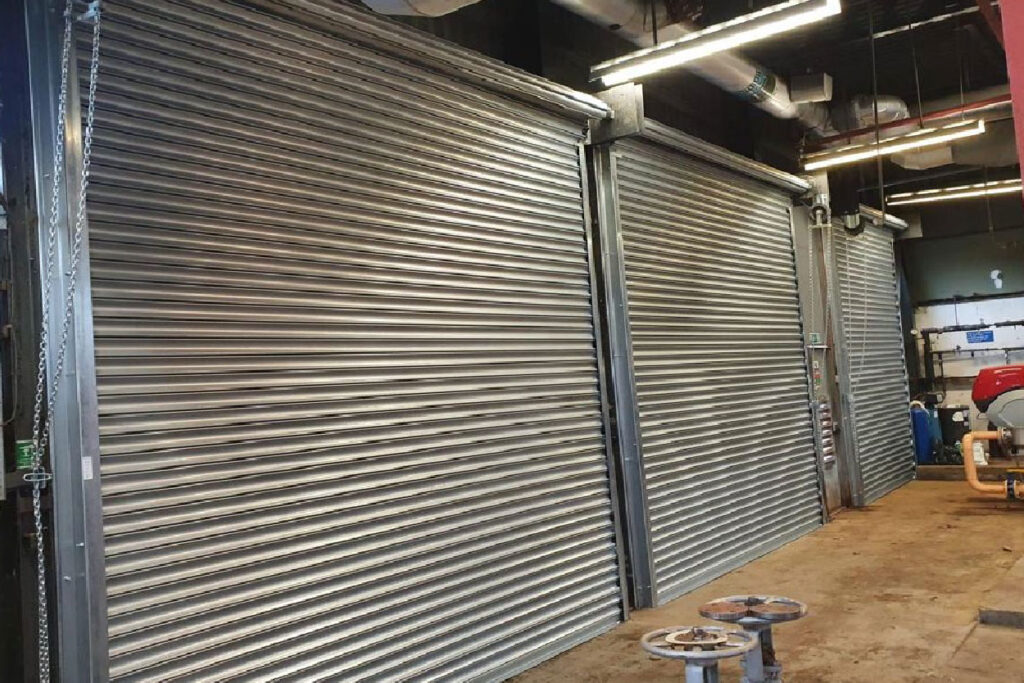
Rolling steel shutters are used across industrial and commercial sectors where security, controlled access, and efficient use of space are important.
Commercial Establishments
Retail stores, shopping facilities, commercial service entrances, and similar premises use rolling shutters to secure openings outside operating hours. Depending on the design, perforated curtains may be specified where visibility or ventilation is needed.
Industrial Warehouses
Warehouses and distribution centers use rolling steel shutters at vehicle entrances, storage zones, loading areas, and restricted-access openings. Their compact operating mechanism is useful where surrounding floor space must remain available for logistics activities.
Manufacturing Facilities
Manufacturing plants may install steel rolling shutters at workshop entrances, equipment areas, and production-related storage openings. Material strength, operating frequency, and environmental exposure are important selection factors.
Healthcare and Institutional Facilities
Selected service areas, storage rooms, equipment rooms, and controlled-access spaces may use rolling shutters for physical security. Where hygiene, contamination control, or fire protection is required, the door must be evaluated against the specific facility requirements.
Educational and Public Facilities
Schools, universities, and public buildings may use rolling shutters to secure service counters, storage rooms, equipment access points, and other openings outside normal operating hours.
The required shutter configuration should be selected according to the actual application rather than using one design for all building types.
Rolling Steel Shutters vs. Rolling Steel Fire Doors
Although the terms are sometimes used interchangeably, a standard rolling steel shutter and a rolling steel fire door do not necessarily serve the same purpose.
A standard rolling steel shutter is primarily selected for security, access control, durability, and space-saving operation. A rolling steel fire door, by contrast, is specifically designed and tested as part of a fire-protection strategy for an opening in a fire-rated assembly.
| Feature | Standard Rolling Steel Shutter | Rolling Steel Fire Door |
|---|---|---|
| Primary Purpose | Security and access control | Protecting openings in fire-rated assemblies |
| Typical Applications | Warehouses, factories, storefronts, storage areas | Fire-rated wall openings and specified fire-protection locations |
| Fire Rating | Not automatically fire-rated | Requires an appropriate tested and labeled assembly |
| Closing Requirements | Based on normal operating needs | Must comply with the specified fire-door system and applicable requirements |
| Selection Priority | Security, size, operation, environment | Fire rating, listing, installation and code compliance |
This distinction is important when selecting a door for an industrial project. The fact that a shutter is manufactured from steel does not by itself make the door fire-rated.
If the project requires protection of an opening in a fire-rated wall, confirm the required fire rating and applicable standards before selecting the door.
For additional technical information, refer to the UL Solutions Fire-Rated Doors Application Guide. The project designer and responsible authority should determine the applicable fire-protection requirements.
Why Are Rolling Steel Shutters Popular in Industrial Buildings?
Strong Physical Security
Steel slats create a durable physical barrier that can help restrict unauthorized access to warehouses, factories, storage areas, and commercial facilities.
Space-Saving Vertical Operation
Unlike swing doors, rolling shutters travel vertically and coil above the opening. This leaves the surrounding floor area available for vehicles, equipment, storage, and pedestrian movement.
Suitable for Large Industrial Openings
Rolling steel shutters can be manufactured for a range of opening dimensions, making them suitable for industrial entrances, storage areas, garages, and commercial openings. The maximum size must be confirmed for the selected model and installation conditions.
Manual or Motorized Operation
Depending on door dimensions and operating frequency, rolling steel shutters can use manual or electric operation. Motorized systems are often more practical for large or regularly operated industrial doors.
Customizable for Different Environments
Door dimensions, curtain design, controls, finishes, and other features can be selected according to the installation environment and operational requirements.
Comparison with Other Industrial Doors
Steel vs. Aluminum Roller Shutters
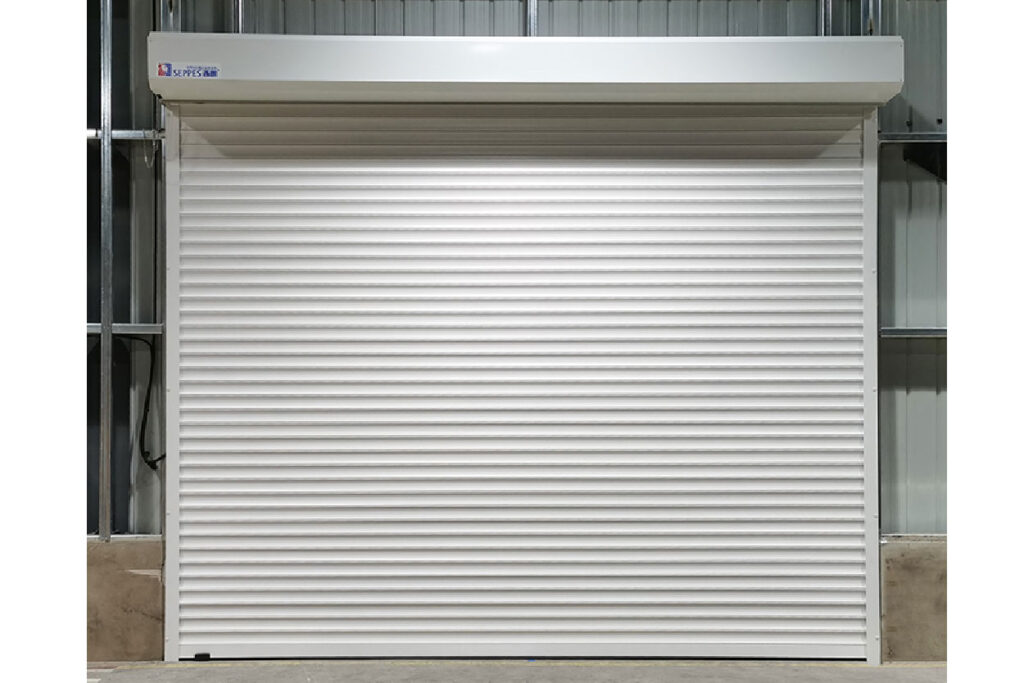
Steel roller shutters are generally selected where strength, security, and heavy-duty performance are priorities, while aluminum shutters are often preferred where lighter weight and corrosion resistance are important.
Fire performance should not be determined by material alone. Where a fire-rated door is required, the complete assembly must have the appropriate testing, rating, and approval.
| Parameter | Steel Rolling Shutters | Aluminum Rolling Shutters |
|---|---|---|
| Strength | Suitable for robust, heavy-duty configurations | Depends on alloy, profile and reinforcement |
| Weight | Generally heavier | Generally lighter |
| Corrosion Resistance | Depends on coating and steel grade | Generally good with suitable alloy and finish |
| Security | Suitable for industrial security applications | Depends on slat and locking design |
| Thermal Insulation | Available in selected insulated designs | Available in selected insulated designs |
| Fire-Rated Applications | Requires a tested and rated door assembly | Requires a tested and rated door assembly |
| Operation | Manual or motorized | Manual or motorized |
| Cost | Depends on size, design and specification | Depends on size, design and specification |
| Maintenance | Inspection of finish, guides and drive system | Inspection of profiles, guides and drive system |
Durability and Maintenance Considerations
Both steel and aluminum rolling shutters can provide reliable service when correctly selected, installed, and maintained. Their long-term performance depends on material quality, structural design, operating frequency, environmental exposure, and maintenance practices.
Steel rolling shutters are commonly selected for industrial applications where physical security and durable construction are priorities. Galvanized steel and suitable protective finishes can help resist corrosion, but shutters installed outdoors still require periodic inspection for coating damage, rust, and mechanical wear.
Aluminum rolling shutters offer lighter construction and generally good corrosion resistance. However, their suitability for impact exposure, wind loads, and demanding industrial environments depends on the specific profile and reinforcement design.
Routine maintenance should include inspection of the curtain, guide rails, barrel assembly, motor, controls, fasteners, and safety devices where fitted.
Rather than relying on a universal service-life estimate, buyers should ask the manufacturer about model-specific duty ratings, operating limitations, recommended inspection intervals, and replacement components.
Cost Analysis of Different Materials
The cost of a rolling shutter depends on more than the curtain material. Opening dimensions, slat thickness, structural design, motor selection, safety accessories, surface treatment, and installation conditions can all affect the final quotation.
Steel rolling shutters are often chosen for demanding security and industrial applications. Aluminum shutters may be appropriate where lighter construction and corrosion resistance are priorities, while transparent curtain materials may be considered for selected commercial applications.
When comparing suppliers, request quotations based on the same technical specifications.
Important cost factors include:
- Opening width and height.
- Curtain material, profile and thickness.
- Manual or motorized operation.
- Required operating frequency.
- Wind-load and corrosion protection requirements.
- Locking and access-control options.
- Safety devices and optional accessories.
- Installation and structural preparation.
- Shipping, import costs and local labor.
For international projects, EXW, FOB, CIF and DDP quotations may cover different responsibilities and costs. Buyers should confirm the scope of supply and delivery before comparing prices.
The lowest initial purchase price may not provide the best long-term value if the selected shutter is unsuitable for the actual operating conditions.
Selection and Customization Options
Framework for Selection Criteria
Choosing a rolling steel shutter requires careful evaluation of the opening, operating environment, security requirements, and installation conditions. For industrial facilities, the following specifications should be confirmed before finalizing the door design.
| Parameter | What Buyers Should Confirm |
|---|---|
| Opening Dimensions | Clear width × height in mm |
| Quantity | Total number of shutters |
| Curtain Material | Galvanized steel or other specified material |
| Slat Design | Solid, perforated or insulated construction |
| Headroom and Side Clearance | Available mounting and service space |
| Operating Frequency | Expected cycles per day |
| Operating Method | Manual or motorized |
| Motor and Power Supply | Required voltage, frequency and drive configuration |
| Wind Resistance | Site wind exposure and project load requirements |
| Safety Devices | Required protection and operating controls |
| Security | Locking and access-control requirements |
| Fire Protection | Applicable rating and documentation, only when required |
| Installation Environment | Indoor, outdoor, humid or coastal conditions |
| Destination | Country, nearest port and preferred trade terms |
Customization Options Available
Industrial rolling steel shutters can be configured to suit different opening sizes, operational requirements, and building conditions.
Depending on the model, available options may include galvanized steel curtains, selected insulated or perforated slat designs, electric motors, locking systems, surface finishes, and compatible safety or activation devices.
All configurations should be confirmed against the manufacturer’s product specifications and the actual installation environment.
Industry-Specific Customization Requirements
Warehouses and Logistics Centers: Prioritize opening dimensions, security, vehicle movement, and operating frequency.
Manufacturing Plants: Consider heavy-duty construction, environmental exposure, and potential integration with facility controls.
Commercial Buildings: Evaluate security, appearance, access control, and the intended opening schedule.
Outdoor Industrial Openings: Consider wind loads, corrosion protection, weather exposure, and maintenance access.
Fire-Rated Openings: Specify an appropriately tested and rated rolling fire-door assembly rather than a standard rolling steel shutter.
Installation and Maintenance Best Practices
Pre-Installation Considerations
Before installing rolling steel shutters, verify the opening width and height, supporting structure, headroom, side clearance, and access to the installation area.
Confirm that the wall or structural frame can support the shutter assembly and that the specified anchors and mounting arrangement are suitable for the construction material.
For motorized shutters, check the required electrical supply and control locations against the approved documentation. Applicable permits, building requirements, and installation responsibilities should also be confirmed before work begins.
Best Practices for Installation
Correct installation is essential for safe and reliable rolling steel shutter operation.
Before installation, qualified personnel should confirm the approved opening dimensions, wall structure, mounting arrangement, available headroom, and electrical requirements.
Structural Support: Verify that the supporting structure and selected fixing method are appropriate for the door’s loads and installation conditions.
Guide Rail Alignment: Install the side guides in accordance with the approved drawings and ensure that the curtain has a clear travel path.
Barrel and Drive Assembly: Position and secure the barrel, brackets, motor, and associated components according to the model-specific installation manual.
Electrical Connections: A qualified electrician should complete the electrical work using the supplied wiring diagram and applicable safety requirements.
Safety Devices: Where protective sensors or safety edges are specified, install and test them according to the approved door configuration.
Commissioning: Test the opening and closing movement, operating limits, controls, and required safety functions before placing the shutter into service.
Installation methods vary by model and should not be generalized across standard rolling shutters and fire-rated rolling door assemblies.
Maintenance Guidelines for Longevity
Regular inspection and preventive maintenance help rolling steel shutters remain reliable during daily operation.
Maintenance personnel should inspect the curtain, guide rails, barrel assembly, motor, electrical controls, fixings, and safety devices according to the manufacturer’s instructions.
Common maintenance tasks include:
- Inspecting the curtain for deformation, damage, and corrosion.
- Checking the guide rails for wear and obstructions.
- Identifying unusual operating noise or movement.
- Inspecting accessible fasteners and structural supports.
- Checking the motor and control system for reported faults.
- Testing applicable safety devices.
- Cleaning exposed surfaces with materials compatible with the shutter finish.
Only lubricate components where the manufacturer specifically recommends it. Steam cleaning, excessive water exposure, or unsuitable cleaning chemicals may damage electrical and mechanical parts.
Maintenance frequency should be based on the door model, operating cycles, installation environment, and applicable safety requirements.
For fire-rated rolling door assemblies, additional inspection and testing requirements may apply.
Common Problems and Troubleshooting
Common Operational Issues
Rolling steel shutters may develop operational problems due to wear, incorrect alignment, damaged components, or control-system faults.
Common symptoms include uneven curtain movement, unusual motor noise, incomplete opening or closing, and unexpected stopping.
If the shutter moves abnormally, stop operation and arrange an appropriate inspection. Do not force the curtain to move or bypass protective devices.
Material-Related Problems
Steel shutter components may experience corrosion, deformation, or surface damage depending on the installation environment and usage.
Inspect the curtain, guide rails, and exposed steel components for rust, bent slats, coating damage, and abnormal wear.
Damaged parts should be assessed and repaired or replaced according to the manufacturer’s recommendations.
Troubleshooting and Preventive Measures
| Problem | Possible Cause | Recommended Action |
|---|---|---|
| Uneven Curtain Movement | Guide obstruction or misalignment | Stop operation and inspect the guide system |
| Door Stops Unexpectedly | Control fault or safety device activation | Check fault indications and arrange qualified troubleshooting |
| Motor Does Not Operate | Electrical or drive-system issue | Have a qualified technician check the power and controls |
| Excessive Noise | Worn or misaligned components | Inspect mechanical components and seek service |
| Corrosion or Slat Damage | Environmental exposure or impact | Assess damage and replace affected components where necessary |
| Poor Closure | Incorrect limits, obstruction or damaged components | Inspect closing conditions and arrange adjustment |
Electrical repairs, structural adjustments, and safety-related work should be carried out by suitably qualified personnel.
How to Choose a Rolling Steel Shutter for Your Application
Selecting the right rolling steel shutter starts with understanding how the opening will actually be used. Before requesting a quotation, consider the following factors.
1. Application
Determine whether the shutter will be used for a warehouse, factory, storefront, loading area, storage room, service opening, garage, or another application.
A door used only a few times per day may require a different solution from a high-traffic opening operating continuously throughout a working shift.
2. Opening Size
Measure the clear opening width and height accurately.
The available headroom and side room should also be checked because the barrel, guides, operator, and other components require installation space around the opening.
3. Operating Frequency
Consider how many times the door will open and close each day.
For moderate-frequency security applications, a conventional rolling steel shutter may be suitable. For very frequent traffic or applications where opening speed directly affects production or logistics efficiency, a high-speed door may be a better option.
4. Security Requirements
Consider the level of physical security required for the opening.
Slat design, guide construction, locking options, controls, and door structure can vary depending on whether the shutter is being used for general access control or a higher-security application.
5. Indoor or Outdoor Environment
Outdoor installations should take local wind conditions, moisture, temperature, and corrosion exposure into account.
Coastal, humid, or harsh industrial environments may require additional corrosion protection or alternative materials.
6. Fire-Rating Requirements
If the shutter is intended to protect an opening in a fire-rated wall, do not select the door solely because it is made from steel.
Confirm whether a fire-rated rolling steel door is required and determine the necessary rating, listing, installation conditions, and local compliance requirements.
7. Manual or Motorized Operation
Smaller or infrequently operated shutters may use manual operation, while larger industrial shutters are typically easier to operate with an electric motor.
Control options should be selected according to actual site requirements.
Information to Prepare Before Requesting a Quotation
For an accurate industrial rolling shutter quotation, prepare the following project details:
- Clear opening width × height in mm.
- Number of shutters required.
- Installation environment and application.
- Available headroom and side clearance.
- Expected daily operating frequency.
- Preferred manual or motorized operation.
- Available voltage and frequency.
- Wind exposure and corrosion conditions.
- Required locking, safety and automation functions.
- Destination country or nearest port.
- Preferred trade terms: EXW, FOB, CIF, or DDP.
Providing this information helps the manufacturer assess the application and recommend an appropriate door configuration.
Buyers can also review SEPPES Steel Roll Up Doors and Industrial Roller Shutter Doors for related product options.
When Should You Choose a Rolling Steel Shutter?
A rolling steel shutter is a practical choice when your project requires a durable, compact, vertically operating closure for security or access control.
It is commonly suitable for warehouses, factories, commercial properties, storage facilities, loading areas, garages, and other industrial openings.
For openings requiring very high operating speeds, environmental separation, frequent automated traffic, or specialized fire protection, another industrial door type may be more appropriate.
Matching the door type to the actual operating conditions is more important than selecting a door based only on material or price.
Need a Rolling Steel Shutter for an Industrial Project?
SEPPES manufactures customized industrial doors for warehouses, manufacturing plants, logistics facilities, and commercial industrial openings.
Our team can review your opening dimensions, installation conditions, operating frequency, security requirements, and preferred control configuration to recommend a suitable rolling shutter solution.
For a project-specific quotation, please provide your opening width × height, quantity, installation environment, available power supply, required safety features, destination country, and preferred trade terms (EXW, FOB, CIF, or DDP).
Contact SEPPES to discuss your industrial door requirements and request technical support.
Frequently Asked Questions
How are rolling steel shutters often used?
Rolling steel shutters are often used for warehouses, factories, storefronts, loading areas, storage facilities, garages, service openings, and other commercial or industrial entrances requiring security and space-saving operation. In fire-protection applications, appropriately tested and rated rolling steel fire doors may also be used to protect openings in fire-rated walls.
What are rolling steel shutters used for in warehouses?
Warehouses commonly use rolling steel shutters at vehicle entrances, storage areas, loading zones, and restricted-access openings. Their vertical coiling design leaves surrounding floor space clear while providing a durable physical barrier when the opening is closed.
Are all rolling steel shutters fire-rated?
No. A standard rolling steel shutter should not automatically be considered a fire-rated door simply because it is made from steel. Where fire protection is required, the complete rolling steel fire-door assembly must have the appropriate testing, rating, labeling, installation, and approval for the specified application.
Where are rolling steel shutters commonly installed?
Common installation locations include factories, warehouses, distribution centers, storefronts, shopping facilities, storage rooms, garages, loading areas, service counters, and restricted-access areas. The correct shutter design depends on opening size, traffic frequency, environmental exposure, security requirements, and operating method.
What is the difference between a rolling steel shutter and a roll-up door?
The terms are sometimes used interchangeably, especially in commercial and industrial door markets. Both generally describe a curtain that travels vertically and coils around a barrel above the opening. However, product construction, slat design, duty cycle, security level, fire rating, and intended application can differ between manufacturers and door types.
Are rolling steel shutters suitable for large industrial openings?
They can be suitable for many large industrial openings, but the appropriate dimensions depend on the specific door design, wind conditions, structural support, operating frequency, and manufacturer limitations. Large openings should be evaluated individually before the final door configuration is selected.
Should I choose a rolling steel shutter or a high-speed door?
Choose a rolling steel shutter when security, durability, and compact vertical operation are the main priorities. A high-speed door may be more suitable when the opening experiences frequent traffic and fast opening and closing are important for production flow, temperature control, dust control, or logistics efficiency.
Explore SEPPES High Speed Roll Up Doors if your project requires faster and more frequent opening cycles.