
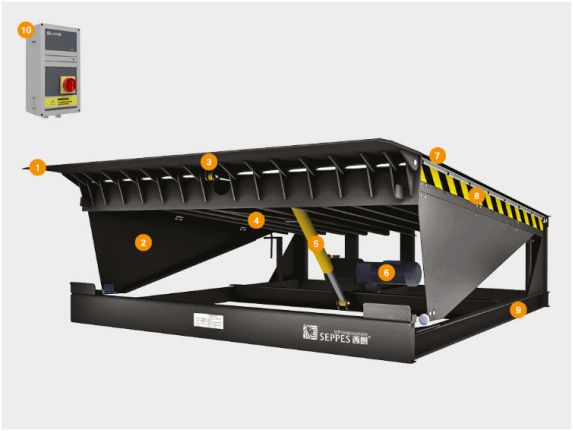
The efficiency of dock managementis key to effective logistics and supply chain management. Smooth loading and unloading require top-notch dock levelers to create safe and effective load/unload traffic bridges to/from vehicles and warehouses. Unconsidered maintenance and outdated knowledge in the field often create high-cost downtimes and delays. I will analyze innovations, practice structure, maintenance, and strategies to maximize the performance of loading docks, and provide an overview. Whichever role you play as an operations manager, warehouse steward, or facility owner, the information will be transformative to your risk and efficiency improvements.
What Is a Dock Leveler?
A dock leveler is installed at a loading dock to bridge the gap between the dock and a trailer. Levelers help accommodate the height and gap differences between the dock and trailer so that the unloading/loading of goods is safe and secure. Levelers improve safety and efficiency by minimizing the chances of accidents during operation and keeping equipment from being damaged.
Types of Dock Levelers
Each category of docking station requirements and operational needs is designed based on various kinds of dock levelers.
Mechanical Dock Levelers
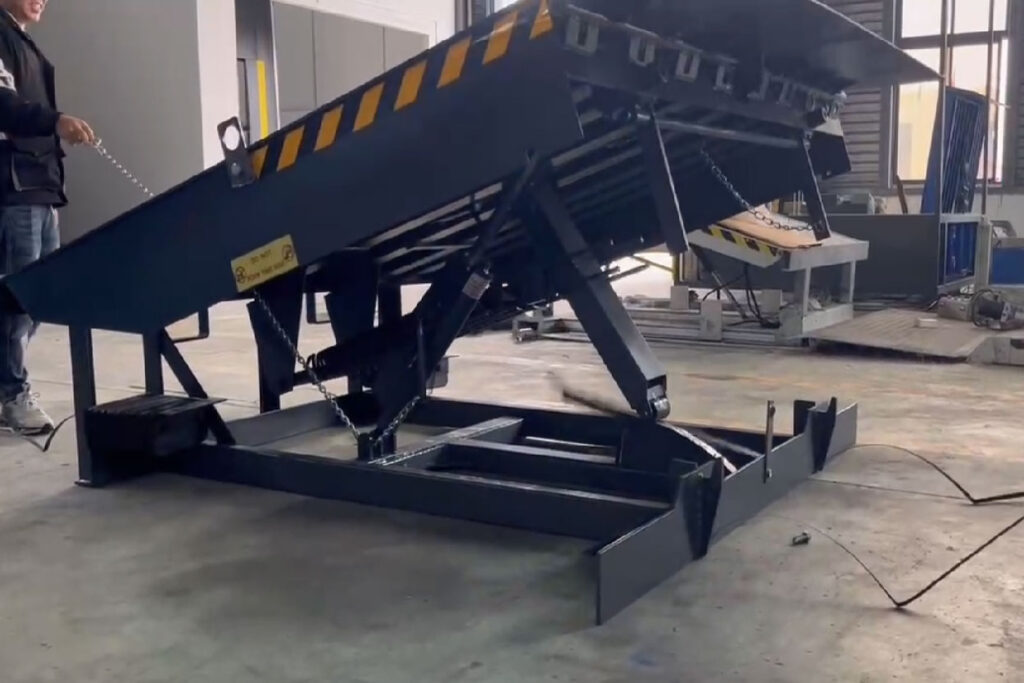
Mechanical dock levelers are cost-effective with a durable design that best suits facilities with moderate use, making them a smart choice for loading dock equipment. These are manually operated but require less maintenance and offer the advantage of more reliability in different operational environments.
Hydraulic Dock Levelers
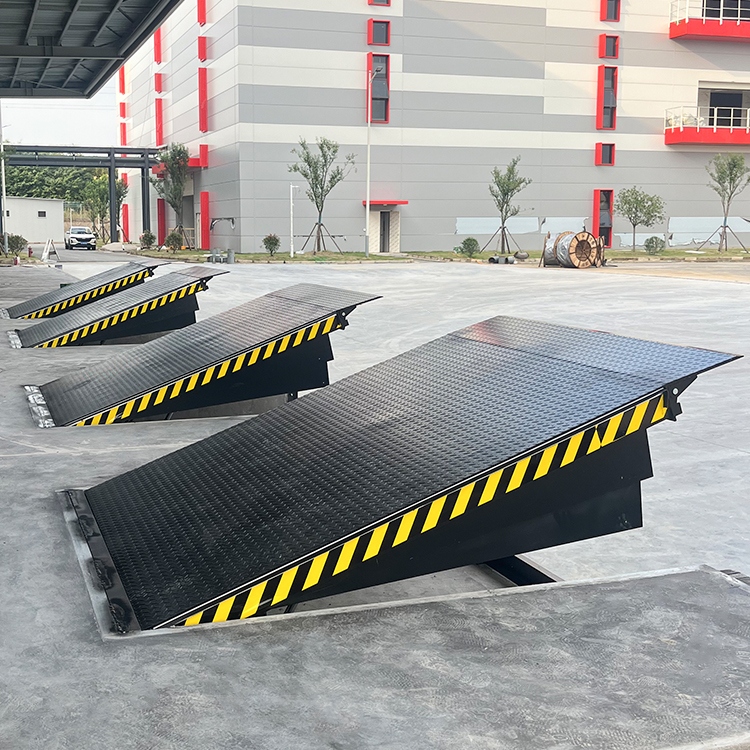
Having the ability to both raise and lower the operational platform instantly makes them the best choice for high-volume and easily controlled docking station use. In addition to that, the platform is designed to provide smooth movemnt reducing any operational hazard and injury from loading and unloading goods.
Dock Levelers Powered by Air
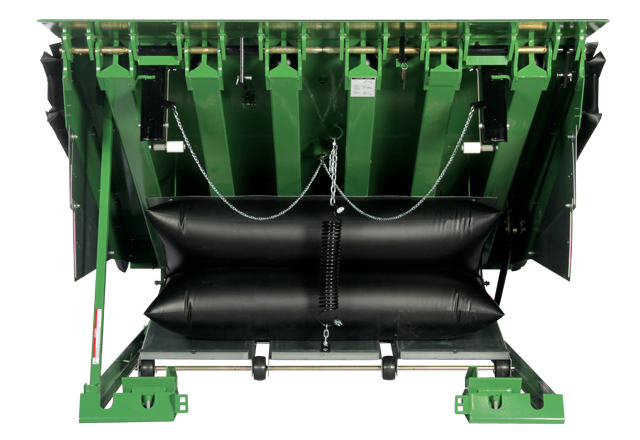
More maintenance is required for Air-Powered Dock Levelers. They also have a more exclusive advantage by not needing the same lubricants and hydraulic fluids as other powered levelers. These are best suited for other industries with sustainability goals.
Edge of Dock Leveler
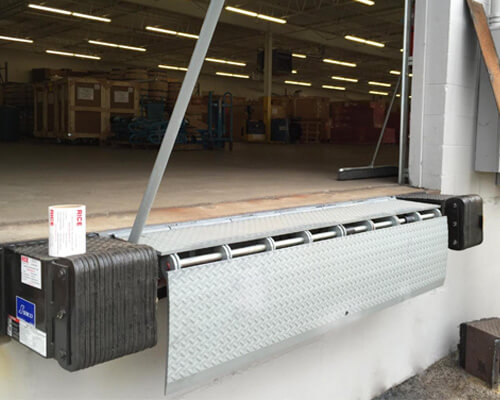
Edge of dock levelers sit on the edge of the loading dock, and work for only small differences in height between the dock and the trailers. These levelers remain small and economical, and businesses often use them in areas with lower operational demands or limited space, making them ideal for loading dock equipment.
Vertical Dock Levelers
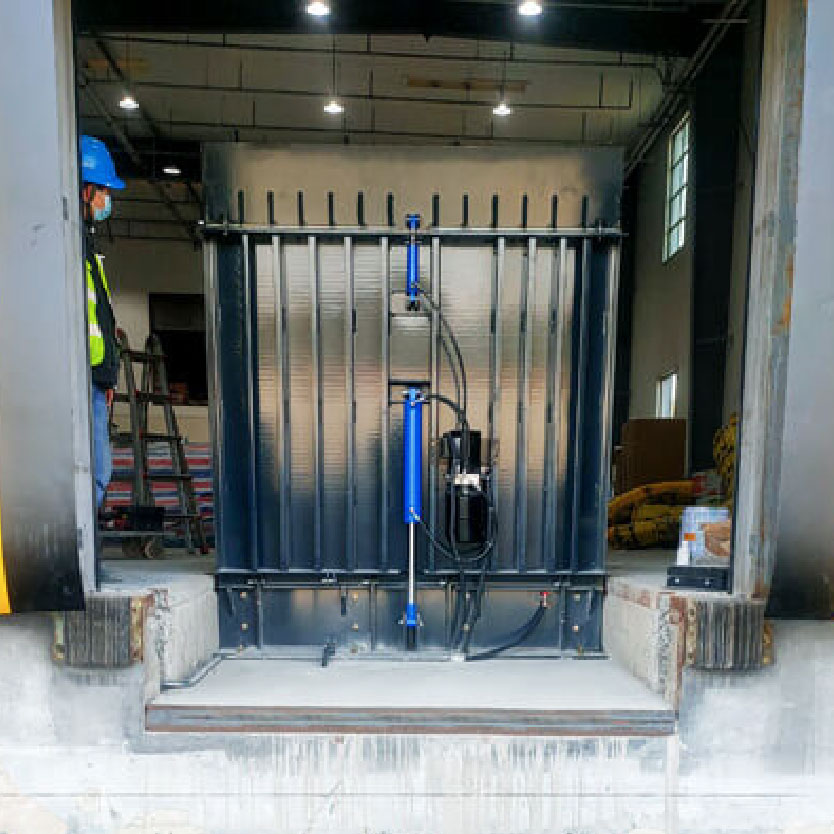
Vertical dock levelers are designed to stay upright when not in use, which helps with cleaning the facility and controlling the environment, ensuring proper dock preventative maintenance. This is great for industries such as food processing and pharmaceuticals, where both clean and controlled environments are necessary.
Each type of dock leveler is beneficial in its own way and is designed to meet the demands of different operations. Choosing the right dock leveler is important to ensuring loading dock operations remain safe, effective, and productive.
Applications Across Industries
Dock Levelers are helpful to loads of different industries and businesses. For safety and efficiency, dock levelers simplify the process of loading and unloading. Levelers in the transportation and logistics industries make the merging of vehicles and warehouses easy and decrease the likelihood of accidents, enhancing the efficiency of loading dock equipment. Levelers that control temperature and cleanliness are extremely useful in the food and drink industry. In heavy-duty manufacturing and automotive, heavy-duty dock levelers that handle big parts and equipment are vital. The manufacturing and automotive industries rely on dock levelers to move large parts efficiently. Advanced e-commerce and retail operations prefer hydraulically or air-driven levelers for optimal performance.
Importance of Choosing the Right Dock Leveler
Dock levelers play a key role in operational flow and keeping users safe and efficient across various work areas. To choose the best one for your company, consider your operational needs, load capacity, and how frequently vehicles and equipment operate in your facility.Take, for instance, if you have high-volumes and a lot of heavy-duty traffic, then you will need to get a hydraulic dock leveler as they are more robust and operationally more friendly. However, if your facility is more about saving costs, then you can choose the mechanical dock levelers.
The recent industry trends have shown a lot of customers tilting towards smart dock levelers as they utilize the latest IoT technology for real-time monitoring of their dock levelers. They integrate with the latest systems and utilize your dock leveler’s machinery and components to monitor their own usage and help the technician to understand any problems before they actually occur. This optimizes your dock leveler by reducing the amount of downtime and repairing your dock leveler, which will save you a lot of money. Similarly, keeping in mind the latest model of dock levelers will also help you meet your sustainability goals, as you will consume a lot less energy by using an energy-efficient dock leveler.
By choosing the best dock levelers for your facilities, you will be ensuring that you have smooth operation in your workplace, thus reducing the risks involved with having to load and unload the trucks in your facility. Also, the right dock levelers for your facilities will help support any adjustments you want to make as your company grows. Consulting with the professionals will help to ensure that good safety and efficiency are gained with the new technology.
Why Maintenance Matters
Impacts on Safety and Efficiency
Regular maintenance on dock levelers is vitally important for safety and efficiency. A poorly maintained dock leveler can result in hydraulic failure, uneven surfaces, and mechanical malfunctions, posing hazards to workers and increasing the likelihood of unloading and loading accidents. Regular walkthroughs can catch worn parts, loose fasteners, and fluid leaks before they cause injuries or downtime.
Efficiencies can also be found in the maintenance of dock levelers. They allow smoother work processes and fewer delays from equipment failures. They say the best time to plant an oak tree was 20 years ago. The second-best time is today. The same can be said for maintenance regarding the longevity of the equipment, safety regulations, and a safe, productive work environment. Upgrading maintenance to predictive analytics and IoT-fused sensors can optimize maintenance even further. These provide real-time updates and alerts to the condition of equipment, leading to fewer failures and downtime.
Compliance with Industry Standards
Every business has standards that must be met if it wants to run effectively and efficiently. For example, if dock levelers do not comply with standards meant to keep workers safe and protect their health, then problems with breakdowns and consequent injuries will arise. OSHA (Occupational Safety and Health Administration) and ANSI (American National Standards Institute) focus on the problems that safety rules can create and evaluate procedures to minimize the risks associated with safety equipment failures. In addition to safety equipment failures, they evaluate the effectiveness of toe guards and rollover stop safety devices. They evaluate the effectiveness of the lubrication and movement of safety devices. Equipment tends to last longer if the manufacturer’s recommended maintenance is followed. Equipment that is well-maintained tends to last longer.
Businesses can incorporate new technology into existing dock levelers. For example, IoT sensors collect data, monitor changes, identify issues, and stream performance information in real time. For example, sensors for the Internet of Things (IoT) create stream information on the performance of the dock levelers and create maintenance needs to be compliant with safety rules. Proper efforts and compliance with safety rules and documentation are necessary to improve the level of safety at a/c dock levelers to protect business owners from fines, lawsuits, and other legal issues. Standards combined with real-time monitoring greatly improve the level of safety and reliability of dock levelers.
Return on Investment (ROI) Considerations
An investment in the maintenance of dock levelers can show great returns in the course of the investment. Businesses achieve the greatest returns by performing maintenance before breakage or extreme wear on the levelers. Optimally working levelers allow the business to focus on operational details, streamline logistics, and improve customer satisfaction.
If done, it should be easy to set proactive/future maintenance. The maintenance historian should highlight the times when smaller issues become larger and more expensive to fix. With levelers in good and working order, it is best to avoid using more energy/automated systems. In more controlled systems, this will lead to decreased overall operational expenses.
The most current maintenance software will recognize anything automated and give insight so that proactive maintenance can be done. Companies should be able to get control of their maintenance along with any maintenance software. It will also avoid the guesswork of when maintenance should be done and make it easier to control when maintenance is done. Prioritizing the maintenance of dock levelers is an investment that will bring a company returns. Along with the right technology, dock levelers will give the most returns.
Maintenance Fundamentals
Routine Inspection Checklist
To provide employees with a safe working environment and ensure the proper functionality of the dock levelers, a detailed inspection checklist has been provided:
Hydraulic System
During your inspection, ensure there are no signs of leaking fluid from the hoses, cylinder, or connections of the hydraulic system. Verify the hydraulic system’s pump and ensure the fluid levels are sufficient. If your inspection reveals any signs of sealing that are worn or damaged, replace them as quickly as possible, as this could lead to further malfunctioning of the system.
Mechanical Components
Inspect and ensure there are no signs of damage or wear and tear to the springs, cables, or pins. Inspections, along with the appropriate lubrication of the pivot points, will help to ensure no excessive strain or failure occurs, and that the platform and lip are operated with minimum, if any, resistance. The smoother the operation, the better.
Structural Integrity
During your inspection, please check the leveler frame, the platform, and the weld on them for any obvious signs of cracking, rust (corrosion), or bent frames. If there are any damaged, bent, rusty, or signs of exhibiting this, it could lead to the failure of your leveler to function safely.
Safety Features
Address any inactive safety features, such as safety legs, lip locks, or emergency stop mechanisms, immediately. Replace any safety device that stops functioning as soon as possible.
Control Panel
It should be obvious if the control switches and buttons are responding correctly to your inspection. If there are issues with the wiring or connections that may be damaged, worn, or show any signs of looseness, it is advisable to resolve all issues quickly.
Cleanliness and Debris Removal
To help your leveler run longer and with less operational strain, cleaning the area around the dock leveler is essential to ensure that workers may be able to work better to assist the leveler. Proper cleaning is essential to help the leveler remain functional.
Dock Seals and Alignment
Check whether the dock leveler is aligned with the dock and the seals. If not, there will be a loss of the dock’s operational and safety functionalities.
Operational Testing
To complete the operational testing, evaluate the dock leveler working with a load. If there are any strange noises or if there are delays and irregular movements, those are indicators of problems.
This checklist, along with some of today’s state-of-the-art technologies, like IoT-based sensors and predictive analytics, will help businesses foreseefully maximize the issues related to the usability of dock leveler systems.
Lubrication Schedules and Cleaning Protocols
To improve the longevity and efficiency of dock levelers, cleaning and lubrication require the most attention. Lubrication schedules must be kept consistently so that the parts move smoothly and the levelers do not get damaged. Experts recommend cleaning and lubrication schedules monthly. Levelers in environments of moisture and varying temperatures require special lubricants that are resistant to those elements. Using poor lubricants will increase rust and friction damage to the levelers.
Inspectors should follow a consistent cleaning schedule and check the leveler for grease, dust, and debris. Keep the area around the lever, platform, and lip clear to ensure smooth operation. Increase cleaning frequency in high-traffic areas, and complete a thorough cleaning at least once every quarter. Use a pressure washer for deep cleaning, and choose non-corrosive cleaners to protect components and prevent damage to other parts of the leveler.
The Cleaning and Lubrication of new advanced tech levels provides a more efficient and effective means of cleaning and lubricating parts. New automated levels allow tech sensors to monitor parts of the leveler. When it is necessary to clean or lubricate the leveler, a tech sensor will send a maintenance alert. Cleaning and Lubrication of levels will improve the safety and functionality of dock levels.
Basic Troubleshooting Tips
The ideal operation of a dock leveler requires maintenance, but that does not mean problems won’t occur. Here are some common problems with their solutions.
Sight levelers are not operating evenly or correctly
Check to see that the hydraulic system is not leaking hydraulic oil or is not below the minimum fill mark. If oil is not replaced because it is insufficient, the mechanism won’t operate correctly. Look for broken components in the mechanism.
Something is stopping the level end from moving
Check to see that nothing is blocking the hydraulic end. If it is, it probably cannot extend to the fill or above the minimum mark. If there is a loss of power, there won’t be enough hydraulic fluid to operate the actuator at the level.
Check to see that the leveler lip is not damaged, bent, worn out, etc
Leveler lip efficiency fails if the lip is too damaged to operate. Remove rust from any lip showing corrosion, and replace lips that cannot function properly.
Levelers are made to operate with little noise
Noises when operating the leveler are a sign that the leveler is not in good operating condition.If the leveler produces grinding, squealing, or other noises, first check proper lubrication. Worn or misaligned components will cause noise during operation.
Dock Leveler Stuck in Position
An example cause of a stuck leveler is the hinge assembly contracting due to debris buildup or corrosion. Before testing the system again, clean the mechanism thoroughly and check for any physical obstructions.
Sensor or IoT System Errors
If your dock leveler includes IoT sensors, review system alerts to identify the source of the problem. Clean and realign any dirty or misaligned sensors to restore accurate monitoring.
Follow a scheduled maintenance plan to address minor issues before they disrupt operations. For complex or persistent problems, contact the manufacturer or consult a qualified technician to ensure safe and reliable performance.
Advanced Maintenance Techniques
Preventive Maintenance Strategies
Most of the prevention strategies for deteriorating dock levelers consist of effectiveness monitoring, lubrication, and inspection methods. Perform routine inspections of mechanical systems like hinges, extensions, and pins for deterioration, and address deterioration before it leads to failure. Premature deterioration of systems can also be mitigated through the lubrication of all moving parts.
Clean the area around the dock leveler regularly to prevent debris from blocking its operation. For hydraulic or pneumatic systems, check for leaks, low pressure, and confirm proper function before use. You can also integrate IoT technology to monitor performance in real time. When the system detects a fault or obstruction, it sends an alert so employees can take corrective action quickly and restore safe operation.
Using the latest risk-minimizing techniques and the best available technologies greatly reduces accidents and costly repairs. Properly maintained dock levelers last for long periods. The levelers can even grow with the company.
Innovations in Dock Leveler Design
You can find the latest trends in dock levelers’ design, concentrating on operational efficiency, safety, and the environmental impact. One design improvement includes the innovation of hydraulic and air-powered operated dock levelers, helping reduce manual effort. These newer systems boost productivity and reduce worker injuries that mechanical levelers usually cause.
Furthermore, pinch points and programmable control panels have steps to make increasingly safe dock levelers. These newer control panels help make even the most complicated adjustments simple and easy so that everyone can dock levelers to the best of their demands. Button controls and easy adjustments help make the most complicated docking processes the easiest.
You will also find a dock leveler growing trend towards energy-saving designs and construction. Levelers increased use of sealable and insulated operator platforms to help save the environment, and help give many fewer dollars to water to the global environmental cause.
The last trend you will find is ‘smart’ technology. Unplanned service should be left to ‘smart’ technology, as advanced (remote) control will help lessen the chances of your dock leveler reaching service level standards.
These innovations showcase the evolving nature of dock leveler technology. They aim to tackle the challenges of today’s industries and offer solutions that prioritize safety, efficiency, and sustainability in dock leveler service.
Smart Sensors and IoT Monitoring
Data-driven smart sensors and IoT-integrated systems are transforming dock leveler maintenance through real-time monitoring and predictive analytics. These systems collect and analyze data such as load usage, vibration levels, temperature changes, and cycle counts via cloud-based platforms. By identifying performance trends early, they alert maintenance teams to minor issues before they escalate into costly downtime or major repairs.
Because of IoT, loading dock equipment can be monitored and controlled remotely. Managers of storage facilities can monitor dock levelers quickly. It increases operational efficiency and lessens the need for manual inspection. Managers can provide predictive maintenance. With new tech, businesses can become compliant with safety measurements and have fewer interruptions to storage operations.
Choosing a Maintenance Provider
Key Criteria for B2B Buyers
When considering a maintenance provider for dock levelers, B2B buyers focus on a few critical elements for the best possible level of performance, safety, and cost savings. The following are some considerations:
Experience and Knowledge
Providers are available with experience in the maintenance of dock levelers. Providers with a breadth of knowledge and experience with a range of different models and brands are best for dock leveler maintenance. Experience in the industry allows them to accurately diagnose issues and perform repairs most efficiently.
Maintenance with No Downtime
In order to best utilize dock levelers, maintenance providers should be able to respond rapidly and flexibly perform repairs. Maintenance providers should be available to perform repairs and maintenance outside of normal working hours.
Maintenance to Avoid Downtime
Service providers should carry out preventive programs to avoid costly repairs in the future. They replace wear parts before failures occur and regularly inspect and adjust critical components to keep equipment running efficiently and extend its service life.
Maintenance Providers and Regulation Compliance
To avoid workplace liability and ensure dock leveler safety, maintenance providers must follow OSHA and other local safety regulations.
Maintenance Providers with the Best Equipment
With the most innovative technology, maintenance providers should be able to meet the maintenance requirements that are present. This allows the provider to best be able to analyze the equipment for wear and tear and perform predictive maintenance before the equipment is no longer functional.
Transparent Pricing and Contracts
Choose vendors with cost structures that are easy to understand. There should not be any obscured expenses, and their service contracts should be easy to understand and not overly complicated.
Customer Support and Training
Consider the value of customer support and training. If your vendors provide staff training, and the support center is accessible, their technology will allow them to fix small problems and keep the system running.
Focusing on these factors will allow a company to choose a maintenance provider that will fit with operational goals and be safe, dependable, and economical over a long period.
Evaluating Service Packages
When you determine service packages for dock leveler service maintenance. You should determine all factors of the packages to receive the maximum value. Also, look for service maintenance packages that include services up to routine maintenance and emergency repairs. Also, ensure these packages include all the parts for the maintenance of hydraulic extensions, control systems, safety systems, and maintenance of systems.
Modern-day service provides maintenance of dock levelers through customized maintenance packages to meet the demands of the customer. Some include on-site inspection and parts replacement. Maintenance packages are now also incorporating systems that can be used to complete repair analysis to keep the levelers working as pod asibles for as long as possible.
Also, you should consider emergency repair analysis and support to be as quick as possible. You can lose money when operations are shut down. Maintenance packages should include records of inspections and repairs so that companies can see the money they are spending.
The maintenance packages should include things like training your employees to use your systems and repairing your systems so that they can be used in a compliant manner. Also, they should provide handouts so that your systems can be compliant. When partnering with a maintenance provider, you control operations, lose less money, limit risk, and protect your employees.
Importance of Warranties in Dock Leveler Repair
When investing in dock leveler repair, warranties are invaluable as they protect businesses from unforeseen repair expenses. Customers gain peace of mind when repair services or new dock leveler parts use high-quality materials and workmanship. Promises of high-level repair extend to warranties covering a range of issues, from routine wear to manufacturing defects, protecting both businesses and service providers.
The warranty of repair parts and labor is equally as important as the repair covers themselves, and service providers describe warranties as a means of confidence in quality service. At the industry level, technological advancements and industry-level standards should be used to guide the selection of service providers.
Overall, continuity, operational efficiency on the loading and unloading process contributes to long service dock levelers and repair warranties high value to your business, to prevent uncertain repair expenses.
Buying Guide and Cost Considerations
Product Specifications and Options for Dock Leveler Maintenance
When trying to understand dock level maintenance, learning about the different product specifications and any options is the first step to take. Almost all modern dock levelers will take into consideration things like how long their product will last, how safe the product is to use, and ease of use. Some of the standard specifications include all-season use, heavy-duty steel, and ergonomic safety features. Then they might add the options of weather seals, safety sensors, and telescopic lip extensions, which can improve their levelers’ performance.
Hydraulic dock levelers are one of the most preferred options because of their low maintenance and high reliability. Most of these come with safety stops and smooth operation. Then we have mechanical dock levelers, which provide a cost-efficient alternative. These tend to come with automatic lip extensions and spring assists to make operation even easier. Air-powered dock levelers also provide a more environmentally friendly alternative because they have fewer moving parts, which diminishes wear and tear.
Additional options such as energy-efficient insulation kits, anti-slip paint, and advanced diagnostics systems for continuous monitoring can improve the lifespan and performance of dock levelers. While selecting service options, it is worth considering maintenance services that are compatible with the manufacturer-specific parts and the service providers who grant extended warranty. These options are designed for specific operational needs and allow your business to optimize safety and efficiency in your material handling processes.
ROI Analysis and Total Cost of Ownership
When it comes to dock levelers, Regular and consistent maintenance is the best way to guarantee the greatest return on investment (ROI) and the greatest reduction in the total cost of ownership (TCO). Regular dock leveler maintenance takes away the surprise operational costs and repair costs that are caused by unanticipated breakdowns. Keeping dock levelers in great shape helps businesses keep their equipment longer and repair costs lower because of less frequent premature replacements.
Looking at it from an ROI point of view, maintenance cuts costs due to energy inefficiencies, such as air leakage from dock levelers that are not functioning properly. Properly maintain dock levelers to reduce workplace accidents, lowering costs for lawsuits, insurance, and healthcare. Good maintenance can prevent up to 30% of expected repair costs.
When calculating the TCO of dock levelers, it is more than just the cost to purchase them. There are also the costs of energy use, service maintenance schedules, costs of parts that need to be replaced, and costs of repair that are unanticipated and need to be addressed. Because of the cost of service and parts, it is often best to purchase a warranty or service contract, along with IoT technologies, to help maintain lower costs in the future. With the help of IoT service tools, maintenance can be anticipated, and breakdowns are avoided.
With a strategic approach to dock leveler maintenance, a business can create more efficiency, control costs, and have a safe, reliable, and secure handling operation, increasing its ROI and decreasing its TCO.
Safety and Regulatory Essentials
Safety Compliance Checklists
It is vital to keep dock levelers up to date with a guide to loading dock standards and keep employees safe. Below is a checklist dedicated to dock leveler safety:
Regular Inspections
You should be performing daily inspections before using any dock leveler. Inspections should be performed to check for physical damage, hydraulic, or structural leaks. Monthly inspections should be performed as part of scheduled maintenance, and should be conducted by a qualified individual. Monthly inspections should detail all damage done.
Proper Equipment Guarding
Install proper equipment guarding to protect dock levelers. Fit safety side guards, secure reach-locking features, and safety lip components to prevent slips, falls, or equipment accidents.
Load Capacity Verification
The weight on the dock leveler must be verified before using it. Set your sights on the dock leveler’s load rating, as weight will be the main cause for structural safety issues and will cause severe injuries.
Functional Safety Tests
Inspect all safety features regularly to ensure safe and reliable operation. Check hydraulic components, mechanical parts, activation controls, safety pin systems, and emergency stop functions to make sure they operate correctly and meet your business requirements.
Training and Education
Training that addresses dock levelers should be provided to staff to prevent injury. Include training on emergency procedures and best practices to address risk.
Dock Leveler Safety Requirements
The Occupational Safety and Health Administration and the American National Standards Institute have criteria for installation and maintenance for testing and operational purposes for all dock levelers.
Lighting
To increase visibility for operators and drivers to decrease the number of accidents, sufficient lighting must be installed throughout the dock area.
Emergencies
Clear instructions for safe operation in case of an emergency must be posted, and emergency shutoffs must be installed at the docks.
The analytics that come from the Safety Compliance are up to date as of October 2023. The Safety Compliance determines business cost and worker safety based on history to insulate the business from future accidents.
Certifications and Legal Requirements
When it comes to using dock levelers, safety comes first. Businesses must meet various legal requirements and certifications to ensure safety, compliance, and operational efficiency. For example, ISO 13849-1 sets the gold standard for machine safety and control performance levels and enjoys broad acceptance.Of dock levelers, if they are to be compliant, must also follow ANSI MH30.1. That standard discusses the safety, performance, and testing compliance of dock levelers.
It’s also both the legal and ethical responsibility of the employer to ensure dock levelers are compliant with the national and regional Occupational Safety and Health Administration (OSHA) regulations. OSHA emphasizes eliminating fall risks, performing regular maintenance, and using safety barriers to prevent accidents.
Businesses selling dock levelers in the European Union must comply with CE marking standards, meeting European safety and health laws through extensive testing. They also need to follow state regulations to ensure additional safety beyond federal or international requirements.
Your compliance dock levelers, along with the ongoing safety of your workplace, will benefit from regular reviews and updates to relevant certifications, as well as ongoing personnel training. It is advisable to speak with an attorney and/or regulatory agency to ensure your business meets the certifications and regulatory requirements.
Industry Trends and Innovations
Latest Advances in Dock Leveler Technology
Improvements have been made in the technological advancements of dock levelers in the areas of efficiency, safety, and durability. One of the biggest innovations is the development of smart dock levelers using IoT (Internet of Things). These devices can monitor and detect their performance in real-time, and perform remote diagnostic and predictive maintenance, which will ultimately reduce downtime and repair costs. Additionally, newer models have better energy efficiency and quieter/hydraulic and air-powered systems.
Newer models also have advanced safety features, including the automation of locking and proximity sensors, which can reduce accidents during loading/unloading, and these design features can reduce the level of energy utilization in operation to help the environment and sustain sustainability initiatives, which can help logs and warehousing environments and maintain safety in the industry.
Market Trends and New Product Releases
Demand for energy-efficient and automated solutions in logistics and warehousing has brought significant growth in the dock leveler market. Growth has especially arisen with the development of smart dock levelers, which have the internet of things (IoT) for real-time monitoring and remote management. These dock levelers can easily notify and alert operators of their maintenance needs, and can also reduce operational downtime by identifying possible malfunction issues before they become a problem.
Manufacturing companies develop dock levelers with new safety features, including: slip-resistant surfaces, safety fails in the hydraulics system, and injury reduction. To help support sustainability goals, companies have also started to offer dock levelers with energy-saving hydraulics and new, sustainable materials for the construction of docks and their components.
Developing dock levelers helps the ever-evolving market for supply chain management and improves loading dock equipment efficiency. New dock leveler models carry greater loads and have adjustable automated heights to accommodate various vehicles. Also, some companies sell modular dock levelers that improve the ability to be installed in freestyle configurations in shipping docks. All of the developed features help fulfill the requirements for modern supply chain management and assist with the future of supply chain management.
Authoritative Positioning
Quotes from Industry Experts
According to John Peterson, a Senior Logistics Consultant with over 20 years of experience, “Not conducting routine inspections can lead to increased safety risks and more expensive downtime.”
“Preventative maintenance is a good investment to keep dock levelers running, and boosts performance to keep operations running even during peak times.” Says Sarah Moore, a Mechanical Engineer working in the field of Warehousing Solutions.
Logistics Today recently published an industry report stating, “Operators now use predictive analytics and IoT-enabled sensors to detect issues in dock levelers before they cause system failures.”
This is a clear case of the combination of advanced technology and maintenance creating new ways to help businesses keep their dock leveler systems good and working.
Case Studies and Success Stories
Enhanced Efficiency through IoT-Powered Maintenance
An example includes a large distribution center. They connected IoT-enabled sensors with their dock leveler systems. By predicting analytics, the center monitored wear and tear in real time. They were able to reduce unplanned downtime by 40%. In one example, sensors were able to detect abnormal patterns of vibration in one of the hydraulic systems. This gave time for the technicians to fix it before a full breakdown. This approach was able to save the company several thousand dollars in urgent repairs and also helped in smooth operations in peak seasons.
Sustainability and Cost Savings
An example of smart maintenance using IoT and data analytics shows how businesses apply these technologies to maintain dock levelers effectively. In one year, the company reduced energy consumption by 20% due to more optimized energy usage patterns and improved maintenance practices. Instead of relying on manual inspections, the operation crew received alerts when the motor system/driver temperature neared a threshold. This improved operational energy focus/consumption and reduced operational expenditure through maintenance, prolonging energy equipment life and meeting company sustainability targets.
Increased Safety Measures
A global shipping and logistics company improved safety at its workplaces after deploying advanced maintenance technology at its loading docks. With the help of IoT sensors, it can predict and address the issues of employee safety caused by malfunctioning lock systems and platform misalignment. Docking accidents were reduced by 25%, creating a more confidence-boosting work environment.
These advantages show the importance of IoT technologies in the maintenance of the dock levelers. Such technologies help businesses gain efficiency, reduce costs, and increase safety in the workplace.
Actionable Tips and Best Practices
Do’s and Don’ts for Maintenance Teams
Do’s:
Have an Expert Inspect Your Levelers: Make appointments to have professionals check your dock levelers for wear, damage, or malfunctions to avoid serious damage and expensive repair costs.
Stick to the Manual: To avoid warranties, always follow the manuals that come with your dock levelers.
Get Advanced Tech: Purchase advanced technology to improve the ease of maintenance on your dock levelers.
Get Your Team to Certify: Have your staff get certified updates to ensure dock levelers are optimized to their full potential.
Affix Lubricants on Your Levelers: Use the correct protégé to ensure optimal lubrication on the moving components of the dock levelers to ensure durability and minimize repair costs.
Don’ts:
Ignore Warning Signs: Unusual noises, misalignment, and visible deterioration can be signs of equipment failure and safety hazards. Never ignore these signs.
Overload the Dock Leveler: Dock levelers have a maximum load capacity. And exceeding it can cause serious damage and increase safety concerns.
Use Improper Tools or Techniques: Using the wrong tools or taking shortcuts in maintenance can lead to no or ineffective repairs and can cause additional damage.
Delay Maintenance Visits: Maintenance is one of the most important factors in dock leveler repair. Delaying these tasks can lead to more extensive damage and more costs to repair.
Neglect Safety Protocols: Safety is the most important concern during maintenance. Lock and tag out procedures must be done to avoid accidents when workers are on the dock leveler.
Following these do’s and don’ts helps maintenance teams minimize worries, work more efficiently, increase the lifespan of the equipment, and maintain a safe working area.
Practical Recommendations for Facility Managers
Get Organized: Create a maintenance calendar with scheduled inspections, servicing visits, and weekly, monthly, and yearly tasks based on manufacturer recommendations.
Train Employees: Ensure all operators and maintenance staff know safe procedures, proper loading/unloading, and how to spot wear or safety issues.
Use Modern Technology: Apply IoT or other monitoring tools to track performance and detect issues early.
Keep Maintenance Records: Log all services, repairs, and part replacements to track wear patterns and recurring problems.
Use Quality Parts: Install manufacturer-recommended parts to ensure longevity and avoid breakdowns.
Conduct Safety Inspections: Regularly check dock areas, lighting, markings, and warning devices to reduce accidents.
Consider Energy Efficiency: Upgrade to hydraulic or air-powered levelers to save energy and improve sustainability.
Following these steps helps facility managers maximize dock leveler performance, reduce costs, and maintain a safe working environment.
Call to Action
Encouraging Regular Dock Leveler Maintenance Schedules
Dock levellers need maintenance to make sure they last as long as possible and work safely and super smoothly. New data and research show that not getting regular maintenance inspections increases the likelihood of your place of work being unsafe and accidents happening. Regular maintenance inspections and repairs decrease the likelihood of serious injuries occurring in the workplace, as well as lowering the chances of expensive repairs. Setting your maintenance inspections out in advance will allow for the scheduling of upcoming inspections and repairs before serious issues arise, as well as provide for quicker future repairs. And assist in repairs in between scheduled regular maintenance inspections. Daily operational interruptions will be avoided thanks to the advanced scheduling of the preventative inspections and repairs.
Owners and facility managers should keep a clear schedule of routine inspections. They can combine regular service checks with modern technologies to improve equipment monitoring and performance. At the same time, they should plan separately for newly integrated or future technologies to ensure consistent maintenance and smooth system upgrades. New technologies also help sneak up on and catch unintentional and unexpected failures. And partially help to raise the efficiency of your workplace and the total customer service.
When businesses use new and improved technologies and normal maintenance for a reasonable amount of time. They will be able to decrease the cost per out and improve & increase the efficiency of their operational technology and customer service, as well as increase the safety of their employees’ work environment.
Offering Downloadable Dock Leveler Maintenance Checklists
As dock leveler maintenance management becomes more streamlined, companies now have a guide to dock leveler maintenance available for download. Made with the most up-to-date industry standards. The maintenance checklists guide maintenance teams on recommended tasks, cleaning, inspection of mechanical components, hydraulics review, and safety features review. With this checklist, no step is missed.
Also valuable, and of course, checklists that are easy to use and can be customized for different facility needs are available. The checklists are available online and will provide. The most recent best practices will be included on the checklists. The online availability of the checklists will help businesses become more equipped and informed while helping to improve the safety and efficiency of the warehouse operation.
Frequently Asked Questions (FAQs)
How often should you perform preventive dock leveler maintenance, and is every 90 days enough?
Preventive maintenance for dock levelers is needed, and facilities should do these tasks monthly and catch anything serious in the blind spot inspection every 90 days. Every 90 days is also a good rule of thumb for maintenance tasks such as cleaning, lubrication. And inspection of the hydraulic fluid and hoses, as well as the bumpers and lip. However, if you have a busy Loading dock, you may need maintenance more often. Consider this schedule a guideline and adjust it based on your dock levelers’ usage and your commercially used Loading Dock Equipment’s signs of damage or corrosion.
What are the key maintenance tasks for hydraulic dock levelers versus mechanical dock levelers?
Mechanical and hydraulic levelers require maintenance, but in different ways. You need to check the hydraulic fluid levels and test the hoses for leaks or condensation. And you need to “exercise” the system so it does not seize as part of your dock preventative maintenance. Mechanical levelers include springs and multiple pivot points. And maintenance struts, so teams need to lubricate these components regularly and check the cables for wear. For both mechanical and hydraulic levelers, staff should remove dirt and debris from the deck surface and hinge areas as part of routine dock preventive care. You should also check the dock bumpers and the dock plate to ensure the lip operates smoothly. Whether hydraulic or mechanical, dock levelers incorporate these tasks into a schedule and guide for dock leveler maintenance.
When should I call a technician or service team for dock repair and maintenance?
If you notice hydraulic fluid leaks or bent bumpers, call a dock service team or technician. They can help with odd noises, broken springs, or visible damage. If an operator says the lip is not seating properly or is unstable, repairs cannot wait for the next check; this must be done immediately. Repairs will help keep the dock safe for shipping and receiving. And a technician will be qualified to decide what to fix or replace.
What preventive dock leveler maintenance steps help extend the life of your dock and loading dock levelers?
The best way to preserve the dock is to keep the equipment and everything around it clean. Regularly clean and lubricate the moving parts and bumpers, and replace the dock plates. Tighten bolts, springs, and cables on mechanical dock levelers. Add this to your preventative maintenance checklist and keep a record of these to help you with the maintenance of your dock and dock equipment.
How do dock bumpers, dock plates, and dock lifts factor into repair and maintenance plans?
Dock bumpers are crucial for protecting the building and directing the positioning of the trailers. Inspect for signs of wear and tear and replace them if they are compressed, torn, broken, or otherwise damaged. Also, check the dock plates and dock lifts for cracks, deformation, and issues with mounting hardware to make sure everything is secure. Consider including these things in your routine maintenance, as damaged dock bumpers or an ineffective dock lift may cause additional damage to your loading dock levelers and increase the frequency of requiring loading dock repairs. Likewise, servicing your dock levelers will be needed more often.
Can I perform loading dock leveler maintenance myself, or do I need a professional dock technician?
Basic maintenance for loading docks can be done by trained facility staff. This maintenance may include cleaning dirt and debris, lubricating pivot points, checking for visible damage, and testing to confirm the dock is operating safely. While this maintenance can be done by staff, dock technicians, and service teams should be hired to do hydraulic repairs, perform major mechanical repairs, or if there is damage or corrosion that needs additional investigation. Professionals will perform maintenance and repairs, and replace parts properly while also ensuring that the dock is compliant with safety regulations.
What are common signs that indicate dock levelers and equipment need repair or replacement?
Most commonly seen issues are** leaks of hydraulic fluids, slow or jerky lifting motions, the lip failing to extend or retract, broken or weakened springs, bent dock plates, crushed or missing dock bumpers, and rusty or corroded components**. Pay attention to how forklifts interact – this is especially true if the forklift operators report the presence of unstable or hard-to-align trailers. When you notice one or all of these, always remember to set a date to have the levelers and the dock repaired to avoid even further unsafe operations and downtime concerning the loading dock.
How should a maintenance program address loading dock maintenance for busy shipping and receiving facilities?
While shipping and receiving are busy, a good maintenance plan is made up of operator daily checks, dock leveler preventative maintenance scheduled every 90 days, and maintenance by professionals scheduled annually. These should also contain a checklist for cleaning the debris and dirt, removing and inspecting the dock bumpers, limits of the edge of the dock levelers, assuring the mechanical and hydraulic levelers, and recording the actions taken for maintenance and repairs. Plan dock repairs and window to work alongside, maintaining the safety and functionality of your dock to minimize downtime and maximize safety for your employees.
Reference Sources
- McGuire Dock Leveler Manual – This manual provides detailed operational procedures, maintenance practices, and troubleshooting techniques for dock levelers.
- Stanford LBRE Facilities Operations – Contracted Services – This page discusses contracted services for dock leveler maintenance and annual inspections at Stanford University.
- Confined Space Safety Assessment – UMass Boston – This document includes safety assessments and maintenance procedures for dock levelers, emphasizing hazardous energy isolation.
- Operate Manual Dock Leveler – A guide on operating and maintaining manual dock levelers.
- Dock Levelers – University of Texas at Dallas – This document provides specifications and maintenance guidelines for dock levelers, including electrical service and closeout submittals.