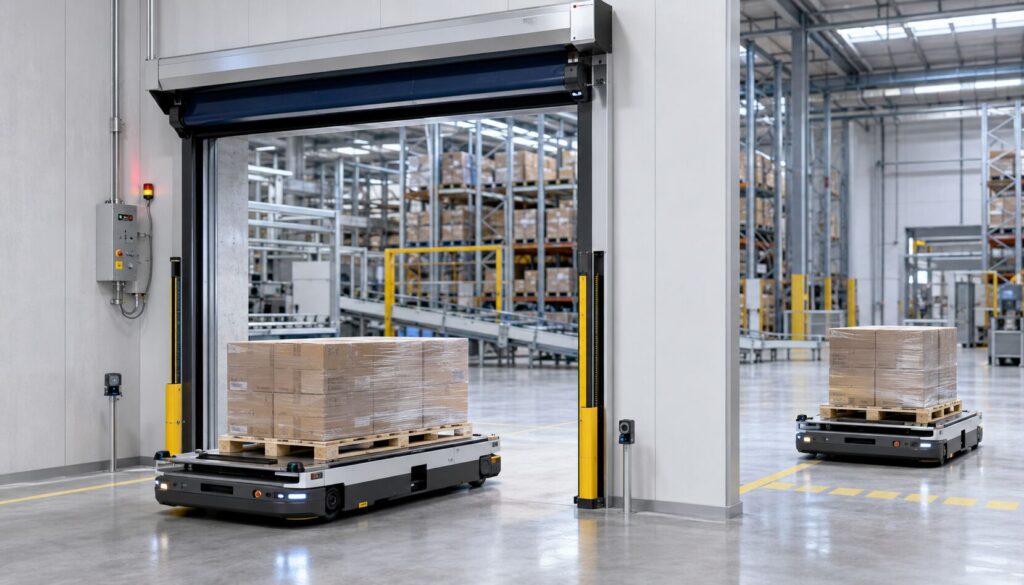
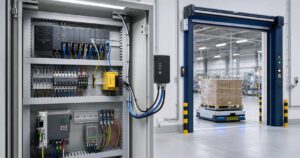
Eine automatisierte Lagerhalle verhindert, dass eine kleine Verzögerung zu einem logistischen Engpass wird. Um 6:30 Uhr erreicht ein AGV eine Übergabeöffnung, während Förderer weiterhin Paletten zuführen. Eine manuelle Tür kann die Route blockieren und weitere Fahrzeuge in die Warteschlange bringen. Eine automatisierte Lagertür öffnet sich für autorisierten Verkehr, bestätigt einen freien Durchgang und schließt sich, nachdem die Last passiert ist.
Warum eine automatisierte Lagertür an einem AGV-Übergang wichtig ist
Die beste automatisierte Lagertür ist mehr als ein motorisierter Vorhang. Sie ist ein kontrollierter Zugangspunkt zwischen Logistikzonen. Eine automatisierte Lagertür empfängt eine Öffnungsanforderung, überprüft die Route, meldet die Position und schließt, ohne die nächste Aufgabe zu unterbrechen. Im Vergleich zu langsameren Öffnungen reduziert eine automatisierte Lagertür Wartezeiten, während schnelle Lagertüren den Luftaustausch begrenzen. Jede automatisierte Lagertür sollte an die Verkehrsfrequenz, Öffnungsgröße, Temperatur und Fahrzeugart angepasst sein.
Wie eine automatisierte Lagertür mit AGVs und SPS verbunden wird
Ein AGV fordert Zugang über einen SPS-Ausgang, RFID-Leser oder Gateway an. Die automatisierte Lagertür beginnt zu öffnen und sendet eine Bestätigung. Wenn die automatisierte Lagertür ihre sichere offene Position erreicht hat, gibt die Steuerung das AGV frei. Nachdem Sensoren die Freigabe bestätigt haben, schließt die automatisierte Lagertür. Dieser Handshake verhindert Bewegungen in eine teilweise geöffnete automatisierte Lagertür. Vor der Installation sind Signalspannung, Rückmeldung, Notverhalten und manuelle Übersteuerung für die automatisierte Lagertür zu definieren.
Vorteile einer automatisierten Lagertür
Schnellerer Materialfluss
Eine automatisierte Lagertür reagiert, ohne dass ein Bediener seinen Arbeitsplatz verlassen muss. Kurze Zyklen reduzieren AGV-Warteschlangen, Gabelstapler-Wartezeiten und Förderunterbrechungen. Die automatisierte Lagertür unterstützt gleichbleibende Fahrzeiten. Schnelllauf-Rolltore für Lagerhallen werden Teil des Materialhandhabungsprozesses.
Sicherere Fahrzeugtrennung
Eine automatisierte Lagertür kann Radaraktivierung, Fotozellen, Warnleuchten, ein Lichtvorhang und eine überwachte Unterkante kombinieren. Die automatisierte Lagertür bleibt geöffnet, solange ein Fahrzeug oder eine Palette die Schutzzone belegt. Die automatisierte Lagertür reduziert das Kontaktrisiko bei gemischtem Verkehr.
Bessere Umgebungskontrolle
Jede unnötige offene Sekunde bewegt konditionierte Luft, Staub, Insekten oder Gerüche zwischen Zonen. Eine automatisierte Lagertür schließt umgehend, nachdem der Verkehr frei ist. Automatische Schnelllauftore helfen, Temperatur und Sauberkeit zu stabilisieren, während eine abgedichtete automatisierte Lagertür Energieziele unterstützt, ohne den Routineverkehr zu verlangsamen.
Zuverlässige SPS-Transparenz
Eine vernetzte automatisierte Lagertür meldet die Zustände offen, geschlossen, in Bewegung, Störung und Notfall. Die automatisierte Lagertür kann Zyklenzahlen liefern. Bessere Transparenz ermöglicht es Technikern, zu reagieren, bevor eine Störung eine automatisierte Lagertür stoppt.
Reduzierte Ausfallzeiten durch Kollisionen
Stark frequentierte Routen benötigen möglicherweise Schnelllauf-Textiltore oder selbstreparierende Vorhänge. Nach einem leichten Aufprall kann die automatisierte Lagertür die Wiederherstellung vereinfachen und Schäden begrenzen. Die richtige automatisierte Lagertür reduziert die Reparaturzeit.
Einheitliche Verkehrsregeln
Eine automatisierte Lagertür kann Einbahnverkehr, abwechselnden Verkehr oder die Verriegelung von zwei Öffnungen erzwingen. Eine automatisierte Lagertür bleibt geschlossen, bis die andere ihre Position bestätigt. Eine klare Logik verhindert widersprüchliche Bewegungen durch enge Logistikkorridore.
Skalierbare Automatisierung
Mit der Erweiterung von AGV- oder AMR-Flotten vereinfacht eine standardisierte Schnittstelle für automatisierte Lagertüren die Inbetriebnahme. Die automatisierte Lagertür kann Radar, RFID, Fernbedienung oder SPS-Befehle unterstützen. Standard-Signallisten erleichtern die Integration jeder zukünftigen Öffnung.
Auswahl der richtigen automatisierten Lagertür
Beginnen Sie mit der Route, nicht mit dem Katalog. Notieren Sie Fahrzeugbreite, Ladehöhe, Richtung, tägliche Zyklen, Umgebung und Montageplatz. Eine geeignete automatisierte Lagertür muss diese Bedingungen erfüllen. Entscheiden Sie dann, ob die automatisierte Lagertür PVC-Gewebe, isolierte Paneele, eine starre Spiralkonstruktion oder Aufprallwiederherstellung benötigt. Schnelllauf-Rolltore für Lagerhallen eignen sich für Innenrouten; industrielle Schnelllauf-Rolltore können für exponierte Öffnungen geeignet sein. Dokumentieren Sie, was die automatisierte Lagertür bei Sensorblockade, Stromausfall und verlorener SPS-Kommunikation tut.
Warum SEPPES für ein automatisiertes Lagertürprojekt wählen?
SEPPES behandelt jede automatisierte Lagertür als technisch entwickeltes Zugangssystem. Die Schnelllauf-Rolltore bieten einstellbaren Betrieb, intelligente Steuerungen, verstärkte PVC-Vorhänge, Abdichtung und fotoelektrischen Schutz. Jede automatisierte Lagertür kann für Abmessungen, Verkehr, Signale, Transparenz, Rahmenmaterial und Sicherheitseinrichtungen konfiguriert werden.
SEPPES liefert auch industrielle Schnelllauftore, Verladebrückentore und Sektionaltore. Für jede automatisierte Lagertür stellt SEPPES Zeichnungen, Verdrahtungsinformationen, Installationsanleitungen und Fernsupport bereit.
FAQ zur automatisierten Lagertür
Kann eine automatisierte Lagertür AGVs und Gabelstapler bedienen?
Ja. Eine automatisierte Lagertür kann separate Aktivierungszonen oder Identifikationsmethoden verwenden. Ihre Logik sollte Fehlöffnungen verhindern und gemischten Verkehr schützen.
Welche Sensoren schützen eine automatisierte Lagertür?
Radar kann eine automatisierte Lagertür aktivieren, während Fotozellen oder ein Lichtvorhang die Öffnung schützen. RFID- oder SPS-Signale können Fahrzeuge autorisieren.
Wo können Käufer eine automatisierte Lagertür vergleichen?
Wie funktioniert eine automatisierte Lagertür für den AGV-Verkehr?
Eine automatisierte Lagertür für den AGV-Verkehr empfängt eine Öffnungsanforderung über eine SPS, einen RFID-Leser, einen Sensor oder ein drahtloses Steuerungssystem. Nachdem die Tür ihre sichere offene Position erreicht hat, sendet sie eine Bestätigung, um das AGV freizugeben. Sicherheitslichtvorhänge und Fotozellen halten den Türdurchgang frei, bevor die Tür schließt.
Welche Sicherheitsmerkmale sollte eine automatisierte Lagertür für einen AGV-Übergang enthalten?
Eine automatisierte Lagertür für einen AGV-Übergang sollte Radaraktivierung, Fotozellen, einen Sicherheitslichtvorhang, Warnleuchten und Positionsrückmeldung umfassen. Diese Merkmale helfen zu verhindern, dass ein AGV einfährt, bevor die Tür vollständig geöffnet ist, und stoppen das Schließen der Tür, während ein Fahrzeug oder eine Palette im Türdurchgang verbleibt.
Bauen Sie die automatisierte Route um die Türöffnung herum
Entwerfen Sie die automatisierte Lagertür mit der Fahrzeugroute, der SPS-Sequenz und den Sicherheitszonen. Eine koordinierte automatisierte Lagertür beseitigt manuelle Verzögerungen, kontrolliert den Zugang und verbessert die Wartungstransparenz. Senden Sie SEPPES Ihre Abmessungen, den Verkehrsplan, die Schnittstelle und die Zyklusschätzung für eine automatisierte Lagertürlösung, die auf dem gesamten Betriebsszenario basiert.