
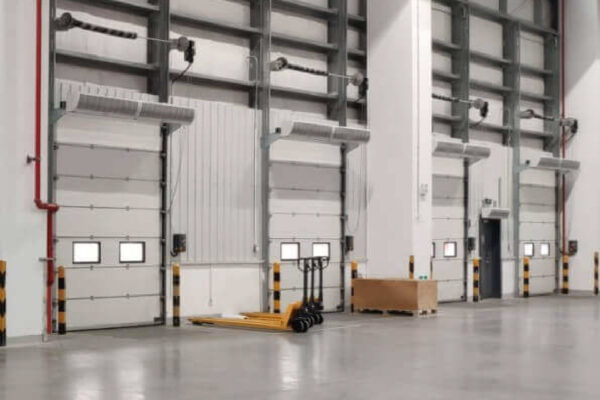
Proper Industrial Sectional Door Maintenance helps doors operate at peak performance, improves safety, and extends their service life. When businesses neglect maintenance, sectional doors can fail and lead to costly downtime and repairs. In this article, we highlight the key steps of Industrial Sectional Door Maintenance to keep your doors running reliably. Facility managers can use these practices to extend door lifespan and minimize operational disruptions.
Introduction to Industrial Sectional Doors
Keeping your industrial sectional doors functioning properly with routine maintenance is crucial to safety and efficiency. Your team is trained to identify and remedy problems before they arise to avoid large and costly repairs as well as safety concerns and unexpected stoppages. Your team also ensures that your doors are in working order to avoid replacing them in the future, as maintenance increases the lifespan of your doors. Investment in maintenance is an investment in uninterrupted daily operations and the reliability of your doors.
Overview of Industrial Sectional Doors
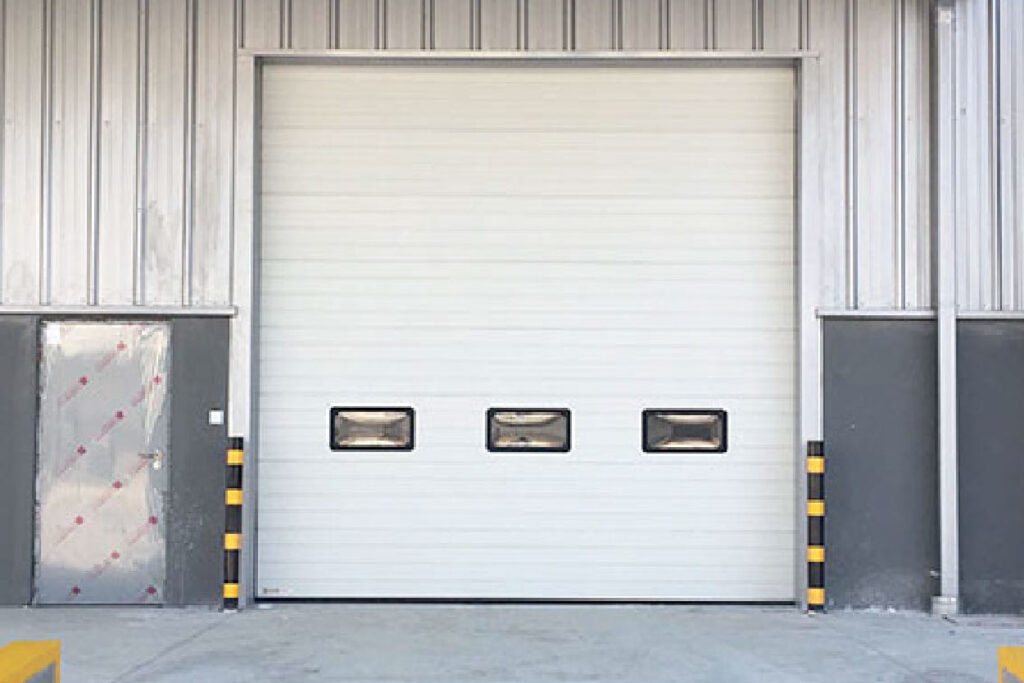
Sectional doors for industries are useful, sturdy, space-saving, and work for different industries and businesses. These doors consist of multiple hinged panels that slide up and down along track systems. Their unique construction allows placement in areas with heavy foot and vehicle traffic, avoids swinging out, and maximizes space usage.
Most modern doors use advanced technology, which provides the customer with the perks of efficiency, improved insulation, and the highest level of security. Most options use aluminum suitable for all industrial doors. Adding bottom weather seals and thermal insulation helps save energy and maintain temperature, reducing costs in controlled warehouses.
New technology also allows the use of smart technology with things like remote controls for added security and operational ease. These doors provide ease of use for the customer, long-lasting options, and security in the areas that need to support the higher demands of industrial businesses when needed.
Common Applications in Commercial and Industrial Facilities
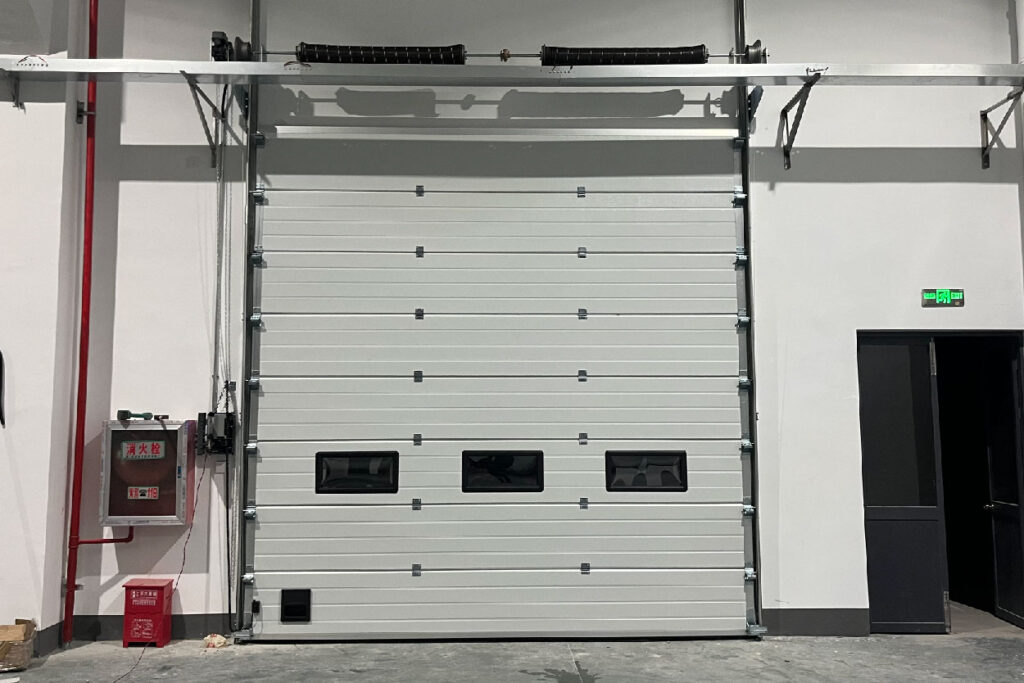
Manufacturing businesses look for garage doors that can be customized to their needs. Industrial sectional doors offer functionality, durability, and efficiency to any commercial enterprise. They are used in warehouses for the movement of goods and controlled access. Industrial sectional doors are excellent for logistics and distribution centers for truck loading/unloading.
These sectional doors insulate cold storage facilities to maintain the proper temperature for perishable goods. Manufacturing plants use them to organize operations and protect worker safety and security.
Large retail stores and supermarkets also use industrial sectional doors for backend operations to keep the stock rooms secure and access controlled. Industrial sectional doors are used in automotive centers to allow access for vehicles of different sizes and to keep the doors secure. Because of their sleek designs and flexibility, industrial sectional doors remain the best option for many businesses.
Importance of Maintenance for Safety and Longevity
Your business’s fire door systems are more complex than they may first appear. Proper fire door system maintenance ensures you have fire door systems that are safe, functional, and have longevity. Older doors may have issues with systems such as door closers, which are air or spring-operated, door swings and post-fixed pivots, and even break-away paddles. If the fire door systems have malfunctioned, your business will be at risk. Preventative inspections and maintenance will mitigate stops and increase door operations.
Data shows that fire door systems that are properly serviced experience far fewer breakdowns. Immediate services such as hinge clearances, touch bar replacement, and adjustments are particularly effective. Systems that are lubricated and serviced also continue to function and meet operational demands as they were designed. Additionally, maintenance serves to preserve your systems’ warranty and the standards of your business’s insurance. Maintenance will continue to keep your fire door systems a functional part of the business.
Why Maintenance Matters
Cost Benefits of Proactive Maintenance
Industrial sectional doors are an important feature of every business. They can be very expensive to repair. However, if you take a more proactive approach to maintenance to repair doors, you can save a lot of money. Read more below.
Repair Costs Can Be Lowered
Repairing a door can range from just a simple fix to very expensive, depending on the issue that occurs. However, with preventative maintenance, repair costs can be lowered up to 40 when compared to the reactive approach to repairing doors.
Doors that are Maintained Properly Use Less Energy
Maintained doors can save you a lot of money every month by using 15 to 20% less energy. When doors are properly maintained, they are more insulated and do not let air in or out.
Door Lifespan is Increased
When you have maintenance done on doors regularly, you can extend the door from having to be replaced up to 30% longer than if you do not have maintenance done.
Door Service Can Prevent Breaks = Less Downtime
When doors are regularly serviced, they are less likely to have issues. When you have issues with doors, it can cost you an average of 260,000 dollars every hour.
Improved Safety and Compliance
Safety and Maintenance have to go hand in hand to make sure industrial doors work within the scope of the law. Maintaining doors lowers the chance of accidents and reduces the legal risks to the company. Reducing the chance of an accident saves the company money that would have to be spent on legal issues. Maintenance also helps to keep employees safe.
When businesses use scheduled maintenance, they are directly creating a competitive advantage by monetarily reducing the costs associated and providing peace of mind.
Improving Safety and Operational Efficiency
New technologies improve the safety and operational efficiency of industrial sectional doors. Businesses can use these advancements to perform regular inspections, apply predictive maintenance, and fix issues before they become major problems. Using streaming tools, businesses can analyze the performance of doors and detect wear and mechanical strain that may result in their failure.
Moreover, proactively applying the latest industry news and safety guidelines from governing bodies and manufacturers enhances compliance and reduces the chances of accidents. Operator education is just as important. Providing employees with tools to use doors properly helps to reduce misuse and the potential for accidents.
The combination of new technologies and new approaches to preventative, tool, and resource-driven maintenance will improve the safety and efficiency and operational doors sectional industrial of the doors of sectional industrial doors and will improve and extend the operational efficiency and safety of industrial doors and will enhance the operational safety of sectional doors, sliding doors, and operational safety. This approach reinforces and enhances peace of mind by ensuring the operational efficiency and safety of industrial doors, as well as consistent maintenance and safe operation.
Reducing Downtime and Compliance with Safety Standards
To ensure industrial sectional doors in your facility operate properly, your company can perform regular maintenance, address issues promptly, and follow safety standards to minimize downtime and maintain compliance. Answering this question starts with the understanding that the best way to solve a problem is to prevent it. Scheduling maintenance and keeping records of inspections and repairs are some of the things that keep the productivity of your facility up, without worrying about breakdowns, or repairs and inspections that keep doors from being in the way. Using some of the advanced computerized and Internet of Things tools, your maintenance department can monitor the condition of the doors and get a complete statistical and working report, predictive of when door maintenance should occur. These doors perform best when the maintenance is anticipated, and without breakdowns.
Keeping safety features at the top of your list of priorities helps with ensuring that employees and visitors are kept safe. Emergency stop, safety light curtain, safety sensor, and automatic safety locking doors, along with others, are some of the features that contribute greatly to safety compliance, along with International and Local (OSHA and EN) safety standards. These features also increase operational safety. Safety features are a perfect example of how compliance with safety standards helps improve safety at the workplace and with doors, helps save the environment, and with doors, helps save the environment, too.
Common Problems with Industrial Sectional Door
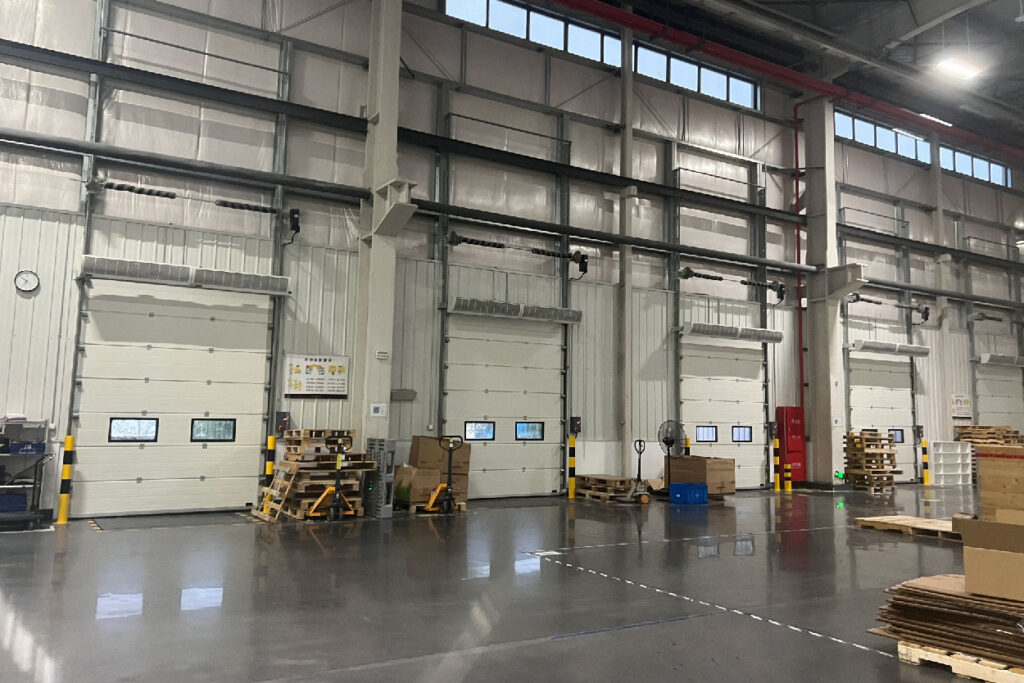
Power Failures and Electrical Issues
Industrial sectional doors come with a set of challenges and obstacles that include electrical and power failure issues. When relying on a motorized system with a series of electrical components, one or many power outages can disrupt the full functioning of the door. When power system failures occur, system users cannot open or close the door to secure the door or cope with their operations. Malfunctions can be caused by faulty wiring, tripped circuit breakers, or motor burnouts.
To prevent these issues, perform routine maintenance on the electrical components: check wires and connections, ensure the motor system works, and verify manual or battery-powered backups operate correctly. Functional backup power sources and battery-powered backup systems are great tools to ensure operational tools are provided. And as always, maintenance and repairs will decrease operational downtime on sectional doors.
Physical Obstructions: Dirt and Debris
Entangling dirt, debris, and other particulates can significantly stop production with industrial sectional doors. Grime that builds up can stop rollers, track, and seal doors, even losing function. Issues like these can be averted with consistent cleaning. Tough, dirt removal cleaning supplies are strong, but can also be damaging. Choose tools that won’t damage the inner working parts. Look daily for anything located between, and logs in the middle parts, could be working. Many companies are trying to modernize the use of autopilot cleaning and obstructions at doors. Maintenance should be scheduled regularly and for cleaning to keep the doors functioning properly and lasting a long time.
Worn or Misaligned Parts and Their Effects
The operation of industrial sectional doors can be significantly affected by worn or unaligned components. Parts such as rollers, tracks, hinges, and springs can become worn due to constant use and exposure to the elements, in addition to some more extreme weather conditions and frequent use. Irregular wear or misalignment can lead to excessive wear and noise, and can lead to complete mechanical failure. For example, uneven movement can lead to undue stress on components like tracks and can lead to other components breaking soon.
Springs that are under tension are important because worn door springs that are worn can be unbalanced, making the operation of the door very difficult. This can lead to wheels being off their pivoting points, and can lead to doors being difficult to open and close, as well as being dangerous. When any of this occurs, it can be a problem because it can lead to the door operating very poorly and can lead to injuries to the people or the machines in the area.
Modern advancements in technology have also provided more options, like custom-manufactured parts or even parts that are able to detect and/adjust. However, preventative maintenance, coupled with the expertise of a professional, is very important to fix these possible problems before they happen, which is very important in industrial doors, as it is crucial to maintaining the functionality. This will result in the door being able to be used for a longer period of time.
Rust and Corrosion Impacting Operation
Rust and corrosion are extremely common problems for industrial sectional doors, but are even worse than you would think. Rental doors and sectional doors are usually the worst for these issues, especially when used in a highly humid, coastal, or chemical-exposed environment. When rust occurs, the metal components of the door weaken and, if untreated, can lead to problems such as the door jamming or becoming stuck, can jam or get stuck and can even lead to injury.
Modern doors are designed using additional technologies, such as corrosion and rust-resistant materials, to fabricate components, assemblies, and even hinges and rollers. These rust and corrosion-resistant parts will reduce the frictional forces of corrosion and rust and enable the door to function as designed. Regular maintenance will minimize corrosion or rust forces.
There are additional newer technologies that can determine when a door will start to corrode or rust, and close the door to free the door. With smart technologies, the functionality of a door will be maintained, regardless of the environmental conditions it will be exposed to.
Faulty Motors and Sensors
Sensors and motors are some of the most common faults that affect the functionality of industrial sectional doors. They are the two most important components of a sectional door. The door motor powers the opening and closing of the door. The motors can wear out from use, which can lead to motor malfunctions. This can lead to the inability to open or close the door. The sensors can also have a fault, which can cause them to miss objects, which can cause the door to close on them or keep the door open.
With the most recent advancements in technology, there are many solutions to help alleviate the previously mentioned problems. There are new motors of door operators that have built-in overheating protection. This allows the motor to be more reliable and last longer. Sensors that are smart and work under the IOT are able to diagnose themselves and inform the owner of the motor that is close to failing. He can do this before ever going through additional downtimes. Things like these, along with regular maintenance, can keep the sectional doors in operational and working condition. The longer the doors are in working order, the shorter the downtime will be.
Troubleshooting and DIY Maintenance Checks
Visual Inspections of Moving Parts
Mind moving parts for wear and tear and for safety hazards is the first step in maintaining industrial sectional doors. Check for damage or rust on the tracks, rollers, rod hinges, and cables. Check to make sure all the parts are installed properly, secured in place, and moving smoothly to do their job. Pay particular attention to the rollers. Damaged or rusty rollers will make the door move unevenly or squeak. Cables should also be checked for weak spots or fraying to prevent safety hazards.
Moving parts will need to be lubricated to reduce friction and wear. Use industrial-grade lubricants to coat hinges and rollers to improve their operation. Obstructions in the tracks impede smooth operation, so clear the tracks regularly. Businesses that plan ahead avoid costly breakdowns, reduce safety hazards, and enhance the performance of their industrial sectional doors.Regular inspections are required to keep moving parts in order.
Cleaning and Lubricating Components
Cleaning and lubricating industrial sectional doors helps them function better and last longer. Start cleaning the doors and components like the tracks, rollers, and hinges. You can remove dirt and grease with a cleaning solution and a soft washcloth or a soft brush. Make sure that after cleaning, all parts are dry to avoid any rust or corrosion from falling moisture.
Make sure you use a high-quality lubricant to put on the hinges, rollers, and bearings, as they are usually made to withstand environmental conditions and wear. Do not put on too much, as it can become a trap for dust and dirt, and the door will not perform as well.
The recommended amount of time between lubrication and door cleaning is about six months. In high dust areas or extreme climates, you should do it more. A good routine for cleaning and lubrication will go a long way to ensure that sectional doors last as long as they can.
When to Call a Professional for Repairs
Neglecting repairs can be an issue, which is why we recommend that you get a trained professional to look at industrial sectional doors. If your door shows unusual sounds, an increased difficulty in opening, or even an issue where your door is not moving at all, this is an issue that can be caused by the springs, tracks, or even the cables. These parts can be dangerous to fix without the proper knowledge, so leave these repairs to the professionals.
If your door has been in an accident or has suffered actual damage from the weather, then you will want to get a professional inspection to evaluate the door. If your door is motorized, any problems that happen with the motor (like outages, bad wiring, etc.) will require a professional to fix, so it can be safe to use, and you won’t have to worry about your door being down for an extended period. Having a trained professional fix any issues will help alleviate problems down the line.
Industrial doors have a lot of protective and safe features for your use, but these doors will require the use of professionals if the automation features, like the sensors and remote control systems, break. These doors have an extensive collection of helpful tools to keep you safe while at work, so be sure to keep the sensors up to date by having a professional keep the doors in the best condition possible. The longer you have a trained professional keep an eye on problems, the more hidden problems you will be able to fix, so that you can be safe and the facility can run more efficiently.
Professional Inspection and Repair Services
Role of Expert Technicians in Maintenance Plans
Industrial sectional doors are vital to many businesses. Expert technicians help provide long-term maintenance and service to these doors. Hands-on experience and knowledge with sectional doors often help technicians notice problems before they begin to cost large amounts of money or become a safety issue. Technicians provide help for the doors and do a thorough inspection of components like tracks, springs, and rollers based on the manufacturer’s guides. Also, industrial doors now have advanced tech features like sensors and automated controls, so professionals must learn how to use these tech updates.
For technicians, maintaining the operation of the facility’s doors is a priority. Customized plans can include moving part lubrication on a certain schedule, setting the sensors to an ideal position, and making sure the emergency stop and reverse functions are operational. Technicians are often able to help reduce the cost of energy and increase the durability of the sectional doors, but only if they are familiar with up-to-date technology and standards. Technicians are vital in promoting cost efficiency, operational efficiency, and safety.
What to Expect During a Service Visit
When technicians inspect and service industrial sectional doors, they strive to keep the doors running efficiently and safely. They typically start with a comprehensive check on every part, track, and spring to see if there is any wear and damage. They also lubricate the moving parts to improve function and help reduce any friction-related issues.
Technicians check to see if the door system is balanced and aligned properly since misalignment can cause uneven wear or become a hazard. They also check to see if the safety features, such as edge sensors and photo-eye sensors, are working properly, since that is a legal requirement and can severely injure employees if they are not working.
Finally, modern sectional industrial doors use sophisticated technology such as an automated opener and smart controls. During their visit, technicians check to see if these work properly and are up to date, since it can save a lot of energy. In addition to that, they clean the door panels and improve the function, and help reduce any friction-related issues.
Usually, at the end of the visit, the technician will write what they did, any problems they have noticed, or repairs, and any recommendations for additional services or maintenance that could be performed. This is proactive and helps eliminate unplanned failures and breakdowns, and helps the door last longer. Overall, this assures the productivity of the operations is not hindered.
Choosing Qualified Service Providers
Choosing the correct service provider for the maintenance of your industrial sectional doors is paramount for their reliability, safety, and functionality for years to come. The first thing to look for in a service provider is their maintenance and service experience for the provider and their technicians for the industrial sectional doors. The company should also be able to provide a secure technician to ensure the technician is knowledgeable and understands the latest safety and structural techniques.
The provider’s service offerings should also be considered. Good service providers may offer the maintenance of emergency services, repairs, and replacement parts. A good service provider’s flexibility in maintenance and assistance of several types of doors is a good indicator of their level of experience and field knowledge.
Most customers will appreciate good value and service. Customer service and value are probably the most significant contributors to a business or the most significant deficiencies. A value-based business will offer a good structure and a good service. A provider’s service may not be value-based. Flexibility in the structure and the payment of services will be a good indicator of a provider’s Additional attention and Overall service to the business.
Finally, assess how responsive providers are and the type of support they offer. The best service providers prioritize customer satisfaction, respond quickly to service calls, and minimize operational disruptions. Defining a qualified expert to undertake periodic maintenance of industrial sectional doors not only ensures compliance with safety requirements but also optimally enhances the functionality and longevity of the doors.
Best Practices for Ongoing Care
Setting Up a Maintenance Schedule
Creating an industrial door upkeep plan helps maintain its durability and performance. Door experts and manufacturers provide suggested best practices based on the latest door maintenance industry trends. Start with the manufacturer’s handbook. Typically, plan an inspection covering all the door’s parts, i.e., rollers, tracks, and safety components, every three to six months.
Daily, assuring the door’s balance works and the door opens and closes without issues should be checked. Monthly routines should clean the door tracks, lubricate the hinges, and bolt tightening. To help with issues related to automated systems and the wear on the supposedly hidden torsion springs, i.e., problems with the system’s electricals, a yearly check should be done to identify and correct hidden problems. Tracking systems and maintenance programs can help with documentation and ensure all maintenance considerations are complete. Scheduling needed door maintenance creates a better, safer, and more efficient system.
Keeping Maintenance Logs and Repair History
Suppose you want industrial sectional doors and parts to function longer and better. In that case, you must keep detailed and accurate service history, inspections, repairs, and routine service maintenance records. This service history should include the date of the service, the nature of the service that was performed, the parts that were replaced, and the names of the technicians who performed the specific service. This will help you, as the facility manager, document the issue, the lifespan of the parts, and the timing of the replacement.
With technology, maintenance history records are easier to keep than ever. To document historical records and provide updates, utilize digital and online technology. These records also create calendars or reminders to do maintenance so the maintenance does not fall through the cracks. Repair records are also good to have in case you need to prove compliance with safety regulations during an audit or during an insurance assessment. Safety regulations plus the records help to keep your company running and reduce unscheduled repairs and maintenance. Keeping safety records is a good practice, along with keeping technology up to date.
Training Staff for Routine Checks
Since replaceable parts of the door are going to eventually reach the end of their functional lifespan, the door is going to need routine maintenance, and the more routine maintenance it needs, the more it will help to break down the door, and it will increase downtime and expenses of your business due to the loss of operational time. Train your employees on key inspection and operational criteria to ensure safety and long-lasting door performance. Teach them to check door balance, rollers, tracks, and springs, and to clean, oil, and lubricate moving parts. Make sure they understand door controls, can identify defects, and report issues. Also, provide training on the technologies used to maintain safe and efficient door operation over time.
Choosing the Right Maintenance Provider
Factors to Consider for Maintenance Providers
There are numerous factors that must be taken into consideration when selecting a maintenance provider for industrial sectional doors, especially when it comes to the efficiency, safety, and longevity of the door systems.
Experience and Expertise
Consider maintenance providers that have worked with industrial sectional doors of various makes and models. Their technicians should be able to provide a variety of services of an extensive level of difficulty and anticipate any issues with the door systems to provide the utmost standard of care. Positive reviews and an extensive, organized portfolio of all work done are also good measures of a good provider.
Speed of Response and Availability
Poor door function can cause extended periods of time and cause large problems for businesses. Service providers that operate 24/7 are a great option and can cause far fewer operational issues.
Use of Genuine Parts and Tools
The use of advanced tools and equipment for the repair and/or replacement of the door maintenance provider is of utmost importance. This shows their level of commitment to their work. While some non-genuine replacement systems may be applicable, it is preferred that your vendor utilize genuine replacement systems for increased durability.
Customization of Maintenance Plans
Providers of great maintenance services provide and help design maintenance service schedules at their users’ discretion. Preventative maintenance schedules with constant lubrication, consistent checks, and systematic adjustments at defined intervals are provided to the users to prevent breakdowns from occurring within the time periods prescribed.
Following Safety Standards and Regulations
The supplier must comply with all applicable safety codes and regulations concerning industrial door systems. Being and staying compliant keeps the environment safer and eliminates legal problems.
Transparency of Costs
Pricing appropriately and transparently supports efforts to budget maintenance costs. There are no surprises. Keeping the customer informed about possible repairs or part replacements shows the customer and builds the provider’s trustworthiness.
Eco-Friendly Practices and New Technology
It is important to select the provider whose practice is Eco-Friendly and who uses the latest available technology. New technology is important for long-term operation, for example, smart door systems.
Considering these points, maintenance suppliers provide customers with peace of mind. The operational integrity of the industrial sectional doors is preserved.
Streamlining Communication for Multi-Site Facilities
When it comes to communication and coordination, the springs and sectional doors of industrial locations need to have accurate instructions and documentation. Some of the impediments to communication and coordination may include the fact that some locations are far from others, some locations may have limited access to the technology needed for effective communication and coordination, and some people may simply be too busy to communicate and coordinate. Though a lot of barriers to communication and coordination exist, there are still several possible solutions, some of which include cloud-based maintenance management systems, the Internet of Things (IoT), and maintenance management systems.
Cloud-based maintenance management systems give facility managers and maintenance teams cost-effective tools to handle door service tasks. Teams can receive reports, request reports, and submit maintenance requests to track and manage door maintenance efficiently. These tasks, which in the past may have consumed many hours, or in some locations excessive amounts of time, now consume minimal time, and essentially without any communication to staff. Thus, maintenance and repair tasks of the systems are able to be completed without the need to communicate directly with the staff members.
Teams can coordinate maintenance tasks through mobile tools or maintenance management systems. These systems separate maintenance work from other tasks and organize schedules without constant communication among staff. They provide technicians with the tools and information needed to complete maintenance efficiently. By applying these strategies, companies can manage industrial sectional doors more effectively, saving time and reducing maintenance costs.
Value of Comprehensive Service Plans
Use service plans that include regular maintenance, inspections, repairs, and emergency support to keep industrial sectional doors running smoothly. This approach saves time and money, extends door lifespan, and prevents unexpected shutdowns that could disrupt your business.For example, if you have a door that is prone to error, you can monitor its components to stop issues before they become major problems. This is possible using predictive maintenance and other advanced technologies. Real-time issues can be tracked using cell sensor technology that is built to monitor doors. Traffic doors can also be maintained using other prediction technologies.
To save time and money and extend the life of your industrial sectional doors, create service plans that include regular maintenance, inspection checks, repairs, and emergency fixes. These plans keep doors operating smoothly and prevent business interruptions. For example, if you have a door that is prone to error, you can monitor its components to stop issues before they become major problems. This is possible using predictive maintenance and other advanced technologies. Real-time issues can be tracked using cell sensor technology that is built to monitor doors. Traffic doors can also be maintained using other prediction technologies.
Case Studies and Real-world Examples
Success Stories from Facility Managers
The sectional door maintenance program has had a positive impact on the operations of the large distribution center, the facility manager said. Before implementing a regular service plan, the facility had continual operational problems because doors were malfunctioning. After the manager decided to hire an expert maintenance company to do regular door inspections, services, and adjustments, he saw over a 40% reduction in door-related operational problems in the first year.
From the manager’s perspective, the program provided advance notice of wear on rollers and tracks. This allowed the team to plan replacements in advance and schedule maintenance instead of reacting to unexpected emergency repairs.There are also energy savings and cost savings due to the maintenance upgrades to the safety sensors and seals.
The story represents the value of preventative maintenance and the growing trend of preventative maintenance in the industry. Analytics supported by Google suggests that businesses that report preventative maintenance (i.e., maintenance performed before problems arise ) on industrial sectional doors report longer life of the service doors, traumatic incident avoidance, and loss prevention. The facility also experiences a loss prevention due to the lack of operational interruptions and minimal work process disruptions.
How Regular Maintenance Improved Efficiency
The efficiency of company sectional doors can be vastly improved with regular upkeep and inspections. New Google search data shows that companies with regular inspections show less operational downtime and more operational efficiency. By keeping small problems small and under control before they become large issues, businesses can save a large amount of money and also keep their doors functioning well. In addition, regular inspections improve the energy efficiency of the doors by keeping the good insulation. This preventative strategy keeps operational issues to a min and also extends the life of the doors and the overall workplace by finding and removing workplace hazards early. All of these improved issues show that regular door inspections and operational planning do lessen operational issues and improve overall efficiency.
Conclusion
Recap of the Importance of Regular Industrial Sectional Door Maintenance
Your warehouse sectional doors train the flow of your business’s logistics. Like any other door, they will sag, stick, and creak if they are not taken care of. Maintenance hinges on your proactive approach and determines the door’s life span and how well it will function. A well-maintained door also reduces the chance of a breakdown and the likelihood of the door stopping your business from making money.
Modern maintenance is predictive. Machinery breaks and sags, and makes noises, but before that, it sends signals about its mental health. The Internet of Things is a modern tool that works alongside maintenance and increases its efficiency. It also helps continually meet safety and energy standards while improving the doors’ energy efficiency. It sets itself apart from other predictive maintenance because it is a concern of the door. The doors can maintain your business safety and productivity.
Call-to-Action: Schedule an Inspection
I want to help you make sure your sectional doors are in top working condition. The first step to improving your safety, efficiency, and compliance is to schedule an inspection. Give us a call to schedule a complete walkthrough of your doors today!
Frequently Asked Questions (FAQs)
Why is preventative maintenance important for industrial sectional door systems?
Preventative maintenance helps to keep your commercial door systems and overhead doors fully operational while also lowering the costs of needed repairs by identifying early signs of wear and tear. Regular loading dock inspections help maintain springs, cables, seals, and other hardware in good condition, keeping productivity high and preventing downtime caused by worn rollers or loose fasteners. Including routine inspections in your maintenance program provides a proven way to reduce costs in commercial door service.
What should I inspect during regular checks of a commercial door?
Inspect signs of problems daily, such as frayed cables, weakened springs, separating seals, bent hardware, or noisy overhead doors. Check that garage door rollers and hinges stay aligned and operate smoothly with dock levelers and locks to prevent operational issues. Checking and routine maintenance will help reach the industrial door service and parts replacement, and will mitigate the chances of unexpected problems.
How often should industrial sectional doors receive preventive maintenance?
Analytics, traffic, and usage will dictate the frequency of maintenance; for loading dock doors with a high frequency of use, quarterly maintenance should be implemented. Semi-annually maintenance checks on loading dock doors with moderate traffic. In high-traffic and fast-moving forklift traffic, monthly inspections are needed. Making sure that the system is safe, consistent maintenance programs are needed to extend the longevity of components and systems.
What are the common causes of cable or spring failure, and how can I prevent them?
Corrosion, metal fatigue caused by repetitive cycles, improper tension, and inadvertent strikes/impacts by forklifts or dock traffic are some of the common reasons for cable and spring failure. Preventative measures that address these issues include the use of cable tensioners; spring replacement with service matched to the door’s make and model; lubricating per manufacturer’s instructions; rust and fraying inspections; and professional service to replace cables and springs.
What affects repair costs for industrial sectional doors?
Repair costs are determined by needed parts (springs, cables, nylon rollers, and seals), hardware damage, and the loading dock’s location. Emergency service, specialized tools, and complex or custom doors increase repair costs. Frequent maintenance lowers repair costs by utilizing replacement parts and services most strategically.
How do damaged seals and overhead components impact productivity?
Overhead components and damaged seals create draft and moisture entry points, leading to pest intrusion. Damaged seals and overhead components create draft and moisture entry points that damage goods while elevating energy costs. Slowed loading operations caused by malfunctioning overhead doors disrupt productivity while increasing the use of dock levelers and forklifts. Checking that doors open/close easily and ensuring seals are aligned helps maintain efficient loading dock operation.
When should I call professional service for hardware problems?
When there is wear and tear that includes signs like snapped cables, broken springs, bent tracks, un-tightened loose hardware, and hardware that is unsafe to tighten, call a depot door repair service. They have the tools to disconnect power, unwork springs, and replace parts according to the factory standards. This is to keep doors operational and safe, especially for people and forklifts who may use the doors.
How do I ensure my loading dock and industrial door remain safe during high-use periods?
Also, short and long-term preventive maintenance initiatives that include untrained staff and the generation of staff who know the signs of wear, closing the doors, and unsticking the doors. Services for doors should only be short enough to cover all dock levelers, dock seals, door hardware, and door control systems to keep them operational and to keep door downtime in service.
Reference Sources
- High-Quality Vertical Sliding Industrial Doors
Visit Source - Automatic Steel Vertical Roller Shutter Door
Visit Source - Hollow Metal Doors and Frames (Ceco Door Products)
Visit Source - Industrial Roll-Up Steel Door
Visit Source - Full-Vision Aluminum Sectional Door
Visit Source