
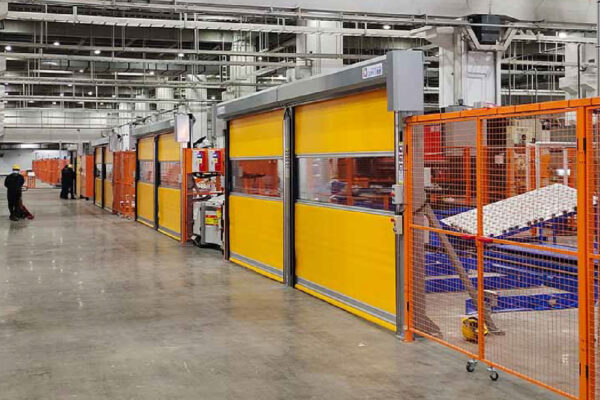
Modern commercial and industrial facilities with a focus on process optimisation, safety, and energy saving need high-speed doors from leading high speed door manufacturers. As the industry adapts to new productivity and sustainability benchmarks, these doors become ever more important to the smooth running of operations. In this article, we focus on high-speed doors and their manufacturing trends, demand, and overall industry insights. Whether you are upgrading your facility or just interested in the rapid innovation in this area, we cover the essentials.
Introduction
In recent years, many industries—such as warehousing, manufacturing, cold storage, and automotive—have demanded high-speed doors that improve efficiency, enhance safety, integrate new technologies, and streamline daily operations while remaining energy-efficient.In this post, we analyze the high-speed doors market, high-speed door trends, new high-speed door technologies, and high speed door industry. This post is for you if you are a business owner, professional, architect, or any other industry professional.
Introduction to High Speed Doors
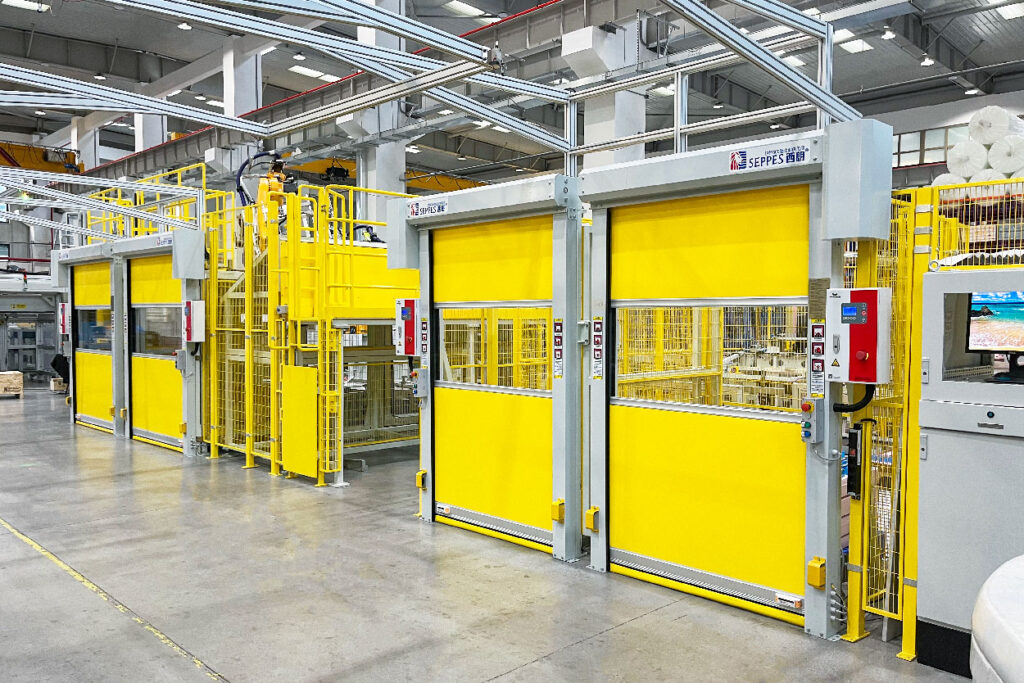
High-speed doors are state of the art entrance solutions that promote efficiency, protection, and added value in a wide range of industrial and commercial settings. These doors improve workflow, save energy, and keep in/ out controlled work environments by opening and closing quickly. They are often found in clean rooms, manufacturing plants, and warehouses, where work stoppage needs to be kept to a minimum. As a business, high-speed door automation and a level of personalization that adds peace of mind.
Purpose and Importance of High Speed Doors
The ability to increase productivity while providing a controlled environment makes high-speed doors a necessity in a variety of industries. Here are five important functions and advantages of high-speed doors:
Increased Operational Efficiency
The quick open and close functions of high-speed doors are a huge advantage, as they cut down on waiting time when goods are being transported throughout a facility, or while production is occurring. Studies show that companies that integrate high-speed doors into their operations can increase productivity by as much as 20%.
Reduced Energy Costs
Fewer open-door seconds mean less energy spent. In facilities that are temperature sensitive, like certain storage facilities, temperature changes and energy loss will be prevented when high-speed doors are utilized.
Increased Safety
The design of high-speed doors incorporates safety sensors and a soft edge that will allow the door to bounce back when a person is in the way. These are crucial in areas where there are machines or heavy traffic with employees who are moving around a lot.
Less Exposure to Dust and Other Contaminants
High-speed doors are great for environments that are clean rooms and where there is a need to keep the environment sterile. These doors keep the outside elements that may contain dust, dirt, and other contaminants from entering, while also prolonging the life of the door.
Reliability and Long Lasting Quality
High-speed doors last through repeated use. Their strong materials and robust design support long-term operation. They endure constant activity, especially in industrial environments, while minimizing maintenance and operational downtime.
Due to these factors, high-speed doors are invaluable to businesses looking to boost industrial efficiency and productivity while providing a safe and energy-saving environment.
Applications in Industrial and Commercial Sectors
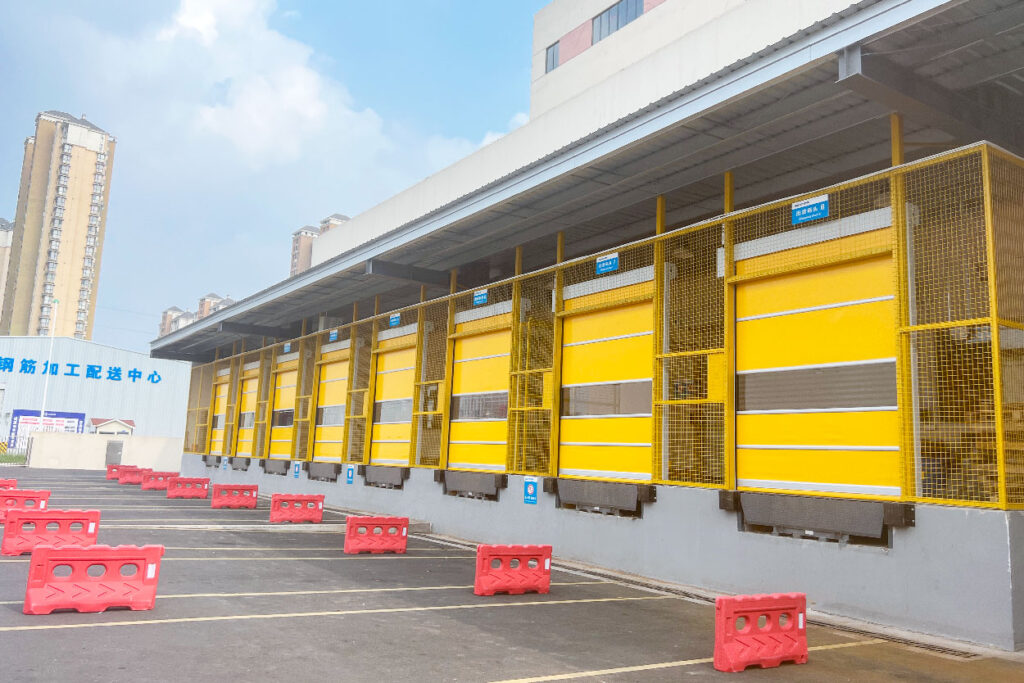
High-speed doors offer a wide range of services. They are used in a greater number of industries as a result of their flexibility, positive impact on the environment, and how cost-effective their services are. Below are five of these key services provided by high-speed doors:
Warehousing and Logistics
The zones of a warehouse and logistics center that are high speed doors are installed are of utmost importance as they provide the services of: quick access, climate control, and security. The efficiency of the logistics center improves burning as high-speed doors are installed.
Cold Storage Facilities
Because there is less air exchange with high-speed doors, the tighter controls on temperature in the cold storage environment can be maintained. The cold storage industry prefers these high-speed roll up doors as studies indicate that they can reduce energy loss in the environment by about 25 – 30%.
Manufacturing Plants
During the workflow, the high-speed doors used in the various sectors of manufacturing prevent the interruption of the workflow and help separate the different operational zones of the sectors. This is especially important with manufacturing efficiency during high traffic, as the ability to endure high traffic and reduce downtime.
Automotive and Aerospace Industry
To control sensitive parts and to ensure the production of the parts to streamline the production process, the automotive industry makes use of high-speed doors to manage the different areas of clean control. The rapid opening and closing of precision-focuseda mechanism means there are no delays in these precision focused industries.
Retail and Supermarkets
High-speed doors in retail environments are energy-saving and provide rapid access to loading docks and cold rooms. This aids in the quick movement of goods and helps streamline inventory and satisfy customers.
Benefits of High Performance Doors
More Efficient Use of Energy
High Performance Doors can save businesses money by using doors that help save energy. Studies show businesses can save 30% of energy costs in climate-controlled environments by using High Performance Doors. High Performance Doors help save energy because they reduce air leakage and keep temperatures consistent.
More Productive Work
High Performance Doors also help improve productivity. High Performance Doors can open and close rapidly to help keep workflow processes moving. This can help people in the logistics, manufacturing, and warehousing industries because they rely on fast access.
Lasting Performance
High Quality Materials help High Performance Doors endure difficult situations. Good quality doors cost less in the long run because they require less maintenance, and they help provide good, consistent performance.
Advanced Safety Features
High Performance Doors help improve and enhance the quality of workplaces with features such as auto-reversal and smart sensors to protect personnel and equipment from collisions.
Less Noise
High Performance Doors help reduce noise and create a peaceful work environment by using insulation to block outside noise. Good places to use High Performance Doors are urban centers, places where installations are sensitive, or where silence helps keep employees comfortable.
Global Market Size & Growth Projections
Current Market Value and Future Growth Forecasts
Recent estimates suggest that in 2023, the high-speed door market reached approximately USD 3.8 billion. As industrialization has increased, so has the use of high-speed doors. The need for energy-efficient innovations and implementation of new safety and automation technologies within manufacturing and logistics has shaped the market’s use of high-speed doors. The food and beverage, pharma, and auto industries are the key drivers of high-speed manufacturing doors due to the need forexpected operational efficiency, hygiene, and temperature control.
With such rapidly changing industry demands, the high-speed door market is estimated to continue to expand for the next 7 years at an average CAGR of 5.6%. Fast doors are to become fully integrated with IoT and AI for enhanced features and predictive maintenance. In smart infrastructures, high-speed doors are to comply with high efficiency standards and become more widely used due to sustainable building and environmental policies.
Regional Analysis: Asia-Pacific, North America, and Europe
Rapid industrial expansion and urbanization in the Asia-Pacific is expected to dominate the high-speed door market. Countries like Japan, India, and China, with growing construction and urbanization, particularly in manufacturing, create a construction market. The high-speed doors market is supported by the governments of the Asia-Pacific region, promoting energy-efficient and sustainable construction.
North America is heavily investing in logistics and warehouse construction, creating a market for high-speed doors. Objectives of construction in the United States and Canada are operational efficiency and environmental standards. Smart construction with high-speed doors, with added IoT, is the primary construction in North America.
Europe is focused on the design of buildings that sustain a low carbon footprint’s focus on high-speed doors. The UK, France, and Germany are the dominant countries in the construction of high-speed doors in the automotive, pharmaceuticals, food, and beverage industries. Europe’s Legislation on energy efficiency and the automation of door manufacturing in the EU is the primary pressure to create high-speed doors in Europe.
Factors Influencing Market Growth
High-speed doors are experiencing market growth due to increased demand and the development of new technology.
Ever-Increasing Need in the Market
People are becoming more aware of the impact of energy usage. Businesses are looking to incorporate tools to help with energy conservation. In manufacturing, warehouses, and cold storage, high-speed doors help to conserve energy by lowering the exchange of heating and cooling between the areas the doors separate.
Increased Energy Efficiency and the Need for Security
High-speed doors have been able to be enhanced with new technology to help with increased building security through the use of sensors, automatic door closers, and the use of high impact material. This is allowing for higher use of doors in this chronically under-provided controlled access.
Ongoing Urbanization and Industrialization
The continuing growth of industries around the world is building new infrastructures. High-speed doors are helping improve operating functions in construction, automotive, food and beverage, logistics industries. This is providing new ways to improve functional efficiency.
Advances In Technology
The adoption of things like smart control, integrated IoT, and increased insulation is cutting-edge prefabricated high-speed doors. These advancements provide the best durability and automation for businesses.
Adhering to safety as well as energy regulations
Governments around the world have begun to impose stricter regulations concerning energy-saving practices and safety in the workplace. More companies will begin using high-speed doors in order to comply with these regulations, especially in the more regulated areas like Europe and North America.
Versatility and Customization
Manufacturers are able to customize high-speed doors, including high-speed roll up doors, to suit the requirements of the specific industry to which they are being sold. The widespread use of these doors is due largely to their adaptability in a variety of applications, including temperature-controlled environments and industrial clean rooms.
All of these elements will continue to fuel the innovation and growing importance of the high-speed doors industry with a focus on operational efficiency and sustainability.
Key Drivers Behind High Speed Door Market Growth
Industrial Automation and Smart Manufacturing
Industrial automation and smart manufacturing are striding ahead and pushing the market for high-speed doors. When Industry 4.0 technologies are adopted, businesses tend to automate workflows and intelligent systems to improve efficiency and accuracy. In environments with high-speed doors, services are uninterrupted, and energy is conserved.
Closed-loop controlled environment, conditioned industrial spaces, seamless energy doors lose doors the work. IoT (Internet of Things) and AI-driven smart systems use high-speed doors to intelligently control their opening and closing functions for particular traffic situations and operational requirements. In the automotive, food processing, and pharmaceutical industries, doors operating under smart systems provide the most reliability. In smart factories, the trend towards improving and streamlining work while also being economically sustainable is fostering the business of high-speed doors again.
Energy Efficiency and Sustainability Trends
High-speed doors are being influenced by growing market trends dedicated to energy efficiency and sustainability. These doors almost fully eliminate energy loss through their proprietary designs, which close rapidly and keep a constant indoor temperature. They can adjust to temperature-sensitive environments – such as cold storage and climate-controlled production areas. Also, versatile cold storage and production areas. Furthermore, better insulating materials and sealing technologies have improved the energy-saving potential of all high-speed doors.
High-speed doors are a prime example of the sustainability trends of adopting environmentally safe production processes and the use of recyclable materials. High-speed doors, made with energy-saving components and low-power motors, help in the global effort to reduce carbon emissions. They also use smart technology such as sensors, automation, and energy-saving technologies to improve the way high-speed doors perform. These features all improve the way high-speed doors perform, and place high-speed doors at the center of modern production, climate-controlled spaces, and green technology.
E-Commerce Boom and Logistics Demand
The growth of e-commerce has increased the need for high-speed doors in logistics and warehousing. For businesses to manage online shopping’s unprecedented levels, they must streamline their supply chains to deliver and optimize order fulfillment. In busy warehouses, distribution centers, and last-mile delivery hubs, e-commerce logistics challenges to operational efficiency are high-speed doors en route to seamless access.
In addition, rapid doors are unique in their ability to maintain controlled environments, preserving temperature and sanitation—features critical to the food and drug supply chain. Pharma and electronics e-commerce distributors are equally impacted. These market factors continue to highlight the importance of rapid doors within the rapidly changing e-commerce landscape. Within critical logistics, the changing face of e-commerce will continue to highlight s high-speed doors.
Technological Innovations & Industry Trends
Adoption of IoT and AI in High Speed Doors
Thanks to IoT (Internet of Things) and AI (Artificial Intelligence) technologies, high-speed doors are becoming more intelligent than ever. IoT-integrated doors can now utilize sensors to collect data. Additionally, they are able to communicate and send alerts through their integration with IoT. These systems are able to gather analytics to operationalize anomalies, log door usage, and optimize IoT functionality. For instance, facilities can receive alerts about the need for maintenance and operationalize anomalies. This way, they can avoid downtime.
The most valuable aspect of AI is its ability to utilize predictive analytics and enhance adaptive performance. AI, combined with IoT, is able to analyze operational data tailored to the use of a specific door and make intelligent predictions about the door’s maintenance, wear, or tear. The door may even learn to adapt its own settings based on traffic or environmental patterns. These technologies streamline operational flow, reduce energy waste, and minimize disruptions. The future is bright for high-speed doors. It is becoming more efficient and intelligent. It is also becoming more valuable to sustainable/good practices for facilities management.
Customization and Design Advancements
Modern high-speed doors allow companies to customize design, materials, size, colors, and finishes to meet their industry needs, align with branding, and support operational goals. Recently, more focus on performance and design has improved the longevity of these doors in extreme conditions, including high and low temperatures and high-wear situations. Additionally, high-wear doors can now be engineered with modular parts so maintenance and upgrades can be done more economically.
The combination of clear panels and sealing systems improves the look of the doors and the available sight lines. They have improved energy efficiency and safety, and some models use less noise for a more pleasant working environment. They have user-controlled sensors to activate them, and they can be programmed for different types of traffic. In total, these factors provide a one-of-a-kind high-speed door for modern workspaces.
Enhanced Safety Features in High-Performance Doors
High-performance doors can come with some of the newest safety technologies geared towards improving workplace safety. Doors equipped with modern optical sensors and motion detectors can remove the risks associated with injury and damage to workplace equipment. Advanced edge protection systems, such as soft bottom edges and safety light curtains, stop doors when an object enters their path, providing an extra layer of protection. High-speed doors also include manual release systems for power outages, ensuring safety during emergencies. By following international safety standards like ISO 13849 or ANSI, these doors protect employees while boosting productivity and operational efficiency.
Major Application Sectors
E-Commerce & Logistics Needs
Doors that can close very fast are needed more and more in businesses that sell goods online and in businesses that move goods around. These businesses need to move and store goods, and sell and ship them. With the doors that close fast, the businesses can save time, move and handle goods seamlessly, and access storage spaces and shipping docks. If the businesses need something that can control the temperature of the stored goods, the doors can help manage the temperature. The doors help reduce the amount of air that is outside of the business, and help the business save money. The doors help the business meet its goals to protect the environment. The use of technology, such as sensors and automatic doors, helps improve efficiency.
Food Processing & Cold Storage Requirements
High-speed doors can be beneficial to industries that deal with food processing and cold storage. Temp control and hygiene are key to these industries, so using something that can open and close quickly, minimize air exchange, and reduce contamination is vital. These doors are made from durable materials like stainless steel and PVC, which can be cleaned thoroughly and are compliant with food safety regulations.
Sealing technology in some high-speed doors ensures the protection of perishable goods and the storage areas from temperature fluctuations. High-speed doors can also have smooth and non-porous surfaces that resist chemical agents, making thorough sanitation easier. These are especially useful in food processing environments. Most, if not all, modern high-speed doors have sensor systems that allow them to open without anyone having to touch them.
When it comes to the food processing and cold storage industries, high-speed doors with the features listed above can be the most beneficial. They ensure the safety and quality of stored goods and help the business save money with the energy-efficient design. These things are especially important in temperature-sensitive environments.
Pharmaceuticals and Controlled Environments
High-speed doors in the pharma industry are critical because operational hygiene and climate control are the most critical factors in the industry. High-speed doors are built to minimize the open cycle frequency and close to keep the air exchange less frequent, therefore keep the environment clean and sterile. With the help of sealing technologies, high-speed doors do not allow external factors and contaminants such as dust and bacteria to enter the controlled environment, helping to keep compliance with Good Manufacturing Practices (GMP).
Furthermore, the climate in controlled environment high-speed doors is one of the most important variables to keep under control. Custom high-speed doors are built with flexible insulation to keep controlled climate air inside, minimizing energy loss, therefore maintaining the critical environmental conditions surrounding the sensitive processes like drug manufacturing. With the addition of the latest technologies like automated and touchless systems, controlling climate in high-speed doors is one of the most critical variables to keep under control. These features are more reasons to make high-speed doors one of the most important components of modern pharma facilities.
High Speed Door Market Segmentation
By Product Type and Material
The construction materials and product types of high-speed doors allow for multiple segmentation that guides end-users to make the best selection for their particular industrial and commercial uses. The following are five commonly identified categories of high-speed doors:
Rolling Doors
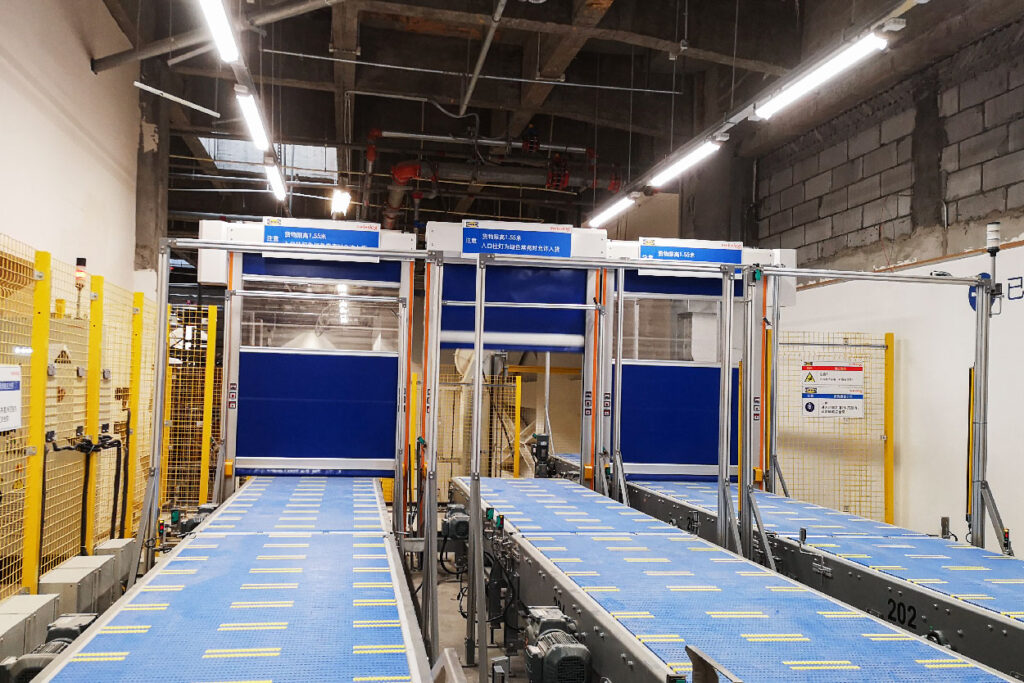
Constructed out of either heavy-duty aluminum or steel. Best fit for space-saving and high-performance applications.
Folding Doors
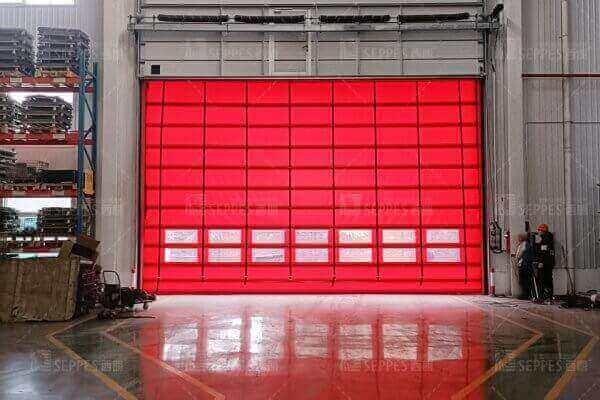
Constructed out of heavy-duty reinforced plastic or steel. Best fit for high-frequency operations and wider openings.
Sliding Doors
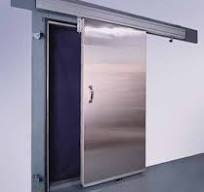
Made of insulated materials or polycarbonate. Best fit for facilities that need to control noise and thermal insulation.
Swinging Doors and high-speed roll up doors serve different purposes in industrial settings.
Made out of heavy-duty stainless steel or flexible PVC. Best fit for high-traffic areas that need rapid entry and exit.
Sectional Doors
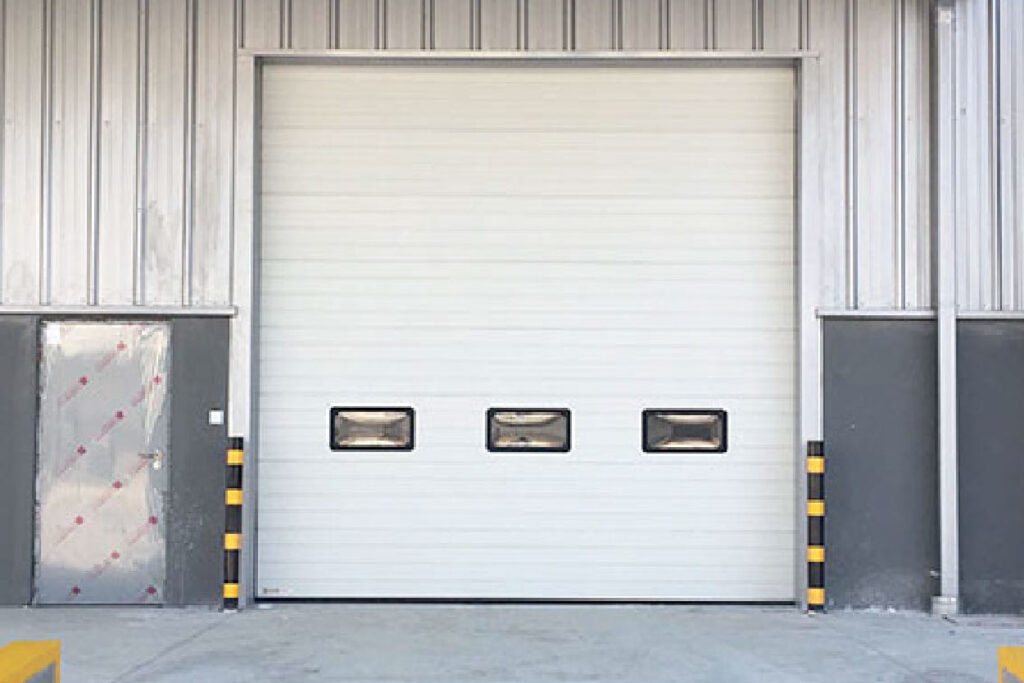
Constructed out of either galvanized steel or aluminum panels. Best fit for added durability in warehouses and distribution centers.
The ability to meet specific end-user needs proves the variety of high-speed doors.
By End User and Operation Mechanism
High-speed doors assist different industries by meeting their individual operational needs. These doors are tailored for end-users like manufacturing, logistics, food processing, pharmaceuticals, and automotive. For instance, in the food and pharma industries, high-speed doors are designed to meet industry-specific hygiene requirements, are easy to clean, and keep contaminants out. Meanwhile, the manufacturing and logistics industries need tough and reliable high-speed doors that manage high traffic and have high thermal insulation.
High-speed doors use different technologies to meet industry operational needs. They use unique systems like direct drive motors, counterweights, and spring assemblies to open and close with finesse and speed. Newer versions have automation with sensor-based operation, like under the radar or beam, allowing free access for heavy traffic. They also have user-loadable smart panels that let the user control the speed and customize operational timing for their specific traffic flow, allowing them to adjust the settings to their liking. Overall, these unique systems create reliability, energy savings, and safety across various industries.
By Distribution Channel and Geography
Different channels can distribute the market for high-speed doors, including direct sales, distributors, and online sales platforms. Direct sales are often favored for more personalized services, as they can manufacture and customize the doors to fit the client’s individual specifications. Contrarily, distributors can cover far more private clientele and are especially needed for areas that do not have a direct presence. The quick purchase and product detail offerings of online platforms have become a newer option for distributors, especially as the internet has become part of everyday life.
Regional differences in areas of high-speed door adoption can often be explained by the prevailing level of industrialization, technology, and infrastructure. The highly developed manufacturing industries of North America and Europe are the primary markets due to a high demand for energy-efficient doors. Asia-Pacific, particularly the developing countries of China and India, has a high demand that contributes to the rapid industrial growth and urbanization of the region. Increasing demand in the Middle East and Africa can be attributed to the developing infrastructure and significant investments in logistics and warehousing.
Leading High Speed Door Manufacturers
Overview of Major Global Players
The high-speed door industry is growing in terms of demand, and there will always be a need for more efficient, durable high-speed doors in various sectors. There are many noteworthy manufacturers within the high-speed door industry. Listed below are five noteworthy manufacturers, most of which have been operating over the last decade.
Hormann Group

The Hormann Group is one of the most popular manufacturers of high-speed doors in the world. They have doors that are made for both industrial and commercial uses. They are based in Germany and are well known worldwide for their high-speed doors.
Rite-Hite

The industrial high-speed doors manufactured by Rite-Hite are pioneering products within the industry. They also provide products for industrial safety, including high-speed roll up doors. They are also the most popular option for industrial and logistics facilities because of their low energy consumption and positive environmental impact.
ASI Doors, Inc

Another notable manufacturer of high-speed doors is ASI Doors. They have provided high-speed doors for the food and beverage, healthcare, and pharmaceutical industries, which are all considered to be hygiene-sensitive areas.
ASSA ABLOY
ASSA ABLOY is a global company that manufactures high-speed rubber doors. The focus of ASSA ABLOY is high-speed rubber doors that are built to last and designed for heavy-duty applications, even in extreme operating environments. They emphasize operational efficiency.
Efaflex

Efaflex is an all-German company that creates high-speed industrial doors. They are widely known within the community for being innovative. They provide diverse solutions for multiple industry problems, such as safety, speed, and durability, Which provide multiple solutions for further industries, automotive, cold storage, and logistics.
These companies are recognized as high-speed doors industry leaders and technology innovators. They are known for pushing the boundaries of applicable performance and the market believed safet and sustainable innovation. They are widely known for having first-hand industry advancements.

One of the most admired high-speed door companies is SEPPES. They are known for their innovation and the ability to provide tailored solutions for individual customers. SEPPES finds importance in quality, innovation, and time-saving efficiency. They create and manufacture doors for countless industries, including logistics, food storage, and manufacturing. SEPPES creates industry advancements by prioritizing durability, energy saving, and safety in innovative high speed doors systems.
Competitive Strategies in the Market of High-Speed Door Manufacturers
Top-end customizability, innovation, and reliability are all key factors to consider as door manufacturers create a high-speed door. With the industry being rapidly evolving, the leading companies of the industry are utilizing the best innovative methods, sustainable energy, and the use of custom industry-focused solutions to cater to the constantly changing demands of the industry.
Technological Innovation
In manufacturing, companies use cutting-edge technology, including artificial intelligence, the Internet of Things, and other automated tools, to improve door performance, enhance operational efficiency, and increase safety for end users.With the advancement of technology, the demand for Smart high speed doors has increased greatly.
Energy Efficiency and Sustainability
The manufacturers are focusing on sustainable innovation in the energy-efficient high-speed doors, as well as the eco-friendly operational units. The most energy-efficient high-speed doors that are manufactured and insulated are the best high-speed doors for the food storage and the pharmaceutical industries.
Customization and Industry-Specific Solutions
Industries such as food storage facilities and insulated moisture barrier operations focus on advanced manufacturing at maximum capacity, using selective insulation and logistics hubs designed for speed and endurance.
Global Expansion and Market Penetration
Emerging markets are key growth opportunities for high-speed door manufacturers. Countries with developing industrial infrastructures offer considerable opportunities and motivate innovative and cost-sensitive solutions, particularly in the realm of high-speed roll up doors.
After-Sales Service and Support
Robust after-sales services like on-site maintenance, technical support, and training are becoming critical differentiators. Firms are forging long-term relationships with clients by being responsive to service and maximizing operational uptime.
By implementing these strategies, high-speed door manufacturers are meeting market demands and ensuring growth in a competitive environment.
Importance of R&D and Sustainability
High-speed door manufacturers cite research & development (R&D) and sustainability as cornerstones for innovation and success. So R&D and sustainability are becoming pillars of door manufacturing. Advancing technology and increasing concern for the environmental impact have led to heavy investment from manufacturers. Doors have to be ‘smarter’ and energy efficient. Modern features are becoming standard: full door automation, safety sensor enhancement, and peak performance energy monitoring systems. Features now have energy smart controls and performance monitoring systems.
Sustainability also impacts the carbon footprint of high-speed doors. Customers want products to be made from recyclable materials, improved insulation to use less energy, and sustainable manufacturing. Customers want eco-friendly operations around their high-speed doors, who want doors constructed to have longer use and less maintenance to reduce impact.
High-speed doors to incorporate R&D sustainability meet their customers’ expectations. The doors constructed from customers’ core focus materials also gain the high-speed doors additional market profit from being the eco friendly product. High-speed doors to incorporate R&D sustainability meet their customers’ expectations. Incorporation of R&D and sustainability gives high-speed doors a market.
Challenges & Opportunities
Cost Barriers and Initial Investment
High-speed doors manufacturers have to make large initial investments, which present significant cost barriers. For designers and manufacturers of high-performance doors to make further investments into advanced materials, precision engineering, and high-level manufacturing, large investments are required. Plus, further developing features such as energy efficiency, enhanced safety automation, and smart automation will incur even more costs. With small and medium-sized manufacturers, these costs developing further will impact their ability to compete on product quality and prices.
Though there are challenges, there are also ways to improve or offset large initial investments. In areas with strong environmental regulations, government incentives to improve funding for sustainable and energy-efficient high-speed doors are available. From some of these incentives, manufacturers can improve their economies of scale, and with the help of simplified production methods and the removal of non-essential manufacturing steps, their production will be less costly. By focusing on these cost concerns, manufacturers will continue growing their bottom lines and fulfill their long-term demand for the flexible and durable high-speed door solutions.
Regulatory Compliance and Installation Skills
The high-speed door manufacturers have to follow a variety of strict safety guidelines. With the ability to make high-speed industrial doors, manufacturers have to obtain marketplace approval. For both the EO and OSHA guidelines, the manufacturers have to obtain the manufacturer’s trust. Safety and reliability, as well as environmentally safe standards, have to be met. These specifications must include: materials used, safety measures, fire* resistance, and energy usage.
After following all of the guidelines, the manufacturers are also expected to offer skilled installation. For the overhead doors to operate as designed, skilled installation is a must. Safety operational, downtime, and longevity are all factors of the installation. The more skilled the technician, the better the door will be installed for the guidelines and standards. Compliance and installation are beneficial and reputation-building services. With the demand on high speed industrial doors, the combination of compliance and skilled installation is a beneficial combination.
Untapped Markets and Future Opportunities
Developments in industrial automation have led to an increase in demand for high-speed doors. The automation of industries has led to the demand for high-speed doors for the efficient management of logistics. Soft Technology Doors’ high-speed doors are in demand everywhere. The demand for high-speed doors is especially notable in the newly industrialized regions of Asia, South America, and Africa. The high-speed roll up doors are needed in the following industries: manufacturing, warehousing and distribution, and e-commerce.
The demand for high-speed doors will increase in the following industries: cold storage, food processing, and pharmaceuticals, particularly for high-speed roll up doors. The demand for high-speed doors is being driven by energy-efficient and sustainable mechanisms. The high-speed doors and the systems with intelligent doors will be operational at a low cost.
The demand for high-speed doors will increase in retrofitted systems in established markets, such as North America and Europe, as the need for operating systems will be in demand. High-speed doors will be in demand in the established markets of North America and Europe to meet the need for technologically advanced operating systems.
Future Outlook
Trends Shaping the Next Decade of High-Speed Doors
The high-speed door industry is set to grow over the next decade due to advances in smart technologies, proactive maintenance, and improved access control, enhancing efficiency, safety, and security. Future designs will focus on energy efficiency with better insulation and airtight construction to reduce carbon footprints in warehouses, cold storage, and manufacturing plants. Customization in dimensions, materials, and opening speeds will allow doors to meet diverse operational needs, including heavy-duty environments like food processing plants. Emerging trends like 3D printing and new materials will create lighter, stronger. And more durable doors, lowering costs and extending lifespans, making the industry more innovative, sustainable, and customer-focused.
Expected Growth Areas in High Speed Doors
From a demand vantage point, the high-speed door industry has plenty of growth opportunities within the manufacturing, pharma, and logistics verticals. The most significant growth factor is the focus on energy efficiency and overall sustainability. Doors that “insulate” better to mitigate energy loss and sustain carbon reduction goals tied to the Paris Agreement will be desired.
Additionally, demand within food processing and cold storage for high-speed roll up doors is on the rise. Doors that keep temps constant and mitigate contamination are standard. Industry-evolving technology is crucial, especially in e-commerce, for the rapid movement and order fulfillment.
Furthermore, the automation and Industry 4.0 transition’s value extends to the door systems integration with automation, warehouse management, and robotics. The sector is advancing to meet the needs of its more visionary customers with new materials and design, and it is boldly sustainable. These trends signify that the high-speed door industry will soon be a reality, with a more advanced, highly efficient, and sustainable end solution.
Innovations Responding to Industry Needs
Modern industries have made advancements that require faster, more adaptable, high-speed doors. The integration of control systems with high-speed doors has fostered more communication and data exchange. IoT integration has led to real-time control and monitoring of doors, including mobile control. And automatic door closure based on energy consumption. All of these improvements have led to less downtime and more productivity for a business.
On the other hand, high-speed doors still allow for the use of controlled descent systems and proximity sensors that increase safety in high traffic areas. New insulating technologies and PVC panels give the door added performance when in transit. Customization in design, mechanism (like rolling), and cleanroom adaptation most also provides a variety of solutions to the door .
While high-speed doors still have the most to give the future of rapid door technologies also lies in the advancements being made for hyper personalized solutions for the fourth industrial revolution and beyond.
Conclusion
Summary of High Speed Door Market Evolution
Market advancements have been sparked by new technologies and the increasing need for operational efficiency in all sectors. Integration of smart systems (IoT sensors and AI-based controls) is enabling high-speed doors to become more dependable and efficient, and to monitor data in real time. This innovative technology improves workflows and safety in modern industrial and commercial facilities.
Sustainability and energy-efficient design have become industry standards, impacting energy consumption and the efficiency of high-speed doors. Solutions targeted to meet specific environmental standards are built with materials containing cutting-edge technology and better insulation. Creating tailored products to meet specific industry demands is a growing trend. These tailored solutions are designed for extreme conditions in the manufacturing and logistics sectors. And in cleanroom environments in the pharmaceutical and semiconductor industries.
Market data shows that the rapid industrial growth in the Asia-Pacific region is the reason for increasing demand. North America and Europe are focusing on the growing use of automation and energy efficiency. These are the emerging trends in high-speed doors that align with the growing energy-efficient deployments of Industry 4.0 and smart infrastructures.
Role of High-Speed Door Manufacturers in Driving Innovation
The contributions of manufacturers to innovation in the market for high-speed doors can hardly be overstated. They are the ones who develop the technologies that improve efficiency, durability, and safety while also being responsive to sustainability and automation. The development of cutting-edge doors that help further the goals of various industries is always needed. Innovations include: designs that reduce energy consumption, integration of Internet-of-Things (IoT) technologies for smart systems, systems that reduce operational noise, and systems that provide high thermal-safety.
High-speed door manufacturers also actively engage industry partners to improve the flexible use of their products across logistics, manufacturing, food processing, and other domains. The following five manufacturers are some of the most notable of those leading innovations in the high-speed door market.
ASSA ABLOY Entrance Systems
With one of the largest portfolios of high-speed doors for various industrial applications, ASSA ABLOY is leading the market in energy efficiency and integration of safety and smart technology.
Hormann Group
Hormann manufactures high-speed doors with the best and most innovative technology in the industry, offering extreme durability, quiet operation, and superior protection for the environment.
Rytec Corporation
For high-traffic applications, Rytec designs and manufactures high-performance doors for reliability, speed, and low maintenance.
TNR Industrial Doors
TNR Industrial Doors designs and manufactures extreme-duty high-speed doors with custom solutions for extreme conditions and industry applications, including innovative breakaway designs for impact resistance.
Efaflex GmbH & Co. KG
Efaflex has made a name for itself with great emphasis on safety systems, operational speed. And energy-efficient designs, making it suitable for fully automated industrial environments.
SEPPES
SEPPES caters to industrial door manufacturing, and like most, emphasizes the durability, safety, and energy efficiency of high-performance industrial doors. Their designs stand out through unique sealing and insulation technologies that help perform in various industrial environments with minimal energy loss.
These manufacturers define the industrial high-speed door technology to meet the modern industrial needs.
Call to Action for Industrial Stakeholders
You can now further improve your industrial operations with high-speed doors. Doors that have also been tailored for the more modern and sophisticated requirements of contemporary industrial facilities. Recent improvements made in high-speed door tech have incorporated smart sensors and extreme durability to provide enhance operatoinal efficently and reduce downtime. In addition to their operational benefits, their insulating closing systems, advanced seals. And the ability to reduce energy waste provide support for the companies suastainability goals.
We encourage industrial stakeholders to invest in custom-made high-performance doors from top-tier manufacturers to enhance operational productivity, workplace safety, and environmental sustainability. Don’t hesitate to invest in the future of your operational productivity! Contact us today to learn more or to schedule a consultation.
Frequently Asked Questions (FAQs)
Browse our wide range: how do I find the right high-speed door manufacturer?
Read through product catalogs and certificates for each possible high-speed door manufacturer and check reviews for their high-speed fabric doors, high-speed metal doors, and rolling doors. Consider their operational capabilities, lead times, warranty, and communication. Do they do service and installation? Look for manufacturers that also do high-speed interior and exterior systems. Rapid doors, tight seals, high cycle, and DynamicRoll® or fold-up specialty doors are always a plus.
Exterior high-speed fabric doors: what are the benefits for large exterior openings?
Large openings can be a challenge when trying to maintain climate control and improve operational efficiency. Exterior high-speed fabric doors improve workflow while limiting air and bug infiltration. Vinyl and reinforced fabric high-speed doors offer a sealed, low-maintenance, and springless option for high-cycle environments. They perform industrial applications that require commercial roll-up rapid door solutions and rugged entrance doors.
High-performance metal doors vs high-speed metal doors: which is right for my facility?
High-speed metal doors and high-speed roll up doors cater to different needs in various industrial applications. Metal high-speed roll-up doors function as heavy-duty security doors with high-speed operations. Perfect for harsh environments and large openings. Consider an insulation, high-cycle, roll-up, or overhead door™ configuration. Metal doors offer better security and longevity than fabric doors, whereas fabric doors have faster cycle rates and tighter seals.
How do fabric doors provide temperature control and energy savings?
Rapid operations for fabric doors close openings and minimize air exchange to assist with temperature control and lower HVAC usage. High-speed openings with metal fabric doors minimize heat loss and gain. Use fabric high-speed doors with built-in insulation, thermal skirts, and automated control for accurate and consistent closure for climate-sensitive processes.
Rolling doors and roll-up door options: what door models are available for industrial high-speed doors?
High-speed industrial doors, which are also known as rolling doors, fold-up doors, and high-speed roll-up doors, come in different models and various designs. Other models include the DynamicRoll® systems and springless roll-up. Other than different models, doors can also be made out of different materials (fabric, metal, rubber), come in different sizes (even large exterior openings), and can have different features, such as vision panels, wind load reinforcement, and safety detection. Manufacturers have commercial doors designed for different environments and can suggest different models based on the amount of traffic, the duty cycle, and the level of sealing required.
Are rubber doors and vinyl rapid doors suitable for high-cycle applications?
Yes, rubber and vinyl fabric rapid doors are engineered for high-cycle use. Flexible fabric and vinyl doors can also handle high openings without being damaged. To guarantee minimal downtime, look for high-cycle and industrial high-speed doors with solid motor controls and quick-change components. A lot of manufacturers point out that high-cycle environments are springless and easy to service.
Safety and security: Are high-speed doors safe to operate, and do they function as security doors?
High-speed doors are safe to use with basic safety items like photo-eye sensors, safety edges, and motion controls. For security, high-speed metal doors or reinforced rolling doors protect better than soft fabric doors. Some rapid door manufacturers offer security-rated latches, locking guides, and monitoring for additional protection. For doors to remain safe and to meet security standards, make sure they are installed to code and are maintained regularly.
Reference Sources
- An Automatic Sliding Door: Leveraging Locally Sourced Materials for Innovation
Read the paper here
This paper discusses the impact of foreign manufacturers and the innovation in automatic door systems. - Electromagnetically Propelled Garage Door
Read the thesis here
Focuses on electromagnetic propulsion in garage doors, referencing leading manufacturers. - Improvement of the Door Production Process and Technological Line in Furniture Manufacturing Enterprise
Read the study here
Explores the technological processes in door production and manufacturing lines. - Design and Finite Element Analysis of a Car Door on Different Speeds & Different Materials
Read the paper here
Analyzes car door manufacturing using composite materials and their performance at different speeds. - Manufacturing Espionage: From the Front Office to the Factory Floor
Read the article here
Discusses data security challenges in manufacturing environments, including supply chain issues.