
Índice
AlternarA instalação do nivelador de doca começa com o desenho da fossa.
A instalação do nivelador de doca tipo fossa deve seguir o desenho aprovado do fabricante. Confirme o comprimento, largura e profundidade da fossa, os ângulos de meio-fio embutidos, a posição do conduíte, a drenagem, a posição do para-choque e a elevação do piso acabado.
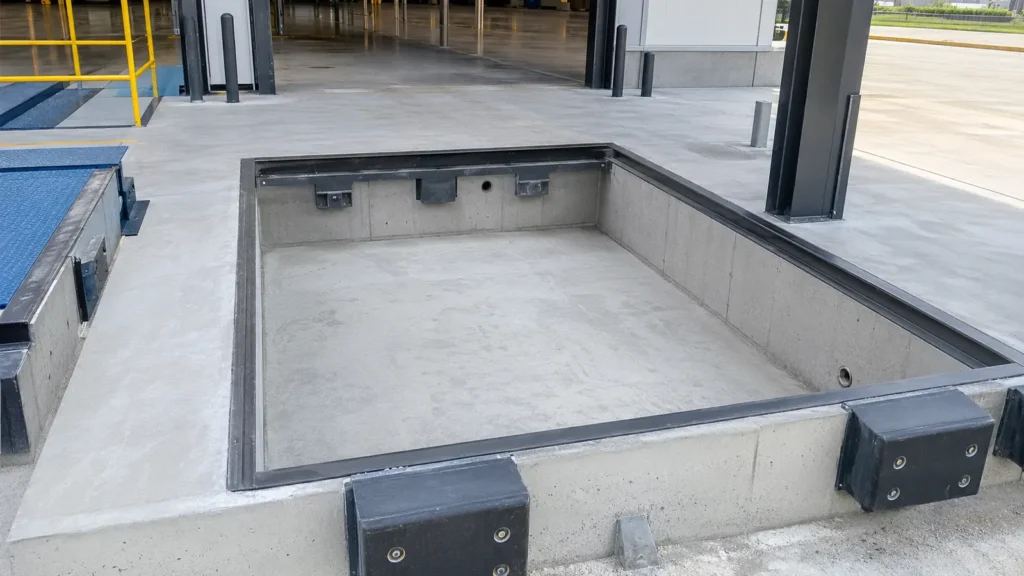
Para a instalação da fossa de concreto do nivelador de doca de carga, verifique se a fossa está quadrada, nivelada, seca, limpa e estruturalmente pronta antes da chegada do equipamento.
As dimensões da instalação do nivelador de doca dependem da capacidade nominal, tamanho da plataforma, comprimento do lábio e faixa operacional. A SEPPES prepara desenhos de instalação do nivelador de doca específicos para o projeto após revisar a altura da doca, a faixa de leito do reboque, o peso operacional da empilhadeira, a frequência de tráfego e a tensão.
Esta coordenação técnica simplifica a instalação do nivelador de doca hidráulico e reduz o risco de alterações na engenharia civil após a entrega.
A instalação de um nivelador de doca de borda é montada diretamente na face da doca e possui requisitos de construção diferentes. A instalação da placa de doca normalmente diz respeito a uma placa portátil. Tratar qualquer um dos produtos como um nivelador de fossa pode causar sérios erros na instalação do nivelador de doca.
Processo de Instalação do Nivelador de Doca
Inspecione o equipamento e proteja a área de trabalho.
Proteja a área de instalação e verifique todas as peças de acordo com as instruções aprovadas de instalação do nivelador de doca. Inspecione o quadro, a plataforma, o lábio, os cilindros, as mangueiras hidráulicas, o grupo motobomba, a caixa de controle, o suporte de manutenção e os fixadores quanto a danos de transporte.
Verifique a fossa de concreto.
Levante a fossa de instalação do nivelador de doca. Registre as diagonais, a profundidade, a retidão do ângulo do meio-fio, o nível do piso, o acesso do conduíte, a drenagem e a folga traseira.
Pare a instalação do nivelador de doca se o concreto estiver rachado, as dimensões excederem a tolerância permitida ou se houver água parada dentro da fossa.
Posicione e fixe o quadro.
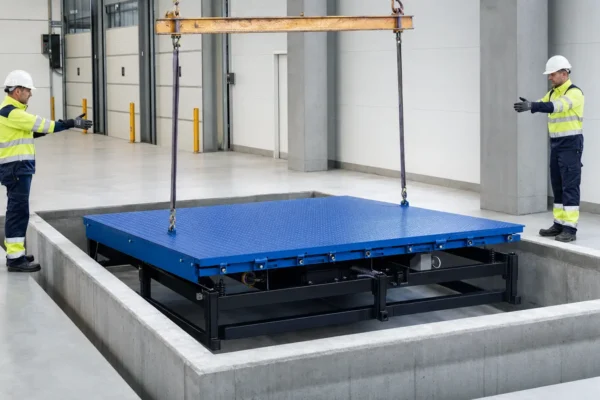
Levante o equipamento apenas dos pontos de elevação especificados e alinhe a plataforma com o piso acabado da doca. Durante a instalação do nivelador de doca, mantenha todo o pessoal afastado de cargas suspensas.
Solde ou ancore o quadro na sequência especificada pelo fabricante. A fixação incorreta ou soldagem irregular pode distorcer o quadro e afetar o movimento da plataforma.
Complete o suporte estrutural.
Complete os calços, o suporte traseiro, as folgas laterais, o alinhamento do para-choque e os reparos de concreto ao redor. Um suporte estrutural deficiente durante a instalação do nivelador de doca pode transferir o impacto da empilhadeira para o quadro ou borda da fossa de concreto.
Instale proteções e acessórios.
Instale as proteções dos pés, vedações contra intempéries, estação de controle, suporte de manutenção, sistema de comunicação e acessórios selecionados.
Para a instalação do nivelador de doca de borda, verifique o suporte da face da doca, o ângulo de aproximação, a condição da borda da doca e a projeção do para-choque antes da fixação final.
Conexões elétricas e hidráulicas na instalação do nivelador de doca.
A instalação do nivelador de doca hidráulico requer a tensão, fase, frequência, disjuntor, aterramento e fiação de controle especificados.
Um eletricista local qualificado deve concluir a instalação elétrica do nivelador de doca de acordo com o diagrama de fiação fornecido e os códigos elétricos locais aplicáveis. Mantenha os cabos elétricos e as mangueiras hidráulicas longe de pontos de aperto, bordas afiadas e componentes móveis.
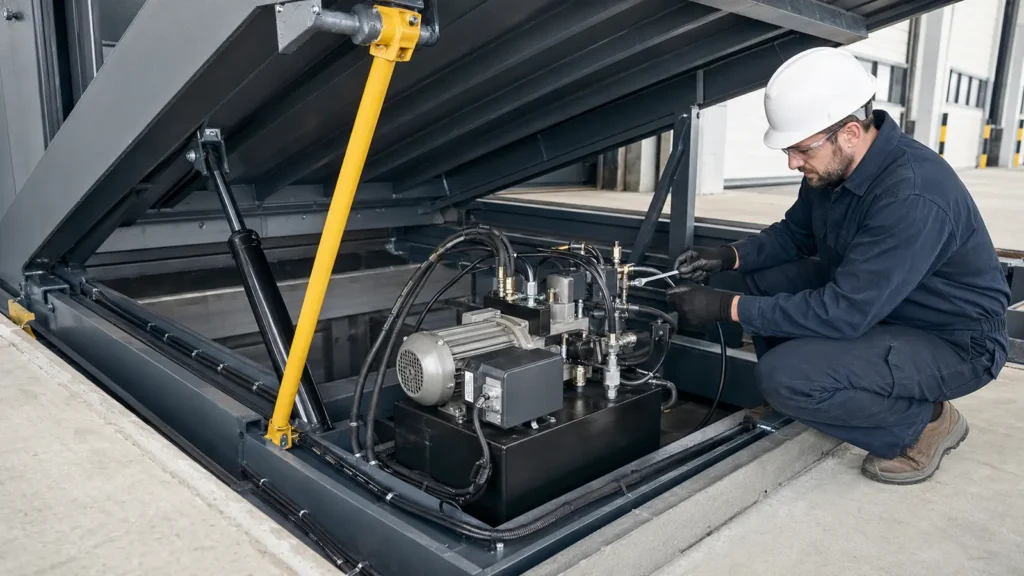
Antes de energizar a instalação do nivelador de doca, inspecione as conexões das mangueiras, o óleo hidráulico, os pinos do cilindro e a montagem do grupo motobomba. Nunca verifique vazamentos hidráulicos pressurizados com as mãos.
Aplique procedimentos de bloqueio e etiquetagem sempre que a energia elétrica, mecânica ou hidráulica puder expor os trabalhadores ao perigo.
Orientação da OSHA sobre Controle de Energia Perigosa:
Comissionamento e verificações de segurança na instalação do nivelador de doca.
O comissionamento transforma uma instalação concluída do nivelador de doca em um sistema de carga funcional.
Ciclo da plataforma sem tráfego de veículos. Verifique a elevação da plataforma, extensão do lábio, descida controlada, faixa de flutuação, posição de retorno à doca, parada de emergência, suporte de manutenção e folga da mangueira hidráulica.
Teste a instalação do nivelador de doca de carga em toda a faixa pretendida de leito do reboque e confirme o contato adequado do lábio. Verifique os para-choques da doca, calços de roda ou retenção do veículo, luzes de comunicação, sinalização, proteção e controles de pedestres.
A OSHA 1910.26 fornece requisitos de segurança relativos à capacidade, fixação, manuseio e movimento da prancha de doca:
https://www.osha.gov/laws-regs/regulations/standardnumber/1910/1910.26
A MHI também fornece informações sobre a ANSI MH30.1-2022 para dispositivos de nivelamento de doca:
https://www.mhi.org/lodem/specifications
Registre os resultados do teste de instalação do nivelador de doca, as configurações do equipamento, o treinamento do operador e a entrega final. Nunca entre na fossa ou trabalhe abaixo da plataforma a menos que todas as fontes de energia estejam isoladas e o suporte de manutenção esteja devidamente engatado.
Erros comuns na instalação do nivelador de doca.
Erros comuns na instalação do nivelador de doca incluem o uso de desenhos desatualizados, falha em confirmar as alturas do reboque, omissão do conduíte elétrico, instalação de calços não suportados, soldagem na sequência errada, desalinhamento dos para-choques, aperto das mangueiras hidráulicas e omissão dos testes operacionais.
Outra falha na instalação do nivelador de doca é selecionar a capacidade com base apenas no peso do palete. Os cálculos de capacidade devem incluir o peso operacional da empilhadeira, acessórios, impacto dinâmico, distribuição de carga e frequência diária de tráfego.
Nunca copie detalhes de instalação do nivelador de doca mecânico para um modelo hidráulico ou aplique instruções de nivelador de fossa à instalação da placa de doca. Profissionais locais qualificados devem seguir o desenho aprovado de instalação do nivelador de doca.
Lista de verificação da instalação do nivelador de doca.
Antes da instalação do nivelador de doca.
Confirme os desenhos aprovados, as dimensões da fossa, a condição do concreto, a altura da doca, a faixa de leito do reboque, a capacidade nominal, o tamanho da plataforma, o comprimento do lábio, a tensão, o conduíte, a drenagem, os para-choques, o acesso de elevação e os controles de segurança do local.
Durante a instalação do nivelador de doca.
Documente o alinhamento da plataforma, os suportes estruturais, os calços, as soldas ou âncoras, as conexões hidráulicas, a fiação elétrica, as proteções de segurança e as configurações de controle.
Após a instalação do nivelador de doca.
Complete os ciclos operacionais, os testes de interface do reboque, as verificações dos dispositivos de segurança, o treinamento do operador, as instruções de manutenção e a aceitação final.
Alt de imagem sugerida: dimensões da fossa de concreto e ângulos de meio-fio embutidos para instalação do nivelador de doca
Alt de imagem sugerida: diagrama de conexão elétrica e hidráulica para instalação do nivelador de doca de carga
Alt de imagem sugerida: alinhamento da instalação da placa de doca
Perguntas frequentes sobre a instalação do nivelador de doca.
Como me preparo para a instalação do nivelador de doca de carga?
Forneça as dimensões da fossa, altura da doca, faixa de leito do reboque, peso operacional da empilhadeira, ciclos diários, tensão, fotografias do local e desenhos de construção. A SEPPES usa essas informações para preparar uma proposta de instalação do nivelador de doca de carga.
Como me preparo para a instalação do nivelador de doca de carga?
Forneça as dimensões da fossa, altura da doca, faixa de leito do reboque, peso operacional da empilhadeira, ciclos diários, tensão, fotografias do local e desenhos de construção. A SEPPES usa essas informações para preparar uma proposta de instalação do nivelador de doca de carga.
Como me preparo para a instalação do nivelador de doca de carga?
Como me preparo para a instalação do nivelador de doca de carga?
Forneça as dimensões da fossa, altura da doca, faixa de leito do reboque, peso operacional da empilhadeira, ciclos diários, tensão, fotografias do local e desenhos de construção. A SEPPES usa essas informações para preparar uma proposta de instalação do nivelador de doca de carga.
Quanto custa instalar um nivelador de doca?
Veja a página do produto Nivelador de Doca Hidráulico SEPPES:
https://workshopdoor.com/products/loading-dock-equipment/hydraulic-dock-leveler/
Explore a gama completa de Equipamentos para Doca de Carga SEPPES:
https://workshopdoor.com/products/loading-dock-equipment/
Envie as dimensões da sua doca, desenhos da fossa, alturas do reboque, dados da empilhadeira, tensão e quantidade necessária para receber um desenho de instalação do nivelador de doca e proposta de equipamento específicos para o projeto.
A SEPPES fornece documentação do equipamento e coordenação técnica. A instalação no local deve ser concluída por profissionais locais qualificados de acordo com os códigos de construção e elétricos aplicáveis.