
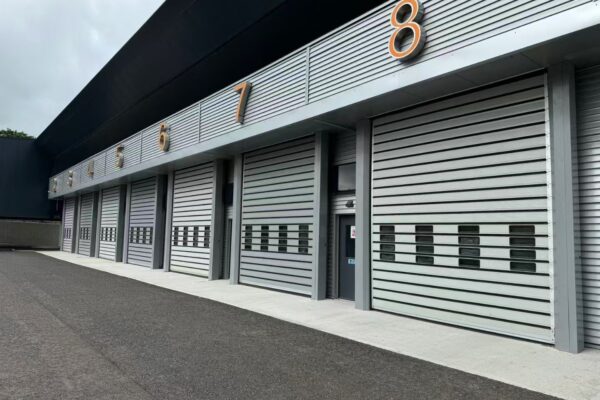
Rapid garage doors are high-speed door systems designed for industrial and commercial vehicle entrances that require faster opening and closing than conventional sectional or rolling doors. Depending on the application, they can use PVC fabric, insulated panels, or rigid aluminum slats and can be activated by radar, loop detectors, remote controls, access systems, or automation signals.
This guide explains the main types of rapid garage doors, typical operating speeds, safety features, cost factors, applications, and how to choose the right door for warehouses, workshops, parking garages, logistics facilities, and temperature-controlled areas.
What Is a Rapid Garage Door?
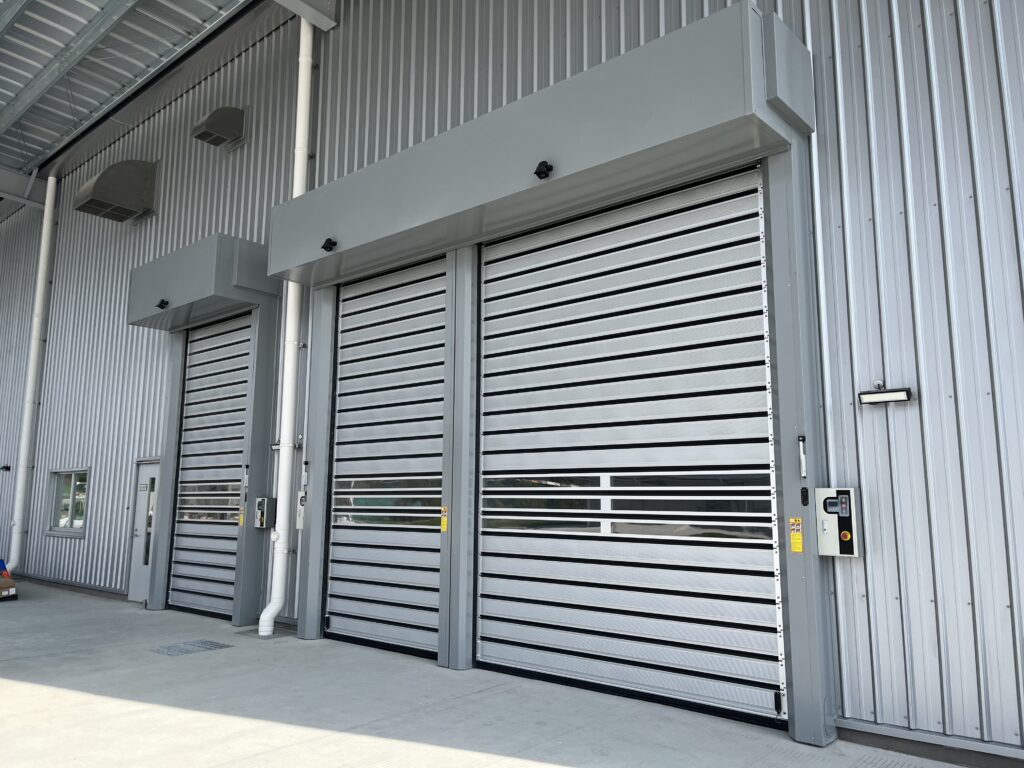
A rapid garage door is an automatically operated high-speed door designed to minimize the time an entrance remains open. It is commonly used in factories, warehouses, logistics facilities, workshops, parking areas, food processing plants, and temperature-controlled environments.
Unlike a conventional sectional garage door that moves relatively slowly along overhead tracks, a rapid garage door is designed for frequent opening and closing. Depending on the door type, the curtain or rigid panel travels vertically and is stored above the opening when the door is open.
The main reasons businesses choose rapid garage doors include faster traffic flow, reduced air exchange, improved separation between work areas, and easier integration with automated access systems.
Common activation options include radar sensors, geomagnetic loops, push buttons, pull cords, remote controls, photoelectric sensors, and access control systems. For automated facilities, the door control system can also be configured to communicate with equipment such as PLCs, conveyors, AGVs, and warehouse automation systems.
Where Are Rapid Garage Doors Used?

Magazyny detaliczne i hurtowe Magazyny i Centra Dystrybucyjne
Rapid garage doors are commonly installed in locations where conventional doors create unnecessary waiting time or allow excessive air exchange.
Magazyny i Centrum Dystrybucyjne
Fast opening helps forklifts and trucks move through busy entrances with less waiting, making rapid doors suitable for high-frequency logistics areas.
Zakłady produkcyjne
Rapid doors can separate production zones while allowing materials, forklifts, and personnel to move efficiently between different work areas.
Cold Storage and Temperature-Controlled Areas
Reducing door-open time helps limit warm and cold air exchange. For low-temperature applications, an insulated high-speed door should be selected according to the operating temperature and required thermal performance.
Zakłady Przetwórstwa Żywności i Napojów
Rapid doors help separate processing, packaging, storage, and logistics areas while supporting efficient internal traffic.
Parking Garages and Vehicle Entrances
Radar, loop detectors, remote controls, or access control systems can automatically activate the door when authorized vehicles approach.
Types of Rapid Garage Doors
PVC Rapid Roll-Up Door
A PVC rapid roll-up door uses a flexible curtain that rolls around a shaft above the opening. It is a practical choice for factories, warehouses, workshops, logistics areas, and internal traffic passages where fast opening and frequent operation are required.
PVC doors are generally lighter and more economical than rigid high-speed doors. They can also be equipped with transparent vision sections, radar sensors, photoelectric protection, remote controls, and other activation systems.
Learn more about our Drzwi szybkobieżne rolowane
High Speed Spiral Garage Door
A high speed spiral door uses rigid slats that travel through a spiral or track system above the opening. Compared with flexible PVC doors, rigid spiral doors provide stronger physical protection and are often selected for exterior vehicle entrances, commercial garages, workshops, and industrial buildings.
They are suitable when a project requires both fast operation and a rigid door panel.
Learn more about our Drzwi szybkobieżne spiralne
Insulated Rapid Garage Door
For facilities where temperature control is a priority, an insulated rapid garage door combines fast operation with improved thermal separation. Typical applications include cold storage, food facilities, temperature-controlled warehouses, and production areas.
The correct configuration depends on the operating temperature, door size, traffic frequency, sealing requirements, and installation environment.
Learn more about our Drzwi szybkobieżne izolowane
Kluczowe cechy i materiały szybkich drzwi garażowych
Opcje materiałowe: PVC, aluminium i stal
Wybierając szybkie drzwi garażowe, PCV, aluminium i stal oferują właściwości, które służą różnym priorytetom w zakresie konstrukcji i wydajności.
Niska waga i opłacalność PCV, wraz z odpornością na wilgoć, dobrze sprawdzają się w miejscach wymagających niekorozyjnej powierzchni, ale nie potrzebujących ochrony o dużej wytrzymałości.
Aluminium stanowi atrakcyjne połączenie niskiej wagi i wysokiej wytrzymałości, a jego czyste wykończenie pasuje do wejść handlowych i obiektów, gdzie wygląd jest równie ważny jak trwałość.
Wyjątkowa wytrzymałość stali naprawdę błyszczy w środowiskach, gdzie drzwi będą poddawane intensywnemu codziennemu użytkowaniu lub trudnym warunkom pogodowym; jej wytrzymałość chroni otwór i zniechęca do włamań, czyniąc ją preferowanym wyborem w zastosowaniach przemysłowych i wymagających wysokiego bezpieczeństwa.
Zrozumienie tych zalet pozwala użytkownikom wybrać materiał, który nie tylko pasuje do bieżącego zadania, ale będzie również niezawodnie działał przez wiele lat.
How Fast Does a Rapid Garage Door Open?
Opening speed depends on the rapid garage door type, door size, motor system, and application.
For example, SEPPES PVC high-speed roll-up doors can be configured with an opening speed of approximately 1.0–2.0 m/s and a closing speed of approximately 0.8 m/s, depending on the door size and project requirements.
Faster operation is particularly valuable at high-traffic entrances because vehicles and forklifts spend less time waiting for the doorway to clear. Shorter opening periods can also help reduce unnecessary air exchange between indoor and outdoor or temperature-controlled areas.
However, the fastest available speed is not always the best choice. Door dimensions, traffic type, safety requirements, wind conditions, daily operating frequency, and the surrounding environment should all be considered when selecting the operating speed.
Redukcja hałasu i izolacja termiczna
Dzisiejsze drzwi szybkobieżne spełniają dwie kluczowe potrzeby nowoczesnych operacji przemysłowych – redukcję hałasu i poprawę efektywności termicznej. Inżynierowie zintegrowali zaawansowane techniki uszczelniania i specjalistyczne materiały tłumiące, aby ograniczyć dźwięk. Niezależne pomiary pokazują, że drzwi z panelami izolowanymi mogą obniżyć poziom dźwięku nawet o 30 decybeli (dB), co jest szczególnie korzystne w środowiskach, gdzie ciężkie maszyny lub procesy mechaniczne są w ciągłej pracy. Cichsze otoczenie nie tylko chroni słuch pracowników, ale także zwiększa ogólną produktywność.
Wydajność termiczna jest równie ważna. Szczelne uszczelki i konstrukcja kompozytowa minimalizują przenoszenie ciepła przez promieniowanie i konwekcję, zapewniając redukcję całkowitego zysku ciepła nawet o 55%. Jest to niezbędne w kontrolowanych przestrzeniach, takich jak chłodnie lub pomieszczenia czyste, gdzie nawet niewielkie wahania temperatury mogą wpływać na procesy lub jakość produktu. Mniejszy zysk lub strata ciepła przekłada się na mniejsze zapotrzebowanie na systemy HVAC, co z kolei obniża koszty energii. Gdy na szali leży trwałość, komfort i wydajność, drzwi szybkobieżne stają się rozwiązaniem pierwszego wyboru dla organizacji zaangażowanych w kontrolę hałasu i zarządzanie energią.
Porównanie z innymi typami drzwi garażowych
Szybkie drzwi garażowe a drzwi segmentowe
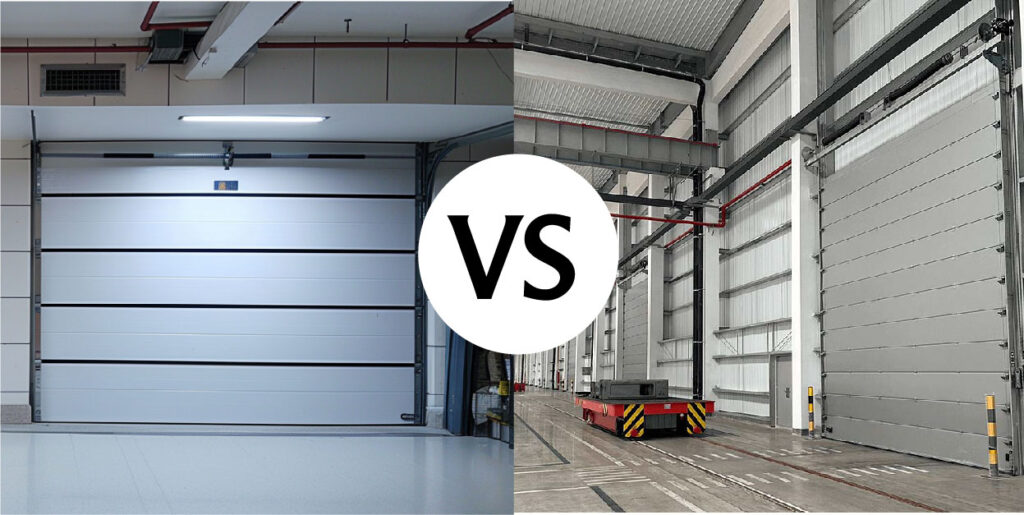
Rapid garage doors and sectional garage doors can both be used for vehicle entrances, but they are designed for different operating priorities. Rapid doors focus on speed and frequent traffic, while sectional doors are commonly selected when insulation, security, and conventional overhead operation are more important than very fast opening..
Tabela porównawcza
| Czynnik | Rapid Garage Door | Segmentowe drzwi garażowe |
|---|---|---|
| Prędkość Otwierania | Szybkie | Relatively slow |
| Traffic Frequency | High-frequency traffic | Moderate traffic |
| Door Construction | PVC curtain or rigid high-speed panels | Izolowane panele segmentowe |
| Najlepsze dla | Logistics, factories, vehicle entrances, high-traffic areas | Warehouses, workshops, garages, industrial buildings |
| Izolacja | Depends on door type | Generally strong with insulated panels |
| Automatyzacja | Radar, loop detector, remote, access control, PLC | Button, remote, radar and access control |
| Headroom | Depends on rapid door design | Depends on lifting method and track layout |
| Dostosowanie | Size, color, controls, sensors and materials | Size, color, windows, tracks and controls |
| Main Advantage | , spełniając | Insulation and versatile lifting options |
Choose a rapid garage door when opening speed, traffic efficiency, and frequent operation are the main priorities.
Choose a sectional garage door when the entrance operates less frequently and the project prioritizes insulated panels, traditional overhead lifting, or specific architectural requirements.
For applications where both speed and rigid construction are required, a high-speed spiral door may provide a suitable alternative.
Szczegóły analizy kosztów i korzyści
Inwestycja początkowa
Drzwi szybkie: Wyższy koszt początkowy ze względu na zaawansowaną funkcjonalność, trwałość i prędkość.
Drzwi segmentowe: Bardziej opłacalne początkowo, odpowiednie dla kupujących z ograniczonym budżetem.
Koszty utrzymania
Drzwi szybkie: Wymagają minimalnej konserwacji, co prowadzi do długoterminowych oszczędności.
Drzwi segmentowe: Umiarkowane potrzeby konserwacyjne, które mogą wiązać się z dodatkowymi kosztami w czasie.
Efektywność operacyjną można znacznie zwiększyć, stosując szybkie drzwi garażowe typu overhead.
Drzwi szybkie: Szybsze działanie prowadzi do poprawy wydajności w środowiskach komercyjnych, oszczędzając czas i zwiększając produktywność.
Drzwi segmentowe: Wolniejsze działanie wpływa na wrażliwe na czas przepływy pracy, ale sprawdza się dobrze w zastosowaniach mieszkaniowych.
Opcje dostosowania
Drzwi szybkie: Ograniczone opcje personalizacji mogą nie pasować do wszystkich konkretnych wymagań.
Drzwi segmentowe: Wysoki potencjał personalizacji pozwala na większą elastyczność dla różnych zastosowań i preferencji estetycznych.
Ogólna trwałość
Drzwi szybkie: Wysoka trwałość wydłuża żywotność, oferując lepszy długoterminowy zwrot z inwestycji.
Drzwi segmentowe: Umiarkowana trwałość, odpowiednia do środowisk o mniejszych wymaganiach dotyczących zużycia.
Kiedy wybrać szybkie drzwi garażowe
Szybkie drzwi garażowe są idealne dla firm, gdzie szybki dostęp jest koniecznością. Zbudowane dla stref o dużym natężeniu ruchu, gdzie drzwi muszą często się otwierać i zamykać, ich szybsze cykle skracają czas oczekiwania i utrzymują płynny przepływ pracy. Sprawdzają się również doskonale w środowiskach, które muszą utrzymywać ścisłą kontrolę klimatu, takich jak magazyny chłodnicze i zakłady produkcyjne, ponieważ ich szybkie działanie ogranicza wymianę powietrza i utrzymuje stabilne temperatury. Dzięki solidnej konstrukcji i łagodnym harmonogramom konserwacji, szybkie drzwi garażowe nie tylko działają; utrzymują produktywność obiektów, jednocześnie obniżając koszty energii.
How to Choose the Right Rapid Garage Door
Choosing a rapid garage door should be based on the actual operating conditions of the entrance rather than speed alone.
1. Measure the Opening Size
Provide the clear opening width × height. The available headroom and side clearance should also be measured because the motor, tracks, frame, and door storage system require installation space.
2. Identify the Application
Specify whether the door will be installed in a warehouse, factory, workshop, cold room, parking garage, food facility, clean area, or exterior entrance. Different environments require different curtain materials, sealing systems, insulation levels, and structural designs.
3. Estimate Traffic Frequency
Consider how many vehicles, forklifts, or personnel pass through the opening each day. High-frequency entrances require a door system and motor designed for repeated operation.
4. Determine Temperature Requirements
If the door separates areas with different temperatures, provide the indoor and outdoor operating temperatures. Cold storage applications may require an insulated rapid door and additional sealing or heating components.
5. Select an Activation Method
Common options include push buttons, remote controls, pull cords, radar sensors, geomagnetic loops, card readers, and contactless sensors. Automated facilities can also integrate the door with PLCs, AGVs, conveyors, or other equipment.
6. Review Safety Requirements
Photoelectric sensors, safety edges, emergency stops, warning devices, and other protective systems should be selected according to the traffic type and site conditions.
For an accurate recommendation, provide your opening width × height, application, quantity, operating temperature, traffic type, and preferred activation method.
Rapid Garage Door Installation Requirements
Before ordering a rapid garage door, the opening and surrounding installation space should be measured carefully.
Important dimensions normally include:
• Opening width
• Opening height
• Available headroom above the opening
• Left-side clearance
• Right-side clearance
• Motor installation side
• Distance to nearby walls, pipes, beams, equipment, or other obstacles
For SEPPES PVC high-speed roll-up doors, installation space varies according to the door size and configuration. The product design should therefore be confirmed after reviewing the actual site dimensions.
The supporting wall or steel structure must also be suitable for fixing the door frame. Power supply, control box location, sensor positions, and cable routing should be planned before installation.
For export projects, installation drawings, wiring information, and technical guidance can be provided so the local installation team can complete assembly and commissioning according to the supplied instructions.
Rapid Garage Door Maintenance
Regular inspection helps maintain reliable high-speed operation.
Maintenance should include checking the door curtain or rigid panels, guides, seals, safety sensors, electrical connections, motor system, and control unit. Photoelectric sensors should remain clean and correctly aligned, while damaged seals or curtain components should be replaced when necessary.
The maintenance interval should be based on operating frequency and environmental conditions. Doors operating hundreds of cycles per day generally require more frequent inspection than entrances used only occasionally.
If abnormal noise, irregular movement, sensor errors, or repeated control faults occur, stop unnecessary operation and inspect the system before returning the door to normal service.
How Much Does a Rapid Garage Door Cost?
There is no single standard price for a rapid garage door because most industrial doors are manufactured according to the project dimensions and operating requirements.
The main factors affecting rapid garage door cost include:
• Opening width and height
• PVC, insulated, or rigid door construction
• Motor and control system
• Required opening speed
• Safety sensors and protection devices
• Radar, remote control, loop detector, or access control options
• Insulation and sealing requirements
• Wind resistance requirements
• Stainless steel or other frame upgrades
• Quantity
• Shipping destination and trade terms
In general, a standard PVC rapid roll-up door is usually more economical than a rigid high-speed spiral door or an insulated rapid door designed for temperature-controlled applications.
For project pricing, provide the opening width × height, quantity, application, installation environment, and required control method.
Rapid Garage Door Safety Features and Compliance
Safety is an important consideration when selecting a rapid garage door, particularly at entrances shared by forklifts, vehicles, and personnel.
Depending on the door configuration, safety options can include photoelectric sensors, safety bottom edges, light curtains, emergency stop controls, warning lights, and automatic reopening functions.
For automated entrances, sensors should be positioned according to the traffic direction and operating environment so the door can detect approaching vehicles or obstacles before closing.
Certification and compliance requirements vary by country and project. Buyers should confirm the applicable electrical, machinery, building, and workplace safety requirements for the installation location before ordering.
For projects requiring CE or other specific certification documentation, the requirement should be confirmed with the manufacturer during the quotation and engineering stage.
Common Rapid Garage Door Applications
Zakłady produkcyjne
Rapid garage doors are commonly used between production workshops, material handling areas, and logistics passages. Fast automatic opening allows forklifts and personnel to move between zones without leaving the entrance open for long periods.
Warehouses and Logistics Centers
At busy warehouse entrances, rapid doors can be activated automatically by radar or vehicle detection systems. This reduces unnecessary waiting and supports smoother forklift and pallet movement.
Cold Storage and Food Facilities
Where temperature differences exist between two areas, fast opening and closing helps reduce the duration of air exchange. Insulated rapid doors can be selected when thermal performance is a major project requirement.
Parking and Vehicle Entrances
For parking garages, service centers, and industrial vehicle entrances, rapid garage doors can work with remote controls, radar sensors, loop detectors, card readers, or other access control systems.
Automated Production Areas
Rapid doors can also be integrated with PLCs, conveyors, AGVs, robots, or warehouse management systems. The door can receive an opening signal and provide open-position or closed-position feedback for equipment coordination.
Rapid Garage Door Automation and Access Control

Modern rapid garage doors can be configured with different activation systems according to how the entrance is used.
Radar sensors are suitable for automatic vehicle or pedestrian detection. Geomagnetic loops can detect approaching vehicles, while remote controls, pull cords, push buttons, card readers, and contactless sensors provide additional access options.
For industrial automation, rapid doors can also exchange signals with PLCs, conveyors, AGVs, robots, and other equipment. Typical control signals can include door-open commands, door-close commands, fully-open feedback, and fully-closed feedback.
The correct activation method should be selected according to traffic type, required access control, automation level, and safety requirements.
Learn more about industrial door radar
Conclusion: Choosing the Right Rapid Garage Door
A rapid garage door is most suitable when an entrance requires fast operation, frequent vehicle or forklift traffic, automatic activation, or reduced air exchange.
PVC rapid roll-up doors are a practical option for many factories and warehouses. Rigid high-speed spiral doors are better suited to applications requiring stronger panels and exterior security, while insulated rapid doors are designed for facilities where temperature separation is especially important.
Before requesting a quotation, prepare the opening width × height, available installation space, quantity, application, operating temperature, traffic frequency, and preferred activation method.
SEPPES manufactures customized industrial door systems for different industrial and commercial applications. If you are planning a new project, send us your door dimensions and application requirements for a project-specific recommendation.
Frequently Asked Questions About Rapid Garage Doors
What is a rapid garage door?
A rapid garage door is a high-speed automatic door designed for industrial and commercial entrances that require fast and frequent access. It is commonly used in factories, warehouses, logistics centers, workshops, parking garages, and temperature-controlled facilities.
How fast does a rapid garage door open?
The opening speed depends on the door type, size, motor system, and application. SEPPES PVC high-speed roll-up doors can be configured with opening speeds of approximately 1.0–2.0 m/s, depending on the door dimensions and project requirements.
What is the difference between a rapid garage door and a sectional garage door?
A rapid garage door is mainly designed for fast opening and high-frequency traffic, while a sectional garage door is generally selected for insulation, security, and conventional overhead operation.
What types of rapid garage doors are available?
Common types include PVC rapid roll-up doors, high-speed spiral doors, and insulated rapid doors. The right type depends on traffic frequency, installation environment, insulation requirements, and security needs.
How much does a rapid garage door cost?
The cost depends on the door size, material, motor system, opening speed, safety devices, control method, insulation requirements, quantity, and shipping destination. Industrial rapid garage doors are normally quoted according to project specifications.
Can a rapid garage door open automatically for forklifts?
Yes. Rapid garage doors can work with radar sensors, geomagnetic loops, remote controls, pull cords, push buttons, and access control systems. They can also be integrated with PLCs, conveyors, and AGVs.
What information is required for a rapid garage door quotation?
Please provide the opening width × height, quantity, application, operating temperature, available installation space, traffic type, and preferred activation method. Site photos or drawings are also helpful for engineering review.