
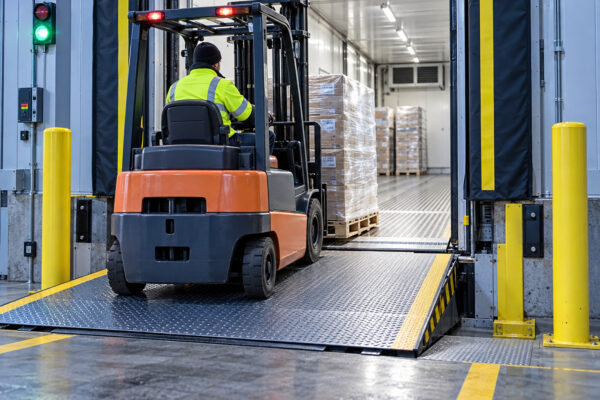
Ramy załadunkowe są jednym z najważniejszych punktów operacyjnych w centrum dystrybucji łańcucha chłodniczego. Każda ciężarówka przyjeżdżająca, transfer palet i dostawa regionalna wyjazdowa muszą przejść przez strefę rampy, często podczas gdy produkty chłodzone są jednocześnie przyjmowane, sortowane, przygotowywane i wysyłane.
Z tego powodu rampa załadunkowa łańcucha chłodniczego nie powinna być projektowana jako rząd identycznych bram. Liczba stanowisk, ruch przychodzący i wychodzący, zakres wysokości skrzyń ciężarówek, typ bramy, poziomnica rampy, system uszczelniający i tymczasowa przestrzeń przygotowawcza – wszystkie te czynniki wpływają na efektywność operacyjną centrum dystrybucji.
Dobrze zaplanowany system wielostanowiskowy łączy kompletny przepływ pracy:
Aby uzyskać szerszy przegląd systemów dostępu chłodniczego, zobacz Rozwiązanie SEPPES w zakresie drzwi chłodniczych i urządzeń rampy załadunkowej .
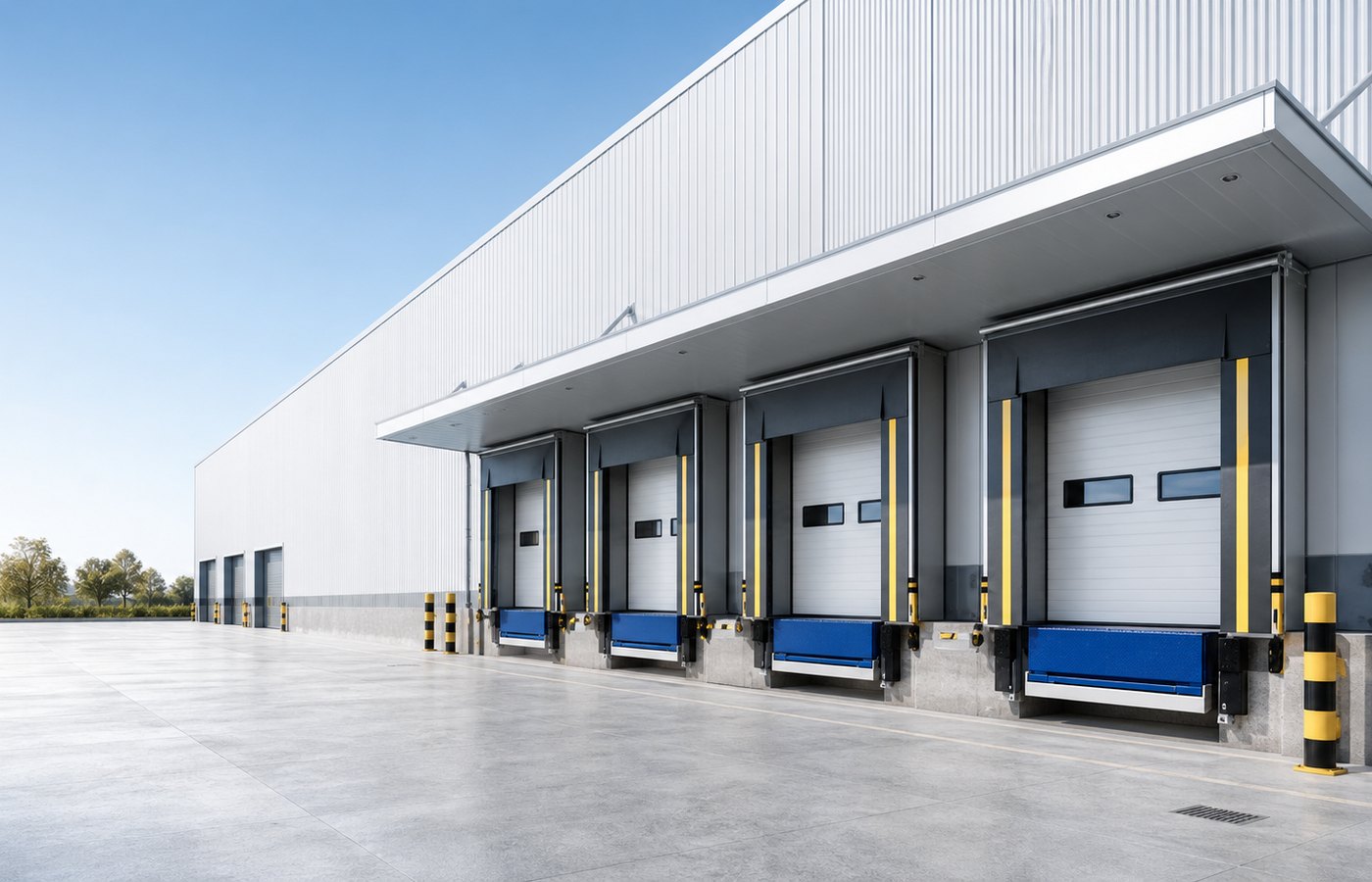
Dlaczego centra dystrybucji łańcucha chłodniczego potrzebują planowania wielostanowiskowych ramp załadunkowych
Konwencjonalny magazyn może mieć stosunkowo przewidywalny ruch przychodzący i wychodzący. Centrum dystrybucji łańcucha chłodniczego może być bardziej złożone, ponieważ produkty często szybko przechodzą przez przyjęcie, kontrolę, sortowanie, tymczasowe składowanie chłodnicze i wysyłkę regionalną.
Kilka ciężarówek może przybyć w tym samym okresie, podczas gdy pojazdy wyjazdowe już oczekują na załadunek tras. Jeśli każde stanowisko załadunkowe jest traktowane jako wymienne, ruch wózków widłowych, kolejki naczep i zatory w strefie przygotowawczej mogą zacząć się nakładać.
Celem planowania wielostanowiskowego nie jest więc jedynie instalacja większej liczby ramp załadunkowych. Chodzi o przypisanie każdemu stanowisku praktycznej roli i zapewnienie, że otaczający układ magazynu wspiera tę rolę.
Ważne czynniki planistyczne obejmują:
- szczytowe przybycia ciężarówek na godzinę;
- średni czas załadunku i rozładunku;
- wolumen przychodzący w porównaniu z wychodzącym;
- zróżnicowanie rozmiarów ciężarówek i naczep;
- strefy temperaturowe;
- pojemność strefy przygotowawczej palet;
- konflikty tras wózków widłowych;
- częstotliwość otwierania bram;
- zakres roboczy poziomnicy rampy;
- wymagania dotyczące uszczelnienia ciężarówek.
Oddzielenie ramp przyjęciowych od ramp wysyłkowych
One of the most useful layout decisions is to distinguish between inbound receiving and outbound dispatch instead of allowing every bay to perform every task.
| Dock function | Main activity | Important design considerations |
|---|---|---|
| Inbound receiving dock | Unload refrigerated trailers and receive pallets | Fast inspection access, forklift circulation and staging space |
| Inspection or exception bay | Handle delayed, damaged or special shipments | Avoid blocking normal receiving bays |
| Cross-dock bay | Move goods rapidly from inbound to outbound routes | Short travel distance between receiving and dispatch |
| Outbound loading dock | Load regional delivery vehicles | Route staging, vehicle scheduling and efficient pallet sequencing |
| Overflow bay | Support peak periods and mixed operations | Flexible equipment and broad truck compatibility |
Separating these functions can reduce conflicts between inbound products and outbound route staging, especially during morning receiving peaks or afternoon distribution waves.
Ile ramp załadunkowych potrzebuje centrum dystrybucji?
There is no universal number of loading docks that works for every cold chain facility. The correct bay count depends more on peak operating conditions than on total daily truck volume.
For an early planning study, ask:
- How many trucks can arrive during the busiest hour?
- How long does one truck normally occupy a bay?
- Do receiving and outbound dispatch occur at the same time?
- How often are trucks delayed because pallets are not ready?
- Does the facility handle several vehicle sizes?
- Is one bay needed for returns, rejected loads or maintenance?
- How much staging space is available behind each dock?
A facility processing moderate daily volume can still experience serious congestion if most vehicles arrive during two short peak windows.
Układ wielostanowiskowej rampy załadunkowej dla dystrybucji łańcucha chłodniczego
The physical arrangement of loading docks should support the internal product route. Ideally, a pallet should not travel through unnecessary cross traffic after it leaves the trailer.
A typical workflow may be:
Inbound truck → receiving dock → inspection → sorting → refrigerated staging → outbound staging → loading dock → regional delivery truck
Where possible, the forklift route should remain simple and directional. Crossings between inbound forklifts, outbound pallets and pedestrian routes should be minimized through warehouse layout and operating procedures.
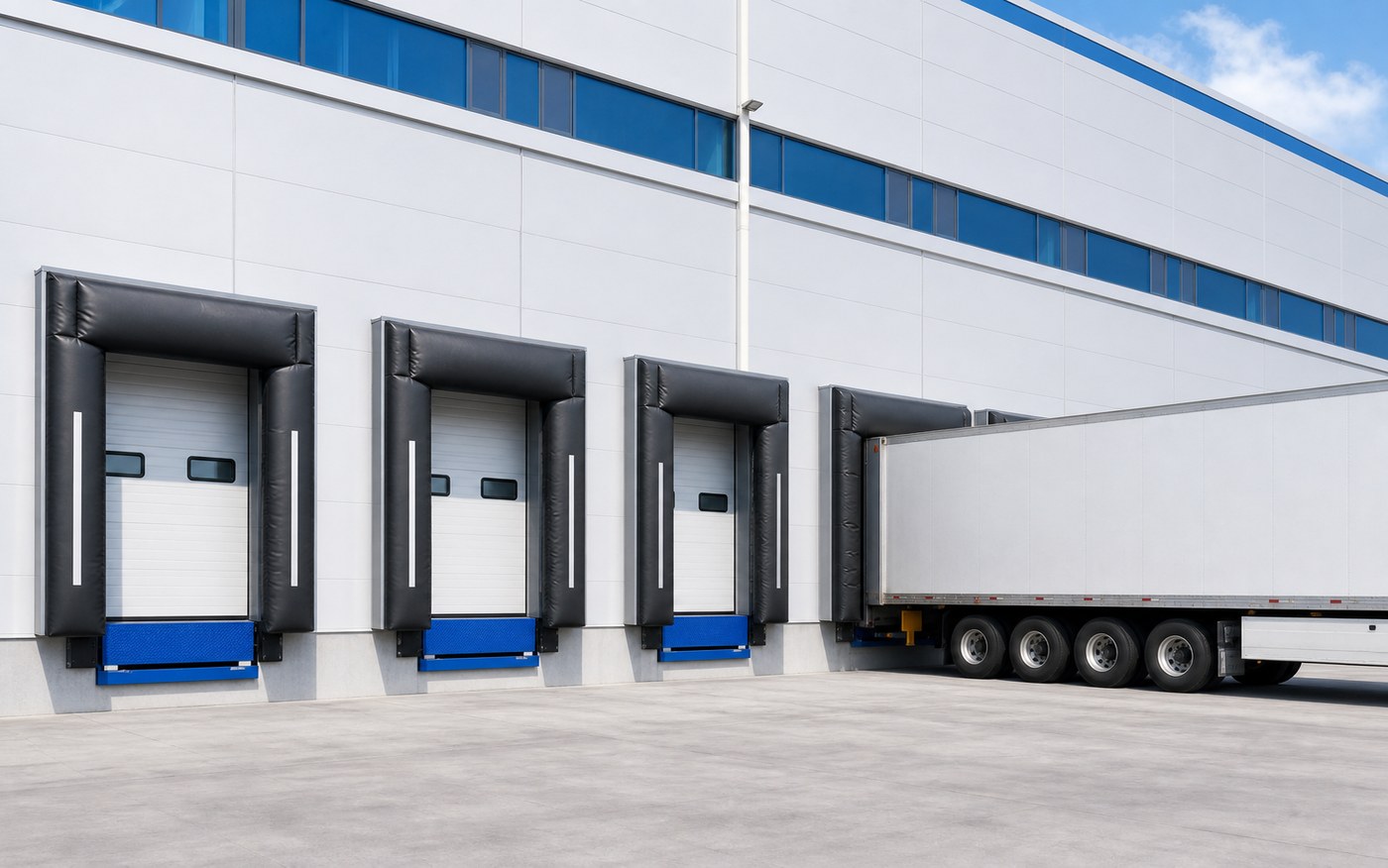
Wybór odpowiedniej poziomnicy rampy dla mieszanych wysokości ciężarówek
Cold chain distribution centers often receive vehicles from different carriers, suppliers and regional fleets. Their trailer floors may not all be at the same height.
A Hydrauliczny mostek przeładunkowy bridges the height difference between the warehouse platform and truck bed so forklifts can move between both surfaces.
SEPPES hydraulic dock levelers are available with reference rated-load options of 6T, 8T, 10T and 12T. Final capacity should be selected according to the complete operating condition rather than pallet weight alone.
Przeanalizuj:
- masę wózka widłowego;
- maksymalną masę ładunku;
- minimalną wysokość skrzyni ładunkowej ciężarówki;
- maksymalną wysokość skrzyni ładunkowej ciężarówki;
- platform height;
- wymiary wnęki;
- daily loading cycles;
- typ ciężarówki;
- dynamic loading during forklift crossing.
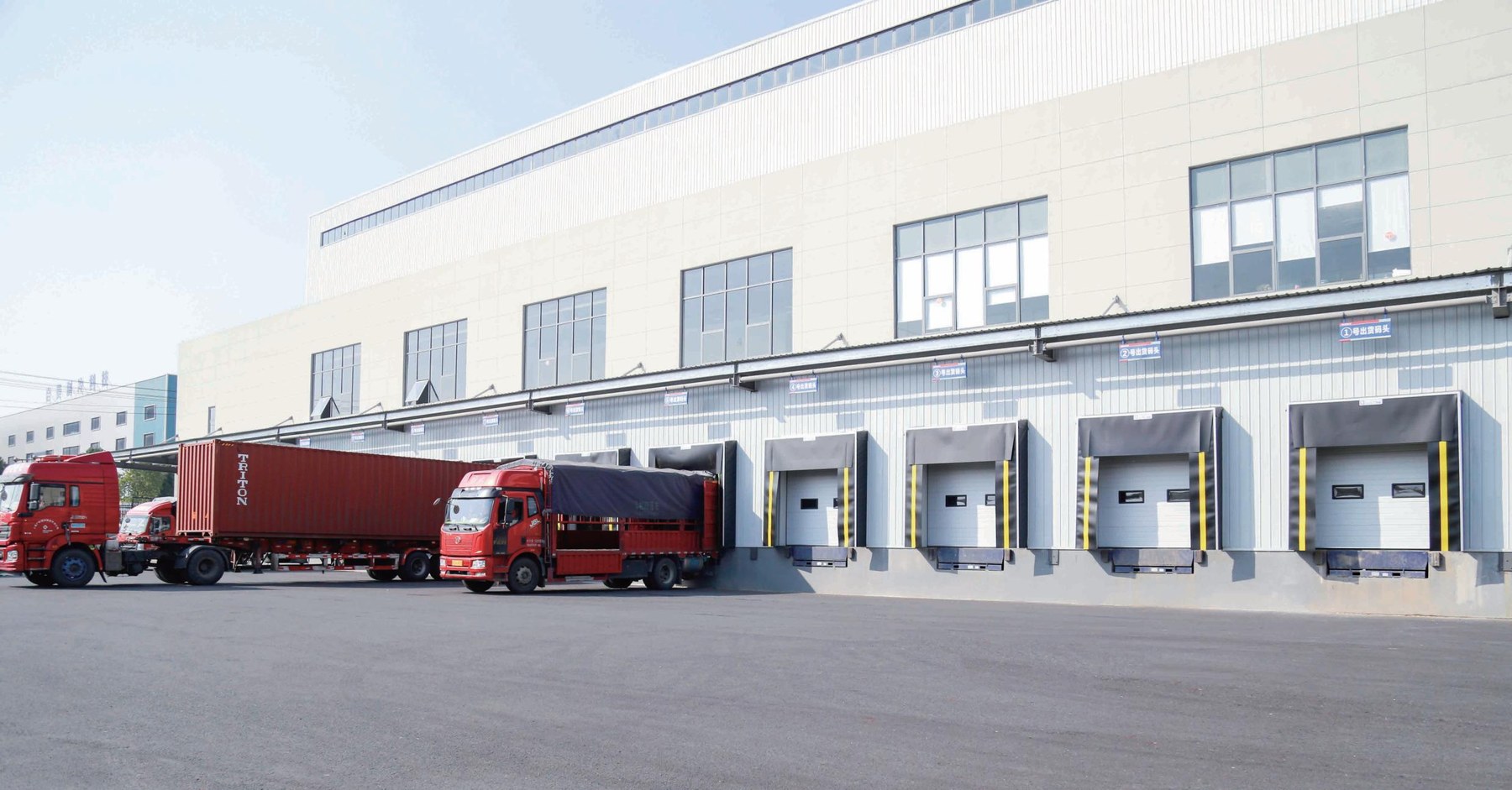
Nośność poziomnicy magazynowej: nie należy opierać się wyłącznie na masie ładunku
A common purchasing mistake is assuming that a six-ton cargo load automatically requires a six-ton dock leveler. The forklift itself also moves across the platform, and dynamic forces occur as its wheels enter and leave the leveler.
For example, project engineers should review the combined operating conditions of:
- wózka widłowego;
- cargo;
- driver or operator;
- crossing speed;
- frequency of operation;
- dynamic impact;
- required safety margin.
Przemysł SEPPES loading dock equipment range includes dock levelers, dock shelters, dock seals and other loading bay equipment for warehouse and logistics applications.
Osłony rampy pomagają utrzymać granicę łańcucha chłodniczego
The truck-to-building interface is another important part of refrigerated distribution. Even when the loading door itself is insulated, a large gap can remain around the trailer while the vehicle is positioned at the dock.
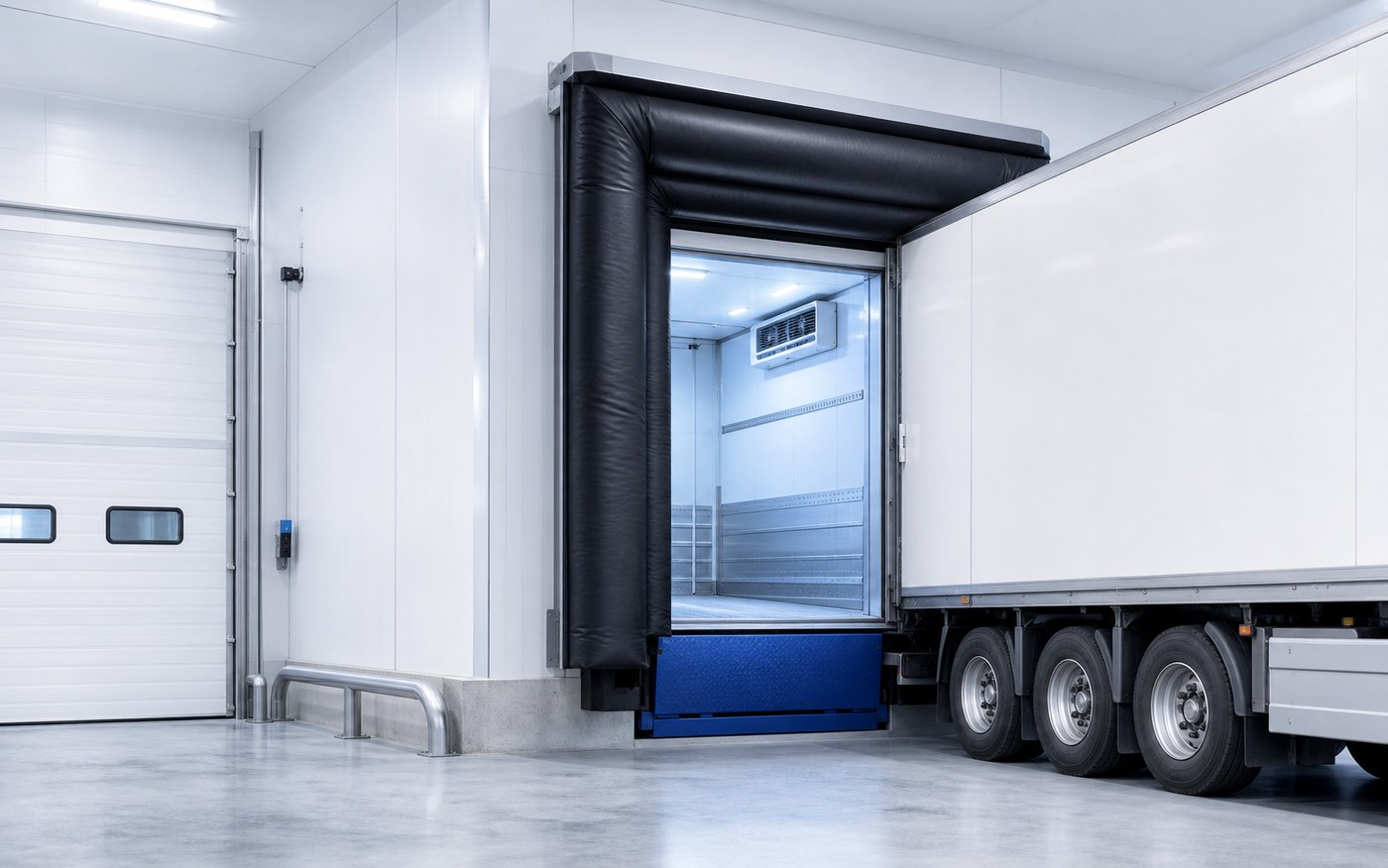
For higher sealing requirements, an Osłona dokowa nadmuchiwana uses side and top airbags to close much of this gap.
The shelter can help reduce:
- outside air entering the loading area;
- wind and rain exposure;
- dust and insects;
- uncontrolled air exchange around the trailer.
This can be particularly useful where trucks are loading products from refrigerated or temperature-controlled staging areas.
Mechaniczna osłona rampy czy osłona pneumatyczna?
Not every loading bay requires the same sealing system. Vehicle variation, loading frequency and temperature-control requirements should guide the choice.
| System | Main characteristic | Typowe zastosowanie |
|---|---|---|
| Mechaniczna osłona dokowa | Flexible side and top curtains around the truck body | Frequent logistics traffic and broader truck-size variation |
| Foam dock seal | Compressed pads contact the trailer body | More consistent truck dimensions |
| Nadmuchiwana osłona dokowa | Powered airbags inflate around the parked trailer | Cold-chain and controlled loading requiring stronger sealing |
For facilities with broad vehicle variation, you can also review the Mechaniczna osłona rampy przeładunkowej konfigurację.
Bramy segmentowe dla centrów dystrybucji chłodniczej
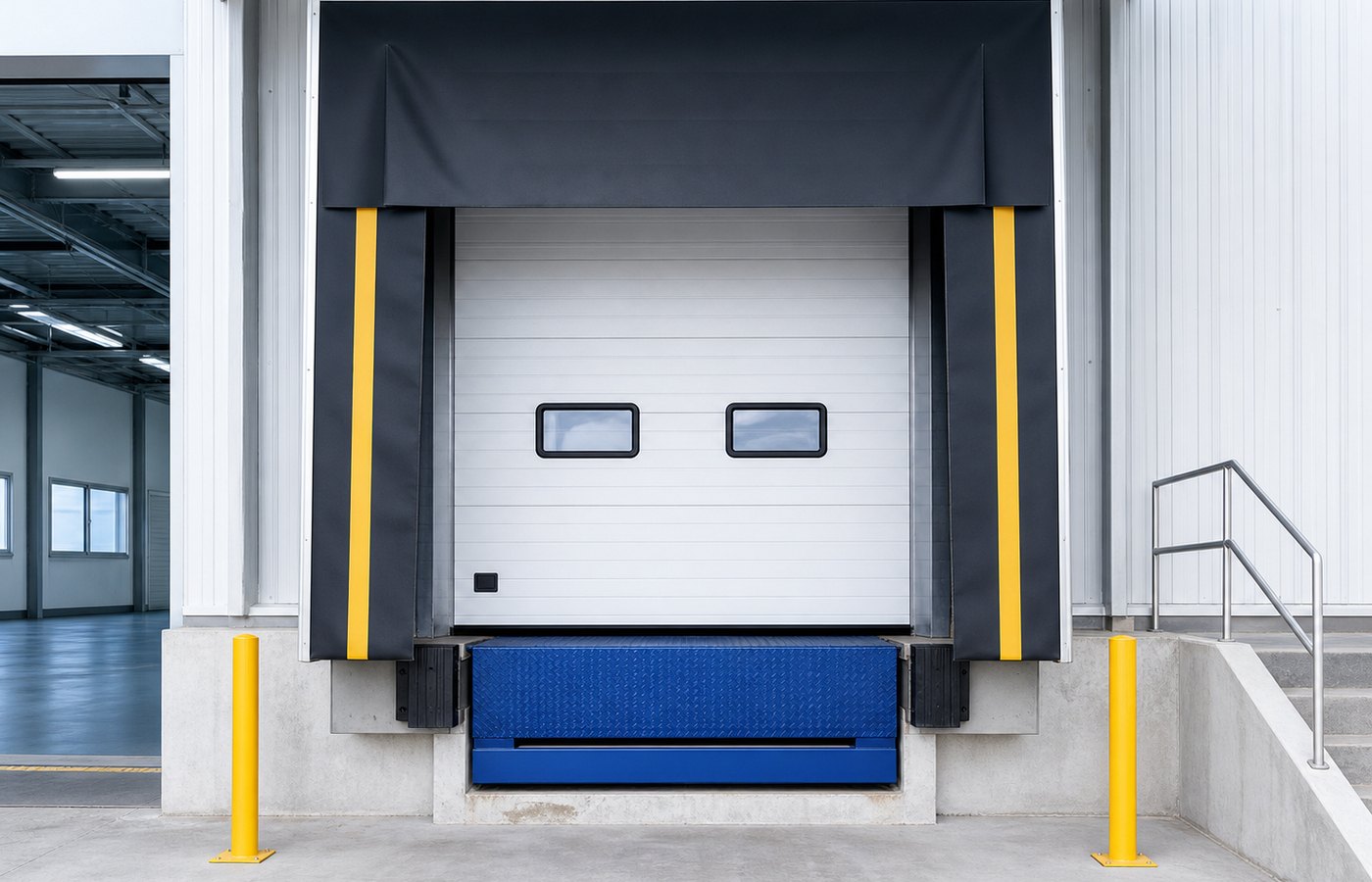
The loading dock door controls access between the warehouse and trailer interface. For refrigerated distribution areas, an insulated sectional overhead door can provide structural closure and thermal separation while keeping floor space around the loading position clear.
Przemysł Izolowana brama segmentowa SEPPES uses 40 mm or 50 mm polyurethane-filled panels with EPDM sealing around the opening.
When designing several loading docks side by side, confirm:
- door opening width and height;
- przestrzeni nadproża;
- side room;
- układu prowadnic;
- motor position;
- dock shelter frame location;
- leveler pit position;
- maintenance access.
Przyjęcie, sortowanie i tymczasowe składowanie powinny być ze sobą połączone
The dock is only one part of the distribution process. Poor staging design behind the dock can create congestion even when the loading equipment is correctly selected.
Receiving areas should have enough temporary space for pallets to be inspected and sorted without blocking active dock doors. Outbound areas should allow complete delivery routes to be staged before the assigned truck arrives where possible.
A practical multi-bay design often separates:
- receiving staging;
- quality inspection;
- temporary cold storage;
- cross-dock transfer;
- outbound route staging;
- returns or rejected products.
This becomes increasingly important as the number of loading docks grows because internal forklift traffic can become the true bottleneck even when enough truck positions are available.
Planowanie ruchu ciężarówek przychodzących i wychodzących oddzielnie
Multi-bay distribution centers should also review vehicle movement outside the building.
Where site space allows, inbound and outbound trucks should have a clearly defined approach, waiting and departure process. This reduces unnecessary reversing, queue interference and congestion in front of active loading docks.
Sprawdzić:
- truck turning radius;
- yard depth;
- trailer waiting positions;
- dock numbering;
- driver check-in process;
- pedestrian routes;
- one-way versus two-way traffic;
- emergency access.
Bezpieczeństwo rampy załadunkowej dla wózków widłowych i naczep
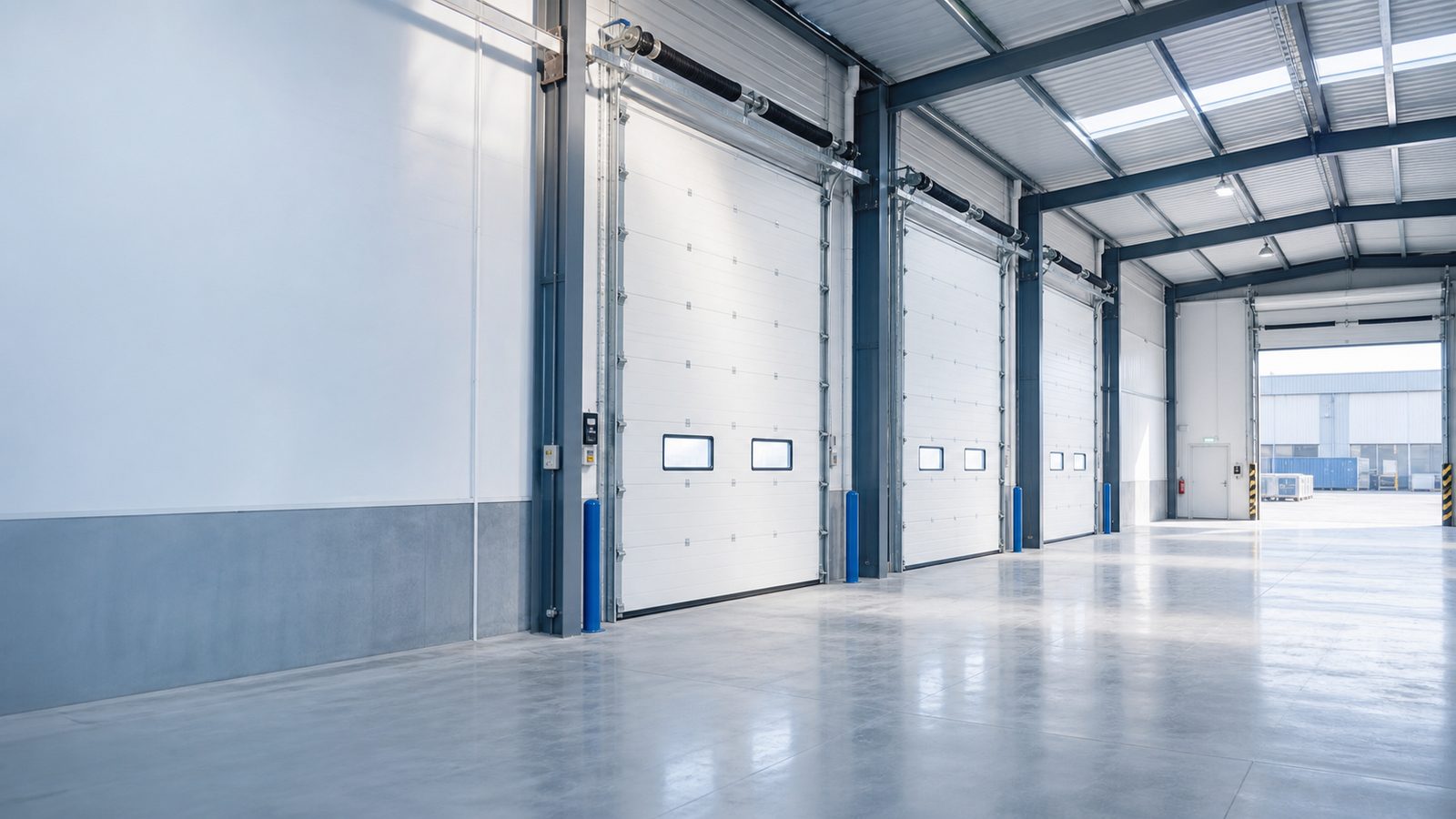
Multi-bay facilities create several areas where forklifts, trailers and employees interact. Loading dock safety therefore needs to be part of the layout rather than added after equipment is installed.
The U.S. Occupational Safety and Health Administration identifies risks such as forklifts falling from dock edges and skidding or slipping on wet or icy loading surfaces.
See: Wytycznymi OSHA dotyczącymi pochylni dokowych .
Depending on local requirements and the site risk assessment, loading bays may use:
- odbojniki rampy;
- wheel chocks;
- truck restraint systems;
- red/green traffic lights;
- dock edge markings;
- pedestrian separation;
- interlocked door and dock controls.
For vehicle control equipment, see the SEPPES truck restraint system .
You can also review the detailed loading dock safety checklist oraz dock leveler safety standards guide .
Kontrola temperatury jest kontynuowana również podczas transportu
Cold chain distribution does not end when the trailer leaves the warehouse. The transition from refrigerated storage to the transport vehicle is part of the complete temperature-controlled logistics process.
The U.S. Food and Drug Administration's sanitary transportation guidance identifies inadequate refrigeration or temperature control, improper loading and unloading practices, sanitation and poor holding practices among potential food-transport concerns.
Oficjalne odniesienie: FDA sanitary transportation of food guidance .
The purpose of the loading dock system is not to replace the facility's food-safety or temperature-control procedures. Instead, the door, shelter and leveler should support the operating environment required by the facility.
Przykładowy układ wielostanowiskowej dystrybucji łańcucha chłodniczego
The following example shows how six loading docks could be assigned. It is a planning example rather than a fixed engineering standard.
| Bay | Funkcja | Possible equipment |
|---|---|---|
| Bay 1 | Inbound refrigerated receiving | Insulated sectional door + hydraulic dock leveler + dock shelter |
| Bay 2 | Inbound refrigerated receiving | Insulated sectional door + hydraulic dock leveler + dock shelter |
| Bay 3 | Cross-dock / priority transfer | Sectional door + flexible dock shelter + leveler |
| Bay 4 | Outbound regional delivery | Insulated sectional door + leveler + shelter |
| Bay 5 | Outbound regional delivery | Insulated sectional door + leveler + shelter |
| Bay 6 | Overflow / returns / exception loads | Flexible loading bay configuration |
The exact ratio between receiving and outbound docks should be determined by truck schedules, pallet flow and peak-hour requirements.
Typowe błędy projektowe wielostanowiskowych ramp załadunkowych
Stosowanie identycznych stanowisk bez sprawdzenia ich rzeczywistej funkcji
A receiving dock handling large supplier trailers may need a different operating range from a regional dispatch bay serving smaller vehicles.
Wybór poziomnicy rampy przed sprawdzeniem floty ciężarówek
Platform dimensions and working range should be selected after the minimum and maximum expected truck-bed heights are known.
Pomijanie strefy przygotowawczej za rampą
Adding more truck positions does not solve congestion if pallets cannot be staged behind those positions.
Mieszanie tras wózków widłowych przychodzących i wychodzących
Repeated crossing between receiving and dispatch flows can reduce efficiency and create additional traffic conflicts.
Stosowanie osłony niedopasowanej do zakresu pojazdów
Dock shelter dimensions should be selected according to actual trailer width and height variation, bumper projection and loading dock geometry.
Traktowanie bramy, osłony i poziomnicy jako odrębnych projektów
All three products occupy the same opening and need to be coordinated before production or pit construction begins.
Jakie informacje są potrzebne do zaprojektowania ramp załadunkowych łańcucha chłodniczego?
For a multi-bay distribution center project, prepare the following information where available:
- liczbę doków załadunkowych;
- receiving versus outbound bay allocation;
- szerokość × wysokość otworu drzwiowego;
- platform height;
- dock leveler pit dimensions;
- minimalną wysokość skrzyni ładunkowej ciężarówki;
- maksymalną wysokość skrzyni ładunkowej ciężarówki;
- minimum and maximum trailer width and height;
- masę wózka widłowego;
- maksymalną masę ładunku;
- expected loading cycles per day;
- temperatura robocza wewnątrz;
- outdoor climate conditions;
- required dock sealing level;
- truck restraint requirements;
- architectural drawings;
- site photos;
- kraj docelowy lub port.
If the warehouse is still in the design stage, sharing drawings before the dock pits and door openings are finalized can make it easier to coordinate the door tracks, levelers, shelters and truck approach dimensions.
Najczęściej zadawane pytania
Ile doków załadunkowych powinno mieć centrum dystrybucji chłodniczej?
Nie ma stałej liczby. Liczbę zatok należy obliczyć na podstawie szczytowego napływu ciężarówek, średniego czasu załadunku lub rozładunku, nakładania się przyjęć i wysyłek, zmienności ciężarówek, pojemności strefy buforowej oraz wymaganego zapasu operacyjnego.
Czy doki przyjęciowe i doki wysyłkowe powinny być oddzielone?
Where the operating volume justifies it, separating inbound receiving and outbound dispatch can simplify pallet flow, reduce forklift conflicts and make truck scheduling easier to manage.
Jaki typ poziomnicy rampy przeładunkowej jest odpowiedni dla centrum dystrybucyjnego?
Hydrauliczne poziomnice rampy są szeroko stosowane w środowiskach magazynowych o wysokiej częstotliwości. Przy doborze należy uwzględnić zakres wysokości skrzyni ładunkowej pojazdu, wymiary wnęki, masę wózka widłowego i ładunku, częstotliwość załadunku oraz wymaganą nośność.
Dlaczego osłony dokowe są ważne w dystrybucji łańcucha chłodniczego?
A dock shelter reduces the exposed gap around a trailer when it is positioned at the warehouse. This can help reduce outside air, weather, dust and moisture entering the loading interface.
Czy każda rampa załadunkowa powinna używać tej samej osłony dokowej?
Niekoniecznie. Stanowiska obsługujące podobne ciężarówki mogą używać standardowego wyposażenia, podczas gdy specjalne stanowiska przyjęć, stanowiska dla małych pojazdów lub stanowiska o wysokiej szczelności mogą wymagać innych wymiarów lub konstrukcji wiaty.
Jakie drzwi są zwykle stosowane przy dokach załadunkowych?
Insulated sectional overhead doors are commonly used because they open vertically, leave the dock floor clear and can be integrated with dock shelters and levelers. The required panel, lift type and sealing system depend on the warehouse environment.
Czy drzwi, osłona dokowa i poziomnica mogą być zaplanowane razem?
Yes. Planning them as one loading bay system allows the opening dimensions, track arrangement, pit, bumper position, truck interface and sealing system to be coordinated before production.
Planowanie ramp załadunkowych dla centrum dystrybucji łańcucha chłodniczego?
Send us your number of loading bays, platform height, pit dimensions, truck-bed range, vehicle sizes, door openings, forklift loads and warehouse drawings. SEPPES can help coordinate the doors, dock levelers and dock shelters for your multi-bay distribution project.
Request a project quote View loading dock equipment