
Loading docks are one of the most important operating points in a cold chain distribution center. Every inbound truck, pallet transfer and outbound regional delivery must pass through the dock area, often while refrigerated products are being received, sorted, staged and dispatched at the same time.
For this reason, a cold chain loading dock should not be designed as a row of identical doors. The number of bays, inbound and outbound traffic, truck-bed height range, door type, dock leveler, sealing system and temporary staging space all affect how efficiently the distribution center can operate.
A well-planned multi-bay system connects the complete workflow:
For a wider overview of refrigerated access systems, see the SEPPES cold storage doors and loading dock equipment solution .
Why cold chain distribution centers need multi-bay loading dock planning
A conventional warehouse may have relatively predictable inbound and outbound traffic. A cold chain distribution center can be more complex because products often move quickly through receiving, inspection, sorting, temporary refrigerated storage and regional dispatch.
Several trucks may arrive within the same period, while outbound vehicles are already waiting for route loading. If every loading bay is treated as interchangeable, forklift traffic, trailer queues and staging congestion can begin to overlap.
The goal of multi-bay planning is therefore not simply to install more loading docks. It is to assign each bay a practical role and make sure the surrounding warehouse layout supports that role.
Important planning factors include:
- peak truck arrivals per hour;
- average loading and unloading time;
- inbound versus outbound volume;
- truck and trailer size variation;
- temperature zones;
- pallet staging capacity;
- forklift route conflicts;
- door opening frequency;
- dock leveler operating range;
- truck sealing requirements.
Separate receiving docks from outbound loading docks
One of the most useful layout decisions is to distinguish between inbound receiving and outbound dispatch instead of allowing every bay to perform every task.
| Dock function | Main activity | Important design considerations |
|---|---|---|
| Inbound receiving dock | Unload refrigerated trailers and receive pallets | Fast inspection access, forklift circulation and staging space |
| Inspection or exception bay | Handle delayed, damaged or special shipments | Avoid blocking normal receiving bays |
| Cross-dock bay | Move goods rapidly from inbound to outbound routes | Short travel distance between receiving and dispatch |
| Outbound loading dock | Load regional delivery vehicles | Route staging, vehicle scheduling and efficient pallet sequencing |
| Overflow bay | Support peak periods and mixed operations | Flexible equipment and broad truck compatibility |
Separating these functions can reduce conflicts between inbound products and outbound route staging, especially during morning receiving peaks or afternoon distribution waves.
How many loading docks does a distribution center need?
There is no universal number of loading docks that works for every cold chain facility. The correct bay count depends more on peak operating conditions than on total daily truck volume.
For an early planning study, ask:
- How many trucks can arrive during the busiest hour?
- How long does one truck normally occupy a bay?
- Do receiving and outbound dispatch occur at the same time?
- How often are trucks delayed because pallets are not ready?
- Does the facility handle several vehicle sizes?
- Is one bay needed for returns, rejected loads or maintenance?
- How much staging space is available behind each dock?
A facility processing moderate daily volume can still experience serious congestion if most vehicles arrive during two short peak windows.
Multi-bay loading dock layout for cold chain distribution
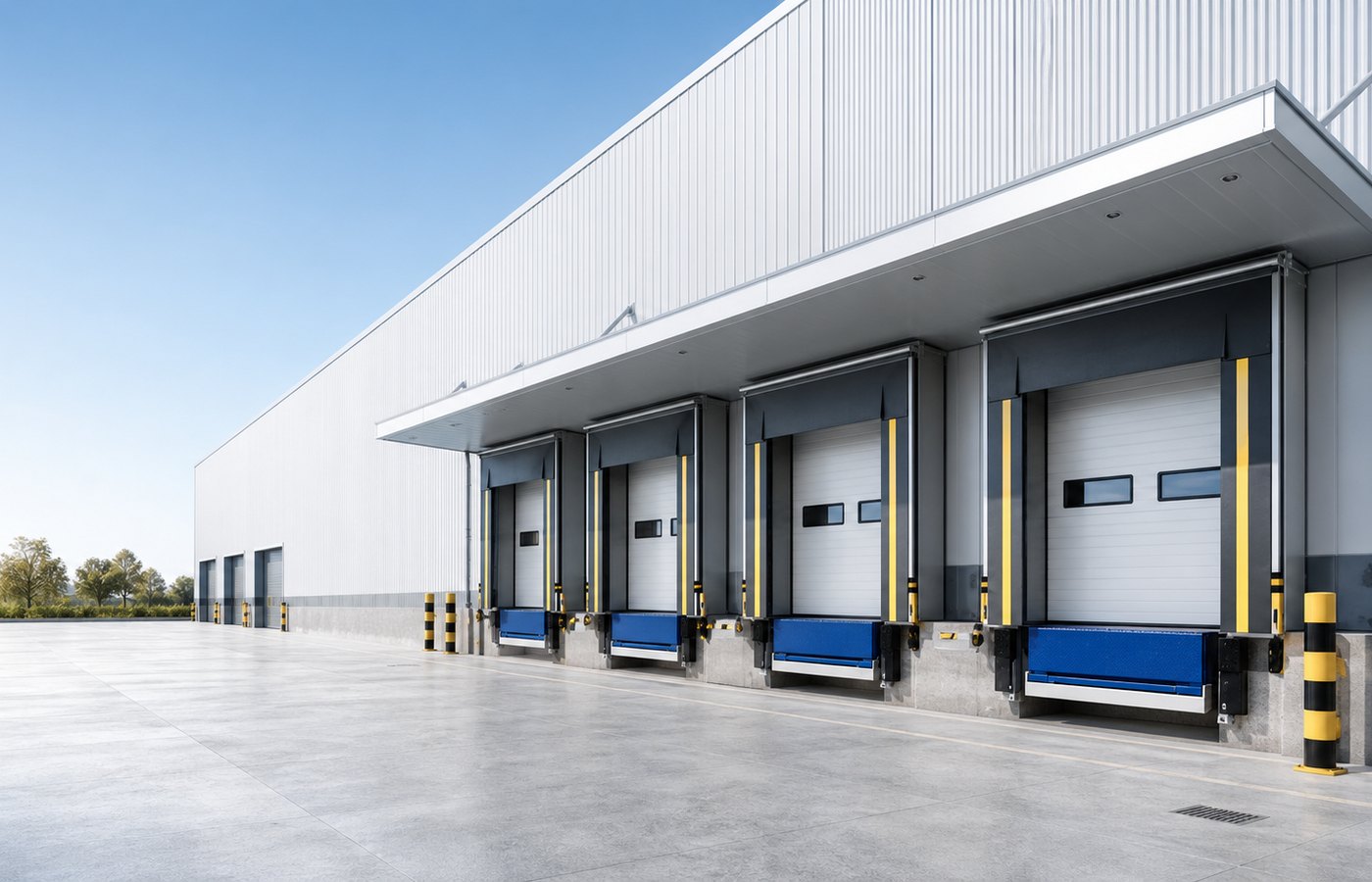
The physical arrangement of loading docks should support the internal product route. Ideally, a pallet should not travel through unnecessary cross traffic after it leaves the trailer.
A typical workflow may be:
Inbound truck → receiving dock → inspection → sorting → refrigerated staging → outbound staging → loading dock → regional delivery truck
Where possible, the forklift route should remain simple and directional. Crossings between inbound forklifts, outbound pallets and pedestrian routes should be minimized through warehouse layout and operating procedures.
Choose the right loading dock leveler for mixed truck heights
Cold chain distribution centers often receive vehicles from different carriers, suppliers and regional fleets. Their trailer floors may not all be at the same height.
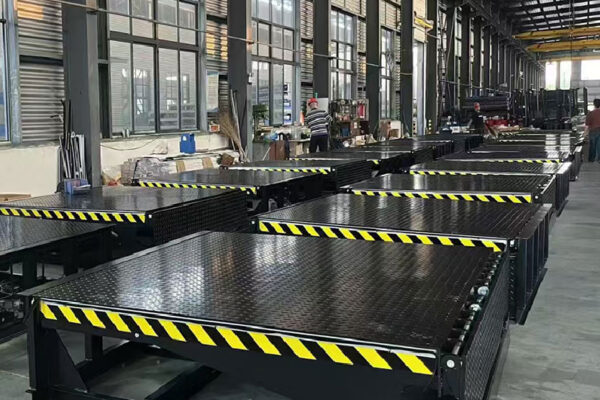
A 液压码头平整机 bridges the height difference between the warehouse platform and truck bed so forklifts can move between both surfaces.
SEPPES hydraulic dock levelers are available with reference rated-load options of 6T, 8T, 10T and 12T. Final capacity should be selected according to the complete operating condition rather than pallet weight alone.
Review:
- forklift weight;
- maximum cargo weight;
- minimum truck-bed height;
- maximum truck-bed height;
- platform height;
- pit dimensions;
- daily loading cycles;
- truck type;
- dynamic loading during forklift crossing.
Warehouse dock leveler capacity: do not use cargo weight alone
A common purchasing mistake is assuming that a six-ton cargo load automatically requires a six-ton dock leveler. The forklift itself also moves across the platform, and dynamic forces occur as its wheels enter and leave the leveler.
For example, project engineers should review the combined operating conditions of:
- forklift;
- cargo;
- driver or operator;
- crossing speed;
- frequency of operation;
- dynamic impact;
- required safety margin.
"(《世界人权宣言》) SEPPES loading dock equipment range includes dock levelers, dock shelters, dock seals and other loading bay equipment for warehouse and logistics applications.
Dock shelters help maintain the cold-chain boundary
The truck-to-building interface is another important part of refrigerated distribution. Even when the loading door itself is insulated, a large gap can remain around the trailer while the vehicle is positioned at the dock.
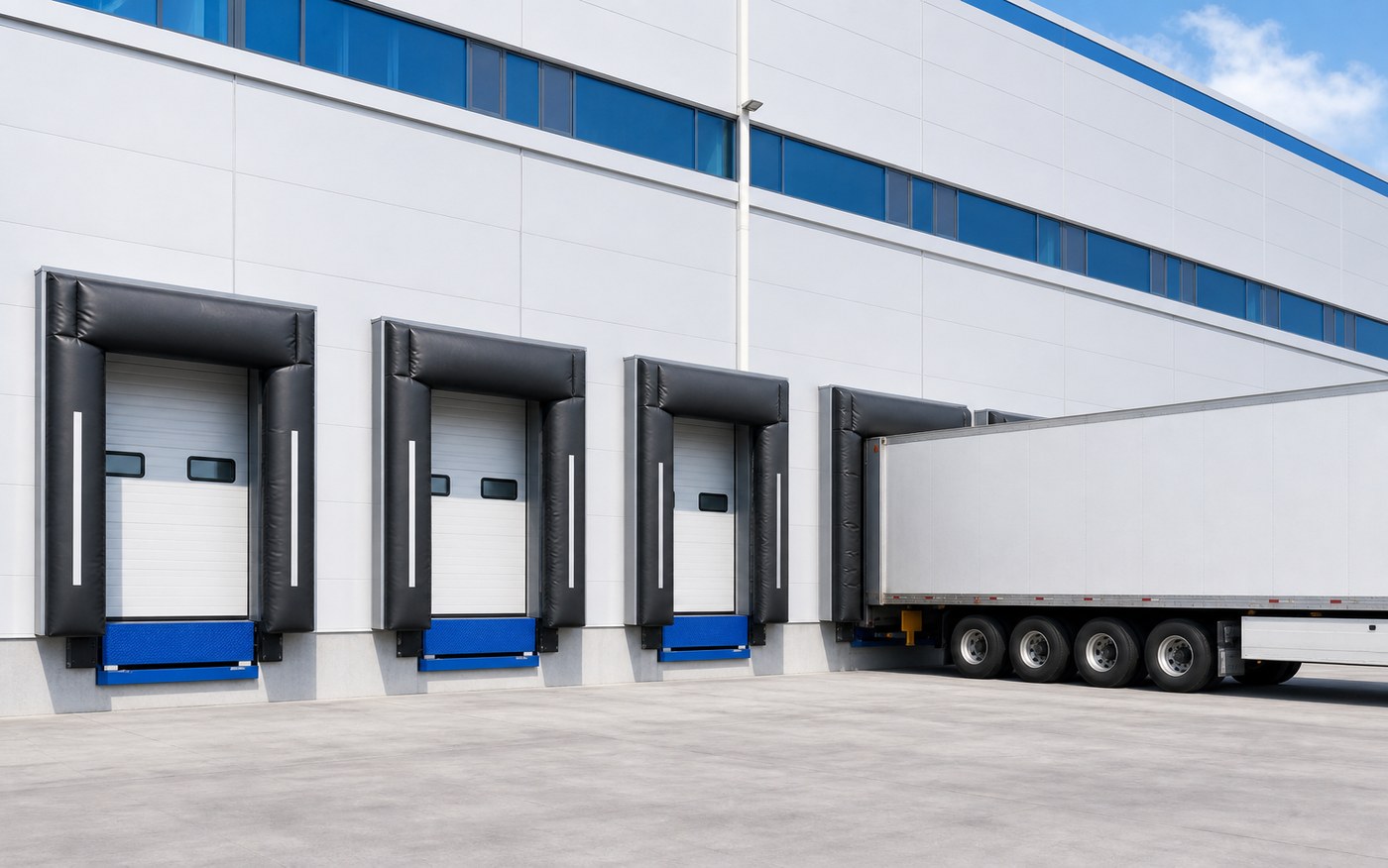
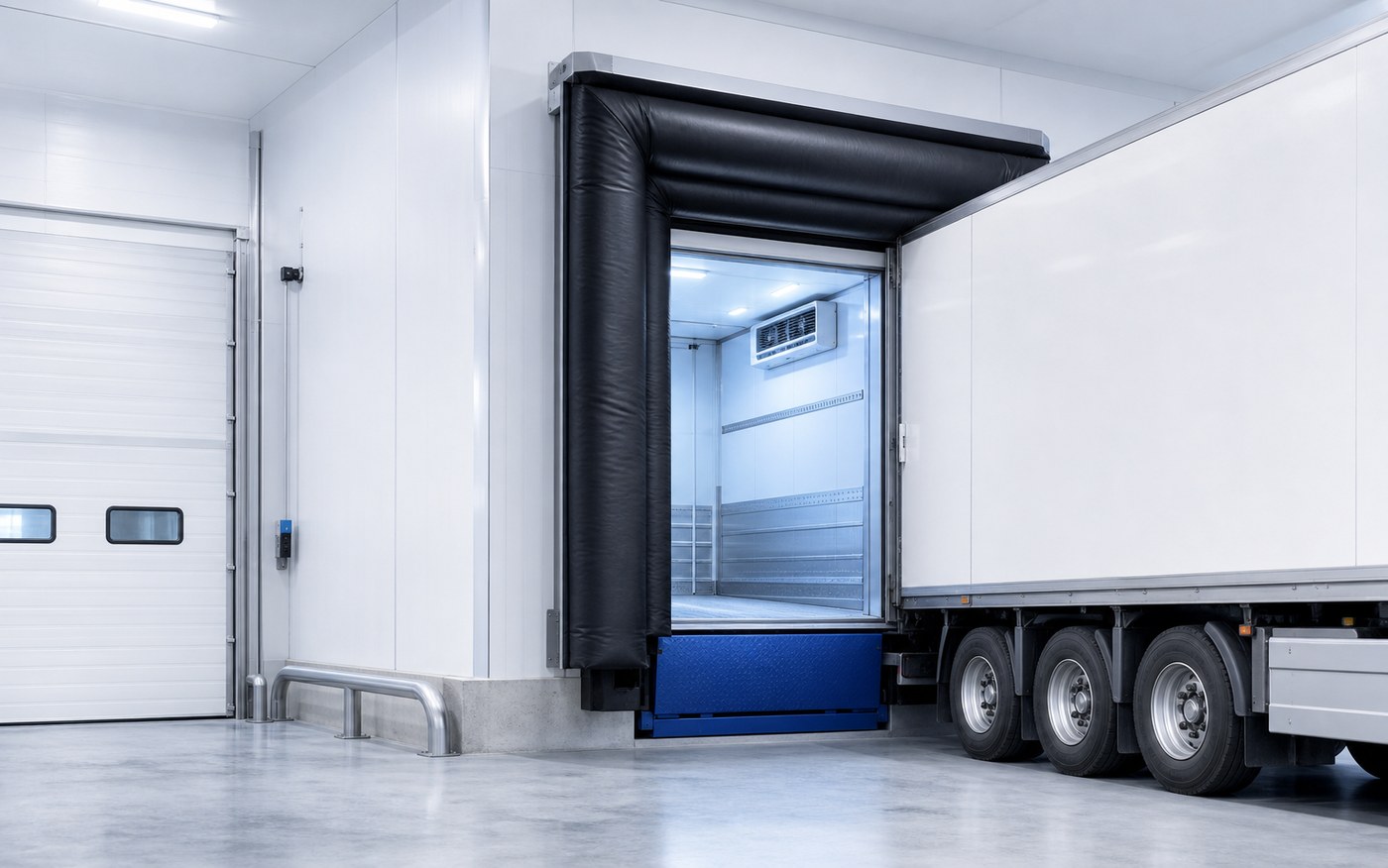
For higher sealing requirements, an 充气式码头遮蔽物 uses side and top airbags to close much of this gap.
The shelter can help reduce:
- outside air entering the loading area;
- wind and rain exposure;
- dust and insects;
- uncontrolled air exchange around the trailer.
This can be particularly useful where trucks are loading products from refrigerated or temperature-controlled staging areas.
Mechanical dock shelter or inflatable dock shelter?
Not every loading bay requires the same sealing system. Vehicle variation, loading frequency and temperature-control requirements should guide the choice.
| System | Main characteristic | Typical use |
|---|---|---|
| 机械船坞防护罩 | Flexible side and top curtains around the truck body | Frequent logistics traffic and broader truck-size variation |
| Foam dock seal | Compressed pads contact the trailer body | More consistent truck dimensions |
| 充气式码头遮蔽物 | Powered airbags inflate around the parked trailer | Cold-chain and controlled loading requiring stronger sealing |
For facilities with broad vehicle variation, you can also review the 机械船坞防护罩 configuration.
Sectional overhead doors for refrigerated distribution centers
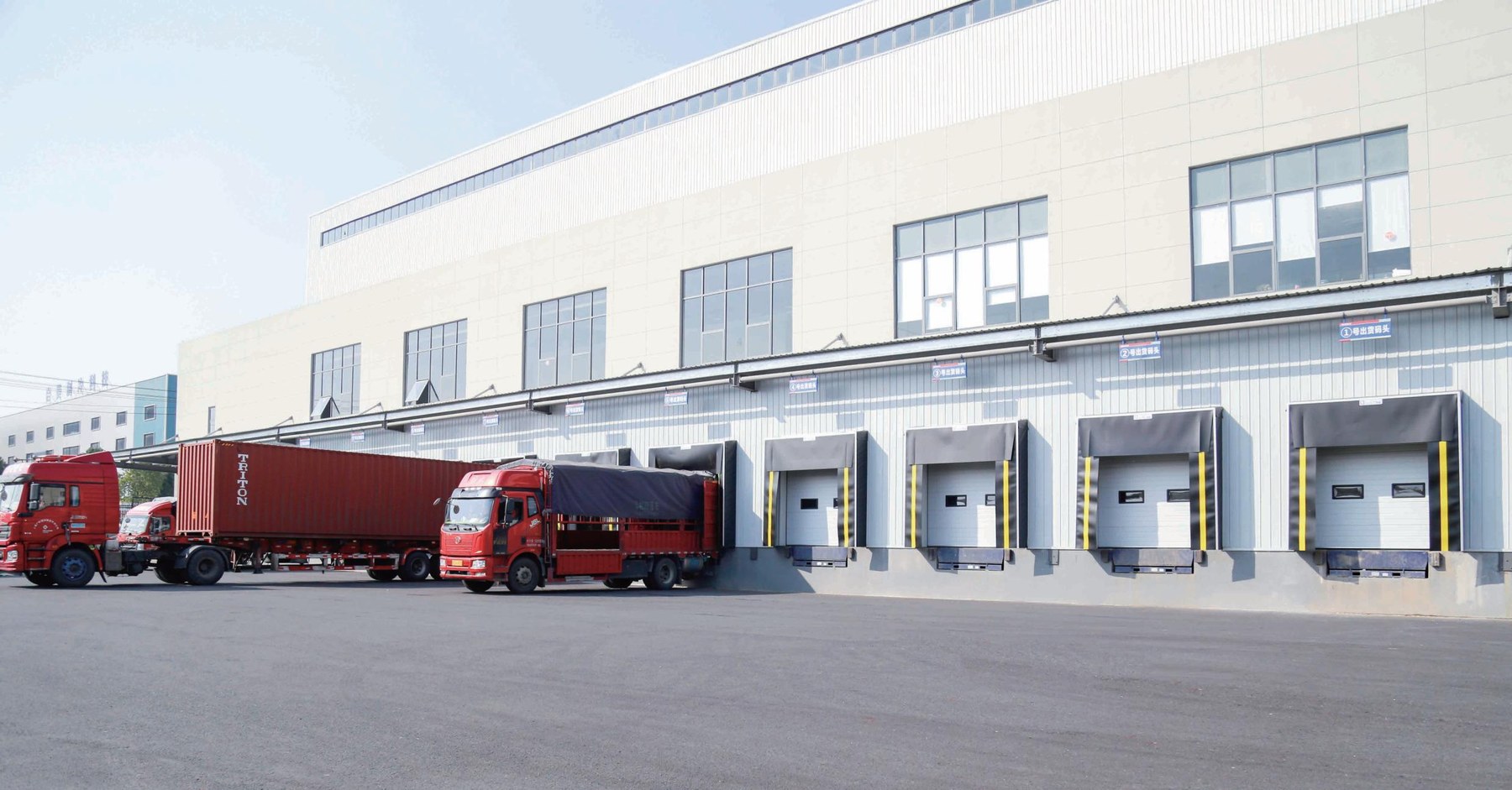
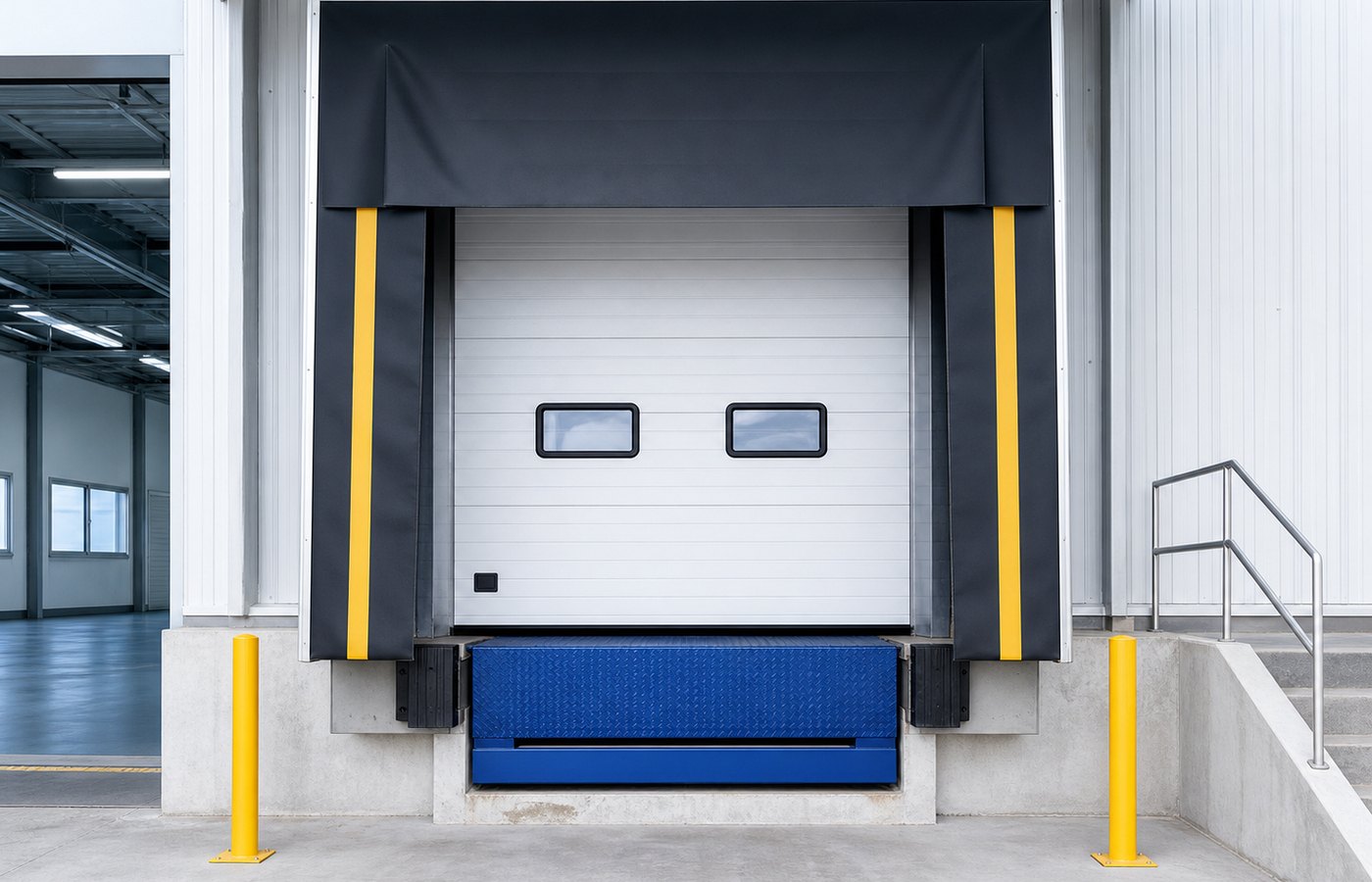
The loading dock door controls access between the warehouse and trailer interface. For refrigerated distribution areas, an insulated sectional overhead door can provide structural closure and thermal separation while keeping floor space around the loading position clear.
"(《世界人权宣言》) SEPPES insulated sectional door uses 40 mm or 50 mm polyurethane-filled panels with EPDM sealing around the opening.
When designing several loading docks side by side, confirm:
- door opening width and height;
- headroom;
- side room;
- track arrangement;
- motor position;
- dock shelter frame location;
- leveler pit position;
- maintenance access.
Receiving, sorting and temporary storage should be connected
The dock is only one part of the distribution process. Poor staging design behind the dock can create congestion even when the loading equipment is correctly selected.
Receiving areas should have enough temporary space for pallets to be inspected and sorted without blocking active dock doors. Outbound areas should allow complete delivery routes to be staged before the assigned truck arrives where possible.
A practical multi-bay design often separates:
- receiving staging;
- quality inspection;
- temporary cold storage;
- cross-dock transfer;
- outbound route staging;
- returns or rejected products.
This becomes increasingly important as the number of loading docks grows because internal forklift traffic can become the true bottleneck even when enough truck positions are available.
Plan inbound and outbound truck traffic separately
Multi-bay distribution centers should also review vehicle movement outside the building.
Where site space allows, inbound and outbound trucks should have a clearly defined approach, waiting and departure process. This reduces unnecessary reversing, queue interference and congestion in front of active loading docks.
Check:
- truck turning radius;
- yard depth;
- trailer waiting positions;
- dock numbering;
- driver check-in process;
- pedestrian routes;
- one-way versus two-way traffic;
- emergency access.
Loading dock safety for forklifts and trailers
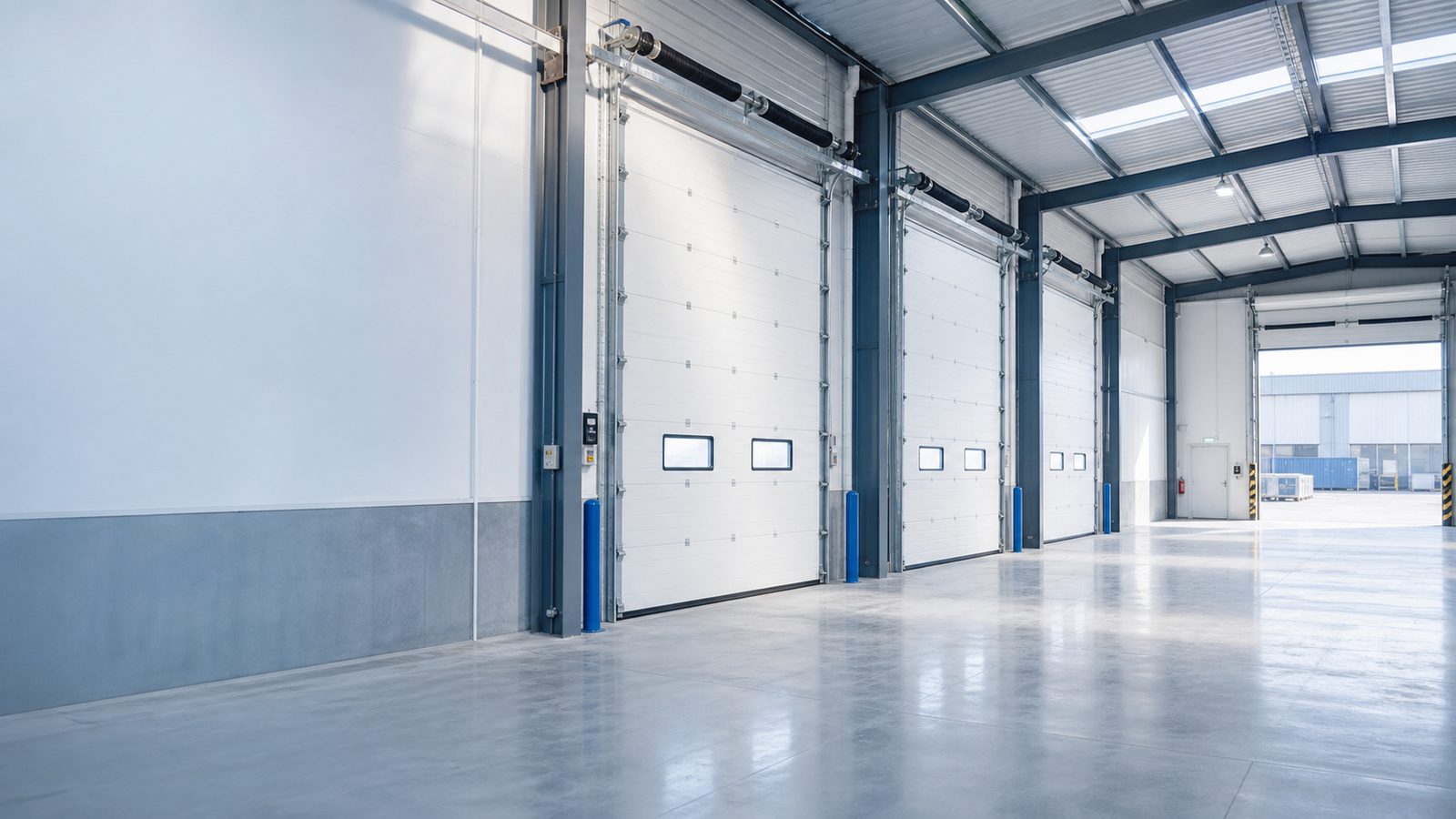
Multi-bay facilities create several areas where forklifts, trailers and employees interact. Loading dock safety therefore needs to be part of the layout rather than added after equipment is installed.
The U.S. Occupational Safety and Health Administration identifies risks such as forklifts falling from dock edges and skidding or slipping on wet or icy loading surfaces.
See: OSHA 装卸月台安全指南 .
Depending on local requirements and the site risk assessment, loading bays may use:
- dock bumpers;
- wheel chocks;
- truck restraint systems;
- red/green traffic lights;
- dock edge markings;
- pedestrian separation;
- interlocked door and dock controls.
For vehicle control equipment, see the SEPPES truck restraint system .
You can also review the detailed loading dock safety checklist 和 dock leveler safety standards guide .
Temperature control also continues during transportation
Cold chain distribution does not end when the trailer leaves the warehouse. The transition from refrigerated storage to the transport vehicle is part of the complete temperature-controlled logistics process.
The U.S. Food and Drug Administration's sanitary transportation guidance identifies inadequate refrigeration or temperature control, improper loading and unloading practices, sanitation and poor holding practices among potential food-transport concerns.
Official reference: FDA sanitary transportation of food guidance .
The purpose of the loading dock system is not to replace the facility's food-safety or temperature-control procedures. Instead, the door, shelter and leveler should support the operating environment required by the facility.
Example multi-bay cold chain distribution layout
The following example shows how six loading docks could be assigned. It is a planning example rather than a fixed engineering standard.
| Bay | 功能 | Possible equipment |
|---|---|---|
| Bay 1 | Inbound refrigerated receiving | Insulated sectional door + hydraulic dock leveler + dock shelter |
| Bay 2 | Inbound refrigerated receiving | Insulated sectional door + hydraulic dock leveler + dock shelter |
| Bay 3 | Cross-dock / priority transfer | Sectional door + flexible dock shelter + leveler |
| Bay 4 | Outbound regional delivery | Insulated sectional door + leveler + shelter |
| Bay 5 | Outbound regional delivery | Insulated sectional door + leveler + shelter |
| Bay 6 | Overflow / returns / exception loads | Flexible loading bay configuration |
The exact ratio between receiving and outbound docks should be determined by truck schedules, pallet flow and peak-hour requirements.
Common multi-bay loading dock design mistakes
Using identical bays without checking their actual function
A receiving dock handling large supplier trailers may need a different operating range from a regional dispatch bay serving smaller vehicles.
Choosing the dock leveler before checking the truck fleet
Platform dimensions and working range should be selected after the minimum and maximum expected truck-bed heights are known.
Ignoring the staging area behind the dock
Adding more truck positions does not solve congestion if pallets cannot be staged behind those positions.
Mixing inbound and outbound forklift routes
Repeated crossing between receiving and dispatch flows can reduce efficiency and create additional traffic conflicts.
Using a shelter that does not match the vehicle range
Dock shelter dimensions should be selected according to actual trailer width and height variation, bumper projection and loading dock geometry.
Treating the door, shelter and leveler as separate projects
All three products occupy the same opening and need to be coordinated before production or pit construction begins.
What information is needed to design cold chain loading docks?
For a multi-bay distribution center project, prepare the following information where available:
- number of loading bays;
- receiving versus outbound bay allocation;
- door opening width × height;
- platform height;
- dock leveler pit dimensions;
- minimum truck-bed height;
- maximum truck-bed height;
- minimum and maximum trailer width and height;
- forklift weight;
- maximum cargo weight;
- expected loading cycles per day;
- indoor operating temperature;
- outdoor climate conditions;
- required dock sealing level;
- truck restraint requirements;
- architectural drawings;
- site photos;
- destination country or port.
If the warehouse is still in the design stage, sharing drawings before the dock pits and door openings are finalized can make it easier to coordinate the door tracks, levelers, shelters and truck approach dimensions.
Frequently asked questions
How many loading docks should a cold chain distribution center have?
There is no fixed number. Bay quantity should be calculated from peak truck arrivals, average loading or unloading time, receiving and dispatch overlap, truck variation, staging capacity and the amount of operating buffer required.
Should receiving docks and outbound docks be separated?
Where the operating volume justifies it, separating inbound receiving and outbound dispatch can simplify pallet flow, reduce forklift conflicts and make truck scheduling easier to manage.
What type of dock leveler is suitable for a distribution center?
Hydraulic dock levelers are widely used in high-frequency warehouse environments. Selection should consider truck-bed height range, pit dimensions, forklift and cargo weight, loading frequency and required capacity.
Why are dock shelters important in cold chain distribution?
A dock shelter reduces the exposed gap around a trailer when it is positioned at the warehouse. This can help reduce outside air, weather, dust and moisture entering the loading interface.
Should each loading bay use the same dock shelter?
Not necessarily. Bays handling similar trucks may use standardized equipment, while special receiving, small-vehicle or high-sealing positions may require different shelter dimensions or designs.
What door is normally used with loading docks?
Insulated sectional overhead doors are commonly used because they open vertically, leave the dock floor clear and can be integrated with dock shelters and levelers. The required panel, lift type and sealing system depend on the warehouse environment.
Can the door, dock shelter and leveler be planned together?
Yes. Planning them as one loading bay system allows the opening dimensions, track arrangement, pit, bumper position, truck interface and sealing system to be coordinated before production.
Planning loading docks for a cold chain distribution center?
Send us your number of loading bays, platform height, pit dimensions, truck-bed range, vehicle sizes, door openings, forklift loads and warehouse drawings. SEPPES can help coordinate the doors, dock levelers and dock shelters for your multi-bay distribution project.
Request a project quote View loading dock equipment