How much do high speed roll up doors cost in 2026?
For factory-supplied industrial doors, a standard PVC high speed roll up door can typically start from around $990–$1,390, while self-repairing, insulated, stacking, and rigid high speed doors cost more depending on the configuration.
However, the final high speed roll up door cost is not determined by size alone. Door type, opening dimensions, frame material, motor and controls, safety sensors, insulation, operating environment, quantity, shipping destination, and local installation can all affect the total project price.
The table below provides a practical factory price reference for common high speed door configurations.
| High Speed Door Type | Reference Factory Price | Typical Application |
|---|---|---|
| PVC High Speed Roll Up Door | $990–$1,390 | Warehouses, workshops, indoor logistics |
| Self-Repairing Zipper Door | $1,190–$1,590 | High-traffic forklift passages |
| Porta de Alta Velocidade Isolada | $1.290–$1.490 | Cold storage and temperature-controlled areas |
| Porta de Empilhamento de Alta Velocidade | $1.290–$1.490 | Large openings and windy environments |
| Rigid High Speed Spiral Door | $1.990–$2.450 | Exterior entrances, security and insulation |
These prices are reference prices for the door equipment and configuration. Freight, import duties, electrical work, structural preparation, and local installation may not be included.
For an accurate quotation, provide the door width × height, quantity, application, operating environment, voltage, and delivery destination.
Índice
AlternarHigh Speed Roll Up Door Cost by Application
The right Porta de alta velocidade configuration depends heavily on where and how the door will be used. This is why two doors with similar dimensions can have very different prices.
For a dry warehouse or indoor production area, a standard PVC high speed roll up door is often the most economical choice. These applications usually focus on fast forklift access, traffic separation, dust control, and reducing unnecessary air exchange.
Food processing, pharmaceutical, and cleanroom applications may require stainless steel frames, improved sealing, contactless activation, interlocking, or additional safety devices. These options increase the initial equipment cost but are often necessary to meet hygiene and operational requirements.
Cold storage projects require a different configuration. Insulated curtains, improved perimeter sealing, heated guide rails, and anti-condensation measures may be required depending on the operating temperature and humidity.
Outdoor entrances may require higher wind resistance, stronger structures, weather protection, or a rigid high speed spiral door instead of a standard PVC curtain door.
For this reason, the lowest-priced door is not always the lowest-cost solution over the life of the project.
What Affects High Speed Roll Up Door Cost?
Several factors determine the final high speed roll up door price. When comparing quotations from different manufacturers, buyers should compare the complete configuration rather than only the final number.
1. Door Size
Width and height affect the curtain area, guide rails, shaft, frame structure, and motor capacity.
Larger openings usually require stronger components and a more powerful drive system. However, high speed doors should not be compared only by price per square meter because operating conditions and technical requirements also affect the final configuration.
2. Door Type
A standard PVC high speed roll up door is generally the most economical option for indoor industrial applications.
A self-repairing zipper door usually costs more because the curtain can automatically return to the guide after a minor forklift impact.
Insulated high speed doors are designed for temperature-controlled facilities, while rigid high speed spiral doors provide stronger insulation, security, and exterior protection.
The correct door type should therefore be selected according to the application rather than purchase price alone.
3. Frame Material
Galvanized steel is commonly used for warehouses, logistics centers, and general manufacturing facilities.
Stainless steel is often selected for food processing, pharmaceutical, cleanroom, washdown, or corrosive environments. Because of the higher material and manufacturing requirements, a stainless steel configuration will normally cost more than galvanized steel.
4. Motor and Control System
The control system can significantly affect the final quotation.
A basic push-button system is usually less expensive than a configuration that includes radar sensors, pull-cord switches, remote controls, access control, PLC communication, interlocking, or automated production-line integration.
If the door needs to communicate with an AGV, conveyor, robot, WMS, or PLC system, the required communication interface should be confirmed before quotation.
5. Safety Devices
Common safety options include photoelectric sensors, safety edges, radar sensors, and safety light curtains.
Industrial facilities with frequent forklift or pedestrian traffic may require additional protection. When comparing quotations, confirm which safety devices are included rather than comparing only the total door price.
6. Insulation and Temperature
Cold storage and temperature-controlled environments usually require a more specialized configuration than standard warehouse entrances.
Depending on the application, the door may require an insulated curtain, enhanced sealing, heated guide rails, or other anti-condensation measures.
The operating temperature should therefore be provided when requesting a quotation.
7. Shipping and Local Installation
The factory door price is not the same as the total installed project cost.
International freight, import duties, local electrical work, structural preparation, lifting equipment, and installation labor may need to be calculated separately.
For international projects, buyers should clearly separate equipment cost, shipping cost, import-related expenses, and local installation when comparing suppliers.
High Speed Roll Up Door Cost by Door Type
Different high speed door designs serve different operating conditions, which is why their prices vary.
PVC High Speed Roll Up Door
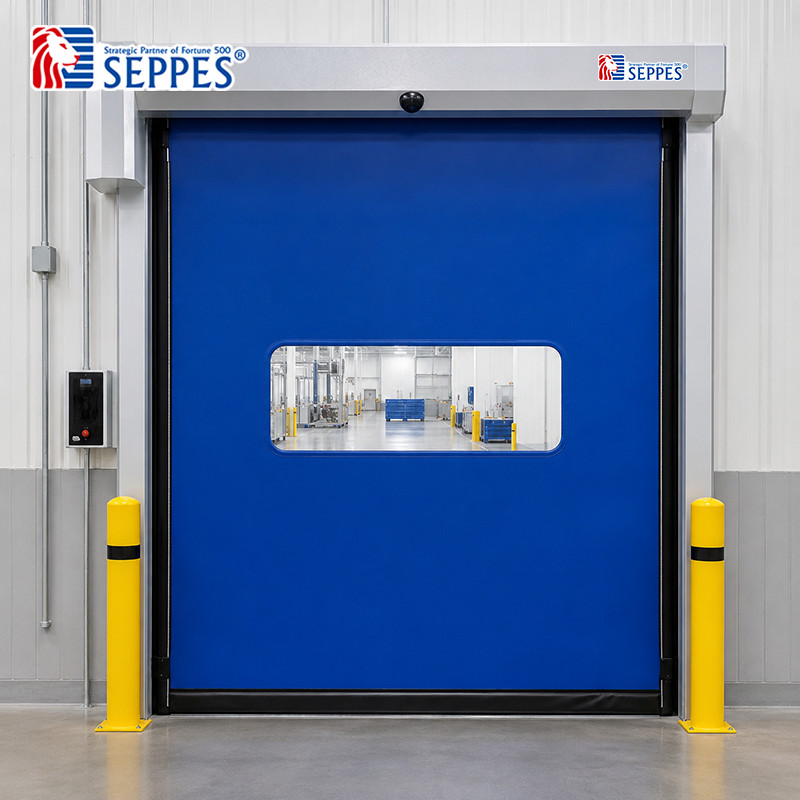
A standard PVC high speed roll up door is generally the most cost-effective choice for indoor warehouses, workshops, logistics areas, and production facilities.
It is suitable where the main priorities are fast opening, traffic efficiency, dust separation, and reducing air exchange.
[View the SEPPES High Speed Roll Up Door]
Self-Repairing Zipper Door
A zipper-style high speed door is designed for high-traffic areas where accidental contact with forklifts or equipment may occur.
After the curtain is displaced from the guide, the zipper system can help the curtain return to its operating position during the next cycle, reducing downtime and maintenance requirements.
[View the SEPPES High Speed Zipper Door]
Porta de Alta Velocidade Isolada
Insulated high speed doors are commonly used in cold storage, refrigerated warehouses, food processing facilities, and temperature-controlled production areas.
Their higher initial cost reflects additional insulation, sealing, and temperature-control requirements.
Porta de Empilhamento de Alta Velocidade
Stacking doors are commonly considered for larger openings or locations where wind resistance is more important.
The larger structural components and curtain reinforcement required for these applications can increase the equipment price.
Rigid High Speed Spiral Door
Rigid high speed spiral doors normally have the highest initial cost among these configurations.
They combine rapid operation with rigid insulated panels, improved security, exterior protection, and better thermal performance, making them suitable for external industrial entrances and high-value facilities.
Como os Engenheiros Definem o Limite do Custo da Porta Rápida
Tipo de Porta
O PVC padrão produz o menor Custo da Porta Rápida em ambientes internos. Um design com zíper aumenta o Custo da Porta Rápida, mas se recupera após impactos. Uma porta rápida enrolável isolada aumenta o Custo da Porta Rápida através do isolamento. Portas rápidas rígidas enroláveis criam um Custo de Porta Rápida mais alto ao combinar isolamento e segurança.
Tamanho e Estrutura
Largura e altura alteram a cortina, o eixo, as guias e o motor. Uma entrada de 4 × 4 metros pode aumentar o Custo da Porta Rápida em 20% a 50% em relação a uma porta de 3 × 3 metros. Pé-direito, vento e suportes de aço alteram o Custo da Porta Rápida. A precificação por metro quadrado não pode definir o Custo da Porta Rápida com precisão.
Estrutura, Acionamento e Controles
O aço galvanizado mantém o Custo da Porta Rápida. Uma estrutura de aço inoxidável pode adicionar de $300 a $1.000. Acionamentos servo, tensão personalizada, comunicação PLC e intertravamento podem adicionar de $150 a $1.000. O Custo da Porta Rápida deve separar esses itens para comparação.
Sistema de Segurança
Radar, sensores fotoelétricos, bordas de segurança e cortinas de luz resolvem riscos. O Custo da Porta Rápida pode incluir de $80 a $300 para radar e de $250 a $800 para uma cortina de luz. Reduzir o Custo da Porta Rápida removendo proteção aumenta o risco. As diretrizes da OSHA fornecem uma referência.
https://www.osha.gov/laws-regs/regulations/standardnumber/1910/1910.212
Faixas de Referência de Custo para Portas Rápidas Enroláveis
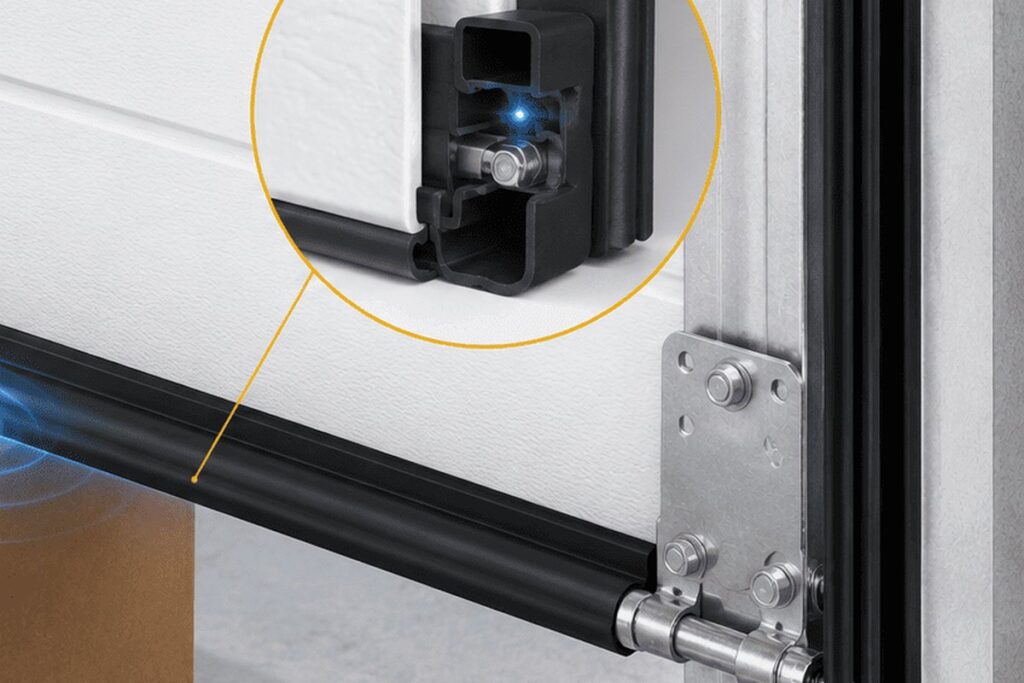
Após definir o regime de uso, o Custo da Porta Rápida pode usar faixas de fábrica: PVC, $990–$1.390; zíper autorreparável, $1.190–$1.590; isolada, $1.290–$1.490; empilhável, $1.290–$1.490; e espiral rígida, $1.990–$2.450.
These High Speed Door Cost figures exclude freight, taxes and local installation. See SEPPES products:
O custo da porta rápida enrolável permanece menor em ambientes internos. O custo das portas rápidas enroláveis aumenta com o tamanho, aço inoxidável, isolamento e controles. O Custo da Porta Rápida deve declarar inclusões e exclusões.
Exemplos de Configuração de Custo de Porta Rápida
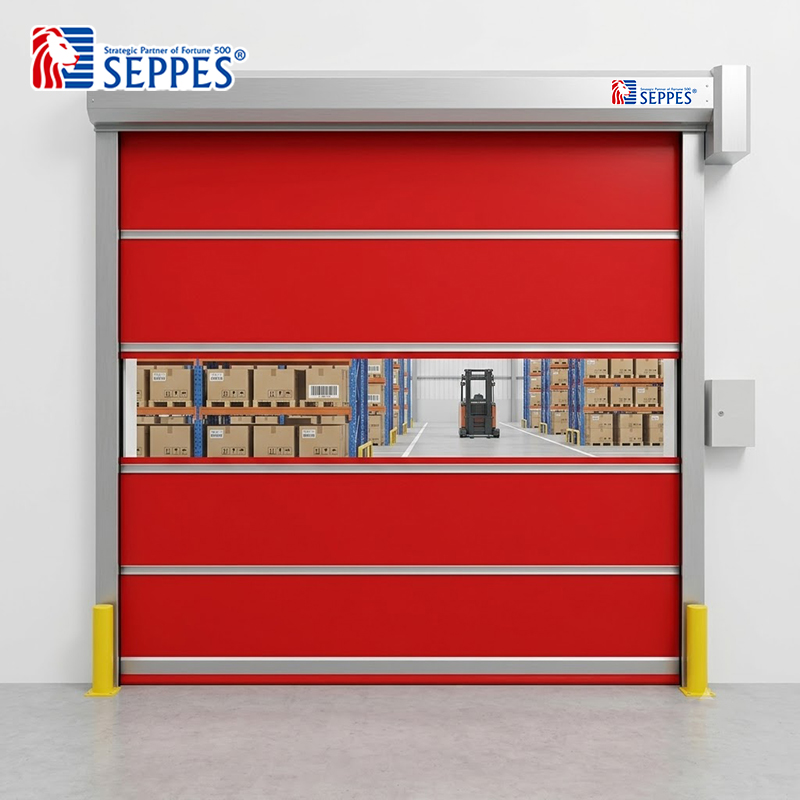
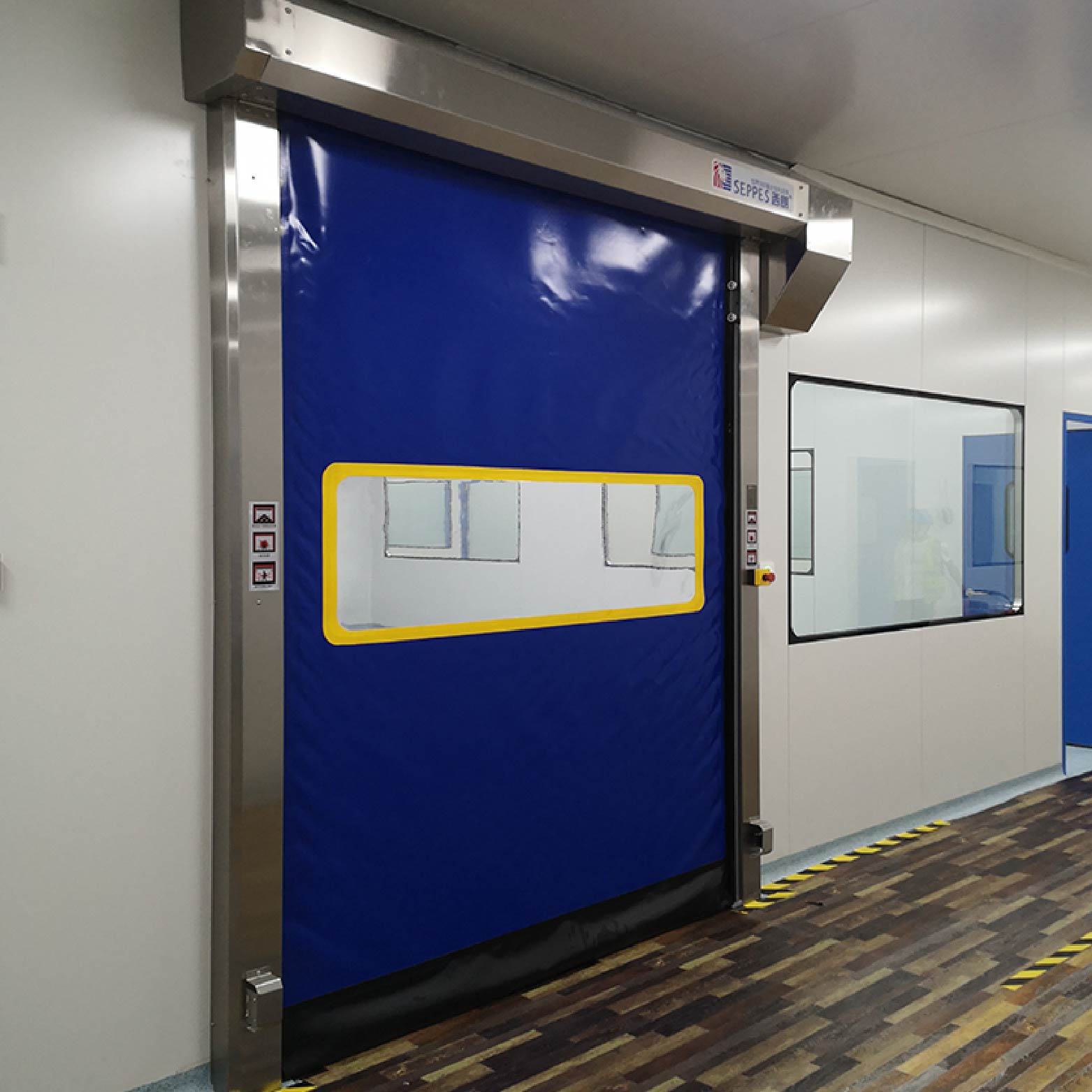
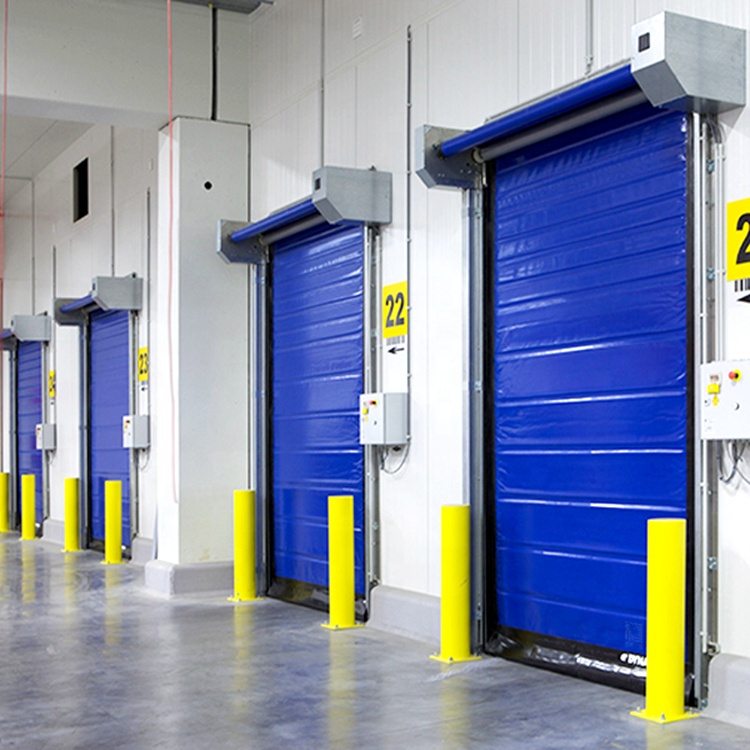
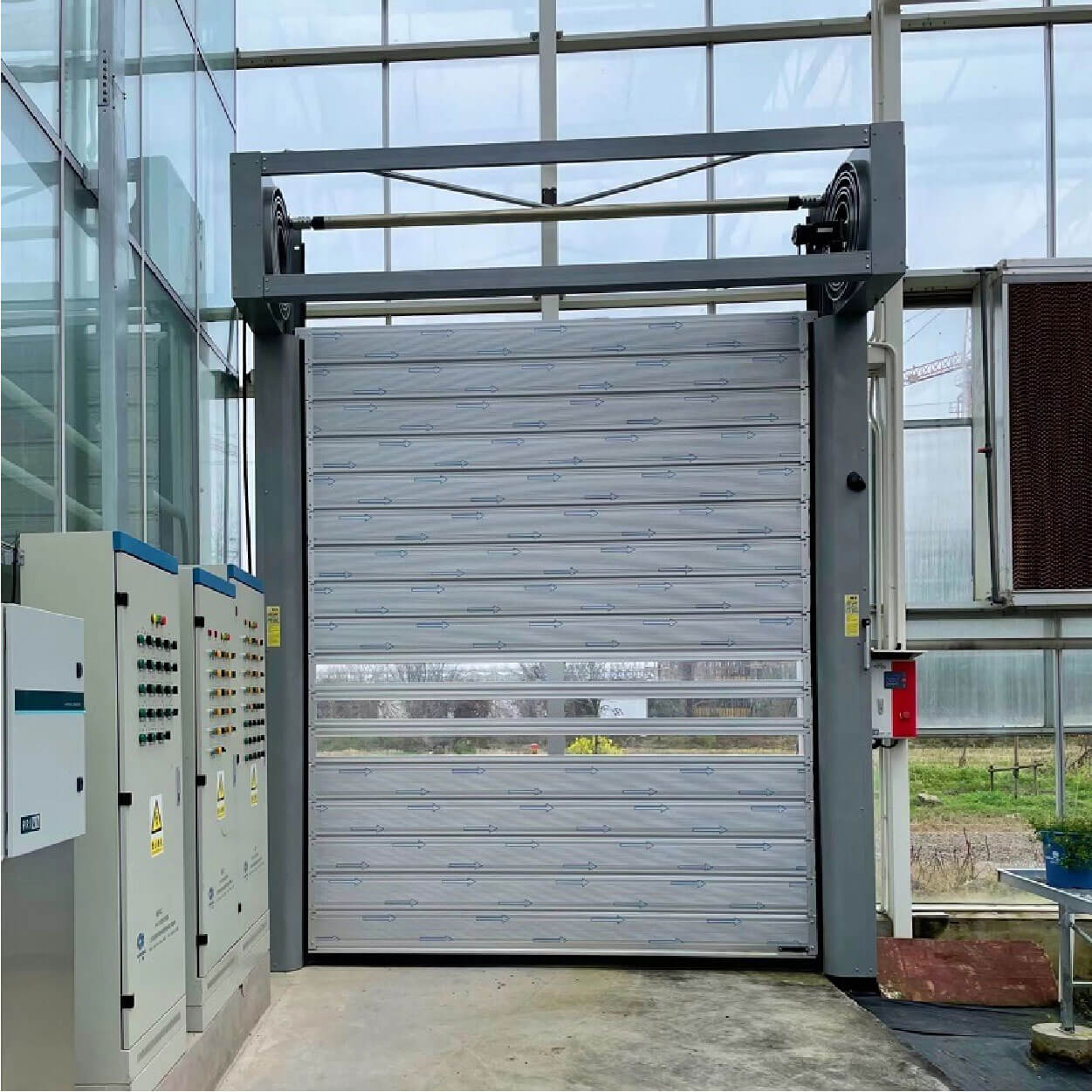
The following examples show how application requirements can change the final configuration and price of a high speed door.
Example 1: Indoor Warehouse Entrance
A 3 × 3 m warehouse entrance may use:
Standard PVC curtain
Galvanized steel frame
High speed motor and control system
Radar or push-button activation
Photoelectric safety sensors
This is generally one of the most economical high speed door configurations because it does not require stainless steel, thermal insulation, or specialized environmental protection.
Example 2: Food Processing Facility
A 2.5 × 3 m food processing entrance may require:
Self-repairing zipper curtain
Stainless steel frame
Contactless activation
Additional safety sensors
Improved perimeter sealing
The price is normally higher than a standard warehouse door because of the stainless steel structure, hygiene requirements, and additional control and safety components.
Example 3: Cold Storage Entrance
A cold storage project may require:
Insulated curtain
Enhanced side and bottom sealing
Heated guide rails where necessary
High-frequency opening and closing
Radar or automated activation
The final cost depends strongly on the storage temperature, humidity, door dimensions, and frequency of operation.
For cold storage projects, always provide the required operating temperature when requesting a quotation.
Example 4: Exterior Industrial Entrance
An exterior entrance may require a rigid high speed spiral door instead of a standard PVC roll up door.
The configuration may include:
Rigid insulated panels
Higher wind resistance
Weather-resistant structure
Safety sensors
High-speed control system
Although the initial equipment cost is higher, this type of door can provide better security, insulation, and protection for exterior industrial entrances.
Why These Prices Cannot Be Compared by Size Alone
Two 3 × 3 m doors can have very different quotations.
For example, one project may require only a PVC curtain and basic controls, while another may require stainless steel, insulation, radar, light curtains, PLC communication, and interlocking.
When comparing suppliers, ask for a detailed configuration list showing exactly what is included in the quotation.
How SEPPES Calculates High Speed Roll Up Door Cost
SEPPES does not calculate high speed roll up door cost from door dimensions alone.
Before preparing a quotation, our engineers typically review:
Opening width × height
Quantidade
Indoor or outdoor application
Temperatura de funcionamento
Expected traffic and opening frequency
Wind conditions
Material da estrutura
Activation method
Safety requirements
Voltage and control requirements
Automation or PLC integration requirements
Delivery destination
Based on this information, the door can be configured according to the actual operating environment instead of using a one-size-fits-all specification.
For international projects, SEPPES can also provide technical drawings, wiring information, installation guidance, and remote technical support.
Por que a SEPPES Define o Custo da Porta Rápida a partir de Dados do Projeto
A SEPPES não define o Custo da Porta Rápida apenas pelo tamanho. Os engenheiros revisam tráfego, ciclos, tensão, segurança e destino. Isso torna o Custo da Porta Rápida auditável. A SEPPES apoia as decisões de Custo da Porta Rápida com desenhos, informações de fiação e coordenação remota.
Perguntas Frequentes sobre Custo de Porta Rápida
How much do high speed roll up doors cost?
A standard factory-supplied PVC high speed roll up door can typically start from around $990–$1,390, while self-repairing, insulated, stacking, and rigid high speed doors cost more depending on their configuration.
The final price depends on door dimensions, material, motor and controls, safety devices, operating environment, quantity, and delivery destination.
Freight, import costs, electrical work, and local installation should normally be considered separately when calculating the total project budget.
What is the cheapest type of high speed roll up door?
A standard PVC high speed roll up door with a galvanized steel frame and basic controls is generally the most economical configuration for indoor industrial use.
It is commonly used in warehouses, workshops, manufacturing plants, and logistics facilities where thermal insulation or high wind resistance is not the primary requirement.
Why do high speed roll up door prices vary so much?
Suppliers may quote very different configurations even when the door dimensions are identical.
Differences may include curtain type, frame material, motor brand, control system, safety sensors, radar activation, insulation, wind resistance, PLC communication, installation support, and shipping scope.
For an accurate comparison, buyers should request a detailed specification instead of comparing only the final price.
Does high speed roll up door price include installation?
Not always.
For international projects, the manufacturer’s quotation may cover the door equipment while freight, import duties, local electrical work, structural preparation, lifting equipment, and installation labor are calculated separately.
Always confirm what is included and excluded before comparing quotations.
How much does an insulated high speed door cost?
Insulated high speed doors generally cost more than standard PVC roll up doors because they require additional thermal insulation, sealing, and temperature-control features.
The final configuration depends on the required operating temperature, humidity, door dimensions, traffic frequency, and whether guide heating or additional anti-condensation measures are required.
Are high speed freezer doors priced by square meter?
Not accurately.
Door dimensions are important, but cold storage doors may also require insulated curtains, heated guide rails, enhanced sealing, specialized controls, and additional safety components.
Therefore, square-meter pricing alone cannot accurately represent the final project cost.
What information is needed for an accurate high speed door quotation?
To receive an accurate quotation, provide:
Door width × height
Quantidade
Cenários de aplicação
Indoor or outdoor location
Temperatura de funcionamento
Approximate opening frequency
Tensão
Preferred activation method
Safety requirements
Automation or PLC requirements
Delivery country and destination
Providing site photos or drawings can also help the manufacturer confirm installation space and recommend the correct door configuration.
Sobre o SEPPES
SEPPES is an industrial door manufacturer based in China, providing high speed doors, sectional doors, loading dock equipment, and customized industrial entrance solutions for projects worldwide.
Our high speed door range includes PVC roll up doors, self-repairing zipper doors, insulated high speed doors, stacking doors, and rigid high speed spiral doors for warehouses, manufacturing plants, food processing facilities, cleanrooms, cold storage, and automated production areas.
Need an accurate high speed roll up door price for your project?
Send us your door width × height, quantity, application, and delivery destination. Our engineers can recommend a suitable configuration and prepare a project quotation.
Notícias e Eventos
What Capacity Dock Leveler Do I Need? 6 Ton, 8 Ton, 10 Ton or More?
How Are Loading Docks Evolving for Automated Warehouses in 2026?
Loading Docks for Cold Chain Distribution Centers: Multi-Bay Layout Guide

Insulated Overhead Doors for Ice Cream & Dairy Freezers: Loading Bay Guide