

Warum Hochgeschwindigkeits-Innentüren für Industrieumgebungen entscheidend sind
Hochgeschwindigkeits-Innentüren sind eine wesentliche Infrastrukturkomponente in Industrieumgebungen. Da moderne Produktion und Logistik weiterhin effizienter werden, fordern Unternehmen höhere Leistungsstandards, insbesondere in hochfrequentierten Ein- und Ausgangsumgebungen. Die Wahl der richtigen Hochgeschwindigkeitstür verbessert nicht nur die Effizienz, sondern bringt auch erhebliche Vorteile bei der Temperaturkontrolle, Energieeinsparung und Sicherheitsgewährleistung.
Definition einer Hochgeschwindigkeits-Innentür
Hochgeschwindigkeits-Innentüren sind Türkörper, die für schnelles Öffnen und Schließen konzipiert sind und typischerweise in Bereichen wie Fertigungsanlagen, Logistikzentren und Reinräumen eingesetzt werden. Sie können in kurzer Zeit geöffnet und geschlossen werden, reduzieren die Verweilzeit und verbessern den Arbeitsfluss, ohne die temperaturkontrollierte Umgebung zu beeinträchtigen, und gewährleisten stabile Luftverhältnisse in Lagern, Fabriken und anderen Standorten.
Hauptvorteile von Hochgeschwindigkeits-Innentüren
Steigerung der Arbeitseffizienz: Schnelles Öffnen und Schließen reduziert die Wartezeiten für den Warenein- und -ausgang und erhöht die Betriebsgeschwindigkeit.
Energieeinsparende Wirkung: Starke Abdichtung reduziert den Verlust von Kalt- oder Warmluft und senkt den Energieverbrauch.
Sicherheit: Anti-Kollisionssysteme und Sicherheitssensoren gewährleisten die Sicherheit von Personal und Geräten.
Temperatur- und Verschmutzungskontrolle: Geeignet für Branchen mit strengen Temperaturkontroll- oder Reinraumanforderungen.
Arten von Hochgeschwindigkeits-Innentüren
Es gibt mehrere Arten von Hochgeschwindigkeits-Innentüren, jede mit unterschiedlichen Merkmalen für verschiedene Szenarien. Die Wahl der richtigen Hochgeschwindigkeitstür kann Ihre Arbeitsumgebung optimieren, die Effizienz steigern und Ihrem Betrieb langfristige Vorteile bieten. Im Folgenden werden wir einige gängige Arten von Hochgeschwindigkeitstüren detailliert beschreiben, um Ihnen das Verständnis der Merkmale und Einsatzbereiche jeder Art zu erleichtern.
Hochgeschwindigkeits-Rolltor

Merkmale: Hochgeschwindigkeits-Rolltore sind die häufigste Art von Hochgeschwindigkeitstüren und zeichnen sich durch ein Aufroll-Design aus. Das Türblatt besteht in der Regel aus PVC oder Verbundmaterial, das sehr flexibel ist und beim schnellen Aufrollen wenig Platz beansprucht.
Vorteile:
Geeignet für Umgebungen mit niedriger bis mittlerer Nutzungsfrequenz und schnellen Öffnungs- und Schließeigenschaften.
Das Türblattmaterial ist weich und bietet gute Stoßfestigkeit.
Kompaktes Design für Installationen in beengten Räumen.
Nachteile:
Geringe Wärmedämmung, geeignet für Umgebungen mit niedrigen Temperaturkontrollanforderungen.
Anwendbare Szenen:
Lagerhaltung, Logistikzentren, Werkstätten und andere Umgebungen mit niedrigen oder mittleren Temperaturkontrollanforderungen, insbesondere für Orte mit hohem Zugangsverkehr und schnellem Be- und Entladen.
Spiral-Hochgeschwindigkeitstür
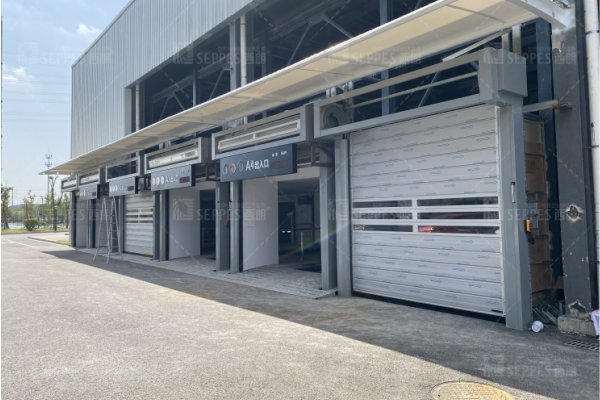
Merkmale: Spiral-Hochgeschwindigkeitstor verwendet ein Spiralbahn-Design, bei dem der Türkörper während des Öffnens und Schließens entlang der Bahn angehoben wird, geeignet für hochfrequenten Ein- und Ausgang und hohe Windbeständigkeit.
Vorteile:
Hochgeschwindigkeits-Öffnen und -Schließen, erreicht in der Regel über 1,5 Meter pro Sekunde, geeignet für Umgebungen mit hochfrequentem Ein- und Ausgang.
Starke Windbeständigkeit, geeignet für den Außenbereich oder bei extremen Wetterbedingungen.
Gutes Sicherheits- und Schutzdesign, oft mit Anti-Kollisionssensoren.
Nachteile:
Komplexe Struktur, relativ hohe Kosten.
Für Umgebungen, die nicht zu viel Windbeständigkeit erfordern, kann es zu kompliziert erscheinen.
Anwendbare Szenarien:
Außenumgebungen, Häfen, Garagen, Industrieanlagen mit hohem Verkehrsaufkommen usw., für Standorte mit hohen Sicherheits- und Windbeständigkeitsanforderungen.
Falt-Hochgeschwindigkeitstür
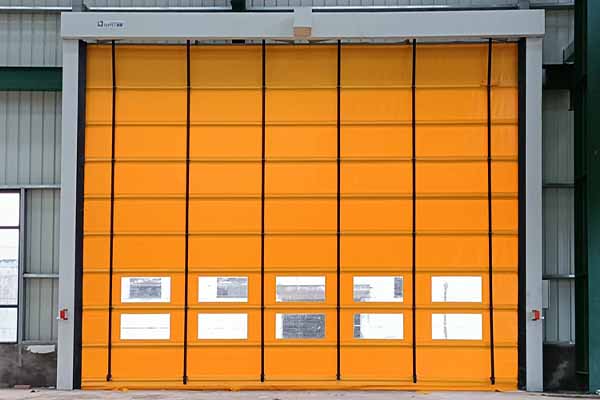
Merkmale: Die Falt-Hochgeschwindigkeitstür nutzt ein segmentiertes Falt-Design, bei dem der Türkörper beim Öffnen und Schließen nach oben gestapelt wird, was es für große Öffnungsbereiche geeignet macht. Es bietet verbesserte Abdichtung und Windbeständigkeit für anspruchsvolle Umgebungen.
Vorteile:
Hohe Windbeständigkeit für große Öffnungen und extreme Wetterumgebungen.
Öffnet und schließt schnell, reduziert effektiv Luftverlust und spart Energie.
Nachteile:
Höhere Anforderungen an den Installationsraum.
Wartung und Instandhaltung können im Vergleich zu anderen Hochgeschwindigkeitstüren komplizierter sein.
Anwendbare Szenarien:
Große Lagerhallen, Flugzeughangars, Docks und andere Orte, die große Öffnungen mit hohen Windbeständigkeitsanforderungen erfordern.
Hochgeschwindigkeits-Reißverschlusstür
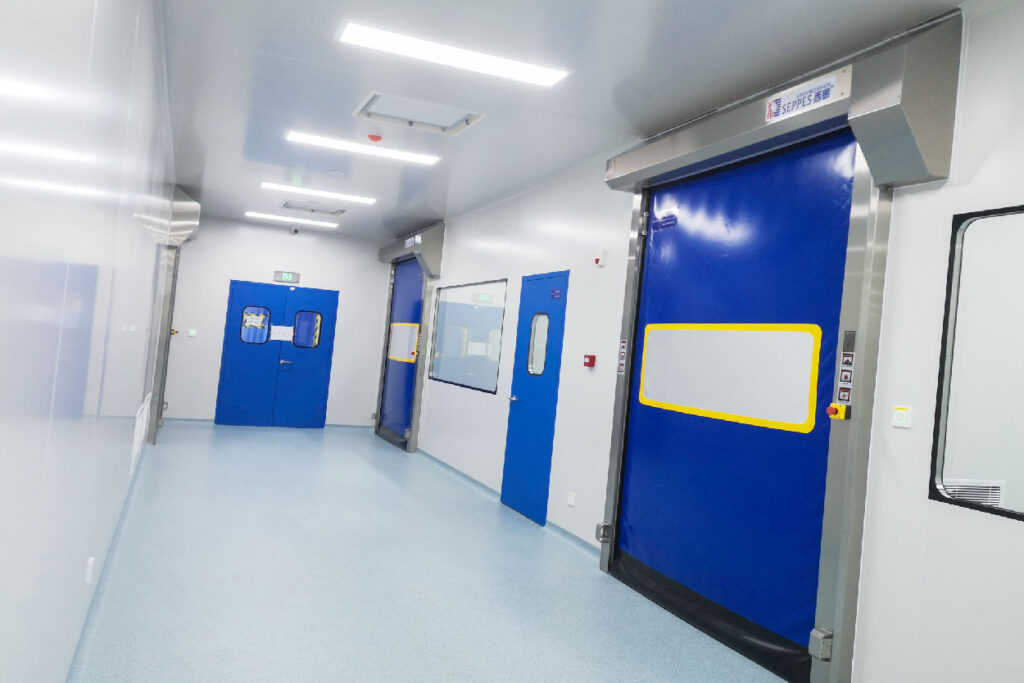
Merkmale: Die Hochgeschwindigkeits-Reißverschlusstür ist mit einem Reißverschluss-Design ausgestattet, das es dem Türblatt ermöglicht, sich schnell entlang der Bahn zu heben und zu senken. Dieses Türdesign bietet ein hohes Maß an Abdichtung und hält Staub und Verunreinigungen fern.
Vorteile:
Hochgradig luftdicht, reduziert den Eintritt von Luft und Verunreinigungen.
Selbstreparaturfunktion, der Türkörper kann nach einem Aufprall automatisch in seinen ursprünglichen Zustand zurückkehren, was Ausfallzeiten reduziert.
Significant energy savings, especially suitable for temperature-controlled environments.
Nachteile:
Regular inspection of the zipper section is required to ensure smooth operation.
Initial investment may be high.
Anwendbare Szenarien:
Clean rooms, food processing plants, the pharmaceutical industry, and other areas require high sealing and temperature control requirements.
Gewebe-Hochgeschwindigkeitstür

Merkmale: Fabric High-Speed Door is made of high-strength synthetic fabric that is lightweight and durable enough to handle frequent opening and closing.
Benefits:
Lightweight, suitable for high-frequency opening and closing, save energy.
Easy to install, flexible and adaptable.
Nachteile:
It may not be ideal for environments with high-temperature control requirements.
Anwendbare Szenarien:
Warehouses, workshops, and production areas that do not require strict temperature control.
Transparente Hochgeschwindigkeitstür

Merkmale: Transparent High-Speed Doors are made of transparent materials (e.g., transparent PVC film or polycarbonate) that allow good line of sight and are suitable for visually transparent locations.
Vorteile:
Improved visibility and increased security.
Good light transmission for stores and clean environments.
Nachteile:
Transparent materials are relatively susceptible to damage.
Anwendbare Szenarien:
Stores, cleaning rooms, production lines, and other places that require high visibility and good light transmission.
Vergleichstabelle für Hochgeschwindigkeitstüren
| Typ der Tür | Vorteile | Disadvantages | Anwendbare Szene | |
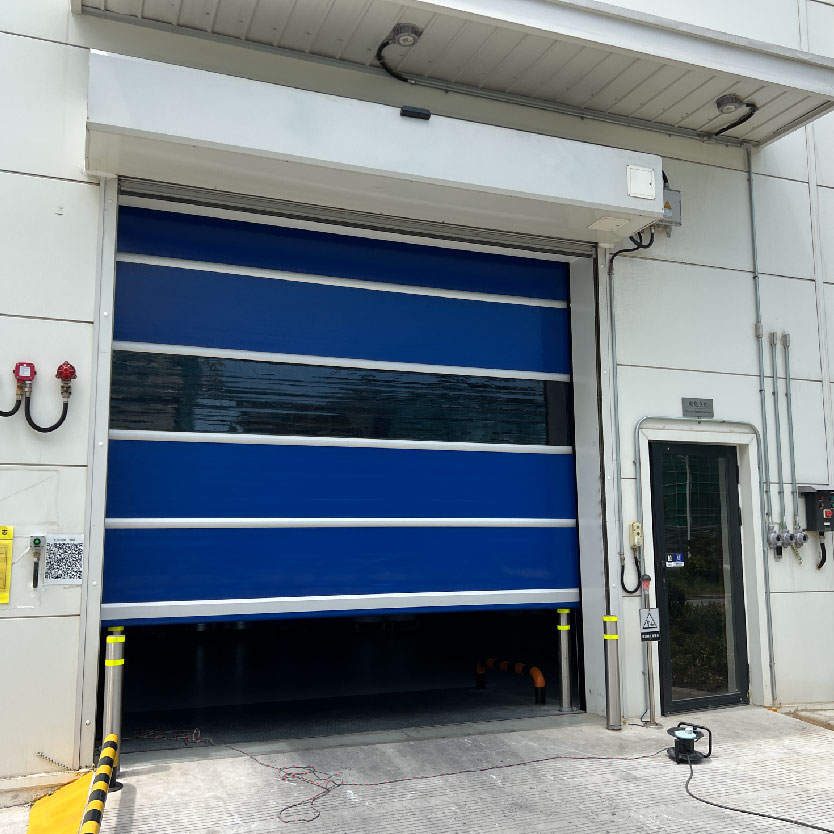 | Schnelllauf-Rolltor | High speed, space saving, good sealing | Poor thermal insulation, suitable for temperature control requirements of the environment is not high | Warehouses, logistics centers, workshops |
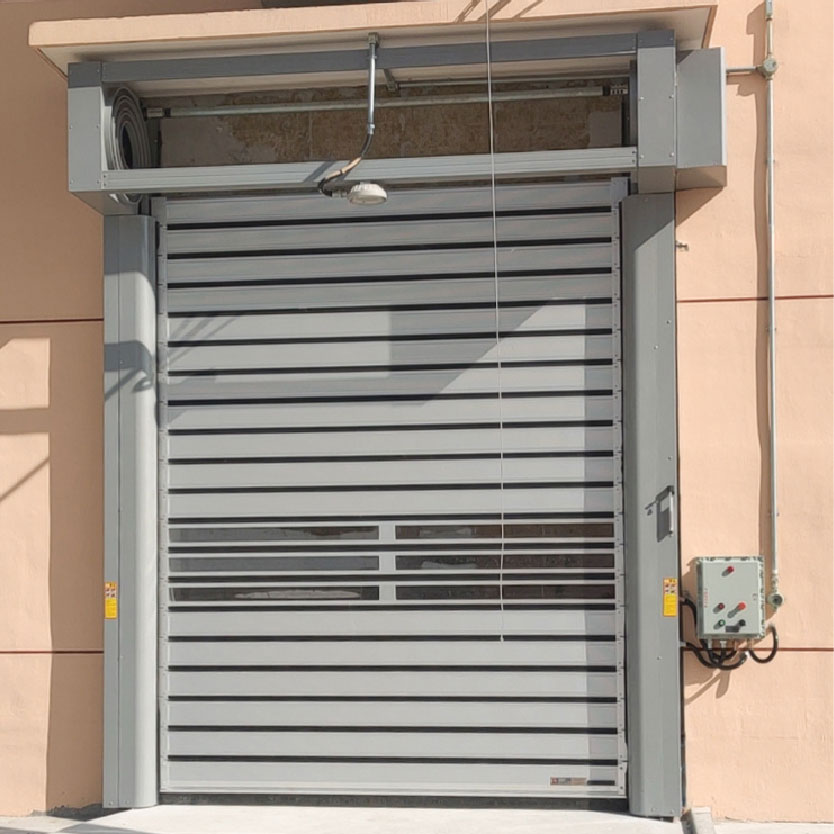 | Spiral high speed door | High speed, high wind resistance, adapted to the external environment | Complex structure, high cost | Harbor, garage, dangerous goods warehouse |
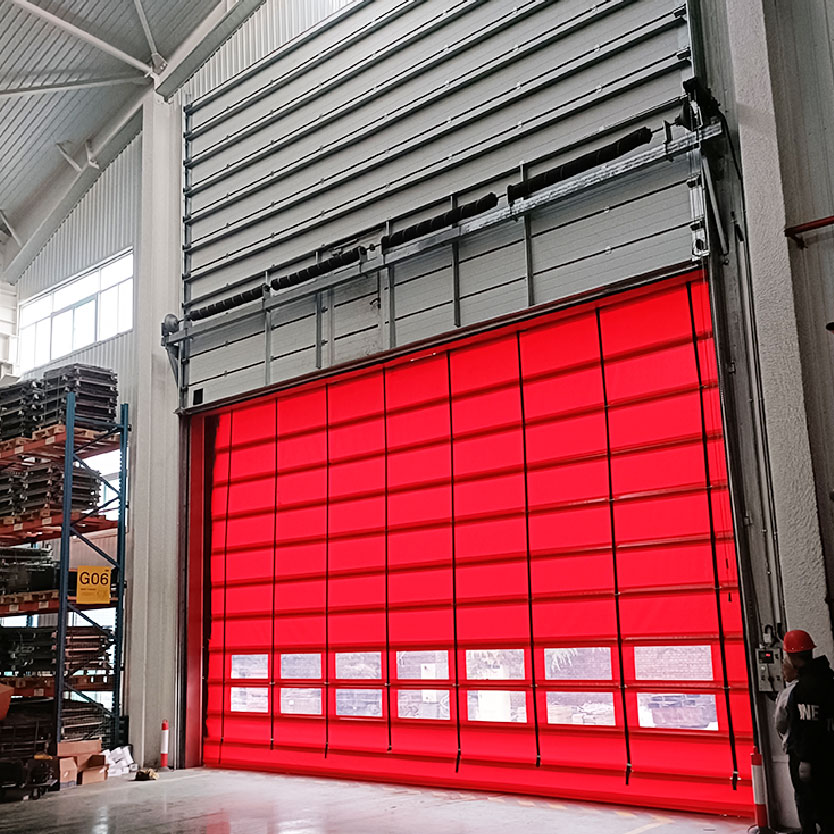 | Stacked high-speed door | High wind resistance, adaptable to bad weather, large opening areas | Large installation space requirement | Large warehouses, airplane hangars, docks |
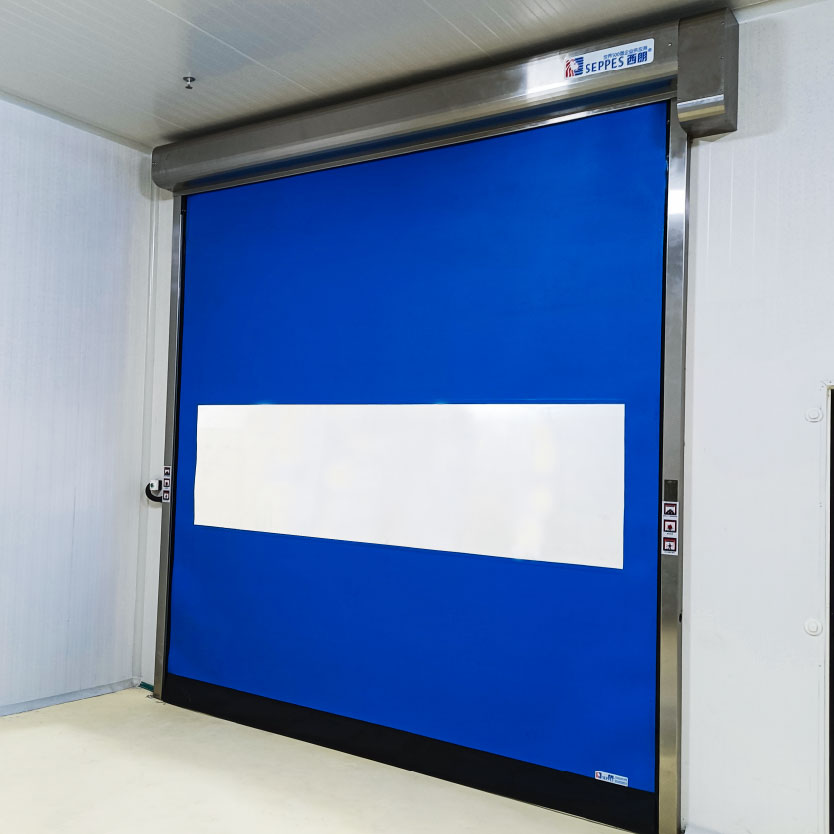 | Hochgeschwindigkeits-Reißverschlusstür | Self-healing function, provides high sealing performance | Requires regular maintenance | Clean rooms, food processing plants, dust-proof workshops |
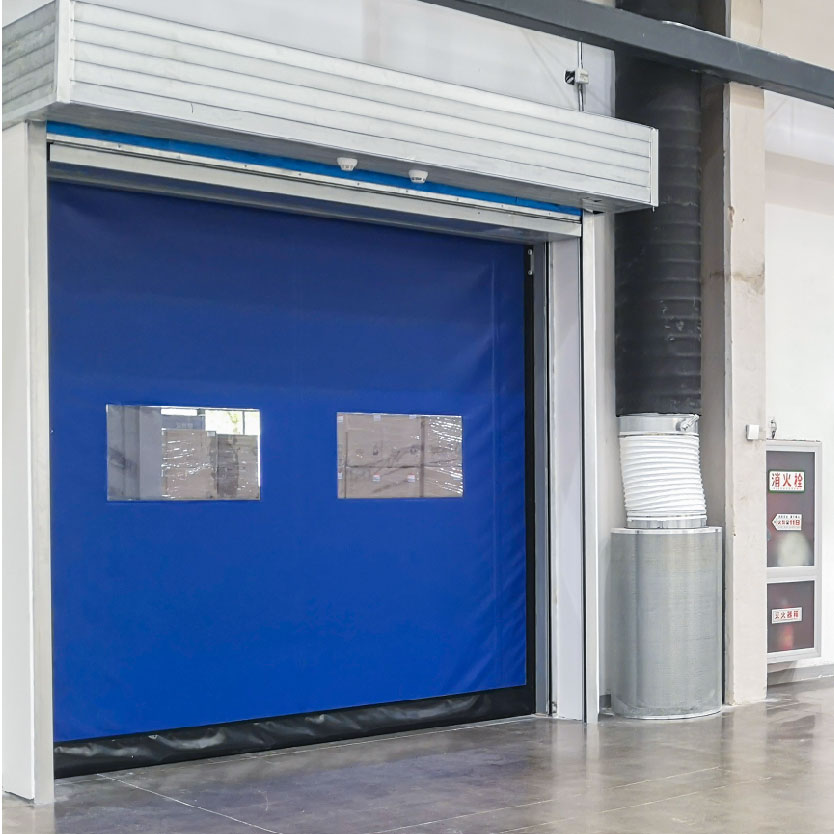 | Gewebe-Hochgeschwindigkeitstür | Lightweight, quick opening and closing, high impact resistance | Not ideal for high temperature control requirements | Areas with low temperature control requirements |
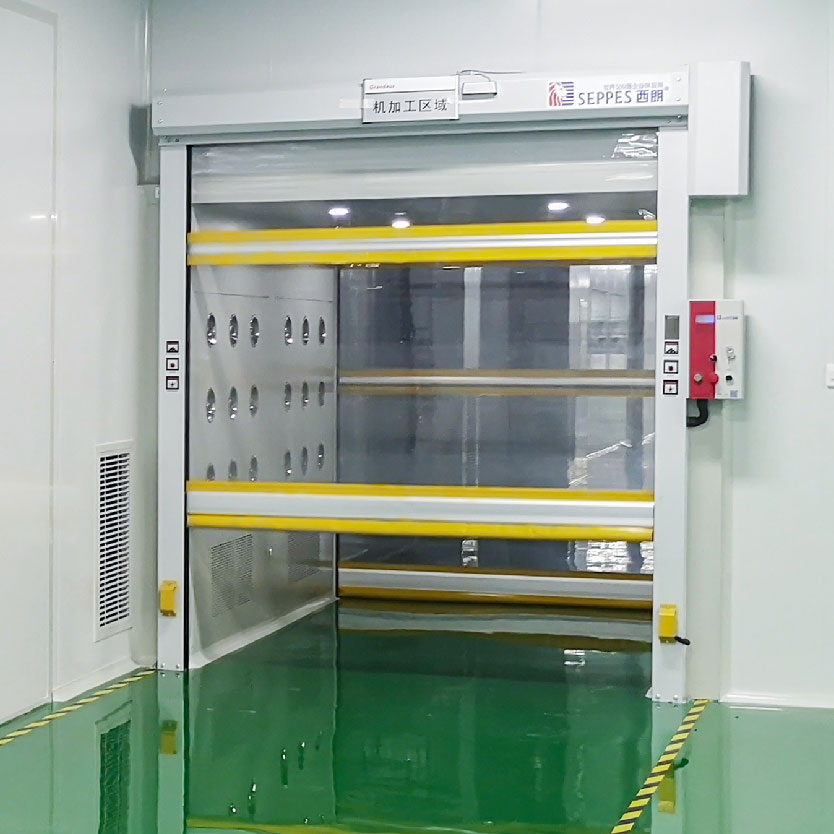 | Transparente Hochgeschwindigkeitstür | High visibility, improved safety, good light transmission | Poor material durability | Stores, clean rooms, production lines, warehouses |
Wichtige Faktoren bei der Auswahl von Hochgeschwindigkeits-Innentüren
Choosing the right high-speed interior door involves several considerations, here are the key factors to focus on when making your choice to help you make the most appropriate decision and ensure that the door meets your work needs and environmental requirements.
Öffnungs- und Schließgeschwindigkeit sowie Effizienz
The opening and closing speed of a high-speed interior door is a key factor in workflow efficiency. The speed at which a door opens and closes should be chosen based on the needs of the workflow to ensure fast passage and increased efficiency. Here are some elements to consider when selecting opening and closing speeds:
Wie Sie die richtige Türgeschwindigkeit für Ihren Arbeitsablauf wählen
High-speed doors typically open and close at speeds between 1 and 2.0 meters per second. For frequently accessed locations, door speeds need to be fast and efficient to minimize wait times and increase efficiency. For example, in warehouses and logistics centers, higher opening and closing speeds can speed up the loading and unloading process, reducing traffic and personnel waiting times.
Auswahl der optimalen Schaltgeschwindigkeit für das Anwendungsszenario
For the shop floor or production line, where fast passage of people or goods is required, doors with faster opening and closing speeds should be selected to keep the production process running smoothly. However, in environments that require a higher level of security, such as cleanrooms or food processing plants, slightly slower door speeds may be required to avoid any possible safety issues or risk of contamination.
Materialien und Haltbarkeit
The materials used for high-speed interior doors determine the strength, durability, and adaptability of the door. Choosing the right material will ensure that the door body will continue to operate consistently and stably in harsh environments. Common door body materials include:
PVC: Commonly used for light industrial applications, it has good flexibility and abrasion resistance. Suitable for low-frequency use in environments such as warehouses and workshops.
Fabric: High-strength synthetic fabrics with lightweight door bodies are suitable for areas with frequent opening and closing and are widely used in places with low-temperature control needs, such as workshops or light industrial areas.
Steel: Steel high-speed doors offer excellent impact resistance and durability and are suitable for environments with high-security requirements, such as hazardous materials warehouses or production lines with high-frequency use.
Aluminium: Aluminum doors are lightweight and corrosion-resistant for environments that require corrosion resistance and low maintenance, such as cold chain logistics and stores.
Composites: Composites combine the advantages of a wide range of materials with high strength, weather and wind resistance. Suitable for use in extreme environments, such as areas with high wind speeds.
Überlegungen zu Haltbarkeit und Stoßfestigkeit
The durability of the door body directly affects the service life. For high-frequency use environments, the impact resistance and overall durability of the door body need to be considered. Choose a door body that is abrasion and impact-resistant, especially for areas with heavy-duty operation or high-frequency access.
Sicherheits- und Schutzfunktionen
Safety is a key factor not to be ignored when choosing a high-speed interior door. The design of the door body should take into account the safety of personnel and equipment, as well as the protection needs of the door body itself:
Sicherheitssensoren: High-speed doors are usually equipped with infrared sensors and safety light curtains, which can detect obstacles when the door body is approaching and stop automatically, preventing people or objects from being caught by the door body.
Auto-Close System: The door body is equipped with an auto-close system, which can automatically close the door within a set period when the door body finishes opening, preventing safety hazards caused by accidental opening.
Antikollisionsvorrichtung: Anti-collision design helps the door to remain stable when impacted, reducing the possibility of damage to the door. High-speed zipper doors and so on, some doors are also equipped with an anti-collision recovery function, that is, after the collision, it can be automatically repaired to avoid the downtime caused by damage.
Auswirkungen von Sicherheits- und Schutzanforderungen auf die Türwahl
In high-security environments, such as medical facilities and chemical production areas, it is critical to select high-speed interior doors that are equipped with high-security features. In addition, wind and water resistance of high-speed doors should also be considered to adapt to various harsh environments.
Energie-Effizienz
The energy efficiency of high-speed interior doors is not only reflected in the reduction of temperature loss but also in the ability to reduce the energy consumption of air conditioning and heating systems. The sealing and material of the door body directly affect energy efficiency:
Temperaturkontrolle bei isolierten Türen
Insulated high-speed doors with highly efficient insulation materials, such as polyurethane fillers, can effectively block heat loss and maintain indoor temperatures. Especially in environments that require precise temperature control, like cold storage, pharmaceutical warehousing, or food processing plants, choosing insulated
Auswirkungen der Abdichtung auf Energieeinsparungen
The sealing performance of a door has a direct impact on the amount of energy lost. Choosing a door with a high degree of sealing will minimize air leakage. Especially in environments with stringent temperature control needs, a good sealing design will not only maintain the temperature but also reduce the burden on the air conditioning and heating, thus lowering energy bills.
Anpassungsoptionen
Every industrial environment has different needs, and choosing a customized high-speed interior door ensures that the door meets specific usage scenarios, functional needs, and aesthetic requirements.
Anpassung von Türgröße, Farbe, Material und Funktionalität an spezifische Anforderungen
Size customization: The size of the door body is customized according to the size of the door opening and the required frequency of passage to ensure the door’s adaptability and effective coverage.
Color customization: Choose the color of the door body according to the company’s branding or environmental needs to maintain a consistent corporate image.
Material customization: Different industrial environments may require specific door materials, and customization options enable the selection of appropriate materials based on usage scenarios, ensuring the durability and functionality of the door.
Functional customization: door body functions are customized according to the requirements of security, thermal insulation, wind resistance, etc., to meet the needs of special environments.
Anwendungsszenarien für Hochgeschwindigkeits-Innentüren
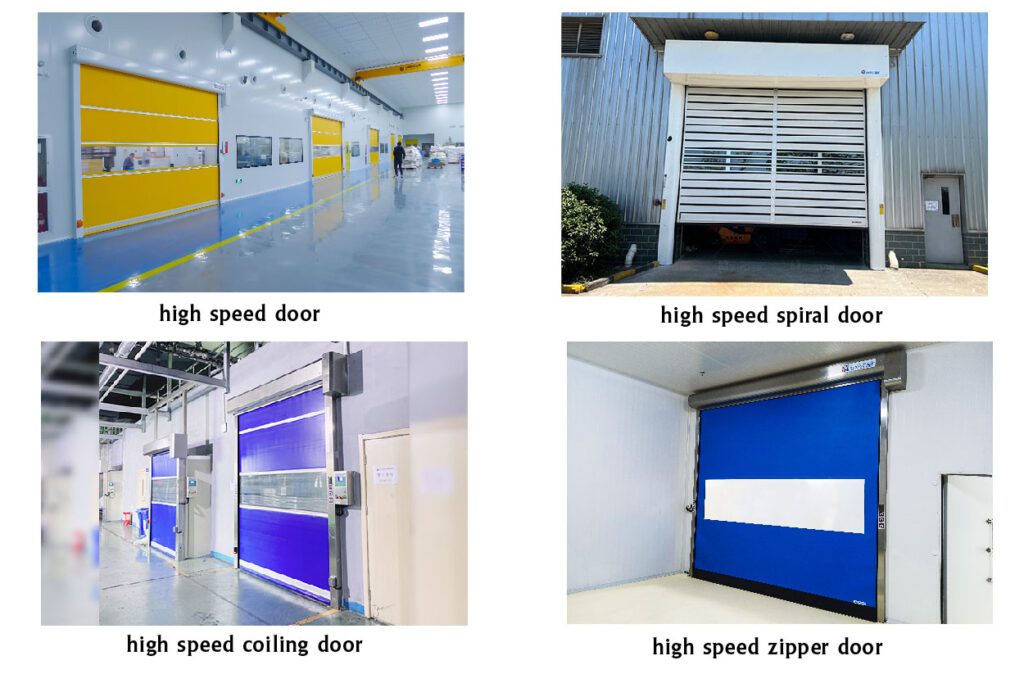
High-speed interior doors are widely used in many industrial fields, the following are some typical application scenarios:
Manufacturing and production: Improve the smoothness of the production line, ensure the rapid movement of materials in the workshop, and improve work efficiency. The use of high-speed doors in the production area can reduce the waiting time of workers and avoid production delays caused by slow opening or closing of the door.
Warehousing and logistics: In warehouses and logistics centers, high-speed interior doors facilitate the rapid entry and exit of goods. Especially in the need for frequent opening and closing of the unloading area, the choice of the right high-speed door can improve the overall operational efficiency and reduce logistics costs.
Reinraum und Pharmaindustrie: In the pharmaceutical industry and clean environments, high-speed doors not only need to be efficiently opened and closed but also need to have a strong sealing performance to keep the indoor air clean and dust-free. Such environments require high sealing and anti-pollution capabilities of the door body.
Lebensmittelverarbeitung and cold chain logistics: temperature-controlled environments and insulated high-speed doors can reduce the loss of cold air to maintain the quality of food or pharmaceutical products, especially in cold storage and food processing plants, which can effectively improve the efficiency of energy use.
Installationsüberlegungen für Hochgeschwindigkeits-Innentüren
When installing high-speed interior doors, you need to consider the size of the door body, space requirements, and professional installation services. Proper installation ensures efficient door operation and a long service life.
Platzbedarf für die Installation
High-speed interior doors need to meet certain installation space requirements, especially for spiral and stacked doors, which usually require more space to accommodate the way the door body opens and closes. The space required for the door should be measured before installation, and a customized solution should be confirmed with the supplier.
Professionelle Installation versus Selbstinstallation
To ensure that the door body works properly, it is highly recommended to opt for professional installation. Professional installation not only ensures that the door body is accurately aligned but also prevents problems caused by improper installation. Self-installation can lead to misalignment of the door, which can affect operational efficiency and may even pose a safety hazard.
Einhaltung von Vorschriften und Normen
High-speed interior doors must be installed in compliance with local laws, regulations, and industry standards, such as ISO 9001, CE certifications, OSHA standards, and more. Ensure that the door body complies with relevant certifications to avoid accidents and legal disputes caused by substandard door quality.
Wartung und Lebensdauer von Hochgeschwindigkeits-Innentüren
Maintenance of high-speed interior doors is an important means of extending their service life and ensuring proper operation. Regular inspection and maintenance can prevent malfunction and damage and reduce maintenance costs.
Regelmäßige Inspektion und Wartung
Regularly inspect the door body’s tracks, drive system, sensors, seals, and other components to ensure that each component operates properly. Especially in high-frequency switching environments, the motorized drive system and sensors of the door body need to be checked more frequently to ensure that they are in working order.
Lebenserwartung
High-speed interior doors typically have a service life of between 5 and 10 years. The material the door body is made of, how often it is used and how well it is maintained will all affect the life expectancy. Choosing durable materials and regular maintenance will extend the life of the door body.
Fehlerbehebung bei häufigen Problemen
Common troubleshooting problems include slow opening and closing speeds, faulty sensors, and door body misalignment. For slow opening and closing speeds, check the power supply and settings of the motorized drive system; if the sensor is malfunctioning, clean or replace the sensor; and door body misalignment guidelines require adjusting the track or checking the door curtain for damage.
Wie Sie den richtigen Anbieter für Hochgeschwindigkeits-Innentüren auswählen
Reputation, product quality, service and support should all be major considerations when choosing a supplier.
Ruf und Erfahrung des Lieferanten
Choosing a supplier with a good reputation and experience ensures that the doors they provide meet quality standards and that they are able to provide a suitable customized solution.
Qualitätszertifizierung
Ensure that the high-speed interior doors provided by the supplier meet international standards and have relevant certifications such as ISO 9001 and CE marking.
Kundensupport und Garantieleistungen
Choose a supplier that offers 24/7 customer support and a comprehensive warranty service to ensure adequate protection in the after use process.
Auswahl der richtigen Hochgeschwindigkeits-Innentüren zur Optimierung des Geschäftsbetriebs
Choosing the right high-speed interior doors not only improves efficiency and reduces energy consumption but also improves safety and productivity in factories, warehouses, and other facilities. We hope that through the analysis of the characteristics and application scenarios of various types of doors in this article, you will be able to choose the right door for your needs and optimize the operational efficiency and energy savings of your business.
FAQ: Häufig gestellte Fragen
1. What is a high speed interior door?
High-speed interior doors are doors designed for rapid opening and closing and are widely used in industrial environments where efficient access, temperature control, and security are required.
2. How to choose the right high speed interior door?
Choose the right type of door based on the application scenario, temperature control needs, security requirements and budget.
3. Do high-speed interior doors save energy?
Yes, many high speed interior doors, especially insulated doors, are effective in reducing air loss and energy consumption.
4. What industries are high-speed interior doors suitable for?
High speed interior doors are suitable for warehousing and logistics, food processing, pharmaceuticals, cold chain logistics and other industries.
5. What is the lifespan of a high-speed interior door?
The lifespan of a high-speed interior door is usually between 5 and 10 years. Depending on the frequency of use and maintenance.
Related articles
Der ultimative Leitfaden zur Auswahl verschiedener Arten von Hochgeschwindigkeitstoren
Referenzmaterial
1.Der ultimative Leitfaden für effiziente Schnelllauftore: Eigenschaften, Vorteile und Anwendungen