
Cold Storage Doors and Loading Dock Equipment for Seafood Processing Facilities
Seafood processing facilities depend on temperature-controlled movement from receiving and preparation to freezer storage and refrigerated dispatch. Each stage creates a different access requirement, which means selecting cold storage doors should involve more than choosing a door based only on opening size.
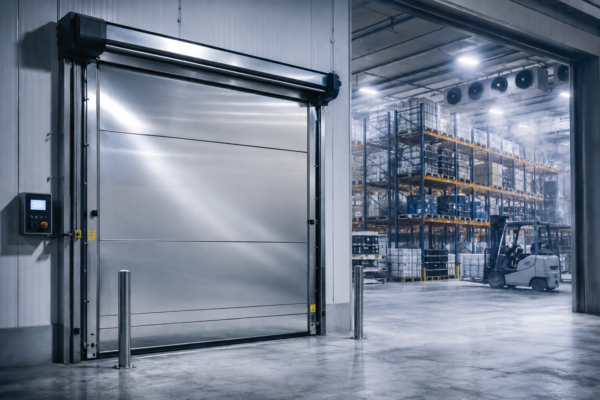
A seafood plant may require fast internal doors for frequent forklift traffic, insulated sectional overhead doors at exterior openings, and loading dock equipment that connects cold storage areas with refrigerated vehicles. When these systems are planned together, the facility can reduce unnecessary air exchange while maintaining practical material flow.
The U.S. Food and Drug Administration's Fish and Fishery Products Hazards and Controls Guidance addresses time and temperature controls during seafood processing and refrigerated storage. Industrial doors are not themselves a food-safety control plan, but properly configured access systems can support temperature-controlled operations.
For a wider overview of refrigerated warehouse access systems, see the SEPPES cold storage doors and loading dock equipment solution .
Receiving
Truck arrival, unloading and raw-material receiving.
Processing
Wet production areas and frequent internal material movement.
Câmara Frigorífica
Chilled rooms, freezer storage and temperature separation.
Refrigerated Dispatch
Sectional door, dock leveler and truck sealing system.
Why Seafood Facilities Need a Different Cold Storage Door Strategy
Seafood processing is different from an ordinary dry warehouse. The access route may pass through wet processing areas, chilled staging rooms, frozen storage spaces and exterior loading bays. Traffic frequency, humidity, cleaning conditions and temperature differences can therefore change significantly from one opening to another.
Using the same door specification throughout the building can create practical problems. A heavily insulated but relatively slow door may not be the most efficient option for a passage crossed by forklifts hundreds of times during a shift. In contrast, an exterior opening that remains closed for long periods may place greater importance on insulation, structural strength and perimeter sealing.
For this reason, cold storage doors for seafood processing should be selected according to the function of each opening rather than treating the entire building as one application.
Which Door and Loading Dock Equipment Fits Each Seafood Processing Area?
| Facility Area | Recommended Equipment | Main Design Priority |
|---|---|---|
| Raw seafood receiving | Sectional door or high speed door | Vehicle access and efficient material receiving |
| Wet processing area | High speed door with suitable frame material | Frequent operation and environmental separation |
| Chilled staging area | Porta de alta velocidade isolada | Reduce open-door time between temperature zones |
| Freezer entrance | Insulated high speed cold storage door | Rapid access and temperature separation |
| Exterior cold storage opening | Insulated sectional overhead door | Insulation, sealing and structural protection |
| Refrigerated loading bay | Sectional door + dock leveler + dock shelter | Truck interface, height compensation and sealing |
Insulated High Speed Cold Storage Doors for Frequent Internal Traffic
Processing plants frequently move seafood between preparation, packaging, chilling and frozen storage areas. If a doorway remains open while a forklift approaches, passes and clears the opening, warm and moisture-laden air has more time to enter a refrigerated zone.
Uma porta de alta velocidade isolada can be considered for frequently used internal openings where both rapid movement and temperature separation are important.
SEPPES insulated high speed doors are available with an adjustable opening speed of approximately 0.8–1.2 m/s, and frame options include 304 stainless steel, aluminum alloy and coated steel. Final material selection should be based on the actual processing environment, cleaning procedures and exposure conditions.
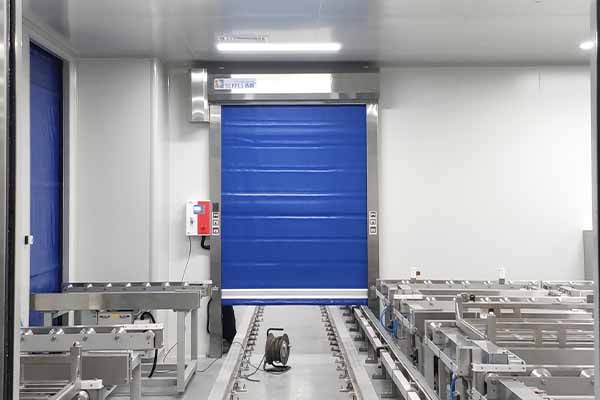
These doors are particularly useful where forklifts or pallet-handling equipment frequently travel between different temperature zones. Activation can also be coordinated with radar, loop detectors, push buttons or other control methods according to the traffic route.
Insulated Sectional Overhead Doors for Exterior Cold Storage Openings
Exterior warehouse entrances usually have different requirements from internal passages. For openings facing outdoor conditions or loading areas, industrial sectional doors provide a practical combination of insulation, sealing, structural strength and vertical space utilization.
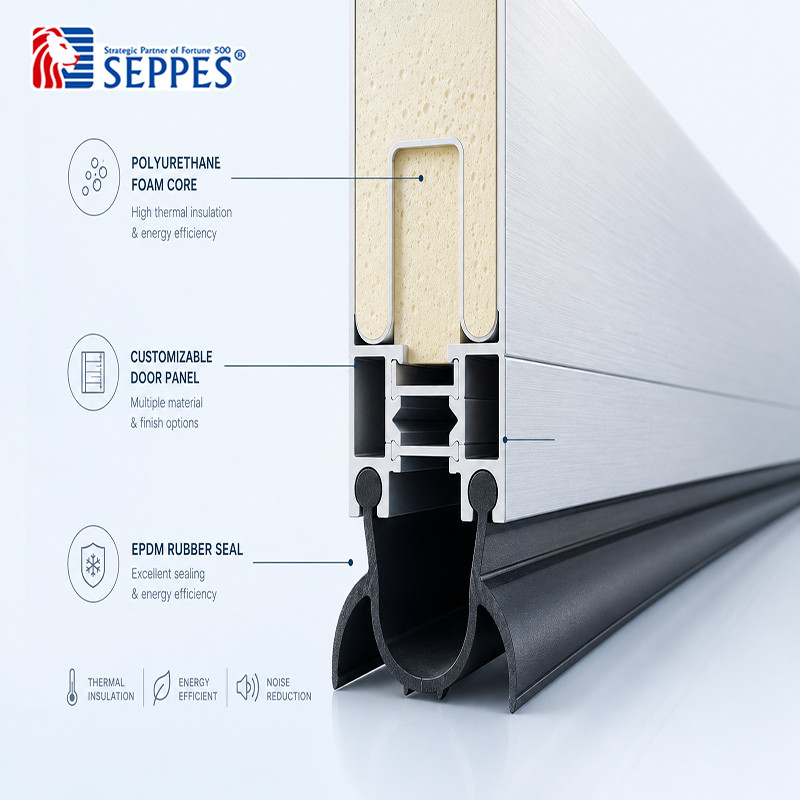
A SEPPES insulated sectional door uses polyurethane-filled steel panels with 40 mm and 50 mm panel options and perimeter EPDM sealing. Track arrangements can be selected according to available headroom and building structure.
An insulated overhead door is therefore commonly considered for seafood cold storage exterior entrances, refrigerated warehouse access and loading bay openings where the door may remain closed for longer periods.
Door Materials for Wet Seafood Processing Environments
Seafood production areas may involve moisture, washdown procedures and repeated cleaning. These conditions should be considered when choosing the frame, panel surface, hardware and electrical component configuration.
A stainless steel configuration may be considered for demanding wet environments. SEPPES also provides stainless steel sectional overhead doors for food-processing and temperature-controlled applications.
However, material selection should not be based on the term “stainless steel” alone. Cleaning chemicals, humidity, salt or chloride exposure, temperature and maintenance procedures can all affect long-term performance. The actual environment should be reviewed before final specifications are confirmed.
Loading Dock Equipment Is Part of the Seafood Cold Chain
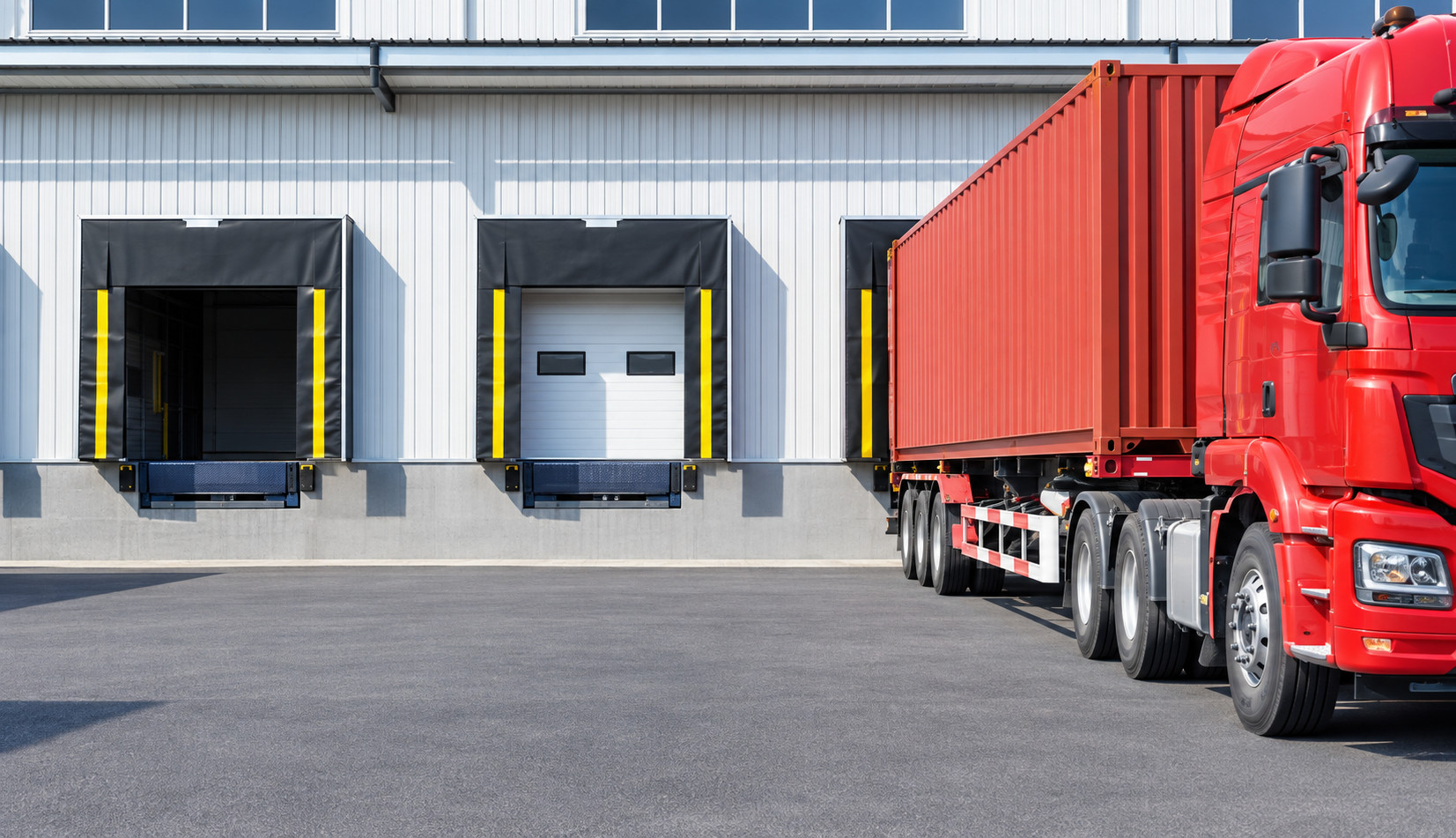
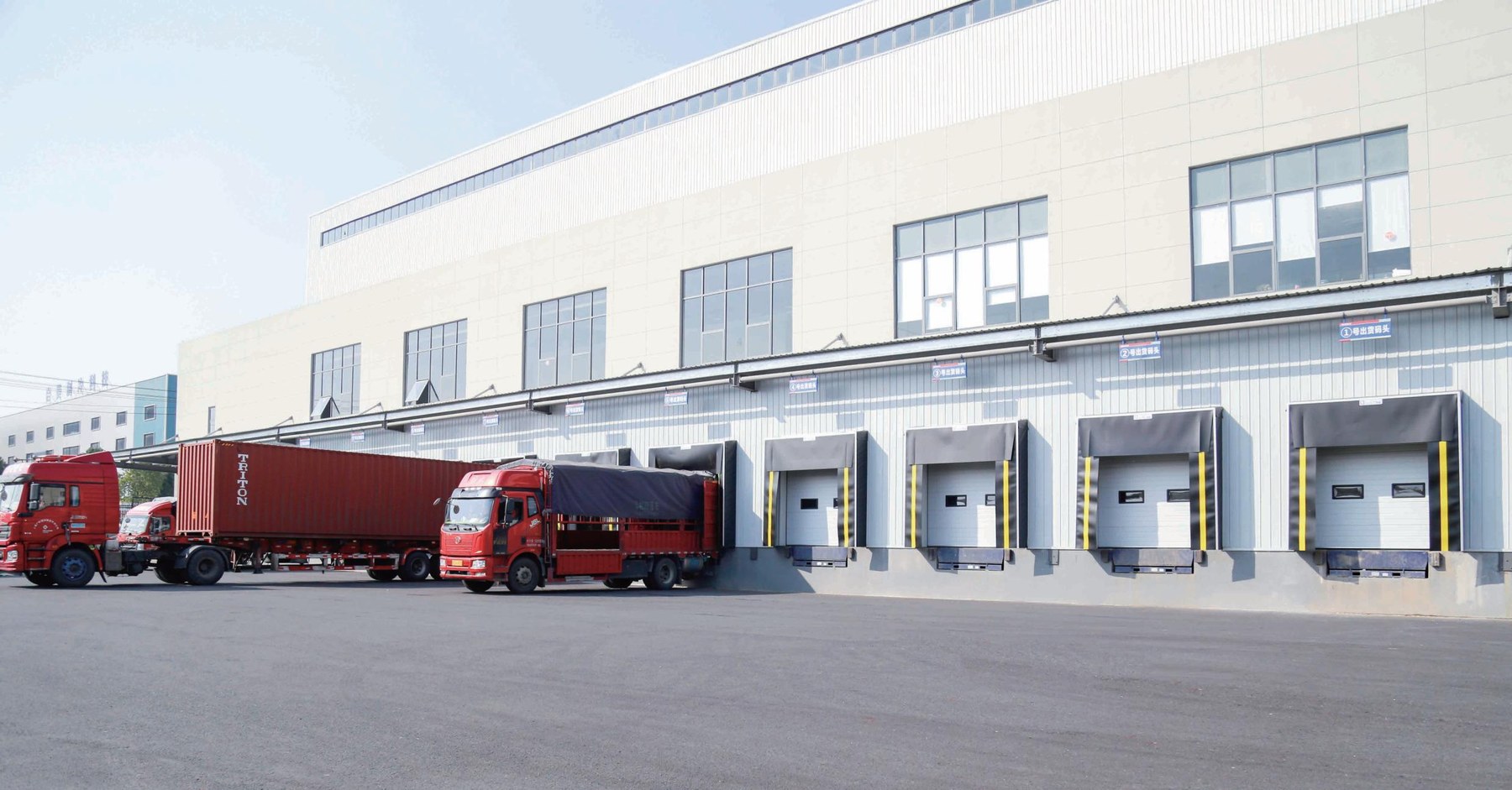
A refrigerated loading bay is the transition point between a temperature-controlled warehouse and an outdoor truck environment. For seafood distribution facilities, this interface should therefore be planned as a system rather than treating the door, dock leveler and shelter as unrelated products.
A typical seafood loading dock can combine:
- an insulated sectional overhead door;
- a hydraulic loading dock leveler;
- an inflatable or mechanical dock shelter;
- dock bumpers;
- vehicle restraint or wheel-chocking procedures;
- traffic signals or other loading-bay safety controls.
You can view the complete range of SEPPES loading dock equipment for warehouse and cold-chain projects.
Hydraulic Dock Levelers for Refrigerated Seafood Loading
Truck-bed height does not always match warehouse platform height. A loading dock leveler bridges this difference so forklifts and pallet trucks can move between the building and vehicle with a smoother transition.
SEPPES niveladores de doca hidráulicos are available with reference rated-load options including 6T, 8T, 10T and 12T. The correct capacity should not be selected from cargo weight alone.
Project planning should consider the combined operating conditions, including:
- forklift weight;
- cargo weight;
- truck-bed height range;
- platform and pit dimensions;
- crossing frequency;
- dynamic loading during forklift travel;
- working environment and temperature.
This is particularly important when a seafood facility handles different refrigerated trucks throughout the day.
Inflatable Dock Shelters for Better Refrigerated Loading Bay Sealing
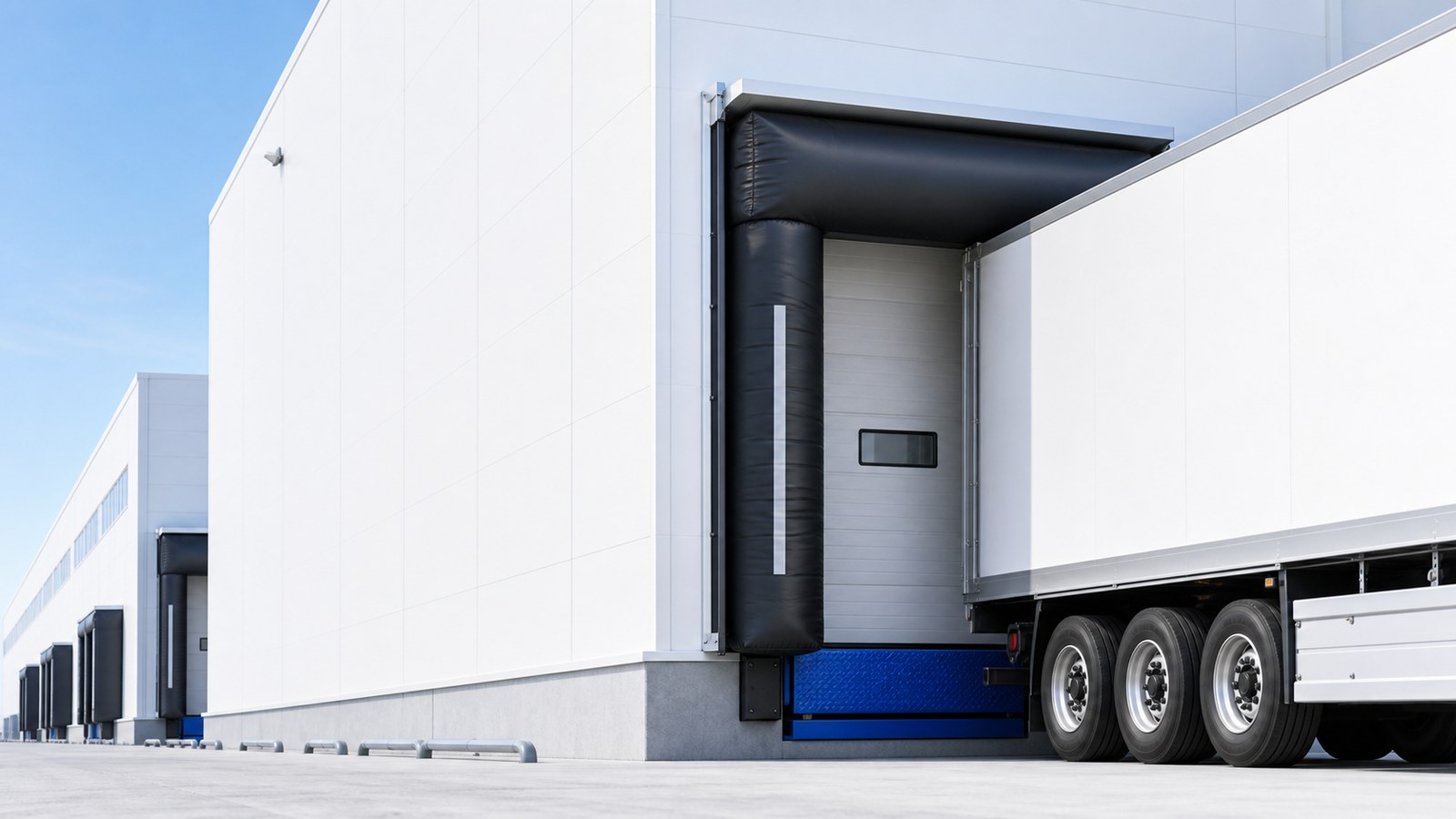
Even when the warehouse door itself is insulated, a large gap can remain between the rear of the refrigerated truck and the building opening during loading.
Uma Abrigo de doca inflável uses inflatable side and top cushions around a positioned vehicle. This can help reduce exposure to outdoor air, wind, rain and dust during loading.
For seafood cold storage and refrigerated distribution, the shelter should be selected according to the actual truck fleet rather than using only the building opening dimensions. Important information includes the minimum and maximum vehicle width and height, dock height, bumper projection and required sealing level.
Why the Door, Dock Leveler and Shelter Should Be Planned Together
A common project mistake is selecting each product independently. However, the sectional door tracks, dock leveler pit, truck position, dock shelter, bumpers and controls all occupy the same loading-bay area.
For example, the door opening determines the available loading passage, while the truck range influences both the dock leveler working range and shelter size. The bumper projection influences vehicle position, which in turn affects the interface between the trailer, dock platform and shelter.
For a deeper explanation of this system approach, see how to design an energy-efficient loading dock for cold storage .
Loading Dock Safety for Forklift Operations
Seafood distribution centers may have frequent forklift movement between cold storage and refrigerated trailers. The transition between the building and truck therefore requires both equipment planning and operating procedures.
A Diretrizes de segurança para docas de carga da OSHA highlights risks associated with forklift operation around loading dock edges and vehicle loading areas.
Depending on the project and applicable local requirements, loading-bay planning may include vehicle restraints, wheel chocks, dock bumpers, warning signals and procedures to prevent unintended vehicle movement during loading.
How to Reduce Air Exchange and Condensation Around Cold Storage Doors
Condensation and frost around refrigerated openings are influenced by temperature difference, humidity, air movement and how long a doorway remains open. Door selection therefore needs to consider operation as well as insulation.
- Select rapid-opening doors for frequently used internal routes where reducing open time is important.
- Use insulated sectional overhead doors where exterior protection and thermal separation have higher priority.
- Check top, side and bottom seals regularly for damage or misalignment.
- Coordinate forklift routes to avoid unnecessary door cycles.
- Use dock shelters or seals to reduce exposure around truck loading positions.
- Match the dock leveler to the expected truck-bed height range so loading can proceed efficiently.
- Maintain door sensors, tracks, seals and loading dock equipment according to the operating schedule.
For additional guidance on warehouse door selection, see how to choose warehouse doors for frozen food and cold storage facilities .
Example Seafood Cold Storage Door and Loading Dock Configuration
The following example illustrates how different door and dock products can be assigned to different areas of one seafood facility. It is a planning example rather than a fixed specification.
| Position | Possible Configuration | Purpose |
|---|---|---|
| Processing room to chilled staging | Porta de alta velocidade isolada | Support frequent forklift traffic while shortening opening time |
| Chilled area to freezer storage | Insulated high speed cold storage door | Separate temperature zones with rapid operation |
| Exterior warehouse entrance | Insulated sectional overhead door | Provide insulated closure and industrial protection |
| Refrigerated truck loading bay | Sectional door + hydraulic dock leveler + inflatable dock shelter | Combine access control, height compensation and truck sealing |
| Loading-bay safety system | Dock bumpers + restraint/signalling arrangement | Coordinate vehicle positioning and forklift loading procedures |
What Information Is Needed Before Ordering Cold Storage Doors?
Door width and height are only the starting point. For a seafood processing or cold-storage project, preparing the following information will make engineering selection and quotation more accurate:
- door opening width × height;
- quantity of each door;
- installation position;
- indoor operating temperature;
- temperature on the opposite side of the door;
- processing room, chilled room, freezer or loading dock application;
- expected forklift or pallet traffic frequency;
- available headroom and side room;
- loading platform height;
- dock leveler pit dimensions if already constructed;
- minimum and maximum truck-bed heights;
- expected forklift and cargo weight;
- truck body width and height range;
- photos, drawings or architectural plans;
- destination country or port.
If these values are not yet finalized, SEPPES can review preliminary drawings and discuss a reference configuration before the building opening and loading bay dimensions are fixed.
Perguntas Frequentes
What type of cold storage door is suitable for a seafood processing facility?
There is no single door type for every opening. Insulated high speed doors are useful for frequently used internal passages, while insulated sectional overhead doors are commonly considered for exterior warehouse openings and loading bays. Selection should depend on temperature, traffic frequency, opening size and building structure.
Should seafood freezers use a high speed door or a sectional door?
For high-frequency internal forklift routes, an insulated high speed door can help reduce the time the opening remains exposed. For exterior openings where insulation, sealing and structural durability are more important than opening speed, an insulated sectional door may be more appropriate.
What loading dock equipment is needed for refrigerated seafood trucks?
A refrigerated loading bay may combine an insulated loading dock door, hydraulic dock leveler, dock shelter, bumpers and vehicle-safety equipment. The final system depends on the truck range, dock dimensions, forklift traffic and required sealing performance.
How do I choose a hydraulic dock leveler capacity?
Do not select capacity from cargo weight alone. Forklift weight, cargo weight, dynamic loading, crossing frequency, truck conditions and the manufacturer's design criteria should all be considered.
Why use an inflatable dock shelter in seafood cold storage?
An inflatable dock shelter can close much of the gap around a positioned truck body, helping reduce outside air, wind, rain and dust entering the loading interface. It can be particularly useful where refrigerated loading requires tighter sealing.
What information is required for a seafood cold storage quotation?
Provide door width and height, quantity, temperature conditions, installation location, loading platform height, truck-bed range, forklift and cargo information, site photos or drawings, and the destination country or port.
Planning a Seafood Cold Storage or Processing Facility?
Send us your door opening sizes, operating temperatures, loading platform height, truck-bed range, quantities and project drawings. SEPPES can coordinate the cold storage doors and loading dock equipment around each area of your seafood processing facility.
Request a Project Quote View Cold Storage Solutions