
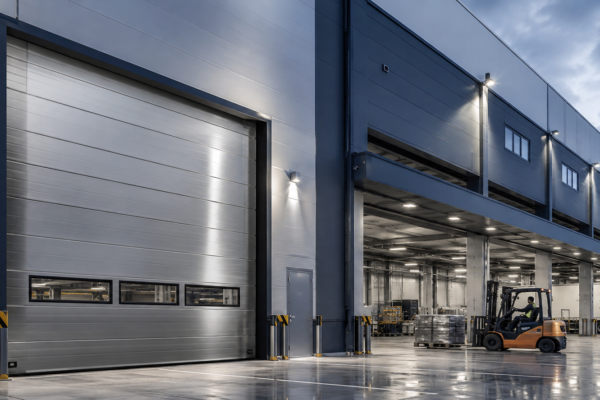
Lorem ipsum dolor sit amet, consectetur adipiscing elit. Ut elit tellus, luctus nec ullamcorper mattis, pulvinar dapibus leo.
Les portes sectionnelles industrielles are reliable for warehouses, factories, loading areas, and other industrial buildings, but improper installation, frequent operation, component wear, or poor maintenance can cause operational problems.
The most common issues include uneven door movement, damaged cables, worn torsion springs, track misalignment, sealing problems, and safety sensor faults.
Most of these problems can be reduced through correct door selection, professional installation, and regular inspection.
Table des matières
Basculerommon Industrial Sectional Door Problems
| Problem | Possible Cause | How to Avoid It |
|---|---|---|
| Door opens unevenly | Cable tension problem or damaged cable | Inspect lifting cables regularly |
| Door becomes difficult to open | Torsion spring wear or incorrect balance | Check spring condition and door balance |
| Door makes unusual noise | Rollers, hinges, or tracks require inspection | Keep moving components properly maintained |
| Door does not close completely | Obstruction, safety edge fault, or track problem | Check the bottom area and safety devices |
| Door moves out of alignment | Track misalignment or loose hardware | Check tracks and mounting points |
| Air or dust enters around the door | Damaged side or bottom seals | Replace worn sealing components |
| Door stops during operation | Sensor, limit switch, or control problem | Inspect electrical and safety systems |
Industrial door manufacturers also identify cables, seals, switches and other moving components as wear items that should be inspected regularly. Springs and lifting cables operate under significant tension and should not be adjusted casually.
1. Uneven Door Movement
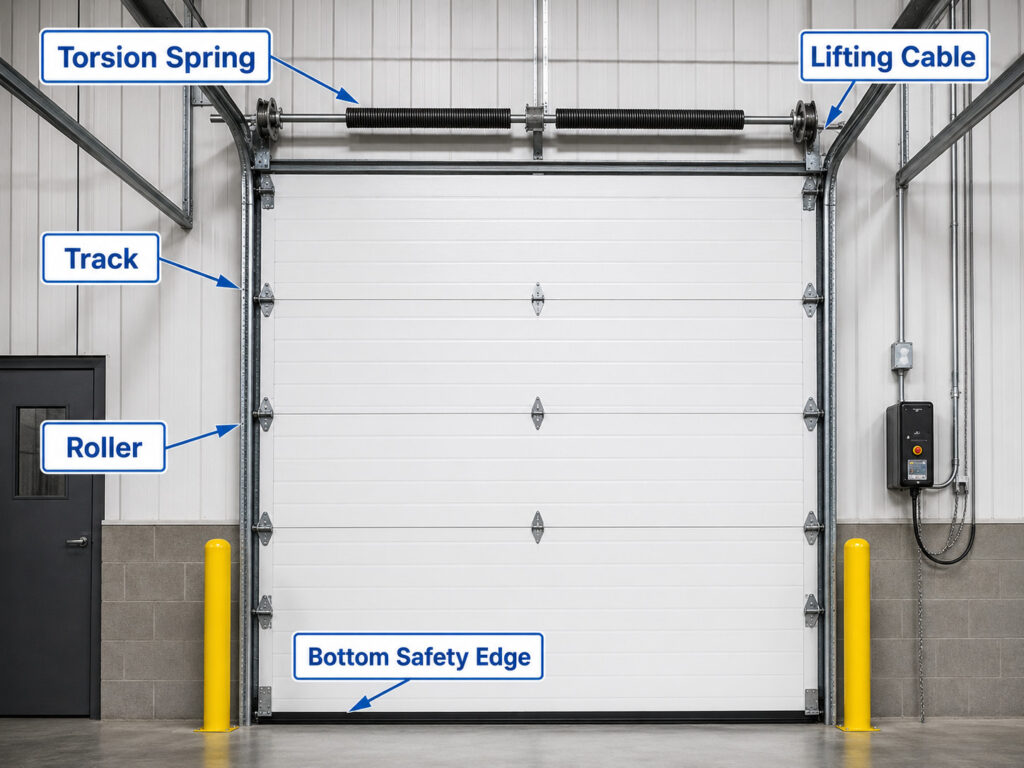
If one side of the sectional door moves faster or higher than the other, the lifting system should be inspected.
Common causes include:
- Uneven cable tension
- Damaged lifting cables
- Cable drum problems
- Incorrect track alignment
Continuing to operate an uneven door can increase stress on rollers, tracks, cables, and panels.
For industrial applications, the lifting cables and balancing system should be checked regularly, especially on doors with frequent daily operation.
2. Torsion Spring Wear or Failure
Torsion springs help balance the weight of an Porte sectionnelle industrielle.
When the spring becomes worn or damaged, operators may notice:
- The door feels heavier
- Opening becomes slower
- The motor works harder
- The door cannot remain balanced
- The door stops opening normally
Because torsion springs operate under high tension, repair or adjustment should be carried out by trained personnel. Major sectional-door manufacturers similarly warn that spring and cable assemblies can present serious hazards if improperly serviced.
When selecting a sectional door, buyers should also consider the expected operating frequency and choose an appropriate spring cycle specification.
3. Lifting Cable Damage
The steel lifting cables connect the door panels to the counterbalance system.
Over time, cables may experience:
- Fraying
- Uneven tension
- Corrosion
- Incorrect winding
- Mechanical damage
A damaged cable can cause the door to tilt or become stuck in the tracks.
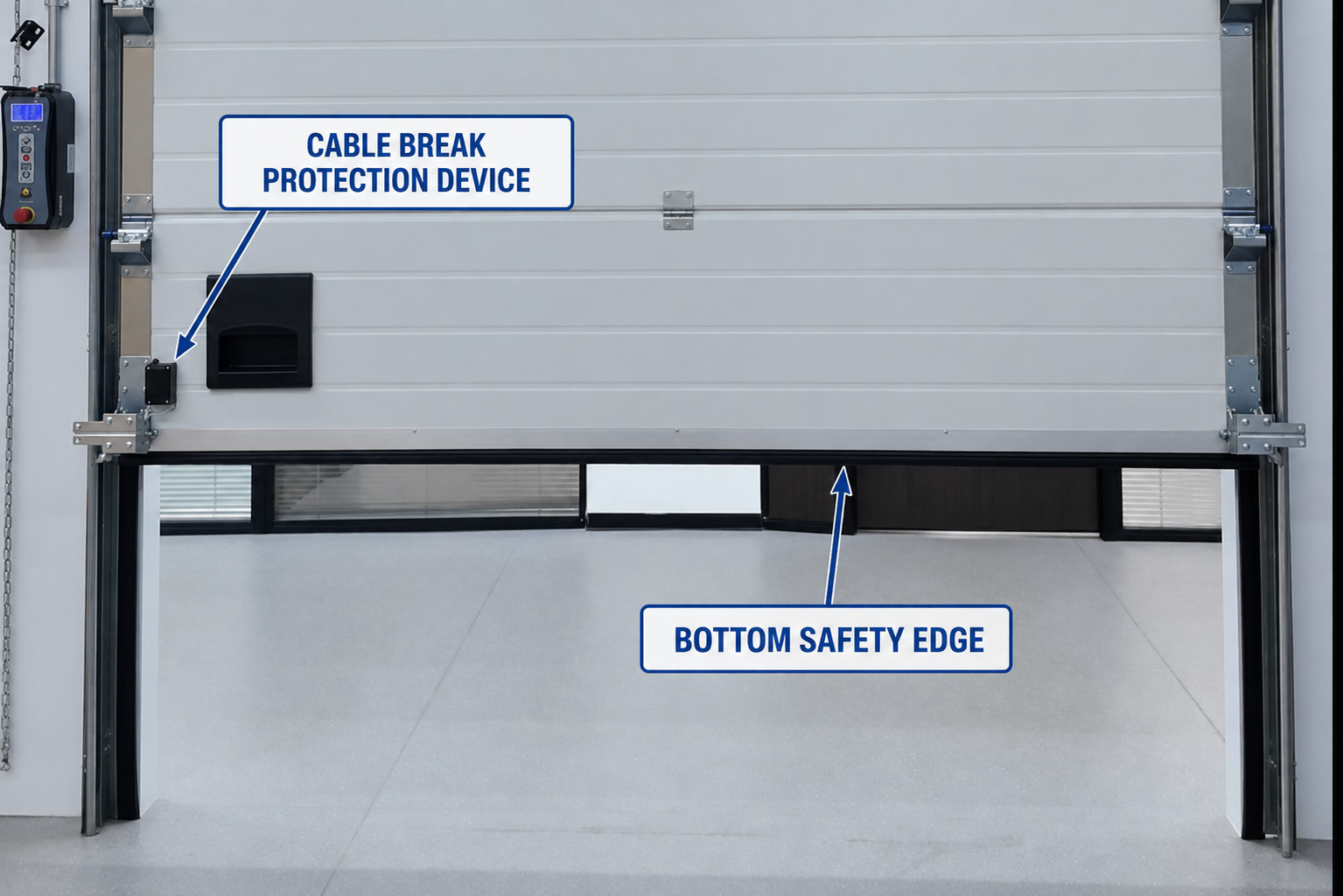
For additional protection, an industrial sectional door can be equipped with a cable break protection device. If a lifting cable fails, the device is designed to prevent uncontrolled downward movement of the door.
Cable-break protection is also offered on commercial sectional-door systems from major manufacturers.
4. Track and Roller Problems
The tracks guide the sectional door panels during opening and closing.
Common track-related problems include:
- Track misalignment
- Loose mounting bolts
- Damaged rollers
- Debris inside the track
- Incorrect track installation
These problems may cause vibration, noise, uneven movement, or excessive resistance.
Track design should therefore match the building structure and available overhead space.
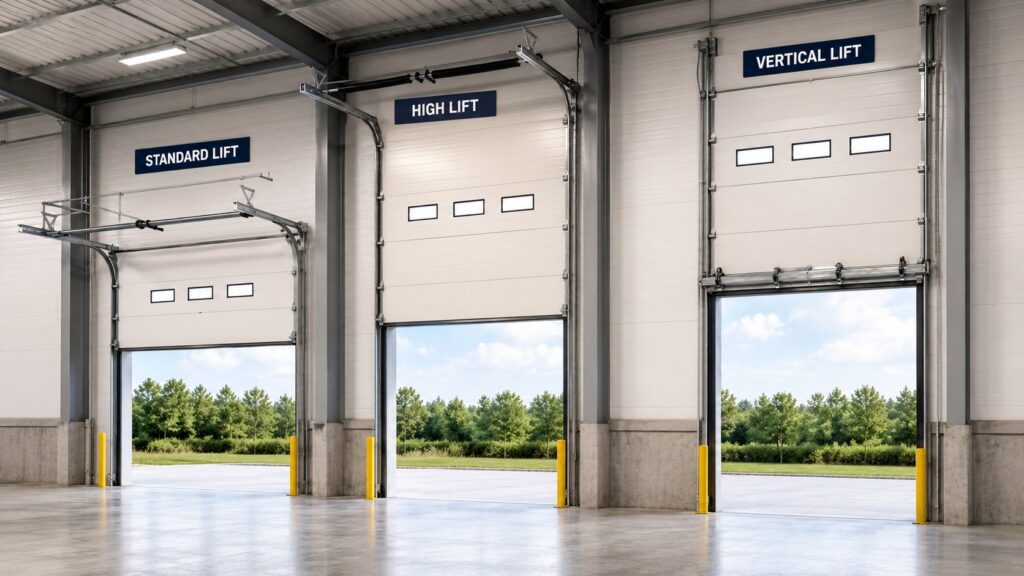
Depending on the site, sectional doors can use:
- Standard lift
- High lift
- Levage vertical
- Special track configurations
The correct track arrangement depends on factors such as available headroom, door height and overhead obstacles.
5. Door Does Not Close Completely
If a sectional overhead door stops before reaching the floor, several components should be checked.
Possible causes include:
- Objects underneath the door
- Incorrect limit settings
- Safety bottom edge activation
- Sensor problems
- Track obstruction
- Uneven floor surface
The safety system should never simply be bypassed to make the door close.
Instead, the source of the problem should be identified first.
6. Damaged Bottom or Side Seals
Industrial sectional doors usually use sealing strips around the door opening.
After long-term use, the seals may become:
- Cracked
- Hardened
- Torn
- Deformed
Damaged seals can allow dust, wind, insects, or outside air to enter the building and can also increase energy loss in temperature-controlled facilities. Preventive maintenance guidance for industrial doors specifically identifies bottom and side seals as wear components that should be inspected and replaced when necessary.
For warehouses and factories requiring better insulation, sealing condition should therefore be included in routine inspections.
7. Safety Device Failure
Industrial sectional doors should include appropriate protection for people, equipment, and the door itself.
Typical safety devices may include:
- Safety bottom edge
- Cable break protection
- Torsion spring break protection
- End buffer protection
Photoelectric sensors can also be added depending on the application.
If any safety device is damaged or not functioning correctly, the door should be inspected before continued operation.
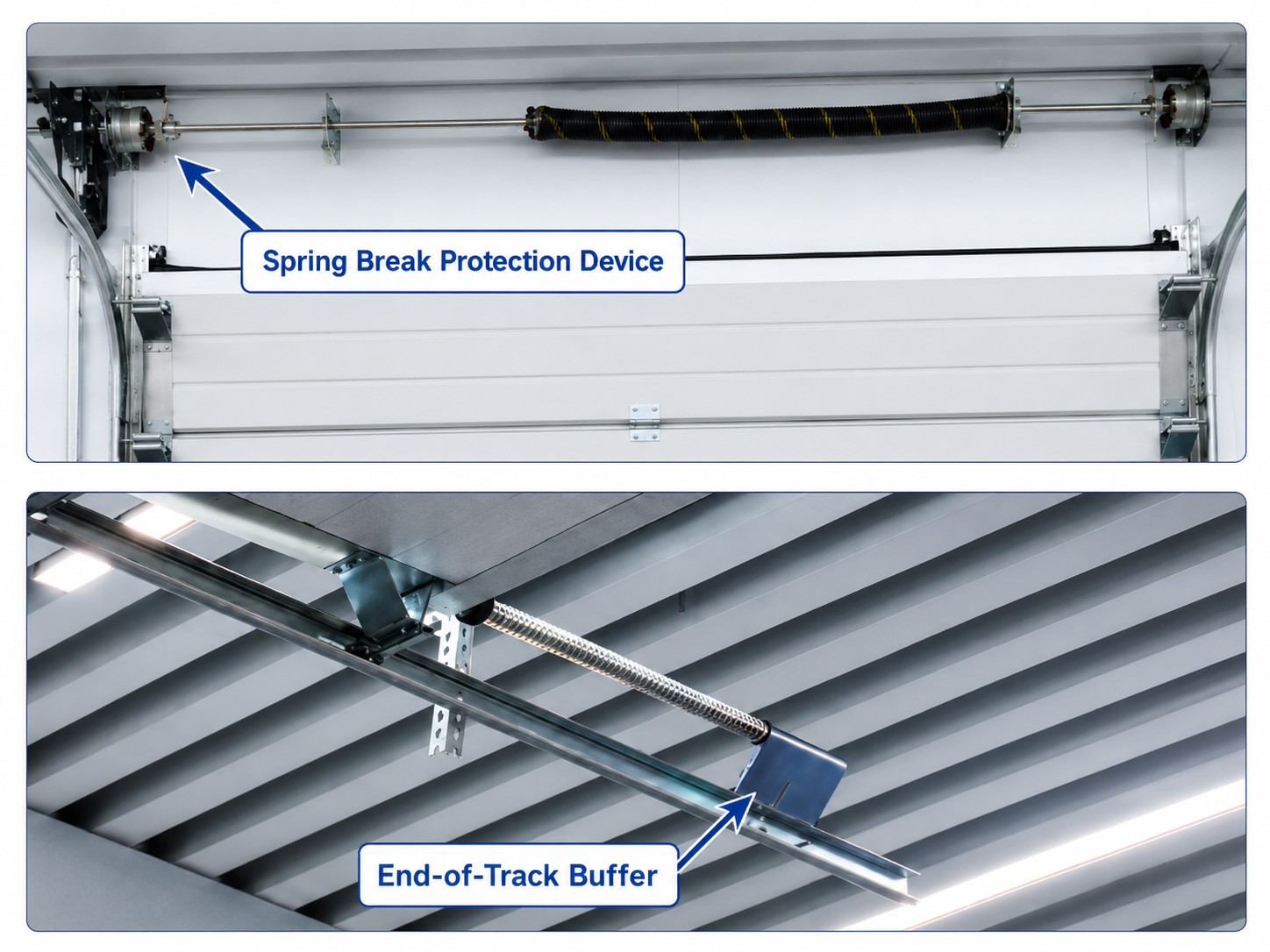
Typical Industrial Sectional Door Configuration
| Élément | Typical Specification |
| Panneau de porte | 40 mm / 50 mm insulated panel |
| Matériau du panneau | Steel + PU insulation |
| Vitesse d'ouverture | Approx. 0.2–0.3 m/s |
| Track | Approx. 2.0 mm galvanized steel |
| Torsion Spring | 82B / 60Si2Mn |
| Drive | Electric motor with frequency control |
| Bottom Protection | Safety bottom edge |
| Cable Protection | Cable break protection device |
| Spring Protection | Torsion spring break protection device |
| Track Type | Standard / High Lift / Vertical Lift |
Actual specifications should be selected according to door size, operating frequency, building structure, and application.
How to Reduce Industrial Sectional Door Problems
Many failures can be prevented before they interrupt warehouse or factory operations.
Choose the Correct Lift Type
The track system should match the available headroom.
For example:
- Levage standard — suitable for common industrial buildings
- Levage haut — suitable when more vertical space is available above the opening
- Levage vertical — suitable for buildings with very high ceilings
Incorrect track selection can make installation more difficult and affect long-term door operation.
Provide Accurate Opening Dimensions
Before production, confirm:
- Opening width
- Opening height
- Headroom
- Left-side room
- Right-side room
- Ceiling obstacles
Incorrect measurements can result in installation problems or unsuitable track configurations.
Match Components to Operating Frequency
A warehouse door operating several times per day has different requirements from a door operating hundreds of times per day.
For high-frequency entrances, buyers should confirm:
- Expected daily cycles
- Spring cycle rating
- Motor specification
- Door speed
In some applications, a high-speed door may be more suitable than a conventional sectional door.
Inspect Wear Components Regularly
Important inspection points include:
- Springs
- Cables
- Rollers
- Hinges
- Tracks
- Seals
- Dispositifs de sécurité
- Moteur et système de contrôle
Preventive inspection is usually more economical than waiting until a component failure stops the door completely.
What Buyers Should Check Before Ordering
When purchasing an Porte sectionnelle industrielle, price should not be the only consideration.
Buyers should also confirm:
- Door panel construction and insulation
- Track thickness and configuration
- Torsion spring specification
- Cable break protection
- Spring break protection
- Safety bottom edge
- Moteur et système de contrôle
- Available installation space
- Expected operating frequency
- Manufacturer installation drawings and technical support
Correct specification at the purchasing stage can significantly reduce installation and maintenance problems later.
Most industrial sectional door problems develop gradually rather than appearing suddenly.
Worn cables, springs, rollers, seals, and incorrectly aligned tracks can eventually affect both door reliability and workplace safety.
For warehouses and factories, the best approach is to select the correct door configuration before installation and regularly inspect critical moving and safety components after the door enters service.
If you are planning a new industrial sectional door, providing the opening width, height, headroom, and expected operating frequency will help determine the appropriate door configuration.