
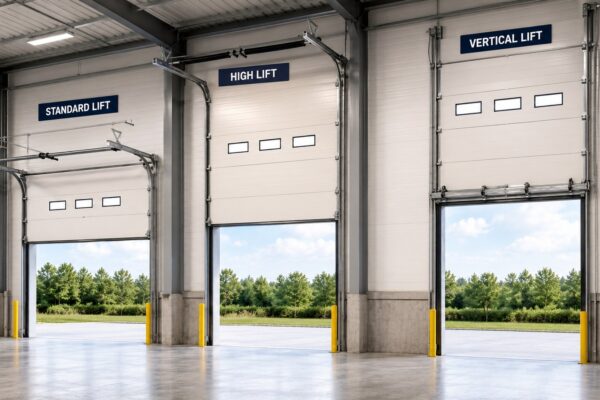
选择正确的 套装门 lift type is important for industrial buildings because the available ceiling space, building structure, and daily operation directly affect the door configuration.
For most warehouses and factories, sectional overhead doors are available in three common lifting systems:
- Standard Lift Sectional Door – suitable for buildings with normal headroom
- High Lift Sectional Door – designed for higher ceilings or areas with overhead obstacles
- 垂直提升式滑升门 – ideal when maximum vertical clearance is required
Selecting the right lift type can improve space utilization, simplify installation, and ensure reliable long-term operation.
目录
切换What Is a Sectional Door Lift System?
A 分节式高架门 consists of multiple horizontal panels connected with hinges. During opening, the panels move upward along tracks instead of swinging outward.
The lift system determines how the door travels after leaving the vertical position.
The main factors affecting the choice include:
- Available headroom above the door opening
- Ceiling height
- Roof structure
- Cranes, pipes, or equipment near the opening
- Vehicle clearance requirements
- Building usage
Standard Lift Sectional Door
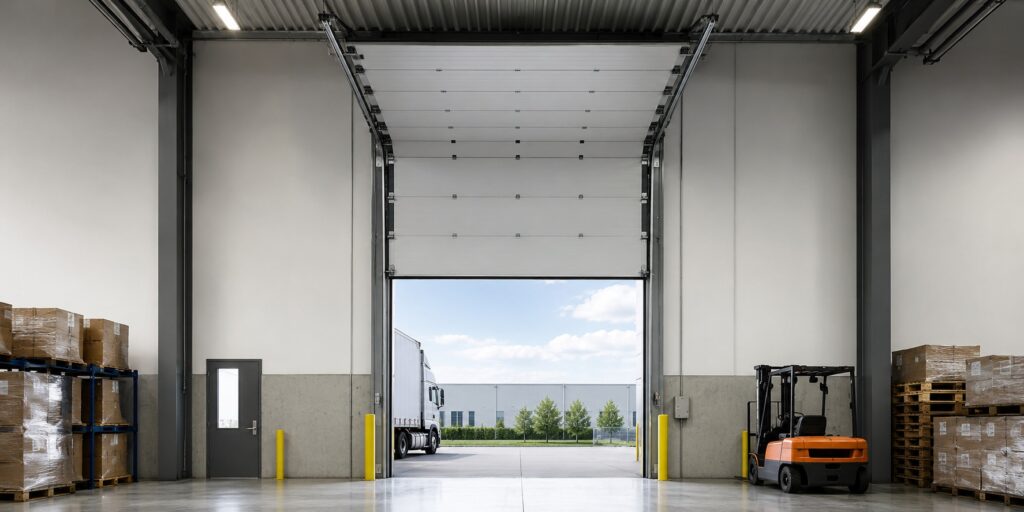
A 标准提升滑升门 is the most common configuration for warehouses, workshops, and industrial buildings.
After opening vertically, the door panels move horizontally along the ceiling tracks.
Features of Standard Lift Doors
- Suitable for normal ceiling height buildings
- Simple and cost-effective structure
- Easy installation and maintenance
- Commonly used for warehouses and factories
Installation Requirements
A standard lift sectional door usually requires sufficient space above the opening.
Typical considerations:
| 项目 | Requirement |
|---|---|
| Headroom | Approx. 500 mm (depends on door size and system) |
| 应用 | Warehouses, factories, workshops |
| Opening Type | Vertical movement + horizontal track |
| 优势 | Simple structure and economical solution |
Suitable Applications
Standard lift doors are commonly used for:
- General warehouse entrances
- 制造工厂
- Industrial garages
- Maintenance workshops
For buildings without ceiling restrictions, a standard lift is usually the first choice.
High Lift Sectional Door
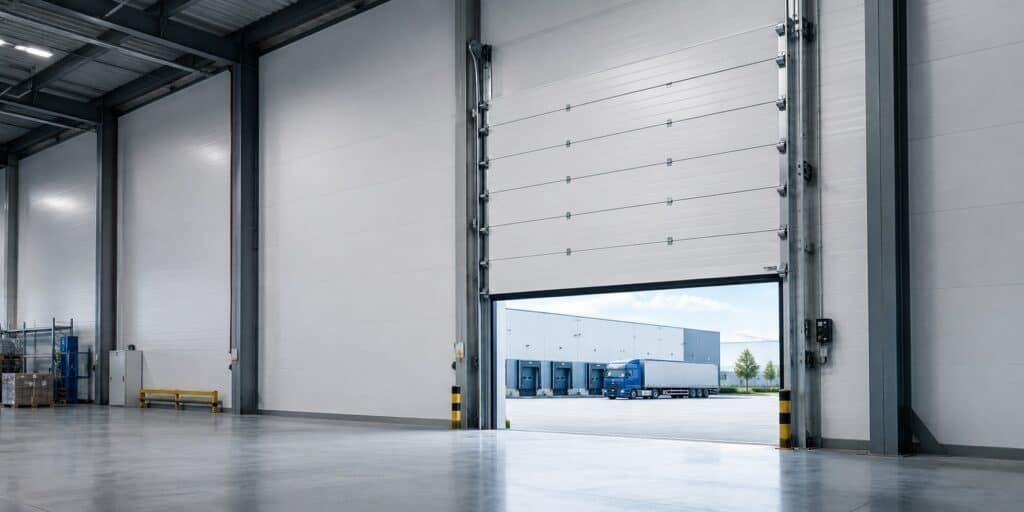
A 高提升分段门 is designed for buildings with higher ceilings or situations where the door needs to travel vertically higher before turning horizontally.
Compared with a standard lift system, the horizontal track is positioned closer to the ceiling.
Why Choose a High Lift Sectional Door?
A high lift sectional door is useful when:
- The building has extra ceiling height
- Equipment or vehicles need more clearance
- Cranes operate near the doorway
- Storage space above the opening needs to be optimized
Advantages of High Lift Doors
Better Use of Vertical Space
The door rises higher before moving horizontally, keeping more space around the opening clear.
Suitable for Tall Buildings
High lift systems are often selected for:
- 大型仓库
- 物流中心
- 生产设施
- Automotive facilities
Improved Vehicle Clearance
For buildings with forklifts, trucks, or tall equipment, a high lift configuration can provide better operating clearance.
垂直提升式滑升门
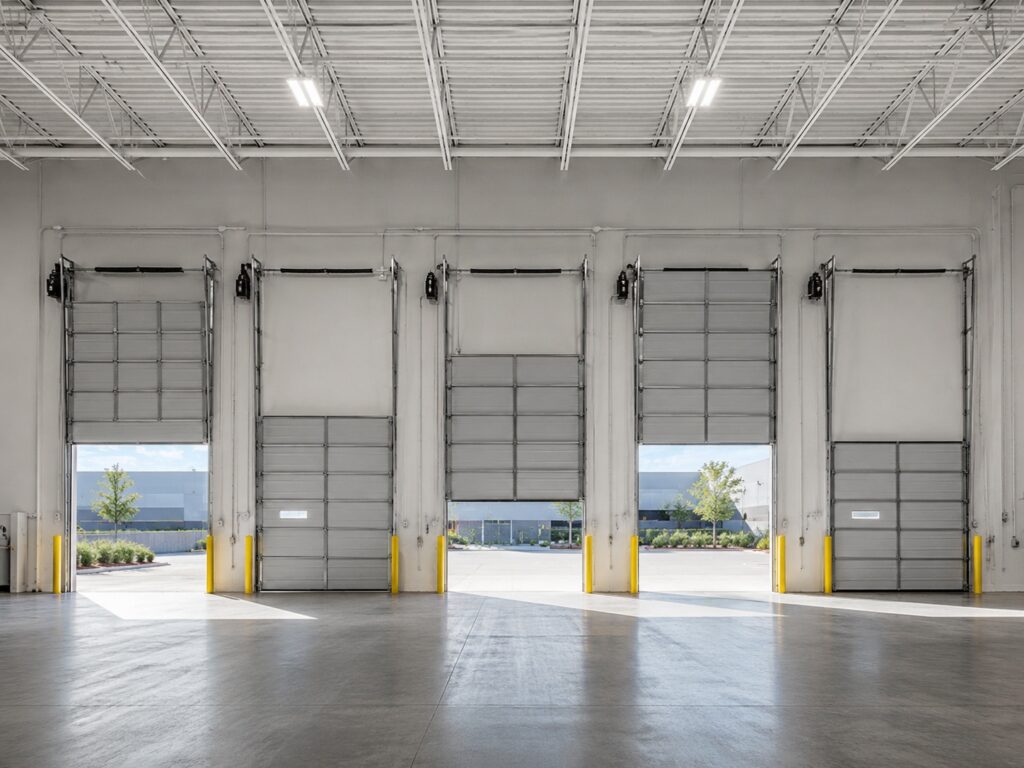
A 垂直提升分段门 moves completely upward without following horizontal ceiling tracks.
The door panels remain vertical above the opening.
This configuration is mainly used in buildings with very high ceilings.
Advantages of Vertical Lift Doors
Maximum Headroom
Because the door does not turn horizontally, the ceiling area above the door remains completely free.
Ideal for Large Industrial Openings
Vertical lift sectional doors are suitable for:
- High-rise warehouses
- 重工业建筑
- Facilities with cranes
- Large equipment entrances
Better Space Utilization
This configuration allows vehicles and equipment to operate close to the doorway without interference from overhead tracks.
Standard Lift vs High Lift vs Vertical Lift
| 特点 | 标准提升 | 高提升 | 垂直提升 |
|---|---|---|---|
| Track Movement | Vertical + horizontal | Vertical higher before turning | Fully vertical |
| Opening Configuration | Door moves upward and then follows horizontal tracks above the ceiling | Door moves vertically higher before turning horizontally | Door moves completely vertically without horizontal tracks |
| Required Ceiling Space | Approx. 500 mm above the door opening | More than 500 mm above the door opening | Space required higher than the full door opening height |
| Installation Cost | 较低 | 中型 | 更高 |
| Space Utilization | 标准 | 更好的垂直净空 | Maximum clearance |
| Typical Application | Warehouses, workshops | Factories, logistics centers | Large industrial buildings |
| 最佳适用场景 | 一般工业用途 | Tall buildings with obstacles | Maximum vertical space |
How to Choose the Right Sectional Door Lift Type
1. Available Headroom
Measure the distance between the top of the door opening and the ceiling.
Limited space may require:
- Low headroom system
- Standard lift configuration
Higher ceilings may allow:
- High lift
- Vertical lift
2. Building Equipment and Obstacles
Check whether there are:
- Cranes
- Pipes
- Ventilation systems
- 照明
- Storage racks
near the door opening.
A high lift or vertical lift system may help avoid interference.
3. Vehicle and Traffic Requirements
Consider the type of traffic:
- 叉车
- Trucks
- Heavy equipment
- Production vehicles
Large vehicles may require additional vertical clearance.
4. Door Opening Frequency
For frequently used industrial entrances, the operating system, motor selection, and door configuration should match the daily cycle requirements.
Sectional Door Specifications for Industrial Applications
Typical industrial sectional doors include:
| 项目 | Typical Configuration |
|---|---|
| 面板材料 | 0.45 mm color-coated steel; aluminum or 304 stainless steel optional |
| Panel Filling | High-density polyurethane foam |
| Foam Density | Approx. 45–48 kg/m³ |
| 面板厚度 | 40 mm / 50 mm |
| 面板高度 | Approx. 500 mm per section |
| 导轨材料 | 2.0 mm galvanized steel |
| 弹簧材料 | 82B spring steel or 60Si2Mn |
| 弹簧使用寿命 | 约 30,000 次循环 |
| 运行 | Push button / Remote control |
| 安全防护 | Safety edge, spring break protection, cable break protection |
| 密封 | EPDM rubber seals on top, bottom and sides |
Actual specifications may vary depending on door size, installation conditions, and project requirements.
应用
分段式提升门 with different lift types are widely used in:
仓库
For loading areas, storage entrances, and logistics operations.
制造工厂
For production areas, equipment access, and factory entrances.
物流中心
Where vehicle clearance and efficient material flow are important.
汽车设施
Where large vehicle access and clean appearance are required.
选择正确的 sectional door lift type is essential for industrial buildings.
A 标准提升滑升门 is suitable for most normal applications. A 高提升分段门 is better for buildings with higher ceilings and overhead obstacles. A 垂直提升分段门 provides maximum clearance for large industrial facilities.
Before ordering, evaluate your building structure, available space, and operational requirements to select the most suitable sectional overhead door solution.