Automatic Glass Sliding Door: Market Trends, Technology, Compliance, and Buying Guide for 2026

"(《世界人权宣言》) Automatic Glass Sliding Door market continues to evolve with advances in technology, new regulations, and changing customer expectations. Businesses across many industries—including retail stores, hospitals, and commercial facilities—choose Automatic Glass Sliding Doors for their modern appearance, convenience, and safety.

In 2026, companies that plan to purchase Automatic Glass Sliding Doors need to stay informed about the latest technologies, compliance standards, and market trends. This guide highlights key developments to help business buyers make smarter decisions and select the right Automatic Glass Sliding Door solutions to enhance their facilities.

目录

Introduction to Automatic Sliding Doors

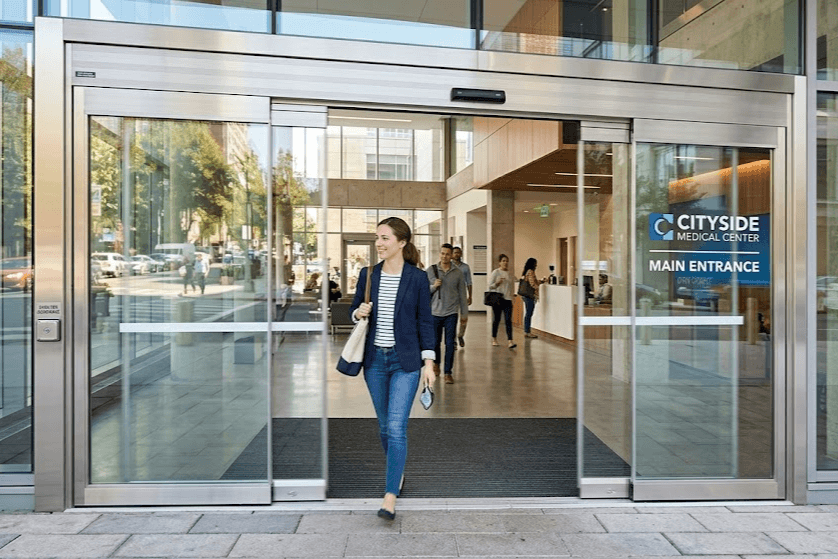
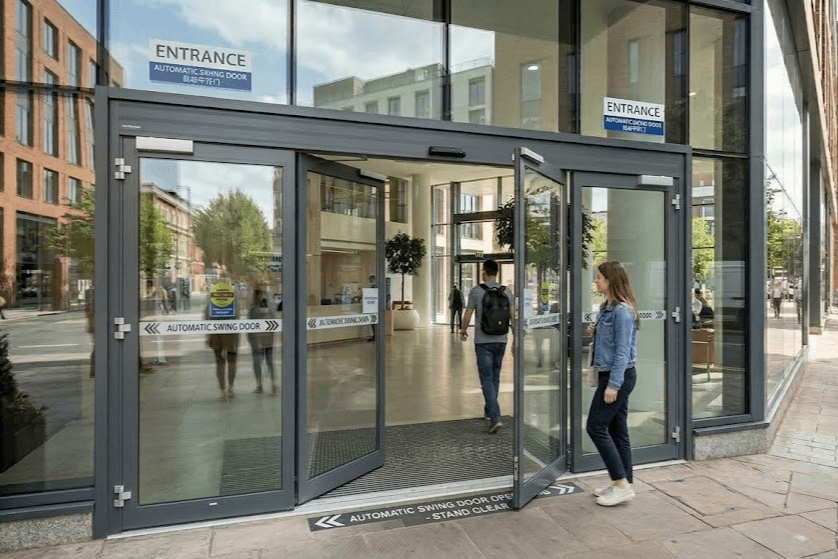
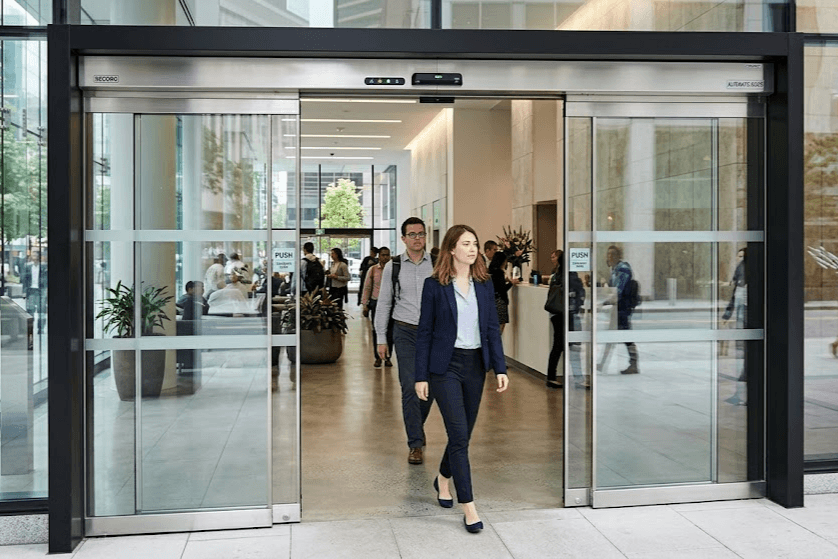
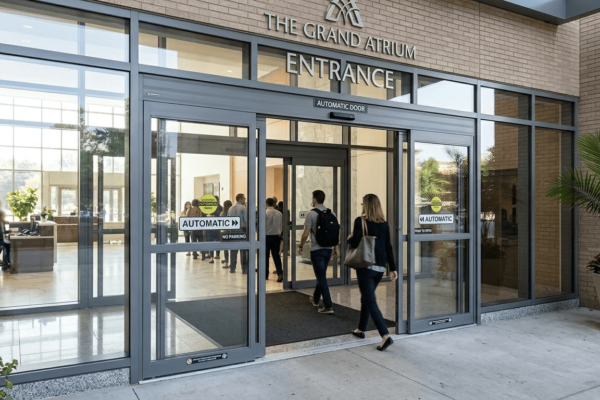
Automatic Glass Sliding Doors open and close automatically when sensors, buttons, or control systems detect a signal. Motion or proximity sensors detect approaching individuals, triggering the electric motor to slide the doors open and close after a set time or when no movement is detected. Their convenience and accessibility make them ideal for hospitals, malls, and airports, allowing effortless entry and exit.

Definition of Automatic Glass Sliding Doors

Automatic Glass Sliding Door Source from : SEPPES

Automatic Glass Sliding Doors provide sophisticated, seamless access for users. Infrared and microwave sensors detect movement and proximity, triggering motorized mechanisms that slide the glass panels along a pre-defined path. Modern doors combine energy efficiency, low operational noise, safety sensors to prevent injuries, and thermal glass to retain building heat. They deliver smooth access, enhanced functionality, and a sleek, elegant appearance.

Evolution in Commercial and Residential Markets

Automatic glass sliding doors have massively changed over the years to suit the needs of the commercial and residential markets. They started as highly used glass sliding doors in places like shops, airports, and offices, where sleek designs were essential for efficiency. However, changes and adaptations have been introduced to allow the use of glass sliding doors in homes.

With the changes to technology, glass doors have seen the introduction of touchless operation, sensor technology, and smart technology integration, which enhances energy saving and user-friendliness. Commercial use doors are engineered with the introduction of remote and biometric security doors to take full advantage of enhanced security.

The use of automatic glass sliding doors in homes is rapidly growing due to the seamless integration it offers in making it easy to bring the indoors out. Other features, such as silence, thermal insulated glass, and customized designs to suit individual needs, have made smart glass doors very appealing. The ability to use voice and app control to operate glass sliding doors adds a sense of luxury and increases demand.

The automatic glass sliding door business is changing due to demands for new sustainable building designs. Modern systems are now made with energy-efficient components to comply with and support green building standards. This shows the flexibility and innovation of automatic glass sliding doors and how they continue to evolve for the changing needs of the commercial and residential sectors.

Market Growth and Demand Overview

There may be an increase in demand and growth in the automatic sliding glass door industry. Reports state that because of the construction of technology-based smart cities, automatic sliding doors have growth potential over the next decade. They may be beneficial for urbanization and possible door expansion.

There has also been a notable increase in the automation of door technology. Their implementation in retail, healthcare, hospitality, and the residential industry illustrates a demand for automatic sliding doors and the need for user-friendly door technology. User-friendly sliding doors are especially important in the construction of environmentally friendly, energy-efficient buildings. The use of sliding doors is important for the management of energy use in residential buildings and to help utilize insulation.

Because of substantial rapid growth, North America and Europe are experiencing growth in construction and smart housing. The automatic glass sliding door industry will be a leader in the demand for innovative residential housing and improvements based on current technology. The Asian Pacific region has experienced growth and has potential for monopolizing rapid growth for use in housing technology, metropolitan area construction development, and the use of Gates sliding doors. Automate sliding doors based on new user lifestyle developments.

Market Trends and Growth Driving Factors

Urbanization and Expanding Commercial Infrastructure

Global urbanization has brought rapid change to commercial buildings and a greater need for automatic glass sliding doors. High-rise buildings, shopping malls, airports, and office spaces are being constructed in megacities. In these spaces, functionality, aesthetics, and the optimization of the usable space are very critical. Automatic glass sliding doors provide a hands-free experience while allowing light to flow to and from the space and providing a clear view of the surrounding area.

Glass sliding doors align perfectly with the new construction of smart cities. Automatic glass sliding doors are becoming a modern necessity in commercial buildings’ infrastructure, along with advanced access control and energy conservation systems. They enhance safety and convenience, adding to the growing trend of eco-friendly construction, which alludes to reduced energy costs.

Increasing Demand for Energy-Efficient Design Solutions

The automatic glass sliding door industry is regularly changing with innovations that enhance the configuration and functionality of every entrance. Because of the recent interest in sustainability, new ‘green’ technologies have been incorporated in sliding door design to maximize energy savings. Eco-friendly upgrades to sliding doors include: double, or even triple, glazed glass to improve insulation, low-E coating to reduce heat transfer, and weather-tight seals to minimize the need for artificial heating and cooling. Additionally, sensor and access control systems allow the door to function only when needed, reducing energy waste even further.

As the world focuses on reducing energy consumption and carbon emissions, the need for doors that have the option of small solar panels integrated into the doors is becoming more in demand. The automatic sliding door industry is putting the latest technologies and fine engineering to use by creating highly energy-efficient sliding doors. Because of this, doors with these new technologies are becoming a ‘must-have’ for energy-efficient design in commercial and urban architecture.

Adoption in New Verticals

Automatic glass sliding doors are no longer just for businesses and hotels. They are being used in healthcare for making sure comers and goers stay hands-free and sanitary in clinics and hospitals. They also look stylish and modern in hotels and make entry and exit easy.

Now they are making their way to people’s homes because they want stylish ways to save energy. Automatic sliding doors have versatility because they provide great operational efficiency in warehouses and production facilities, and have customizations, greater attention to more advanced technologies, and sustainability solutions.

Technological Advancements in Automatic Sliding Doors

Automatic Glass Sliding Door Source from : SEPPES

Integration with IoT and Smart Building Systems

Integrating automatic glass sliding doors with IoT (Internet of Things) and smart building systems has transformed their operational effectiveness and simplicity. With doors integrated into a smart building network, users obtain more seamless automation and sophisticated control. Techniques such as predictive maintenance, real-time foot traffic data, and temperature collection, found in door sensors, support energy-efficient maintenance and control.

The doors may be manipulated and watched remotely through the cloud and mobile platforms. This gives facility managers the ability to make real-time changes whenever it is necessary. Also, the changes come from AI technologies, and while control systems serve to improve security, advanced motion and facial detection may be integrated. Also, smart building systems may improve energy use as sensors determine climate control settings and activate the doors to open and shut. These systems illustrate a new level of smart technology and advanced systems focusing primarily on sustainability and safety.

Sensor Upgrades for Touchless Access

Over the years, the technology of automatic sliding doors has made huge advancements. Most importantly, automatic sliding doors can now be touchless thanks to the use of sophisticated sensors. Built-in modern doors are glass sensors that allow the door to open at the precise moment someone is in proximity, no matter how many people may be approaching the door. Sensor technology combined with artificial intelligence allows Automatic Glass Sliding Doors to open securely in hospitals, airports, and busy offices. Laser technology also helps determine when the door needs to open, improving efficiency and safety. Unless for safety, the advancements made in the sensor and A.I. technology help to allow more doors to be touchless and aligned with the design of constructing new touchless buildings.

Innovations in Motor Systems and Coatings

With the development of new motor systems, automatic glass sliding doors have become more efficient, reliable, and practical for users. The latest motor systems include brushless direct-current (DC) motors, meaning that power consumption is reduced, and operation is quieter and smoother. These systems have new microprocessors that automatically adjust speed and torque to control traffic patterns and extend motor life.

New coating technologies have also improved the performance of automatic glass sliding doors. The glass surfaces of the doors now feature specialty coatings that resist glare, fogging, and staining. Anti-glare coatings enhance visibility by preventing reflections and make it easier to see the glass at all times. Hydrophobic (water-resistant) coatings that repel water make streaking during rain events a thing of the past. Additionally, scratch-resistant coatings prolong the life of the doors, even in high-traffic areas like commercial buildings and hospitals where doors open frequently. The glass sliding doors combine the latest coating technologies with state-of-the-art motor systems to provide modern, practical designs.

Sustainability & Energy Efficiency in Door Systems

High-Performance Insulated Glass and Thermal Breaks

The use of thermal breaks and insulated glass boosts the energy efficiency of automatic glass sliding doors. Insulated glass involves a minimum of two glass panes, which are separated by a spacer and sealed together to form an insulating air pocket. This technology significantly reduces heat transfer. Less energy is wasted, indoor temperatures are stabilized, and heating and cooling costs are lowered, making insulated glass a great option for both residential and commercial use.

Thermal breaks reduce heat transfer across the Automatic Glass Sliding Door frame by using low-conductivity materials like polyamide or polyurethane. Combined with insulated glass, they form an effective barrier that minimizes energy loss and improves temperature control inside the building.

Improvements in glass technology, like Low-E (low emissivity) coatings, help insulated glass to keep reflecting radiated heat while allowing natural light to pass through. Insulated glass, thermal breaks with low-E coatings together provide automatic sliding doors with better insulation and no aesthetic and functional compromise, which answers to the market demand in energy-efficient constructions.

Compliance with Green Building Standards

Glass sliding doors have become more eco-friendly thanks to innovations with thermal insulation and energy loss technologies. Automatic sliding doors become energy efficient, and insulated sliding glass doors meet LEED standards. Along with added energy efficiency and sliding glass door insulation, doors now feature Low-E insulated glass units to reduce heat loss. Thermal breaks and sealed insulation help reduce energy loss.

Modern sliding glass doors and automatic sliding glass doors are engineered using energy-efficient materials to reduce energy loss and improve overall efficiency. Energy-efficient materials and construction help support laws and regulations aimed at moving toward more eco-friendly sliding glass doors with the latest technologies. Eco-friendly doors now use motion sensors to open and close doors only when a person is nearby to help reduce energy loss. More manufacturers have also been designing doors to meet energy loss standards without sacrificing use.

Solar-Powered Systems and Energy Solutions

Using solar power for automatic glass sliding doors is a revolutionary advancement that helps doors open efficiently. Solar sliding doors have photovoltaic panels embedded in their frames. These doors use solar energy to open and close. This technology allows buildings to use less conventional (or “non-renewable”) energy and therefore cut energy costs. This technology is ideal for commercial and residential buildings, being conscious of the environment. When combined with energy storage systems, like lithium-ion batteries, the doors will also function during cloudy days and power outages.

The latest smart solar sliding doors have sophisticated energy management systems that improve their operation. These systems automatically capture and use the right amount of energy to open/close the doors and minimize wasted energy. This technology is a great energy solution for modern-day buildings and allows the building to operate independently away from the conventional power grid. This also provides great eco-friendly construction.

Design & Customization Trends for Sliding Door Systems

Automatic Glass Sliding Door
Automatic Glass Sliding Door Source from : SEPPES

Minimal Frames and Seamless Transitions

Recent trends in the design of automatic glass sliding doors emphasize balance at design of the door frame, and how the door transitions when opening or closing. Balanced door frame design with unbalanced transition operation visually captures attention, especially when doors open smoothly. It shifts focus to the loose frame design. When the glass door structure is balanced at all levels and minimally framed, glass doors naturally integrate into their environment. Ultimately contributing to an unimpeded view and giving most of the environment-related structure.

To ensure balanced structures without aesthetic or functional compromises, engineering refinements and new materials have been implemented to create frames and structurally sound and narrow elements. Integrated glass door design with uninhibited door frames is most common and spoken about in the context of refined commercial environments, upscale housing, and hospitality design. Increased design flow and accessibility through lower barriers allows for natural outdoor/indoor transitions using seamless threshold glass doors.

The balance of functional innovation and design in automatic sliding door systems decidedly contributes to their improvement. It also supports energy conservation, with heightened sliding doors seamlessly merging with multiple design approaches.

Use of Sustainable Materials and Unique Finishes

As the world becomes progressively eco-conscious, the sliding glass door industry’s need for sustainable materials is dire. Now, manufacturers are focused on using materials like recycled aluminum, wood from sustainable sources, and low-emissivity (Low-E) glass. Low-E glass is also a thermal insulator and is great for energy-saving designs because of its ability to reduce the amount of heat that escapes through the glass.

Sliding glass doors can also feature unique finishes that are both aesthetically pleasing and highly functional, enabling them to close with the touch of a button. These unique finishes can feature a glass treatment that is customizable, as well as give the ability to achieve a specific design for whatever the need is: privacy, fun, modern, etc. For a streamlined, integrated look with surrounding architecture, designers can choose Automatic Glass Sliding Doors with anodized or powder-coated frames. Combining these unique finishes with durable, sustainable materials allows businesses and homeowners to create eco-conscious, custom solutions for both residential and commercial spaces.

Applications as Room Dividers and Acoustic Solutions

Modern architects are beginning to utilize more automatic glass sliding doors. These doors are perfect for creating room dividers. Instead of creating rigid, separated rooms and boxy designs, glass doors promote an airy, open concept room division design. An example of an open concept design using automatic sliding doors is offices with glass sliding doors, meeting rooms, or offices that are enclosed using glass sliding doors. These glass sliding doors create an open concept feel to the office while still creating separate office spaces. In homes with automatic glass sliding doors, dividers can be made for the living room and the home office.

Some of the sound reduction technologies used in today’s glass doors include laminated glass and acoustic seals. The sound reduction technologies allow for an increase in privacy. There will be no more sounds escaping the meeting room than sounds entering the meeting room.Automated glass sliding doors create a quiet environment for meeting rooms, conference rooms, or libraries while promoting an open, connected feel between spaces. Instead of creating rigid, separate rooms, glass sliding doors promote an airy, open concept room division design.

Compliance, Standards, and Safety for Automatic Doors

Regional Regulatory Requirements

Because of the need to consider safety, accessibility, and efficiency, glass sliding doors automatically come with all kinds of legal guidelines across different regions. In the case of the United States, some of these laws include the Americans with Disabilities Act (ADA). This Act states that a person with a disability and their caretaker should be able to operate the door independently. There are also other safety guidelines by the ANSI/BHMA A156.10 that are based on the doors performing their required function, and also not harming any person by the use of sensors and other mechanisms to avoid any accidents.

In Europe, a similar legal guideline exists (EN 16005). In this case, the focus is on the prevention of injuries to the users comprising a commercial or public complex. There are also guidelines for the inclusion of sensors, warning systems, and other maintenance routines that would be meant to minimize the injuries to users when doors open.

By law, regions require routine inspections of Automatic Glass Sliding Doors. These inspections ensure the doors operate properly and maintain safety. Legal guidelines protect users by enforcing compliance with local codes for all door mechanisms. Governments implement these regulations to reduce legal risks, and both installers and users must follow newly established standards to stay fully compliant.

Importance of Ingress Protection Ratings

The Ingress Protection (IP) code can show how safe and long-lasting an automatic glass sliding door is. Because these doors are used in various places, an IP code shows how reliable a door is against things like rain and wind, making them a great possibility in a number of indoor and outdoor places.

In places with extremely high or low weather conditions, such as high-dust or high-humidity places, such as urban areas, automatic sliding glass doors must have a better IP rating, while those with an IP rating of 65 or higher must have low dust and low humidity. maximum safety and performance.

Doors with better IP ratings provide better safety and reliability, and even greater challenge or harsh environments such as dusty, high-humidity urban places with high pollution.Overall safety improves when modern technologies like sensors and IoT—now common in Automatic Glass Sliding Doors—receive proper protection. These technologies increase efficiency, reduce downtime, and ensure doors meet high standards for safety and durability.

Safety Features and Certifications

Automatic sliding glass doors have numerous safety measures for their easy and safe use. These safety measures include motion sensors and presence detectors that will stop the doors from closing if they sense a person or object in the way of closing. These automatic sliding doors also come equipped with safety brakes and obstruction detection that stop the sliding door movement if they encounter a person or object in the way of closing, so the door will not injure or damage a person or object that is in the way of the door.

Business owners can be safe in the knowledge that their automatic sliding glass doors will comply with global safety certifications. All of the automatic sliding glass doors will comply with EN 16005 certifications for automatic sliding glass doors in Europe that mandate businesses to do rigorous testing on user safety for the durability, strength, and performance of the automatic sliding glass doors. The UL 325 certification in North America also tests to make sure they are safe, durable, and performance compliant.

Automatic sliding glass doors equipped with safety-certified processes will keep employees and customers safe, alongside the use of emergency fail-safe features that allow the automatic sliding glass doors to open and close during power outages, and fire safety doors that will allow the automatic sliding glass doors to open and close in the event of a fire.

Top Manufacturers and Competitive Landscape

Summary of Leading Global Brands

In the world market for automatic glass sliding doors, the key players are recognized for their ability to innovate, the quality of the doors, and the reliability of their products that help doors open smoothly. With that said, one clear market leader is ASSA ABLOY, which could focus more on the energy efficiency and durability of their automatic doors. They could be the preferred option for all sectors.

Dormakaba is known for its innovative designs and smart door solutions, and is also a key player in the market for doors open technology. They integrate modern intelligent systems into their automatic sliding doors so that they can be modern and functional at the same time.

An important player in this industry is GEZE, which is recognized for their German engineering. They have a wide variety of automatic sliding doors, focusing on safety, ease of use, and integration with the management systems of buildings.

Horton Automatics has a strong reputation in North America for its reliability and customization offering, specifically for the healthcare and retail industries, and also in high-traffic situations. Their designs are user-centric, ensuring optimal performance.

Stanley Access Technologies provides strong and stylish automatic sliding doors to customers who value functionality, safety, and modern design.

These companies are at the forefront of innovation in the industry, integrating technology and operational efficiency to ensure every entrance meets contemporary style and dynamic marketplace needs.

Innovation Strategies in the Industry

The automatic glass sliding door industry is advancing rapidly by utilizing emerging technologies to enhance functionality and efficiency. And overall customer satisfaction with sleek designs. One example of such advancement is the implementation of smart technology. Smart technology includes things like motion sensors and artificial intelligence (AI). Which give doors the ability to alter their speed and their responsiveness to user presence. This contributes to overall better energy saving and user safety.

Moreover, with the increasing focus on sustainability, companies are starting to embrace the use of sustainable materials, such as the use of eco-conscious glass. This trend is mainly to improve energy savings through the use of glass in the construction of buildings. Enhanced durability and the recyclability of the materials used are also aligned with the goals of sustainability. Touchless operation is another area of increasing focus and is mainly a response to the increased demand for safety and hygiene in public and commercial environments. In the current world Touchless technology is of utmost importance. Technologies such as wireless controls and mobile applications are designed to operate doors without the need to be touched. This is particularly important in the current world, as people are concerned about issues of health.

Finally, customers have focused on aesthetic customization as companies attempt to embed automatic sliding door systems with a sleek configuration within their designs. The latest manufacturing innovations facilitate client-specific solutions. An array of colors, textures, and decorative features can be combined to give a functional system a sophisticated, contemporary look. The industry is ready to address a changing market by combining the above approaches.

Market Focus and Competitive Advantages

The market is experiencing growth for automated glass sliding doors for advancements made towards sustaining focus for environmental and global eco-friendly goals for all buildings that use sliding glass doors. From hospitals to homes to commercial and hospitality door openings. Developers and engineers are focused on producing automated glass sliding doors that use efficient and eco-friendly technologies that contribute to energy savings to lessen our carbon footprint.

For a variety of reasons, modern sliding automatic glass doors are the best sliding glass doors for use in fully commercial and residential buildings. Post-COVID, the doors have increased sanitation and hygiene. The doors also have reduced fingertips on mechanical buttons. And the doors’ automated push buttons are motion detected, and touchless doors are considered best for these reasons. Also, doors offer touchless functionality and smart tech. The modern glass sliding doors don’t require a lot of maintenance and are durable provide an excellent cost-effective solution for building multi-unit and single-family residential use.

The market focuses on designs that offer engineering adaptability. The engineering and architectural designs focus on the look and integrate individual designs that meet the builders and architects’ own structural and individual building’s operational systems needs. Offering the building the best function and energy-saving operational systems use.

Focusing on customer needs concerning efficiency, safety, and design versatility. The automatic glass sliding door market will continue to remain competitive while addressing new global opportunities in construction and smart building technologies.

Pitfalls and Sourcing Checklist for Buyers

Risks of Prioritizing Price Over Quality

Choosing cheap automatic glass sliding doors instead of good quality options can lead to buyers facing many issues. When features such as durability and energy-saving designs are cut out to lower the cost. They also may use breakable materials, which can lead to the doors breaking a lot and having high maintenance costs. And may also not have good safety features like emergency stops and motion sensors, which can prevent accidents.

They may not insulate the building well, which can cause energy bill costs to increase. Safety and sustainability certifications may not be met, as well which can lead to buyers having legal issues. Because of these issues, quality options can help buyers save money in the long run. Better building technologies can also be used when quality options are purchased, as well as making the infrastructure of the building safer and more efficient. Research can help buyers understand that better and more quality options are available.

Ensuring Safety and Environmental Compliance

Automatic sliding glass doors are both stylish and functional, designed to take full advantage of modern aesthetics. They enhance the appearance of a building and provide ease and accessibility to all users. While designing these doors, manufacturers consider the applicable local and national building codes. Balancing design and safety gives users confidence to utilize the doors on a daily basis. Automatic sliding glass door manufacturers adhere to strict international standards to ensure that their products help doors open safely. ISO 14001 focuses on the environmental aspects of building. ISO 13849 focuses on building safety and accident prevention. Doors that utilize energy-efficient motors and advanced motion sensors are built with sustainable and recyclable materials, making them environmentally friendly.

To keep Automatic Glass Sliding Doors safe and reliable and to prevent pinch injuries, regularly maintain and test all safety systems and sensors. While these doors operate simply for users, their mechanisms remain complex to ensure consistent and dependable performance. The design of the doors must meet the requirements of building codes to obtain the building’s operational permits. Manufacturers obtain operation permits by obtaining specific certifications, such as LEED (Leadership in Energy and Environmental Design).

Through the use of innovative, sustainable, and compliant design, automatic sliding glass doors are a valuable asset to any building and provide many years of service. Automatic sliding glass doors provide building owners and managers with a compliant and efficient occupancy while ensuring that doors close with the touch of a button.

Logistics and Installation Guidance

To keep automatic sliding glass doors working well for a long time, planning and installation must be done properly. The first step is to take measurements and make assessments about the compatibility of the area with the chosen door system to ensure it allows doors open properly. The installation is likely to be done more precisely by a professional automatic door installer.

When the door parts arrive, a good installation will be even more dependent on the shipment of door parts. These door parts are often customized and assembled by the manufacturer, so be sure to order parts that are easy to install on-site. Also, make sure that the installation area is ready, especially the electrical parts that are stable, as well as the building itself.

In the installation, the mechanism of sliding and sensors are positioned, the doors are tested. And the construction laws are followed. The doors may require repairs and will eventually get more and more wear and tear, and will need regular maintenance. These kinds of activities are necessary and will generally require systems to be updated for sensors and software. Not only that, but cleaning of the slides will also be needed. Each of these kinds of activities will increase the lifespan of the doors and make them more efficient.

Future Outlook and Conclusion

Opportunities and Challenges Through 2026

Advances in technology and the rise of smart, energy-efficient buildings drive new opportunities for Automatic Glass Sliding Doors. IoT-enabled sensors allow doors to communicate with building systems, improving environmental control and saving energy. Growing populations increase demand for sophisticated, sustainable buildings, and manufacturers can use ethically sourced materials and renewable energy to produce doors that meet sustainability standards.

The total cost to install automatic glass sliding door systems is a burden that some will not, and cannot, financially support. Some buyers hesitate to purchase Automatic Glass Sliding Door systems because advanced technology can increase the risk of hacking. Manufacturers and installers must ensure these systems comply with safety, environmental, and sustainability laws and regulations. Despite the increased costs and the Safety, Environment, and Sustainability Laws and Policies, there is a growing demand for automatic glass sliding doors.

Importance of Reliable Product Choices

When buying automatic glass sliding doors, consideration should be given to factors such as safety, reliability, and how seamless the door will operate. Top-of-the-line doors will come equipped with the latest technology. Such as motion detection and anti-crash technology, ensuring a full range of safety features. For the best reliability, sliding doors should be made with tempered or laminated glass. This will ensure that the doors will remain complete and fully functional for a long time, even with high traffic use and changing weather conditions.

The best brands will mitigate your maintenance and repair costs in the long run. Engineered designs will have a longer lifespan and will need repairs less often. For the best seamless installation experience, ensure the doors will integrate with the automation your building will have. Quality brands will have the latest technology that will meet building codes and requirements. This might include even technology to help with your HVAC and energy costs. Simple sliding glass doors, scanning doors, and standard building codes.

Automatic glass sliding doors are a major step in residential and commercial building design.

常见问题 (FAQ)

How do effortless patio door systems differ from standard sliding glass doors?

Effortless patio door systems seamlessly integrate an automatic door system with sliding door functionality that makes them extremely easy to use. Unlike manual sliding doors that require users to push them open and closed. Automatic Glass Sliding Door systems use controllers, infrared sensors, or close-option buttons for effortless operation. You can mount them on the surface or design them to sit flush in a pocket, saving space and enhancing the overall aesthetic of your building.

Can an engineer configure my automatic glass sliding door for a wide range of sizes?

Yes. Doors are designed to be adjustable over a number of different dimensional, systematic, and configurational limits like multi-slide door systems, telescopic systems, or even bi-fold systems. A seasoned engineer will evaluate your opening. Whether it be an interior or exterior, and suggest components like stainless-steel rails, aluminum stile frames, and fitting door panels. They will also make sure the automatic controller and mounting (to be surface-mounted or flush-mounted) are compliant with local codes and the desired aesthetics of your interior designer.

What door features should I look for when choosing an automatic glass door for my patio?

Key features of doors include having automatic sensors that use infrared technology to ensure safety, an automatic door system controller, the option for remote/push button controls, sturdy construction of stainless steel or aluminum style, and the option for a flush or pocket sill for easy accessibility. For door panels that are telescopic for space-saving needs, multi-slide for larger openings. And additional warranties for motors and controllers, some choices provide full design and functionality.

Are telescopic sliding glass doors suitable for tight patio openings?

Telescopic sliding glass doors are unique for saving space where standard sliding glass doors or bifold doors would be tight. Telescopic designs use efficient stacking of multiple door panels to provide seamless automatic sliding operation. They are great for patio applications where achieving a larger opening is desirable. And coupled with a flush or pocket sill, they provide an unobstructed opening between the inside and outside of the living area.

How do automatic multi-slide patio door systems handle security and durability?

Automatic multi-slide patio doors can be designed with heavy-duty locking mechanisms, reinforced aluminum stile frames, stainless steel rail systems. And secure access controllers. Many systems offer locking mechanisms that will automatically lock a panel when it is stationary. As well as sensor systems that will open and close doors automatically, unless there is an obstruction. Investing in a system that offers a comprehensive warranty and customer service will provide peace of mind for the longevity of your systems.

Can I retrofit an existing manual sliding glass door to become an automatic glass door?

In a lot of instances, a manual sliding glass door can be upgraded to an automatic sliding door by adding an automatic door actuator, a surface-mounted track, a controller, and a few sensors. Whether this is possible depends on the door panel design, the door frame design. And the options for mounting the controls. Some systems are designed for simple upgrades, while others may require a lot of construction. An engineer or an installer is the best person to decide whether a retrofit is possible or if it is best to install a new automatic door set.

What controls are available for effortless operation—remote control, push button, or touch of a button?

You can control an Automatic Glass Sliding Door in several ways. Common options include handheld remote controls, wall-mounted buttons, key fobs, and PIR (passive infrared) motion sensors. Advanced systems also allow timer-based operation or mobile app control. Choose the control method that best fits your operational needs and user preferences.

How do I choose between a telescopic, bi-fold, or multi-slide patio door for my living space?

Your choice will be based on the size of the opening, the sightlines, and the configuration of the spaces involved. Telescopic and multi-slide doors are the best for wide, unobstructed openings and for use with automatic doors and flush sill applications. Bi-fold doors have a compact fold-away operation and offer a different aesthetic. They are often a manual slide or fold operation. For the best options on interior and exterior transitions. And to address rail, sensor, and warranty compatibility, we recommend consultation with an interior designer or architect.

参考资料

  1. Cornell University – Educational Content on Automatic Glass Doors
    Everything related to the automatic glass door
    This source provides detailed educational content on the design and functionality of automatic glass doors.
  2. University of Vermont – Auto Sliding Doors and Glazing
    8400-1 Auto Sliding Doors and Glazing
    This document includes safety checks and maintenance guidelines for automatic sliding doors and glazing.
  3. University of Houston – Master Specifications for Sliding Automatic Entrances
    SECTION 084229.23 – SLIDING AUTOMATIC ENTRANCES
    This specification outlines design and installation criteria for sliding automatic entrances, including glass doors.

发表评论

您的邮箱地址不会被公开。 必填项已用 * 标注

滚动至顶部