
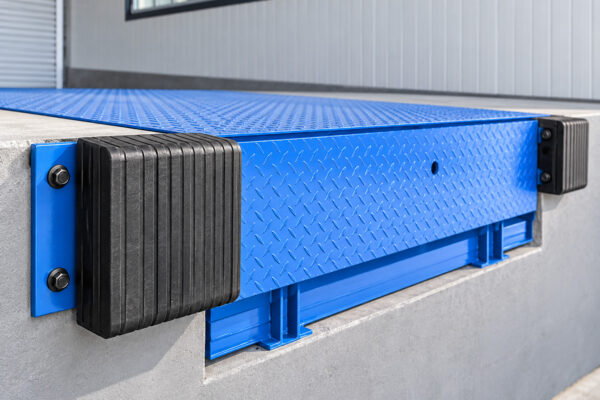
Loading Dock Bumpers: Types, Sizes & Selection Guide
Loading dock bumpers are easy to overlook when planning a warehouse loading bay. Yet the point where a reversing trailer meets the building is exposed to repeated contact, movement and abrasion. Worn, poorly positioned or undersized bumpers can leave the dock face, door surrounds and adjacent equipment vulnerable to damage.
For warehouses modernizing their loading operations in 2026, the practical question is not simply whether to install a rubber block. It is which bumper configuration fits the truck fleet, approach slope, dock height and leveler geometry—and how the bumpers will work with the rest of the loading bay.
This guide explains the main designs, sizing considerations, installation checks and information to include in a supplier inquiry.
Why Loading Dock Protection Matters in Modern Warehouses
Modern warehouses are undergoing significant changes as logistics operators invest in automation, warehouse management systems and faster goods handling. However, loading and unloading operations still depend on the physical interaction between trailers, forklifts and dock equipment.
As more warehouses seek to improve dock utilization, equipment selection and preventive maintenance remain important parts of loading bay management.
A warehouse may have automated storage systems and advanced inventory tracking, but damaged dock equipment can still disrupt loading operations. Repeated truck contact, changing trailer heights and frequent loading cycles all create mechanical stresses around the loading bay.
The US Occupational Safety and Health Administration (OSHA) identifies loading docks as working environments with hazards involving forklifts, vehicles and platform edges. Its powered industrial truck workplace guidance 和 warehouse safety guidance provide useful background for evaluating loading dock risks.
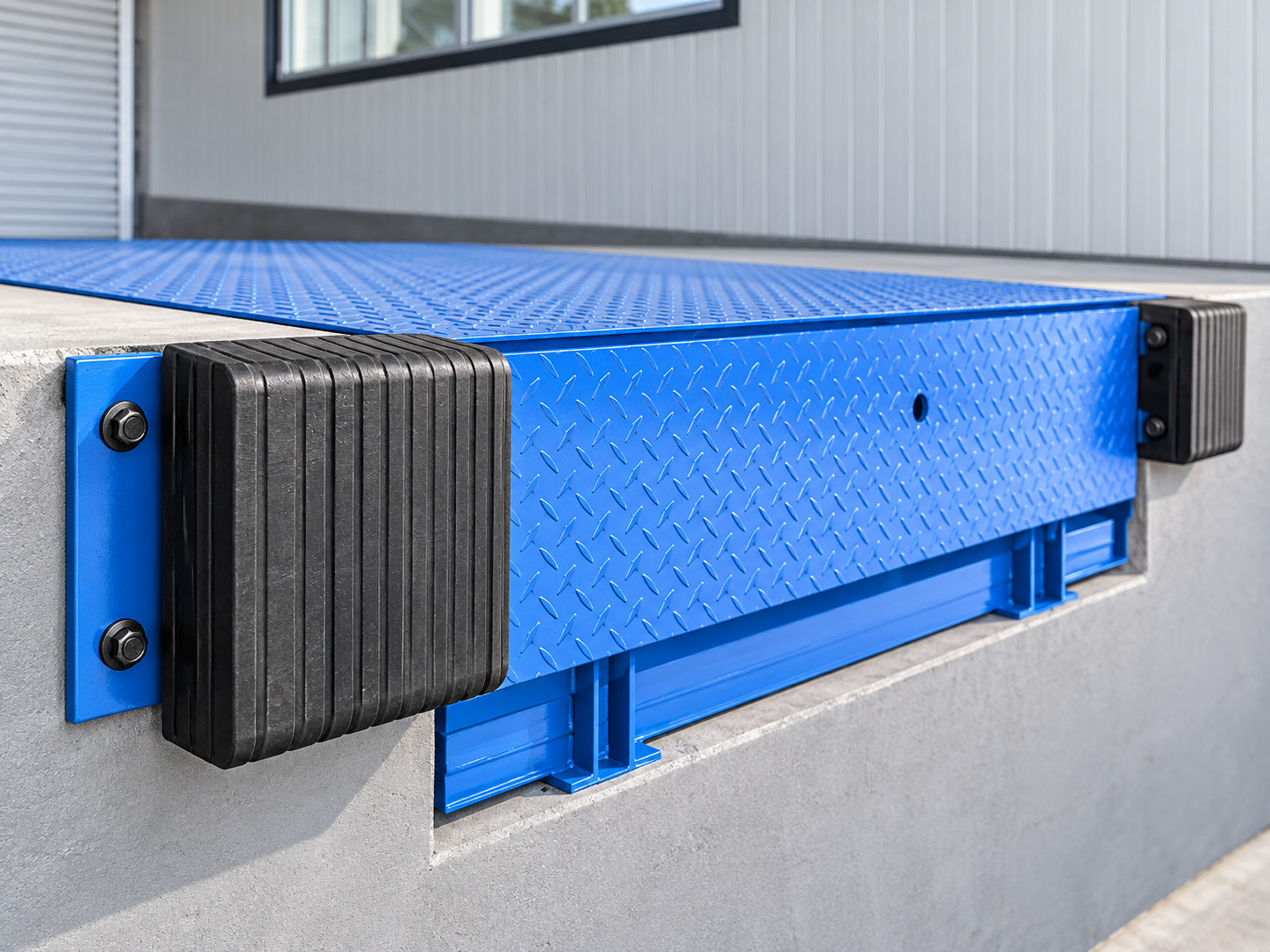
Rubber dock bumpers address one specific aspect of this environment: protecting the point where the rear of a truck or trailer contacts the building.
However, dock bumpers do not replace vehicle restraints, wheel chocks, operator training or a properly selected dock leveler.
What Are Loading Dock Bumpers?
Loading dock bumpers又称 truck dock bumpers 或 loading dock bumper pads, are protective components installed on the front face of a loading dock.
They are usually positioned on both sides of the loading bay opening, where the rear of a truck or trailer is expected to contact the dock structure.
Most industrial dock bumpers use rubber or rubber-based assemblies designed to cushion controlled vehicle contact and reduce direct impact between the trailer and the building.
When a vehicle reverses toward a loading dock, the bumper establishes a contact surface between the trailer and the dock face.
During loading and unloading, trailer suspension movement can also cause vertical rubbing against the bumper surface.
The bumper therefore serves two important purposes:
- Reducing direct contact between the truck and the dock structure.
- Providing a replaceable contact surface exposed to repeated impact and abrasion.
Types of Industrial Loading Dock Bumpers
Different industrial loading dock bumpers are designed for different contact conditions, truck configurations and maintenance requirements.
Understanding the main construction types can help warehouse operators select a suitable design rather than relying only on the appearance or thickness of the bumper.
1. Molded Rubber Loading Dock Bumpers
Molded rubber loading dock bumpers are manufactured as solid or specially shaped rubber units.
They provide a relatively simple contact protection solution and may be used for conventional loading bays, wall protection and other applications where their rated performance matches the operating conditions.
Their suitability depends on rubber formulation, physical dimensions, mounting arrangement and the severity of vehicle contact.
Buyers should confirm the manufacturer's specifications rather than assuming all molded rubber bumpers offer the same durability.
2. Laminated Rubber Loading Dock Bumpers
Laminated rubber loading dock bumpers typically consist of multiple rubber layers assembled into a single protective unit.
The layers may be held together using steel components, connecting hardware or other structural arrangements.
These bumpers are commonly considered for industrial loading docks exposed to repeated trailer contact.
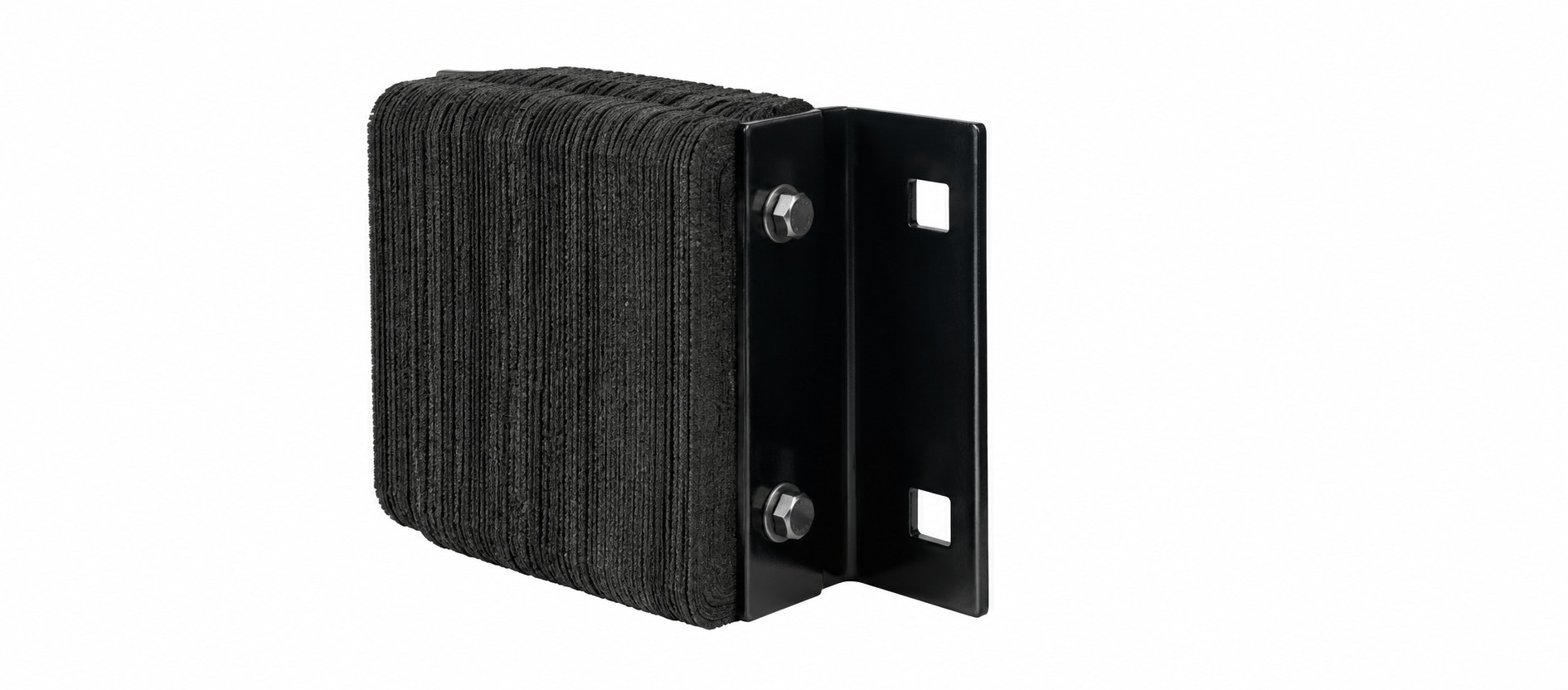
When evaluating layered bumper assemblies, buyers should examine the contact surface, layer construction, mounting hardware and replacement requirements.
The rubber material, installed projection and fastening arrangement should be selected according to the specific loading dock configuration.
3. Heavy Duty Loading Dock Bumpers With Steel-Faced Protection
Some heavy duty loading dock bumpers feature steel-faced contact surfaces to address significant abrasion.
These designs can be considered for loading docks where trucks experience substantial vertical movement during loading or unloading.
The steel contact face can offer additional resistance to abrasive wear under suitable operating conditions.
However, steel-faced bumpers are not automatically the best option for every facility. The trailer contact surface, expected impact conditions and installation details must be evaluated.
| Dock Bumper Type | Key Characteristics | Selection Considerations |
|---|---|---|
| Molded Rubber Bumpers | Solid or shaped rubber construction | Rubber grade, mounting and expected wear |
| Laminated Rubber Bumpers | Multiple rubber layers assembled together | Layer retention, projection and contact coverage |
| Steel-Faced Heavy Duty Bumpers | Abrasion-resistant contact surface | Vehicle compatibility, wear pattern and mounting |
For additional information about different bumper constructions, see this dock bumper selection reference . Specifications from third-party products should not be treated as specifications for SEPPES equipment.
How to Choose the Right Loading Dock Bumpers
Choosing the correct loading dock bumper requires more than selecting a rubber pad with sufficient thickness.
The bumper must match the dock geometry, trailer fleet, loading equipment and installation structure.
Step 1: Record the Dock Height and Trailer Fleet
Start by measuring the finished dock height and identifying the types of trucks or trailers that regularly use the loading bay.
Different vehicles may have different rear contact surfaces and loaded or unloaded trailer-bed heights.
Where multiple vehicle types use the same loading dock, evaluate both the lowest and highest expected contact positions.
This helps determine whether conventional horizontal bumpers provide enough contact coverage or whether taller configurations should be considered.
Step 2: Match Bumper Height, Width and Placement
The bumper dimensions should correspond to the expected vehicle contact area.
Its height and width influence the contact surface available to the trailer, while its installation position determines how the vehicle meets the dock face.
For warehouses receiving vehicles of different heights, larger vertical contact coverage may be useful.
However, the selected bumper must also be mounted to a suitable supporting structure capable of accommodating the expected contact loads.
Step 3: Calculate Bumper Projection
Bumper projection describes how far the installed bumper extends outward from the dock face.
This dimension is particularly important because it affects how close a truck or trailer can approach the loading dock.
A bumper with greater projection creates additional separation between the vehicle and the building.
Although this may provide useful clearance, excessive projection can also increase the gap that a dock leveler must bridge.
If the dock leveler lip cannot achieve the engagement required by its manufacturer, loading operations may be affected.
For additional technical background, review this dock bumper selection guide .
Step 4: Consider the Truck Approach Slope
The slope of the vehicle approach area can change the position at which the trailer contacts the dock.
When a truck reverses down a sloped approach, its body angle relative to the dock face may differ from that of a vehicle approaching on level ground.
This can change the height and location of the contact point.
For this reason, bumper positioning should be checked against the actual vehicle backing path rather than only the nominal dock height.
Step 5: Evaluate Dock Traffic Frequency
Warehouse dock bumpers experience different levels of wear depending on how frequently vehicles arrive and how the facility operates.
A warehouse receiving several deliveries each day may have different bumper maintenance requirements from a high-throughput logistics distribution center.
For busy loading bays, pay attention to:
- Frequency of vehicle contact.
- Vertical trailer movement during loading.
- Rubber abrasion and compression.
- Replacement accessibility.
- Condition of the mounting hardware.
Heavy duty rubber loading dock bumpers should therefore be selected according to actual operating conditions, not simply their appearance or nominal dimensions.
Step 6: Verify Structural Attachment
The attachment system must be compatible with the dock wall, concrete structure or embedded steel components.
Not every mounting bracket or anchor arrangement is suitable for every installation.
Before installation, qualified personnel should evaluate the supporting surface, anchor positions, edge distances and expected loading conditions.
Warehouse Dock Bumpers for Different Applications
Different warehouse environments place different demands on their loading dock equipment.
The following table summarizes common considerations when selecting warehouse dock bumpers.
| 应用 | Main Concern | Recommended Evaluation |
|---|---|---|
| General Warehouse | Repeated truck contact | Truck dimensions, bumper placement and maintenance |
| Logistics Distribution Center | Frequent impact and abrasion | Rubber construction, wear resistance and replacement access |
| Cold Storage Warehouse | Contact protection and environmental sealing | Bumper projection and dock shelter compatibility |
| 制造工厂 | Different vehicle and freight configurations | Trailer geometry and dock leveler requirements |
| Sloped Loading Bay | Changing trailer contact position | Approach angle, vertical coverage and clearance |
For refrigerated warehouses, dock bumper selection should also be coordinated with insulated industrial doors and dock sealing equipment.
Explore the SEPPES cold storage doors and loading dock equipment solutions for additional information about integrated cold-chain loading facilities.
How Dock Bumpers Work With Dock Levelers, Shelters and Doors
Loading dock bumpers should not be selected independently of the surrounding equipment.
A complete industrial loading bay typically includes several systems that must work together to support safe and efficient loading operations.
Dock Bumpers and Hydraulic Dock Levelers
A hydraulic dock leveler bridges the distance and height difference between a loading platform and the trailer bed.
The installed bumper projection influences the final trailer-to-dock distance.
If the trailer is positioned too far from the dock, the leveler lip may not achieve the required engagement.
If the bumper provides insufficient separation, other components around the dock opening may be exposed to unwanted contact.
For this reason, dock bumpers and dock levelers should be reviewed together during project planning.
Learn more about the SEPPES Hydraulic Dock Leveler and its role in industrial warehouse loading systems.
Dock Bumpers and Dock Shelters
Dock shelters help create a protective interface between the warehouse opening and the rear of a parked trailer.
Bumper projection affects the final vehicle position and therefore influences how a dock shelter contacts or surrounds the trailer.
For cold storage warehouses and temperature-controlled logistics facilities, this relationship is especially important when designing the loading bay.
Two common loading dock sealing solutions include:
- Mechanical Dock Shelters — designed to accommodate suitable trailer configurations using flexible sealing components.
- Inflatable Dock Shelters — using inflatable sealing elements to adapt to the trailer interface.
The correct system depends on trailer variation, installation dimensions and environmental requirements.
Dock Bumpers Are Not Vehicle Restraints
A dock bumper helps protect the point of contact between a trailer and the building.
It does not prevent trailer creep, unintended vehicle departure or other vehicle movement during loading.
Appropriate vehicle securing procedures and equipment should be selected through a site-specific safety assessment.
Refer to OSHA's loading dock safety information for relevant safety considerations.
Explore the SEPPES Loading Dock Equipment range when evaluating a complete loading bay configuration.
Dock Bumper Installation and Replacement
Correct installation is essential to the performance of industrial loading dock bumpers.
Before installation, compare the product mounting drawing with the actual dock opening, wall construction and expected truck contact points.
The mounting arrangement should follow the manufacturer's approved instructions.
Installation Checks
- Confirm the correct bumper position on both sides of the dock.
- Check the supporting concrete or steel structure.
- Verify anchor locations and mounting hardware.
- Measure the installed bumper projection.
- Confirm compatibility with the dock leveler and dock shelter.
- Maintain access for future inspection and replacement.
When Should Loading Dock Bumpers Be Replaced?
Loading dock bumpers are exposed to repeated mechanical contact and may wear over time.
Warehouse maintenance personnel should inspect the bumpers regularly and look for visible damage.
Common warning signs include:
- Severe rubber cracking or splitting.
- Missing rubber layers or sections.
- Loose or damaged mounting hardware.
- Significant permanent compression.
- Exposed dock wall surfaces.
- Unusual contact marks around the loading bay.
After an unusually severe impact, the bumper and supporting structure should be inspected before the loading bay returns to normal operations.
There is no universal replacement interval for all rubber loading dock bumpers. Replacement decisions should depend on product instructions, operating conditions and inspection results.
What Sizes and Specifications Should Buyers Request?
When purchasing loading dock bumper pads or complete bumper assemblies, it is important to confirm the dimensions and installation requirements.
A basic product inquiry should include more than the dimensions of the rubber block.
| Required Information | 重要性说明 |
|---|---|
| Dock Opening Width × Height | Helps determine the relationship with doors and dock shelters |
| Dock Platform Height | Supports contact-point evaluation |
| Truck or Trailer Type | Identifies expected vehicle contact geometry |
| Approach Slope | Helps evaluate bumper placement and projection |
| Existing Dock Leveler | Allows compatibility checks |
| Daily Truck Traffic | Supports wear and maintenance evaluation |
| Existing Bumper Dimensions | Useful for replacement projects |
| Installation Photos | Helps engineers understand actual site conditions |
| Required Quantity | Supports project quotation |
If available, customers should also provide technical drawings showing the loading dock structure, dock leveler dimensions and vehicle approach area.
These details help suppliers recommend appropriate products and identify potential installation conflicts before production.
Need Loading Dock Bumpers for Your Warehouse?
SEPPES provides industrial door and loading dock equipment solutions for warehouses, factories and logistics facilities.
Share your loading dock dimensions, truck types, site photos and required quantity with our team.
Our sales engineers can help you evaluate bumper positioning alongside dock levelers, industrial doors and dock shelters for your project.
Frequently Asked Questions About Loading Dock Bumpers
What is the difference between loading dock bumpers and loading dock bumper pads?
The terms are often used interchangeably to describe protective components installed at loading docks.
However, loading dock bumper pads may also refer to individual replaceable rubber sections within a larger bumper assembly. Buyers should confirm the exact construction and included mounting components.
Are rubber loading dock bumpers suitable for busy logistics warehouses?
Yes, suitable rubber bumper constructions can be used in busy logistics facilities.
However, the product must be evaluated according to expected contact frequency, abrasion, installation structure and maintenance requirements.
How thick should truck dock bumpers be?
There is no universal thickness suitable for every loading bay.
The correct installed projection depends on the trailer rear structure, approach slope, dock leveler lip reach and required clearances.
A thicker bumper is not automatically better because it may increase the distance between the trailer and loading platform.
Should heavy duty loading dock bumpers always have steel faces?
No. Steel-faced designs are one option for applications involving significant abrasive contact.
Laminated rubber bumpers or other constructions may be more appropriate depending on the operating environment and vehicle contact conditions.
Can new loading dock bumpers be installed on an existing dock?
In many cases, existing loading docks can be fitted with replacement or upgraded bumper assemblies.
However, the mounting structure, existing bumper projection and compatibility with surrounding dock equipment must be checked before installation.
Do loading dock bumpers replace vehicle restraints?
No. Loading dock bumpers are protective contact components. They do not secure the vehicle against unintended movement.
Vehicle restraints, wheel chocks or other appropriate securing procedures address different operational hazards.
Plan Loading Dock Protection as a Complete System
The most suitable industrial loading dock bumpers are not necessarily the largest or thickest products available.
They are the bumpers that provide appropriate contact protection while maintaining the correct relationship between the trailer, dock leveler, door opening and dock shelter.
For new warehouse construction or loading bay upgrades, it is beneficial to evaluate these components together during the engineering design stage.
SEPPES focuses on industrial doors and loading dock solutions for logistics facilities, manufacturing plants, warehouses and other commercial applications.
Explore the SEPPES Industrial Door Solutions 和 装卸码头设备 range when planning an integrated loading bay.
Ready to discuss your project? 联系 SEPPES and provide your site drawings, truck information and project quantity.
Technical Note: This article provides general selection guidance. Final bumper dimensions, materials, installation methods, mounting design and operating limits must be verified against actual product specifications and site conditions. Referenced third-party resources do not represent certification of a specific SEPPES product.