
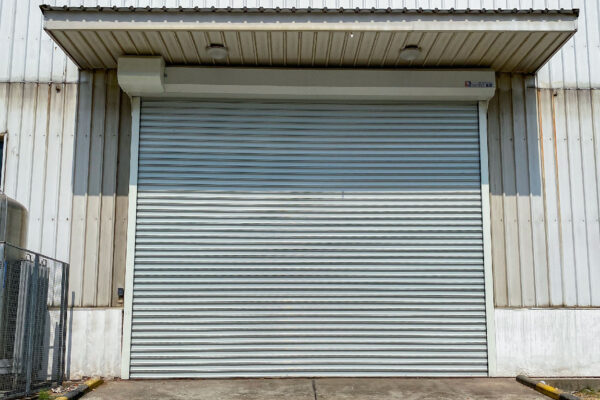
The places where these metal doors come in handy range from residential buildings to commercial spaces. Roll-up doors provide security. They also have an aesthetic that prioritizes space optimization and building efficiency. They come with great features and benefits that help in their installation and maintenance. Business owners, contractors, and homeowners will find this to be an informative article to help make an easier decision. This article will help you meet your expectations and make the most of your space.
Introduction to Roll Up Doors
What Are Roll Up Metal Doors?

Roll-up metal doors are tough and compact doors that roll up into a small coil above the entrance. Because of their tough construction, they are used in a number of fields, including commercial, industrial, and residential. Constructed using high-grade steel and aluminium, these doors secure any opening, along with being easy to operate and weather-resistant. Their design allows these doors to be used in a number of fields, making them a great option in areas where space and durability are top priorities.
Definition and Core Mechanism of Roll Up Metal Doors
Roll-up metal doors are a subcategory of roll-up doors that are constructed for heavy-duty and industrial use. Each of these doors is made of high-grade aluminum or steel and is built with separate, movable, metal slats that interlock with each other, as seen in the model 2000. Each door has a dedicated mechanism, either motorized or a spring, that slowly raises and lowers the door to provide fast and ease of use operations for the user, whether manually or automatically.
Modern roll-up metal doors now include advanced technological features such as enhanced temperature control systems, high-security locking mechanisms, and durable weather strips that protect against harsh environmental conditions. Manufacturers design roll-up metal doors for long-term heavy-duty use, making them ideal for a wide range of industries, including self-storage facilities. They are perfect for securing warehouses, storage spaces, and garages. They are durable and provide ease of use for the user. Their space-saving storage is also a great addition.
Overview of Applications in Residential, Commercial, and Industrial Settings
Roll-up metal doors are highly functional as they can be customized and applied for a variety of uses in residential, commercial, and industrial settings.
Residential: Metal garage doors are great for homeowners wanting to secure storage garages and metal doors. With modern, streamlined designs and insulation features, they can boost energy efficiency.
Commercial: Metal doors provide easy accessibility for commercial businesses like retail, restaurants, and warehouses. They are great as security barriers for storefronts and loading docks. They are also great in fast-paced environments, as they can have automated systems and weather seals. industrial settings
Industrial: Roll-up doors are built to withstand tough environments and heavy use in factories, manufacturing plants, and distribution centers. They are built to secure large openings and have quick operations for great durability. Some additional features of others model are fire resistance, corrosion resistance, and the ability to withstand pressures.
Recent tech advancements have made roll up metal doors have smart locks, remote functions, and high thermal insulation, improving their efficiency in many markets. Combined with their strong performance, roll-up metal doors offer superior security and operational efficiency, making them suitable for overhead door applications.
Brief History and Evolution of Roll Up Doors
Roll-up doors were created as enclosures that were secure and could save space. Because of the versatility of wood and metal construction, these doors became popular in the industry verticals and business markets of the early 1900s. They provided great security while enclosing and saving space.
The construction of these doors got an upgrade. The 1950s and 1960s brought the availability of new lightweight and corrosion-resistantsuch as aluminum, Aluminum, and galvanized steel. The construction of these doors is now even better. Tech upgrades of the 1960s and 1970’s brought new automatic and advanced locking technologies. These elevated the value of the roll-up doors.
Today, roll-up doors are also incorporating fully automated systems that sync with your building’s systems, enhancing their functionality for self storage. These advanced tech features also include smart locks and high-tech remote controls. The environment is now very much taken into consideration when making these products. The insulations and composites on the panels provide advanced energy economy and sustainability. These are the reasons roll-up doors are now in high demand in industries like retail and transport.
Market Trends and Industry Growth
Current Global and Regional Market Size and Forecast of Roll-Up Metal Doors
The general metal door market has recently shown expansion, and the forecasts imply that it will continue to grow for the foreseeable future. According to market trends, the global market value stands at approximately USD 4.2 billion and industry analysts expect it to grow at a 4.5% CAGR from 2023 to 2030. Demand from key sectors—retail, logistics, manufacturing, and agriculture—drives this growth. These industries prioritize fast, space-efficient, and energy-efficient doors, which continues to fuel strong market demand.
While the retail industry is the least affected within the provided sectors, the logistics and manufacturing sectors are still growing and investing a lot more than the agricultural sector of the industry. North America is the largest market for roll-up doors due to their design and fast growing industry. Asia-Pacific has the largest growth due to the ongoing process of attaining developed country status.
New trends, particularly IoT-enabled smart roll-up doors, contribute to market growth. These trends, in combination with increasing construction and more stringent energy efficiency regulations, provide an optimistic forecast for both global and regional roll-up metal door industries.
Growth Drivers: Automation and Security Needs
New security methods and automation continue to grow the roll-up metal door market. With automation and modern security methods needed for door integration, new facilities like distribution centers and retail locations continue to open. Innovations, like remote, timed, and monitored IoT operated roll up doors, improve operational efficiency even more. Increasing property safety concerns are leading to more roll-up metal doors being used. Closing mechanisms, safety alarms, and reinforced security features are being added to roll-up metal doors. New reinforced roll-up metal doors are becoming the preferred choice for businesses servicing and protecting their assets.
Impact of Regulations and Building Codes
Typically, building codes and regulations affect the roll-up metal doors industry design and the selection of materials and components for safety. These regulations focus on maintaining the structural, fire, and energy safety/efficiency. This provides the industry with the services needed to stay current. For instance, building codes state that roll-up metal doors must be able to withstand certain wind-loads. This is especially so for those areas most affected by hurricanes and severe storms. This is to guarantee that the roll-up doors can withstand the inclement weather.
The focus on energy efficiency has increased the use of insulated roll-up doors. There are energy codes that the roll-up doors must comply with, such as the International Energy Conservation Code (IECC), that reduce energy usage and increase sustainability. The roll-up doors also must comply with fire safety regulations that state that certain roll-up doors must have integrated fire-rated doors that slow the spread of fire and smoke to provide safety barriers to help protect life and property.
Lastly, the Americans with Disabilities Act (ADA) establishes standards that designers and installers must incorporate into door design and installation. When manufacturers and contractors ensure compliance, roll-up doors remain accessible to everyone, including people with disabilities. These designers and engineers are forward-thinking, as technology encourages new designs for doors with integrated smart functions that are compliant with the latest accessibility regulations. All these new developments mean that more and more of the latest roll-up metal doors are being installed for diverse applications.
Types and Materials of Roll Up Doors
Comparison of Material Options: Steel, Aluminum, and Wood Composite
Choosing the right material for performance, longevity, and look of the roll-up door is every bit as important as choosing the right design. Below, we look at the pros and cons of steel, aluminum, and wood composite roll-up doors.
Steel
Steel is the sturdiest and most protective. It’s the right option for industrial and commercial use when security is a top concern. Steel doors stand up to all weather and heavy use, and are coated with a finish that resists corrosion to help them last even longer. Steel is the heaviest, and that means it will need stronger parts to counter its weight.
Alumínio
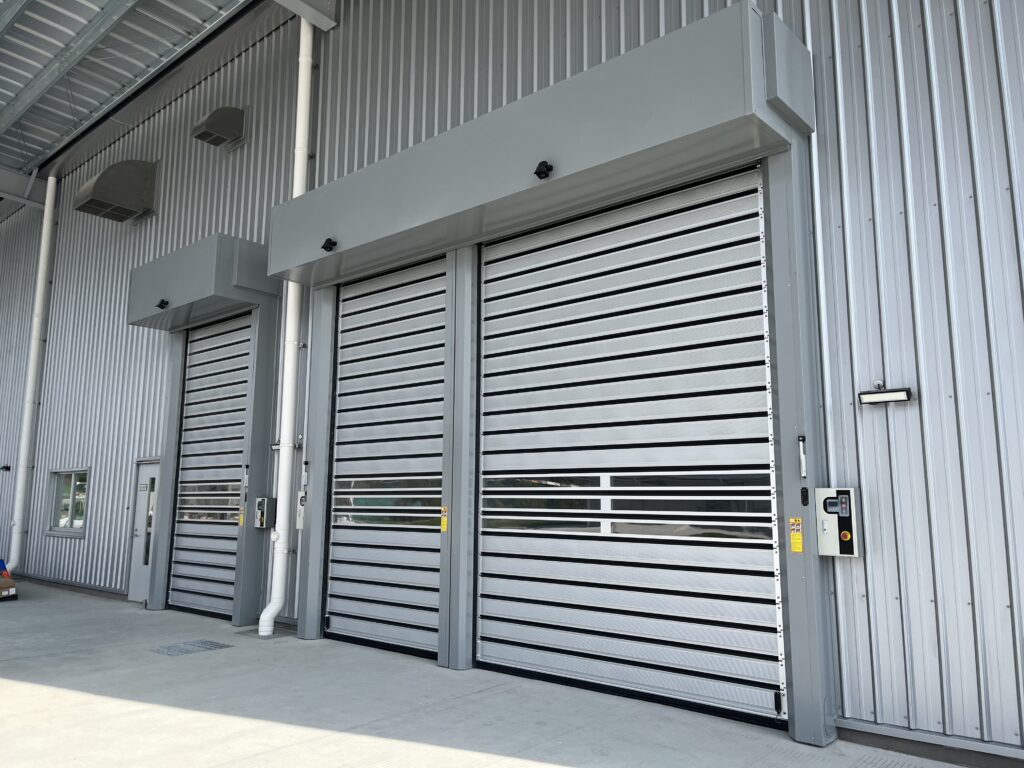
Aluminum roll-up doors are the most economical option and a lightweight alternative to steel that is still corrosion-resistant and won’t rust in a marine environment. Aerodynamic and cost-effective, they can take and look good in most environments. Also, a preferred aluminum is for a marine environment. Ideal for coastal regions, this solution delivers outstanding weather resistance in humid environments and withstands harsh marine conditions without rusting. Its strong corrosion resistance makes it a reliable choice for seaside applications, while the sleek, aerodynamic design complements modern coastal architecture. Combining durability, efficiency, and visual appeal, it offers one of the most cost-effective options for long-term performance near the ocean.
Wood Composite
Wood composite roll-up doors add warmth and a natural feel, great for homes and boutique stores. These materials also combine traditional wooden doors with engineered composite materials. They are treated for warping, cracking, and pest damage, ensuring a long life. However, wood composite doors may not be as strong as their steel and aluminum counterparts and may need more maintenance, like refinishing, to keep them looking good.
When picking between these materials, it is important to see what is important for the application, like how long it needs to last, how it needs to withstand the environment, what it needs to look like, and how much upkeep it needs so that the purpose is served correctly.
Durability, Insulation, and Maintenance Considerations of Roll-Up Doors
The impressive longevity of roll-up doors makes them a great fit for any commercial or residential build. Constructed from an array of materials (steel, aluminum, reinforced composites), they are designed to withstand even the toughest of weather and the most usage. The best roll-up doors even come with coatings to resist rust and corrosion, ensuring the longevity of the door.
Some roll-up doors have the option of being thermally and sound-insulated. For warehouses, garages, and storage facilities that are expensive to heat, insulated roll-up doors are especially helpful in maintaining energy efficiency.
The use and materials of the roll-up doors alter the maintenance needed. For both the steel and aluminum doors and their counterparts, a periodic cleaning is to be done. Parts of the doors, the tracks, rollers, and springs must be cleaned and lubricated to have a smooth operation. There should be inspections and maintenance done to avoid the doors grinding and making a lot of noise, as well as for the sake of safety. Although this maintenance may be seen as a nuisance, it is worth having to prolong the door’s appearance and functionality.
Manual versus Automatic Roll Up Door Options
In the past, we examined key factors when ordering roll-up doors, whether manual or automatic, including door location, usage frequency, operational simplicity, electrical requirements, maintenance needs, operator workload, cost, and the purpose of installation. Keep in mind that an automatic door (depending on size) can cost more than twice as much as a manual door and requires more maintenance, especially for electrical components. However, many businesses justify the higher cost by considering the time savings from automatic operation and the reduced physical effort required to open and close the door manually.
If a company needs to meet the public daily, an automatic door is an absolute necessity, and most people are more comfortable interacting with an automatic door. On the other hand, if the doors need to be used on a less frequent basis, a manual roll-up door may be the better solution. It is important to remember that doors need to be used rather infrequently.
Design and Aesthetic Trends for 2026
Popular Finishes and Colors for Roll Up Doors in 2026
Millennial design tends to combine elements of warmth, friendliness, and personalization. For the 2026 season, millennial design will continue to trend towards functional, cozy elements that prioritize sustainability and minimalist design. The personalization of millennial design and the balancing of different decor elements will be key to defining the fresh approaches to multi-functional, cozy, and refining the design focus towards individualism that other decor elements will prioritize. Roll-up metal doors will be functional yet stylish. For an industrial aesthetic, look towards brushed metal, anodized aluminum, and metal pressings. For a contemporary industrial look, continue to look towards matte black surfaces and even colored coated surfaces.
At the other end of the design spectrum, warmth will still be present through desired grain and patterned wood. Durable high-end roll-up doors, complemented with UV-resistant and elemental sustain coatings, will define the personalization trend of 2026. The development of desired grain and patterned wood will add warmth and texture to the design. More and more homeowners and businesses will continue to fit roll-up doors to preferred architectural styles, ultra-modern swag, or rustic decor. More desired prints and patterned wood will be increasingly easier to accomplish. Roll-up metal doors will be functional yet stylish. For a contemporary industrial look, continue to look towards matte black surfaces and even colored coated surfaces. More desired prints and patterned wood will be increasingly easier to accomplish.
Impact of Color Choices on Curb Appeal and Market Value
Selecting the best shade for your roll-up metal doors can improve your property’s curb appeal and increase its value of your property. Certain colors evoke certain feelings subconsciously. For example, bold colors (ex. red or black) have a modern, edgy feel, whereas toned-down colors (ex. beige and light grey) feel timeless and sophisticated. Industry data shows that the most searched colors for commercial and residential properties, most aligned to the current design trends, are light, neutral, and matte colors.
Choosing colors that match the surroundings or the branding of the property can improve aesthetic appeal. Bright colors of paint and materials attracting customers are common for retail, but for properties that are trying to be natural, earthy colors are prescribed. The latest UV-resistant coatings make sure the colors chosen stay vibrant and don’t fade, adding to the long-lasting appeal. Choosing color to be aesthetically pleasing is a major component of the strategic value of the property and will be felt in the return on investment.
Recommendations for Matching Design to Architecture
Beauty and purpose can exist simultaneously with roll-up metal doors and the right architectural design. Doors made with metal and other modern materials can be functional and beautiful. For clean, modern design, minimalistic architectural looks, roll-up metal doors with grays and blacks will work for industrial and commercial spaces. For residential modern looks, roll-up doors with faux wood grains are perfect to complete the look.
The historical design period of the building will also inform the decorative details of the roll-up doors. For embossed panels and decorative, modern, functioning doors will work for more traditional and historic architecture looks. Coastal and harsh weather areas will require corrosion-resistant, wind-rated doors. It will also be nice to add roll-up doors with the aesthetics of modern and classic styles. Doors can be designed for an environmentally conscious look with modern Eco-friendly materials. Metal roll-up doors will be the visual construction balance, from modern to classic looks, improving the aesthetics of the commercial or industrial building.
Key Features, Security, and Customization
Essential Functional Features of Roll Up Doors
Durabilidade e Longevidade
Roll-up doors are made from aluminum and steel, which gives them a durable material that helps them withstand harsh conditions and extreme wear and tear. With proper maintenance, many doors can last over 15-20 years.
Security and Protection
Roll-up doors are designed with advanced locking mechanisms to keep intruders out. Some doors even have special security options like built-in alarms, security latches, and reinforced construction, making them ideal for service doors.
Design Poupa-Espaço
Because roll-up doors move vertically, they provide maximum space-saving access.
Isolamento e Eficiência Energética
Roll-up doors are designed to assist climate control for the space behind the doors. Some doors contain special insulation designed to control the climate behind the doors.
Low Maintenance Requirements
Roll-up doors have simple maintenance requirements. Regular cleaning and lubrication will make the system operate smoothly and increase the span between repair cycles.
Security Advancements and Integration with Smart Home Platforms
In the last few years, new designs for roll-up doors have improved the security features offered for security for commercial and residential properties. Roll-up doors have the most advanced locking systems, like electronic locks and tamper-resistant locks, that keep the doors secure from robbers. Some roll-up doors can even combine alarm and sensor systems that let owners know if the door has been tampered with or if a break-in has been attempted.
The ability for roll-up metal doors to work with smart home systems has changed the functionality of these doors to a new level. Roll-up metal doors can now work with smart devices like smartphones, smart home assistants, and tablets to help the user control and monitor the door from anywhere. These doors become even smarter by offering features like real-time updates, automatic locking and unlocking by schedule, and even closing the door if it senses bad weather.
The use of new technologies like Wi-Fi and compatibility with smart home security systems help the roll-up doors work with security cameras, motion sensors, and home control hubs. These doors now offer the most security and best materials to fit the needs of modern homes, including options like certified wind load rated models.
Customization Options for High-Traffic and Specialized Uses
Extensive customization is available with roll-up metal doors and can be adapted for high-traffic areas. High-speed door mechanisms are a popular choice for roll-up doors. The rapid opening and closing of high-speed mechanisms make them great for warehouses, distribution centers, and parking garages. Custom insulated roll-up doors are great for cold storage, data centers, and other temperature-sensitive environments.
Heavy-duty materials can be added for even more durability. Along with advanced coatings for extreme weather, corrosion, and abrasive conditions. Windows and vision panels are great for lighting and visibility. Enhanced features are available for more demanding environments. Wind load resistance and noise-dampening technology are great for extreme environments.
Customization of technology is an important factor of roll up metal. Integrated sensors, remote access, and even IoT compatibility for remote network access offers real time monitoring. There roll up metal doors are one of the most versatile solutions for high-traffic environments.
Installation and Sizing Considerations
Importance of Accurate Measurements and Space Requirements
When installing roll-up metal doors, take accurate measurements and plan the spacing carefully to achieve the best performance and fit. Measure the height, width, and total opening space before installation to determine whether you need to adjust the setup. Allocate proper clearance for the door’s roll and guide tracks, as each measurement affects the final installation.Undersized measurements can lead to the tracks and mechanisms malfunctioning, which will create the need for expensive repairs and replacements due to the new gaps.
Also, innovations for the space-saving design of roll-up metal doors have thin side tracks and compact doors for the top to give more height for limited height zones. Contemporary reports show that the use of certain advanced tech tools, like laser measuring tools for the first distance measuring, provides the greatest adjustment accuracy and guarantees a lower chance of error. If all of these considerations are taken into account when installing metal doors, the best results will be achieved for performance, added value, and smooth metal door operation for a long period of time in any commercial or industrial space.
Professional Installation vs. DIY: Risks and Benefits
When choosing to install roll-up metal doors, a person should consider the pros and cons related to hiring out the work to a professional or doing the work on their own, and weigh the risks and benefits.
Professional Installation: When the installation is done by a professional, there is a certainty that the work will be done and done well. The professionals will have access to the best tools and the knowledge of how to complete the work. There are many factors to consider, such as track alignment, door balance, and how to secure functioning parts. Each of these factors contributes to the overall functionality of the door. The door is then more likely to need fewer repairs, and the overall safety is increased. Additionally, installations are more likely to be done correctly to meet the industry standards and newer technologies available. Improved technologies include tools for better sealing and more durable door parts. These all contribute to a door that will work better and last longer.
DIY installation means you won’t have to pay a labor fee. If you order a roll-up metal door system, they typically come with installation manuals, so you should be able to do it if you have some tech skills. Doing it yourself comes with a lot of risk. If you don’t have the right tools or the right experience, you may end up improperly aligning the door or measuring it incorrectly. This could potentially damage the door components and lead to the door becoming an operational hazard. Nobody wants to have a door that goes up and down smoothly, but falls off the hinges. On top of that, you won’t have any sense of professional security because you won’t have a warranty for a professional installer.
Overall, whether or not you use a professional installer or do it yourself depends on your skills + the complexity of the roll-up door system. You also have to take your budget into account. Making sure you balance all of these factors is important.
Cost Breakdown for Installation and Materials of Roll-Up Metal Doors
When looking at expenses for roll-up metal doors, one must consider costs for material + installation. The costs for standard roll-up metal doors can range anywhere from $300 to $1,000. Prices vary depending on materials, size, and any additional features such as insulation. Custom-finished doors or floors can exceed $1,500.
For installation costs, professionals usually charge anywhere from $200 to $600. Prices vary due to the complexity of the setup and the area’s average labor costs. If the installation includes structural additions, custom pieces, and a lot of modifications, costs can go up extensively. These adjustments can add anywhere from $500 to 1,000. You may also do the installation yourself and avoid paying for labor. If you go this route, you may need to buy additional tools and materials. These can cost anywhere from $50 to $150.
Also, consider that there may be shipping expenses. These can cost anywhere from $50 to $500 and depend on how far away you are from the shipping company. Once the doors are installed, there may be a need for maintenance supplies, such as oil and other parts that may need to be replaced. Once you consider all of these features and expenses, installs for metal roll-up doors can range anywhere from $550 to $3,000. To get the most for your money, do a lot of budgeting and get a variety of quotes.
Maintenance, Longevity, and Troubleshooting
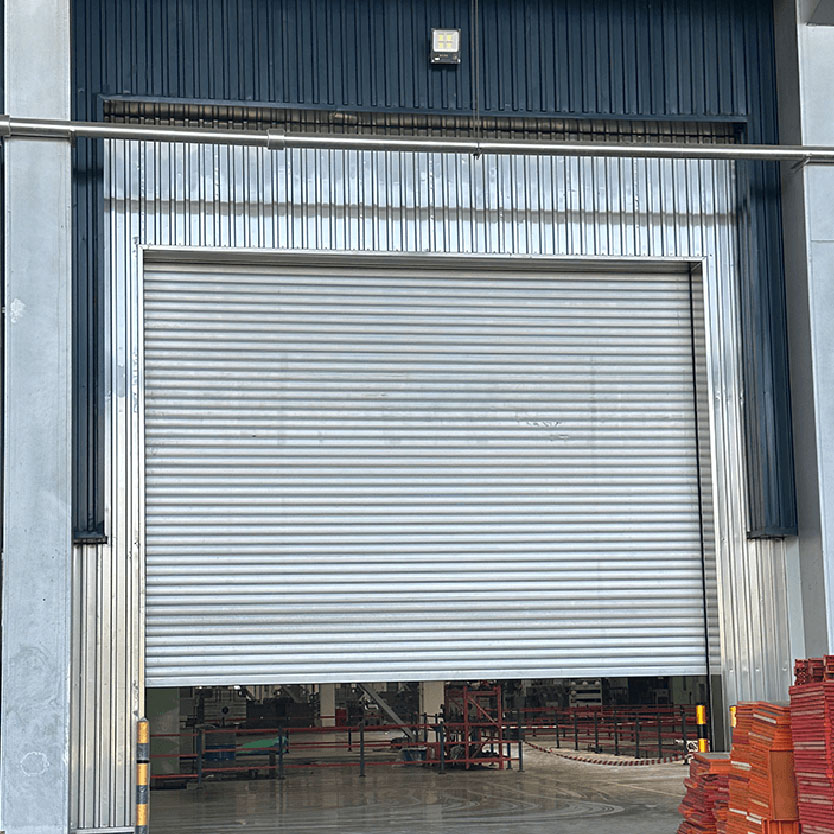
Best Practices for Routine Maintenance of Roll Up Doors
Routine maintenance is essential for maximizing the performance and longevity of roll-up metal doors. Begin by cleaning the tracks and surface of the doors to get rid of any dirt, debris, and the buildup that could keep the doors from operating smoothly. Minimize the wearing and tearing of moving parts (i.e., the hinges, rollers, and springs) using a silicone lubricant on the moving parts. For the tracks, brackets, and cables, perform a thorough inspection to find any loose, damaged, or missing pieces, and make corrections as necessary. Make sure the doors cut smoothly and check for any jerking or unwarranted noise once the doors are fully functional.
During extreme weather conditions, seal all gaps to prevent water intrusion and check metal parts for corrosion or rust. Schedule regular inspections with trained professionals to identify potential issues early and keep the doors in reliable working condition. Incorporate these best practices for routine maintenance to keep the doors working the best, keep them reliable and safe, and make the doors function better overall.
Common Problems and Solutions for Roll Up Doors
Roll-up doors are often used in both commercial and residential settings for their great durability and space-saving design. Like all mechanical systems, problems may arise. Here are some common problems and solutions for roll-up doors.
Door sticking or jamming
Doors may stick or jam due to dirt and debris in the tracks or misaligned tracks. Cleaning the tracks and lubricating the moving parts should prevent the tracks from sticking. If the track alignment is the culprit, check the tracks and adjust them to ensure they are level and secure.
Excessive noise during operation can be a concern, especially with traditional rolling sheet doors.
Worn-out rollers and insufficient lubrication often cause grinding or squeaking noises in the doors. Replace damaged rollers and apply high-quality lubricants to all moving parts to ensure quiet and smooth operation.
Broken springs or cables
The springs and cables of a roll-up door are crucial as they bear the weight of the door. Like most things, they will wear out and need to be replaced. If broken, the springs and cables of the overhead door require immediate professional replacement as the parts are dangerous and high-tension. Sluggish or Uneven Door Movement
The problem can be due to a damaged or imbalanced door. Take a look at the springs and adjust the tension. When the door is balanced, the operation should improve.
Electrical or Motorized System Issues
Malfunctioning control panels and motors can occur on motorized roll-up doors. Check the electrical connections, replace any worn parts, and you may need to work with a technician to figure out the motor problems.
Rust or Corrosion
When the door is made of metal, moisture exposure can lead to rust on the components and compromise the door. Regularly check for rust and remove any you see with a wire brush or rust remover. A protective coating can help prevent rust and corrosion on the metal.
The above issues can be fixed with routine maintenance and repairs. When needing technical expertise, consult a professional technician.
When to Call a Professional for Assistance
We all want to avoid costly repairs, and keeping our roll-up doors functioning properly can help! Even with the greatest care, at some point, roll-up doors will jam, make noise, and, of course, allow the elements in. If a roll-up metal door has some issues, it is time to seek help. The door may block the opening, hesitate, and make grinding or squeaking noises. If the door has damage to springs, tracks, or panels, it is time to call in the experts to override safely.
For electric roll-up doors, if the remote is not working or the control is erratic, there may be electrical issues. Avoid trying to figure out the electrical issues. This can create hazards if you don’t know what you are doing. Technicians alone are qualified to conduct tasks like adjusting the closing springs and lubricating the system’s internals. All these actions help to prolong the system’s functionality and reliability. There are times when it gets too complex, and the technicians are the only ones able to create performance in the functioning system.
Sustainability and Future Innovations
Emerging Eco-Friendly Materials and Practices
The roll-up door industry has begun adopting eco-friendly practices to reduce its impact on the environment. One of the examples is the use of recycled steel and aluminum in the production process. Recycled products lower environmental cost when compared to products made of newly extracted raw materials. The use of aluminum and steel also suppresses the environmental cost of the production process. An additional sustainable innovation is the use of powder-coated paint. Products with this coating are more durable and do not release the volatile organic compounds that many traditional paints do, enhancing their appeal for service doors.
The roll-up doors produced today are equipped with better thermal insulating materials. The higher the insulation level in a roll-up door, the lower the emissions when the door is closed for heating and cooling. Also, the increasing use of solar-powered systems for automation in roll-up doors adds to the sustainability. Another example of eco-friendly practices is repairable modular components, which extend the useful life of a roll-up door.
The roll-up door industry has begun to provide products that meet the growing global sustainability standards and the demand for eco-friendly products. More and more of these products are seen in green building practices.
Anticipated Advancements in Automation and Building Controls
The automation and building control systems that roll-up metal doors can fully merge with is the most important factor shaping their future. New smart technologies allow these doors to have IoT (Internet of Things) capabilities to enable real-time monitoring and remote control, as well as predictive maintenance. These features improve user experience and user’s sense of security, as the doors can have automated locking features and alert systems that notify users of attempted unauthorized access.
Also, AI building management systems will likely allow roll-up metal doors to respond to a more extensive range of situational variables. For example, numerous sensor-software combinations can make adaptive real-time controls to weather, temperature, and/or energy use goals when combined with AI. Adding renewably powered motors, like solar-powered ones, will make roll-up metal doors smart and more sustainable.
When integrated with centralized building controls, users can improve the smoothness of operations and reduce energy expenditure. Roll-up metal doors become vital components of smart buildings, especially in heavy duty applications.
Industry Outlook through 2030–2033
The rolling steel door market will see a lot of growth between 2030 and 2033. The demand for roll-up steel doors will be driven by growth in the construction sector and innovations in technology. Advanced safety systems, the ability to integrate these doors into smart building systems, and automation solutions will be widely available. Furthermore, continuous construction innovations will be focused on the use of smart doors and building systems, recyclable metals, and renewable energy systems.
The demand for these doors will be driven by the construction and industrial sectors, particularly for heavy duty models like the model 2500. This will be especially true for logistics, warehousing, and retail as e-commerce continues to grow. The demand in these sectors will extend to the residential market as well. Homeowners will be looking for smart steel doors and other space-saving, durable construction solutions. Rapid urbanization and growth in construction in the Latin American and Asia-Pacific regions will continue to drive rolling door demand.
Os códigos de eficiência energética e segurança predial estabelecidos pelo governo são importantes para a indústria se adaptar. Mudanças nos códigos de segurança predial e novos programas de incentivo projetados para limitar o consumo de energia provavelmente levarão à adoção global de portas metálicas enroláveis avançadas. Portanto, a indústria olha para o futuro com otimismo, impulsionada por avanços tecnológicos, integração, sustentabilidade e mudanças nas demandas dos consumidores por soluções comerciais robustas.
Conclusão
Versatility of Roll Up Doors for Diverse Needs
Devido à sua flexibilidade, as portas enroláveis são uma solução para uso residencial, comercial e industrial. As portas enroláveis cabem em qualquer lugar e ajudam a utilizar todo o espaço quando abertas. Os proprietários valorizam as portas enroláveis para suas garagens porque proporcionam espaço utilizável, e essas portas oferecem melhor segurança do que uma porta de garagem tradicional. As empresas também apreciam as portas enroláveis devido ao espaço que proporcionam. Além disso, essas portas são excelentes para áreas movimentadas e de alto tráfego devido à alta segurança e proteção que oferecem.
O avanço mais recente é a porta enrolável isolada, ideal para uso comercial pesado. Ela ajuda a reter o calor e bloquear o frio. Protege o interior das condições externas e, do ponto de vista comercial, é excelente porque economiza energia. As portas enroláveis também estão se tornando mais personalizáveis. Especificamente, agora são oferecidas em diferentes materiais e acabamentos, com a opção de tecnologia inteligente. No geral, as portas enroláveis estão evoluindo para atender às novas expectativas dos consumidores.
Final Advice on Selecting and Maintaining Roll Up Doors
Acredito que você deve focar principalmente em opções duráveis, energeticamente eficientes e compatíveis para suas portas enroláveis. Esteja atento aos materiais da porta, isolamento, automação, vedação contra intempéries e quaisquer outros recursos. Para manter sua porta, ela deve ser limpa regularmente e algumas partes móveis lubrificadas. Você também deve inspecionar a porta quanto a desgaste e, se surgirem problemas, corrigi-los para evitar reparos futuros. Com o tempo, isso garantirá que suas portas enroláveis permaneçam funcionais e confiáveis.
Perguntas Frequentes (FAQs)
What makes a steel door or steel roll ideal for self-storage facilities?
Portas de enrolar de aço e portas rolantes de aço são frequentemente especificadas para instalações de self-storage, pois são econômicas, duráveis e exigem manutenção limitada. As portas de lâminas de calibre de aço são resistentes a amassados e corrosão, e muitos modelos oferecem confiabilidade e instalação fácil. Recursos como tambor fechado, conjunto de eixo fixo e peças pré-montadas são projetados para acelerar a instalação. Um guincho de corrente ou operação de empurrar para cima atende aos instaladores, enquanto para uso comercial, oferece flexibilidade operacional. Modelos classificados para carga de vento e códigos de construção rigorosos estão disponíveis para uso comercial.
How does a chain hoist or ratchet tensioner work on roll-up doors, and when is it needed?
Para abrir manualmente portas grandes ou pesadas, um guincho de corrente oferece assistência mecânica girando o eixo por meio de uma caixa de engrenagens. Isso é comum em instalações de portas rolantes de elevação alta ou de uso pesado. Um tensor de catraca ajuda a ajustar a tensão da mola para operação balanceada e fechamento seguro. Esses modelos suportam ajustes fáceis da mola ou ajustes simultâneos das molas para facilitar a manutenção. Os guinchos de corrente são especialmente úteis onde operadores elétricos são impraticáveis ou para operação de emergência em portas de chapa comerciais.
What maintenance is required for rolling steel doors, and how do features like enclosed barrel and dead axle assembly help?
Portas de aço rolantes exigem uma ampla gama de verificações de manutenção, incluindo verificar a tensão das molas, lubrificação dos trilhos, do eixo e dos rolamentos, verificar danos nas lâminas guia e garantir que o hardware do batente esteja totalmente fixado. As molas de torção são protegidas em um tambor fechado contra intempéries e sujeira para aumentar a vida útil dos componentes. Um conjunto de eixo fixo reduz o desgaste e simplifica a substituição do mecanismo. Verificações regulares garantem uma experiência sem problemas para portas de self-storage e portas usadas em aplicações comerciais.
How do I choose between sectional or rolling doors for a garage door or storefront application?
Portas seccionais são totalmente isoladas e projetadas para enrolar verticalmente, semelhante a uma porta de chapa rolante tradicional. Isso é realizado usando uma série de painéis articulados que deslizam para o teto. Este design é perfeito para locais que exigem pé-direito total. Portas de chapa rolantes (também conhecidas como portas de lâminas) deslizam para um enrolamento compacto acima da abertura. Isso é ideal para instalações de self-storage, docas de carga e fachadas estreitas. Decida qual tipo de porta, como uma porta de armazenamento ou uma porta seccional, atende melhor às suas necessidades. Para eficiência de espaço e durabilidade, opte por portas de aço rolantes. Para melhor isolamento e estética, as portas seccionais são a escolha ideal. Ambos os tipos são projetados para uso comercial e podem ser especificados para atender aos códigos de construção.
Fontes de Referência
- Portas Rolantes de Alumínio: Seu Guia Definitivo – Este guia fornece informações detalhadas sobre portas rolantes padrão, frequentemente chamadas de portas enroláveis.
- Kit de Porta Enrolável Motorizada para Galpão de Metal de Garagem Dupla – Um recurso que discute kits de portas enroláveis motorizadas, focando em sua aplicação em galpões de metal.
- SEÇÃO 083323 – PORTAS DE ENROLAR SOBREPOSTAS – Um documento da Universidade de Houston detalhando especificações e critérios de design para portas de enrolar sobrepostas, que estão intimamente relacionadas a portas metálicas enroláveis.