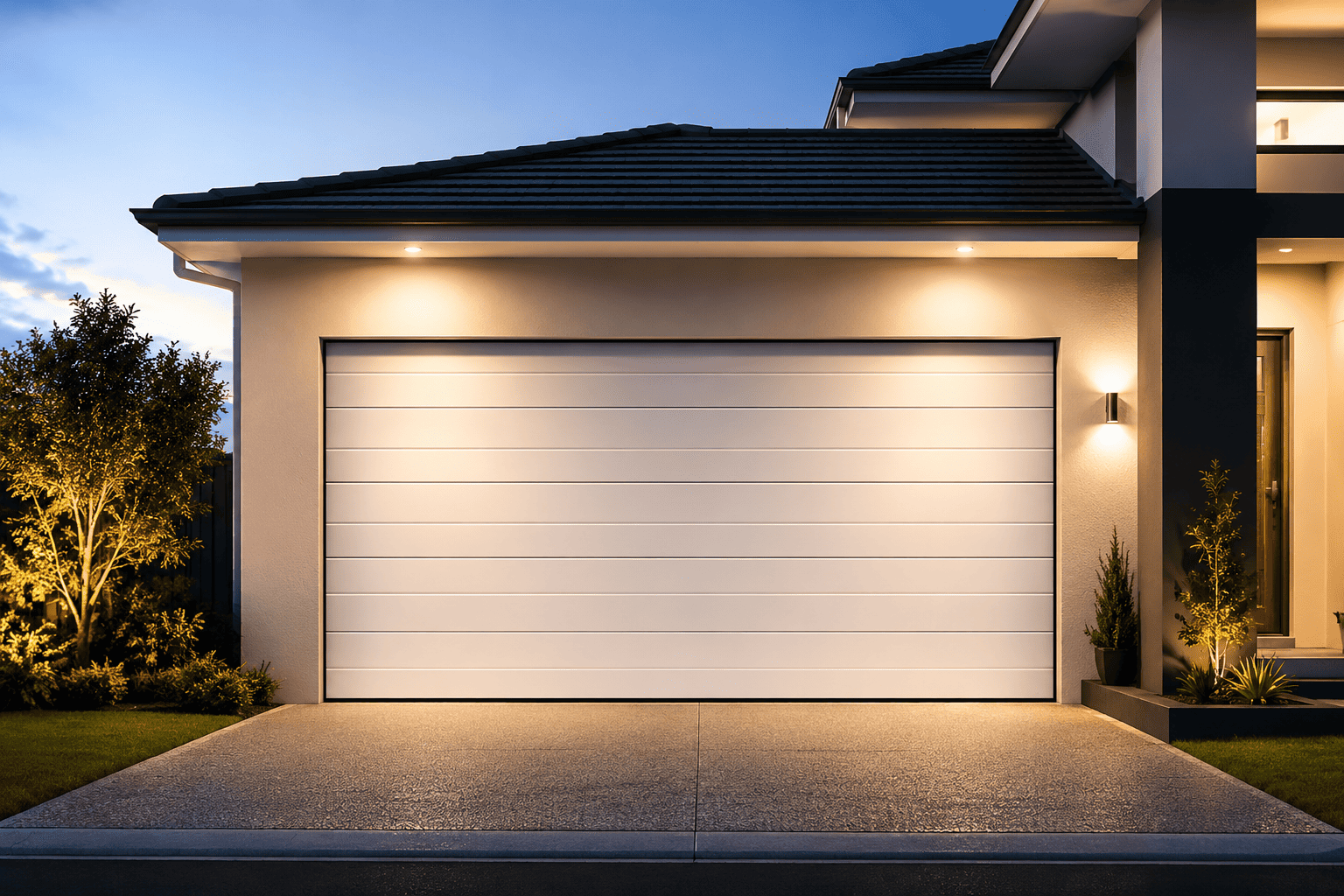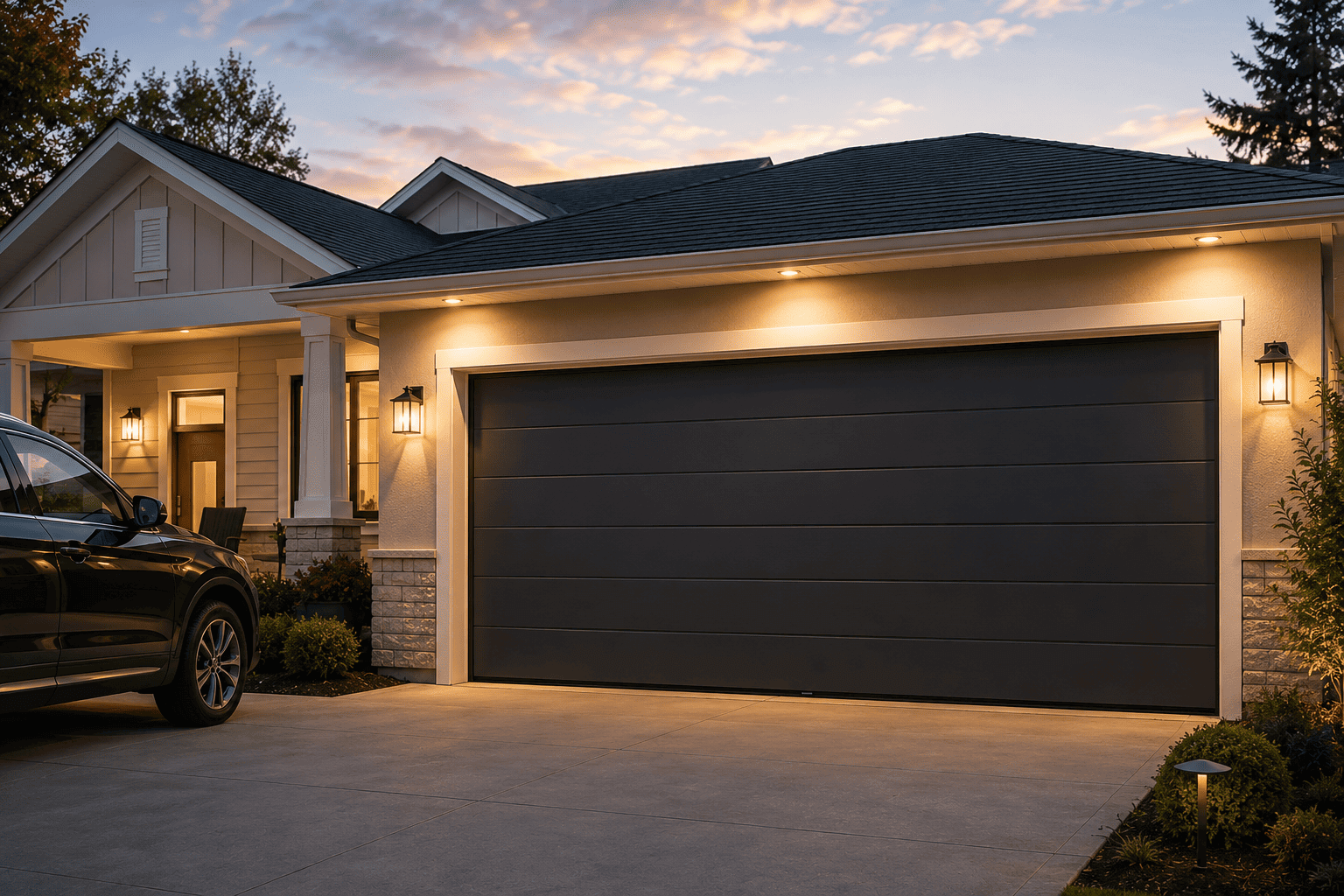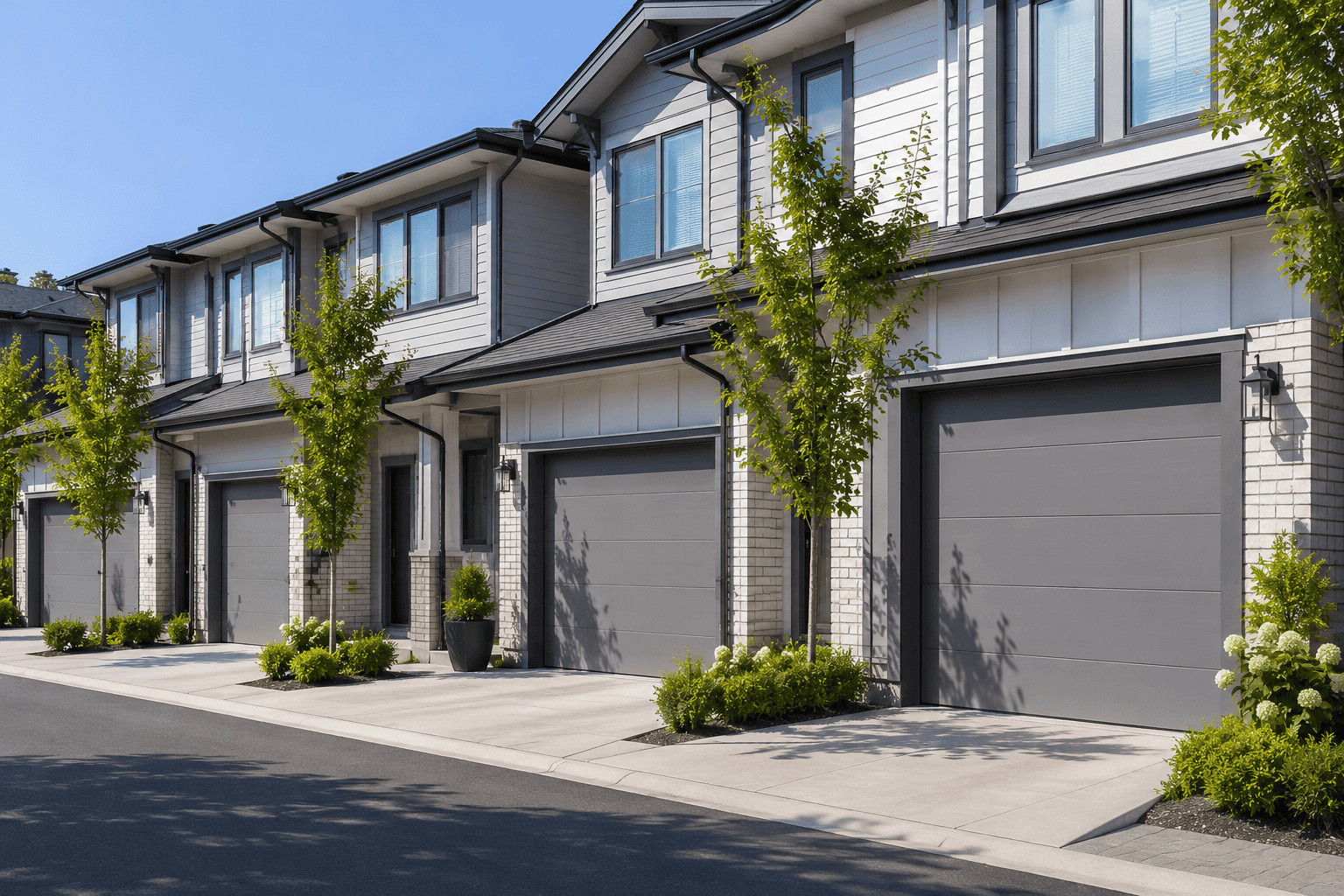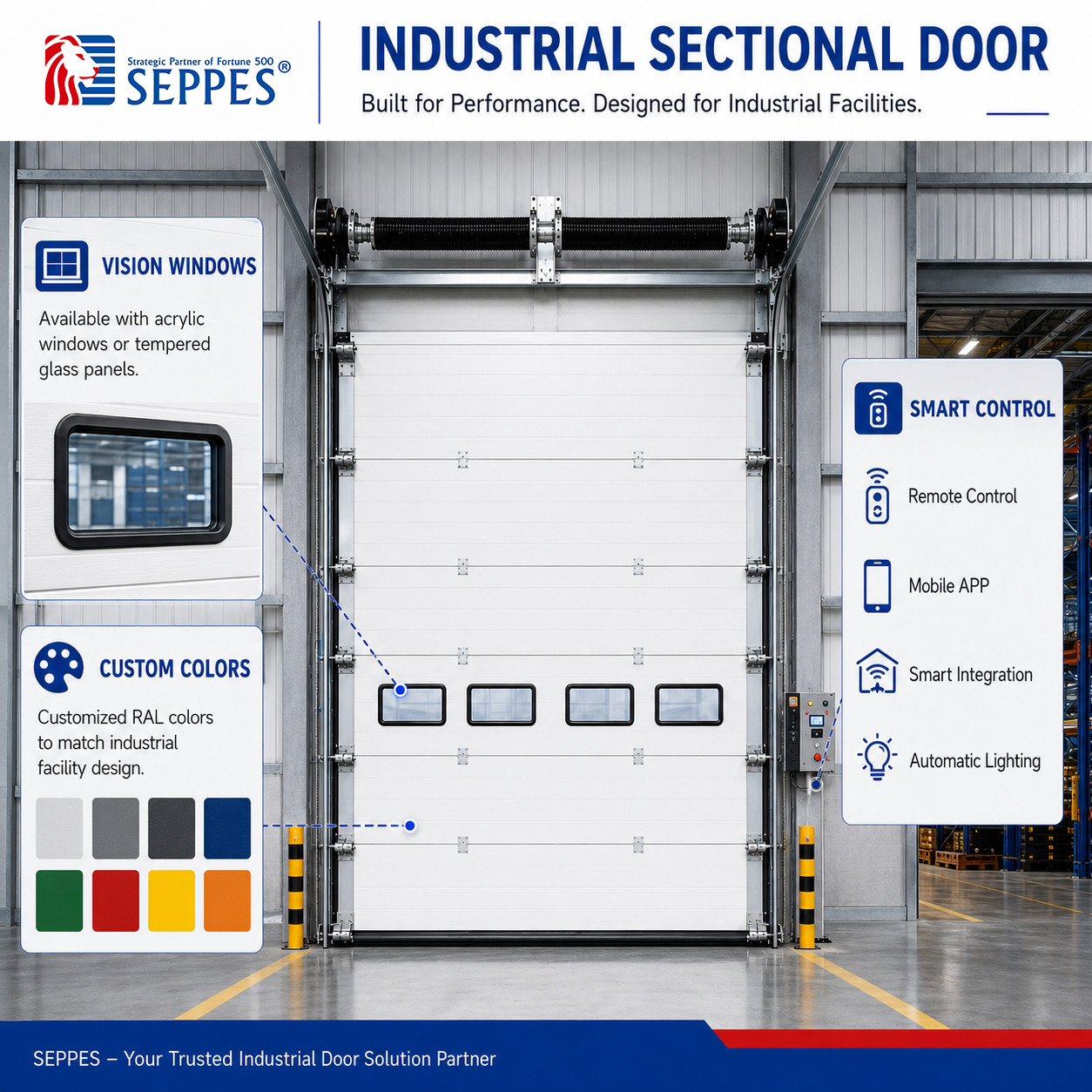
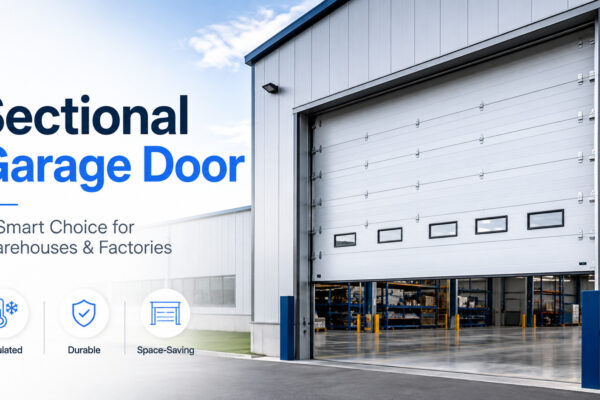
A セクショナルガレージドア is made of several horizontal door panels connected by hinges. When the door opens, the panels move upward along tracks and stay under or above the ceiling.
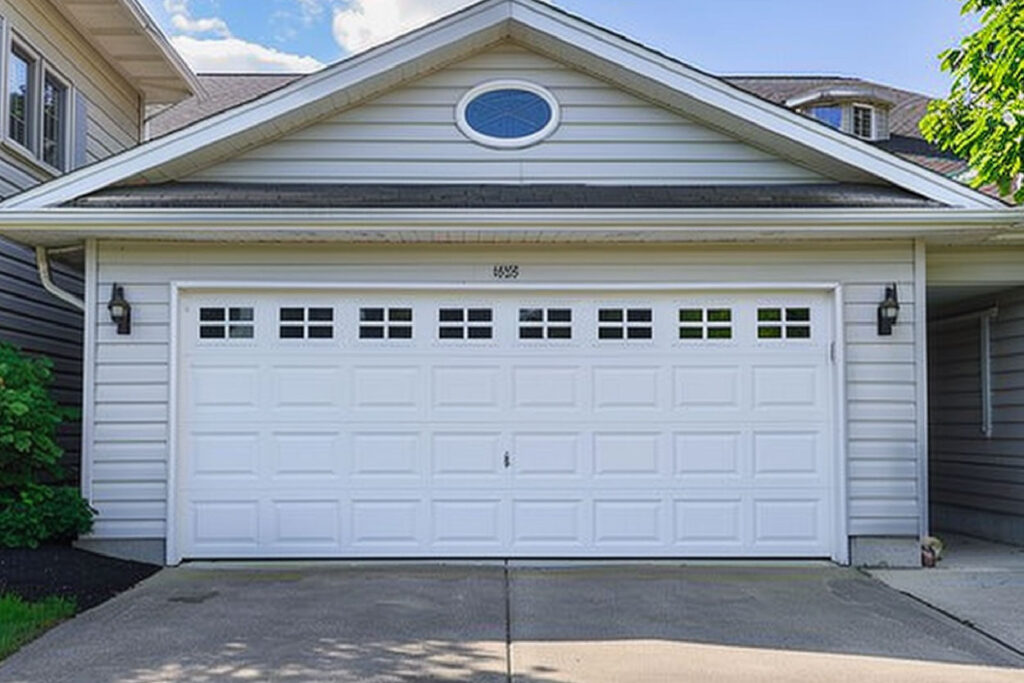
While sectional garage doors are commonly seen in garages, larger セクションドア are also widely used in warehouses, factories, workshops, logistics centers, and other industrial buildings.
目次
トグル断熱セクショナルガレージドアを選ぶ理由
For industrial buildings, insulation is often more important than appearance.
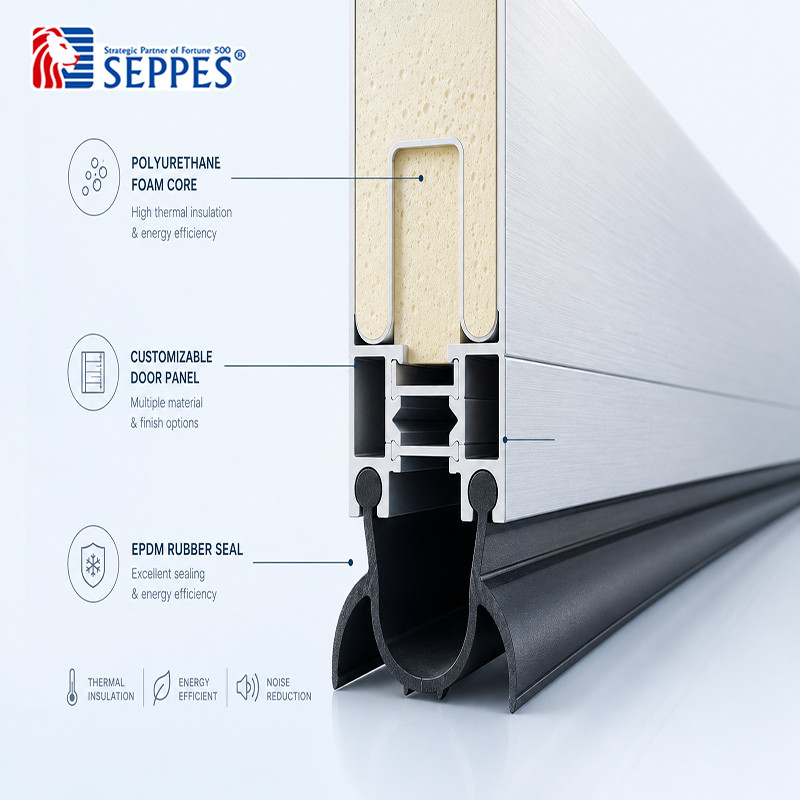
Insulated sectional garage doors use sandwich panels with an insulating core, helping reduce heat transfer between indoor and outdoor areas.
This makes them particularly useful for:
- Warehouses that require stable indoor temperatures
- 制作ワークショップ
- Food and beverage facilities
- Logistics buildings
- Heated or air-conditioned industrial spaces
Good sealing around the sides, top, and bottom can also help reduce wind, dust, rain, and outdoor air entering the building.
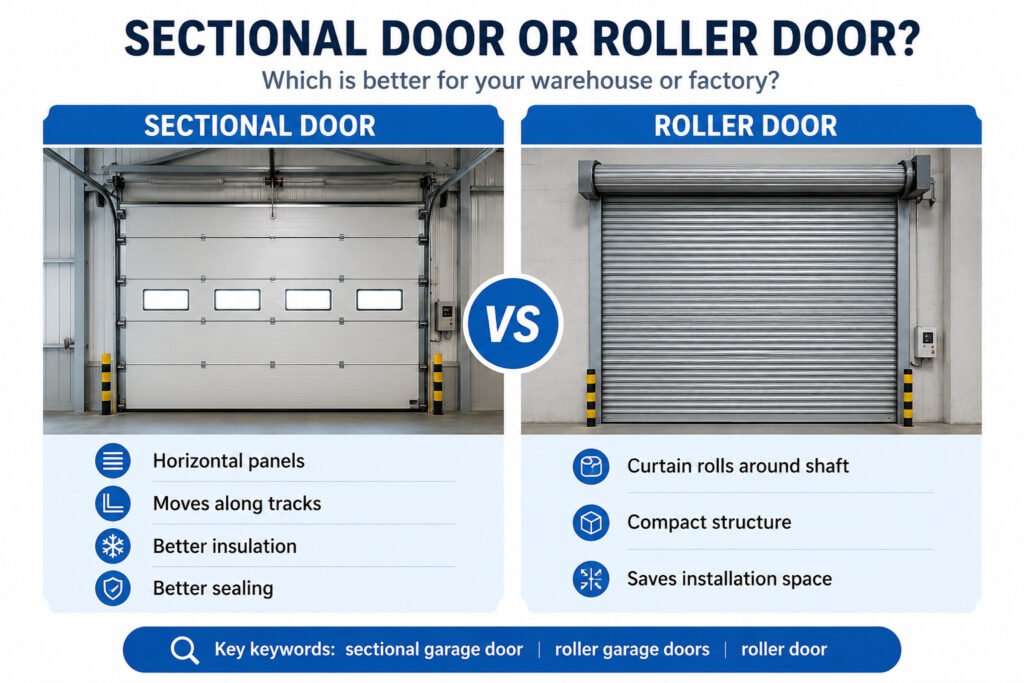
Sectional Door or Roller Door?
Buyers often compare a セクショナルガレージドア を持つ。 roller door.
A roller door rolls around a shaft above the opening, which can save ceiling space. A sectional overhead door moves along tracks and normally provides better insulation and sealing because of its panel construction.
For warehouses and factories where thermal insulation, wind resistance, sealing, and appearance are important, a sectional door is often the better option.
For applications where available space is extremely limited, a roller garage door may be worth considering.
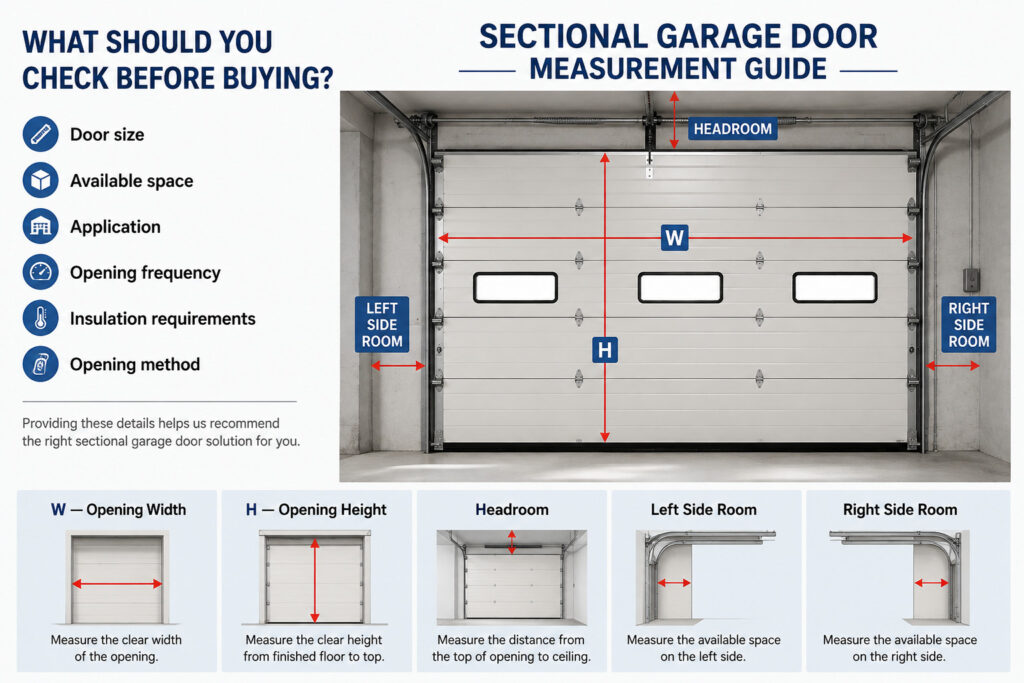
What Should You Check Before Buying?
Before requesting a quotation for a sectional garage door, confirm several basic details:
ドアのサイズ: Measure the opening width and height.
Available space: Check the headroom and side room around the opening.
アプリケーション Is the door for a warehouse, factory, workshop, loading area, or another building?
Opening frequency: Frequently operated doors may require different motors and control systems.
Insulation requirements: Consider indoor temperature control and local weather conditions.
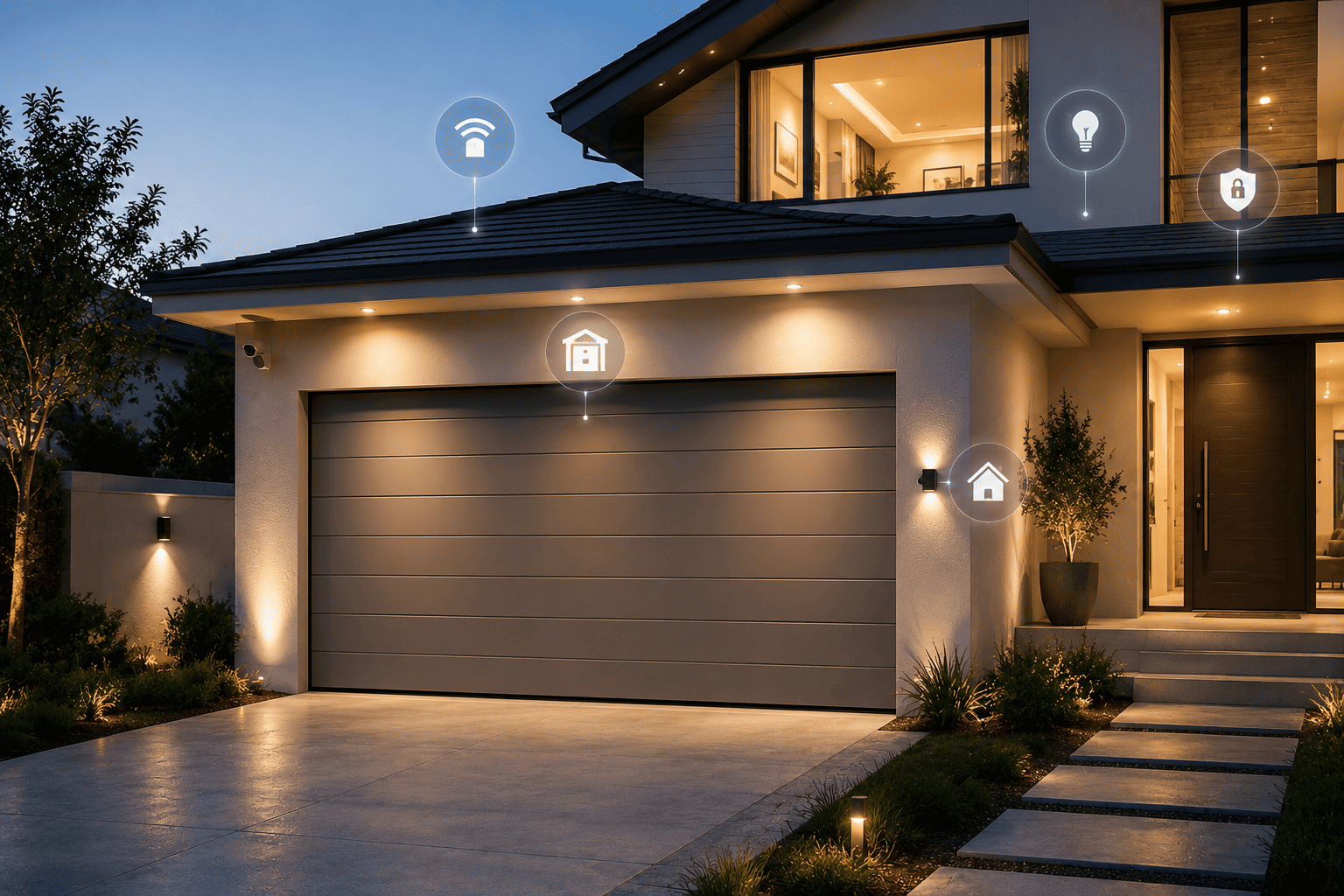
Opening method: Remote control, push button, radar sensor, access control, or connection with an automation system may all be possible.
Providing these details allows the door manufacturer to recommend the correct panel, track system, motor, and opening method.
Choosing the Right Sectional Garage Door
There is no single sectional door suitable for every building.
A warehouse with a 3 m garage door opening may need a very different configuration from a large factory entrance with heavy vehicle traffic.
Instead of selecting a door only by price, consider door size, insulation, sealing, opening frequency, available installation space, and operating environment.
If you are planning a warehouse or factory project, prepare the door width × height, quantity, installation location, and application before requesting a quotation. These details will make it much easier to select the right sectional garage door for your project.
よくある質問
セクショナルガレージドアには断熱材が入っていますか?
Yes. Insulated sectional garage doors typically use double-layer steel panels with an insulating core. They help reduce heat transfer and are suitable for warehouses, factories, workshops, and other temperature-controlled buildings.
What sizes are available for sectional garage doors?
Sectional garage doors can usually be customized according to the opening size. Whether you need a standard 3m garage door or a larger industrial sectional door, the width, height, headroom, and side space should be confirmed before production.
What is the difference between a sectional door and a roller door?
A セクションドア opens upward using connected horizontal panels, while a roller door rolls around a shaft above the opening. Sectional doors are often preferred for better insulation and sealing, while roller doors are useful when installation space is limited.
Where are sectional garage doors commonly used?
Sectional garage doors are widely used in warehouses, factories, workshops, logistics centers, loading areas, fire stations, and commercial garages.
How do I choose the right sectional garage door?
Consider the door size, installation space, insulation requirements, opening frequency, wind conditions, safety requirements, and control method. Providing these details to the manufacturer makes it easier to select the right sectional door configuration.