
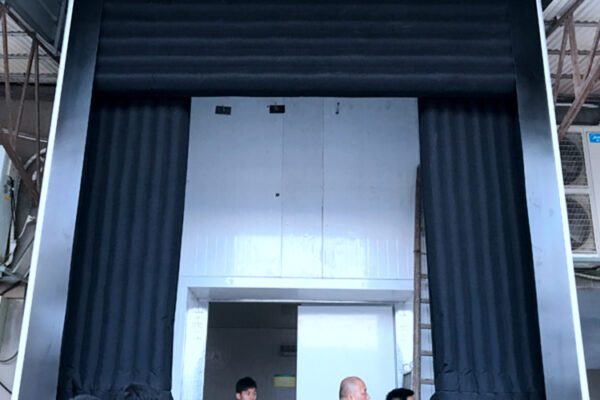
Inflatable dock seals are used to reduce the gap between a truck or trailer and the loading dock during loading and unloading. Compared with traditional foam loading dock seals and dock shelters, inflatable systems use air-filled cushions to create a closer seal around the vehicle while reducing direct compression against the building.
However, inflatable dock seals, inflatable dock shelters, and foam dock seals are not exactly the same. Their sealing method, truck compatibility, access space, maintenance requirements, and suitable applications can differ significantly.
In this guide, we compare inflatable dock seals vs dock shelters and traditional loading dock seals to help warehouse, cold-chain, food, pharmaceutical, and logistics buyers choose the right loading dock sealing system.
What Are Inflatable Dock Seals?
Inflatable dock seals are loading dock sealing systems that use inflatable side and/or top cushions to close the gap between a parked truck and the building opening. After the truck is correctly positioned at the loading bay, the inflatable sections expand around the vehicle to reduce outside air, rain, dust, insects, and temperature exchange.
Unlike traditional foam dock seals, which rely on the trailer compressing fixed foam pads, inflatable systems expand toward the vehicle after docking. This reduces continuous compression during truck positioning and can accommodate a wider range of properly specified trailer dimensions.
These systems are commonly considered for cold storage warehouses, refrigerated logistics centers, food facilities, pharmaceutical warehouses, and other loading areas where environmental control is important.
What Is an Inflatable Dock Shelter?
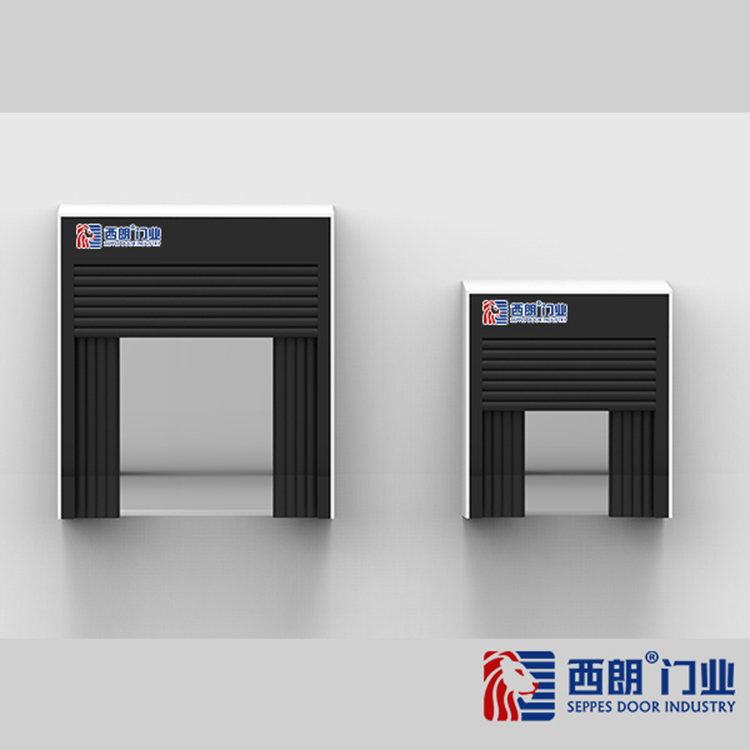
Une Abri de quai gonflable is a loading dock sealing system that uses inflatable side and top cushions or curtains to seal around the outer perimeter of a truck or trailer. Once the vehicle is correctly positioned at the loading dock, the inflatable sections expand to reduce gaps between the trailer and the building.
Because the system remains retracted while the vehicle approaches the dock, it can help reduce unnecessary contact and compression during truck positioning. Inflatable dock shelters are commonly used where strong sealing performance, temperature control, and compatibility with different trailer dimensions are important.
Typical Inflatable Dock Shelter Features
- High-strength industrial fabric designed for repeated inflation and trailer contact
- Inflatable side and top sections that expand after the vehicle is positioned
- Flexible configuration for a specified range of truck and trailer dimensions
- Helps reduce outside air, rain, dust, and insects entering the loading area
- Suitable for warehouses, logistics centers, food facilities, and cold-chain loading bays
What Is a Foam Loading Dock Seal?
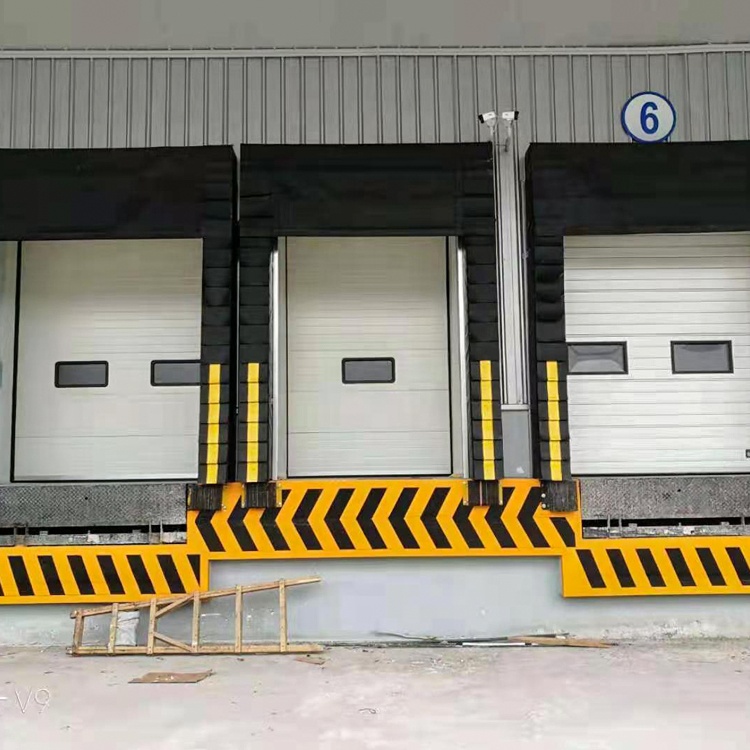
A joint de quai pour quai de chargement, often called a foam dock seal, is a fixed sealing system installed around the sides and top of a loading dock opening. When a truck or trailer backs into the dock, the vehicle compresses the foam pads to create a seal around the opening.
Foam dock seals are commonly used at loading bays handling relatively consistent trailer sizes. Their simple structure and passive sealing design make them suitable for many general warehouse and distribution applications.
Typical Foam Dock Seal Features
- High-density foam core with protective industrial fabric
- Fixed structure compressed directly by the trailer
- Best suited to loading bays handling relatively consistent trailer dimensions
- No blower or inflation system normally required
- Simple operation and relatively straightforward maintenance
Inflatable Dock Seals vs Dock Shelters vs Foam Dock Seals
The main difference between these loading dock sealing systems is how they contact the truck and how much variation in vehicle dimensions they can accommodate. The following comparison can help buyers understand which system is more suitable for different loading conditions.
| Caractéristique | Joint de quai gonflable | Abri de quai gonflable | Foam Dock Seal |
|---|---|---|---|
| Sealing method | Inflatable cushions | Inflatable curtains or cushions around the trailer perimeter | Fixed foam pads compressed by the trailer |
| Vehicle contact | Inflates after the vehicle docks | Inflates around the trailer after positioning | Trailer directly compresses the foam |
| Truck-size flexibility | High when properly specified | High when properly specified | Better for relatively consistent trailer sizes |
| Temperature control | Excellente | Excellente | Bonne |
| Trailer opening access | Depends on configuration | Generally provides good trailer-opening clearance | Foam pads may reduce part of the opening |
| Compression during docking | Faible | Faible | Higher due to direct trailer compression |
| Power required | Oui | Usually yes | Non |
| Typical applications | Cold chain, food, pharmaceutical and controlled environments | Mixed fleets and controlled loading environments | General warehouses and standardized fleets |
Advantages of Inflatable Dock Seals and Shelters
Improved Loading Dock Sealing
Inflatable cushions expand around the truck or trailer to reduce gaps at the loading dock. This helps limit the entry of outside air, dust, rain, and insects while supporting more stable indoor conditions.
This can be particularly useful in food processing, pharmaceutical warehousing, refrigerated distribution, and other applications where environmental control is an important consideration.
Flexible Truck Compatibility
When properly sized, inflatable sealing systems can accommodate a wider range of trailer dimensions than many fixed foam systems. This makes them useful for loading docks that regularly handle different types of trucks.
Reduced Uncontrolled Air Exchange
By improving the seal around the trailer, inflatable systems can help reduce the exchange of conditioned indoor air with outdoor air. This is especially important in refrigerated warehouses and cold storage facilities where loading bays can otherwise become a significant point of temperature exchange.
Reduced Compression During Vehicle Positioning
Because the inflatable components remain retracted while the truck approaches the loading dock, they are exposed to less continuous compression during vehicle positioning than traditional fixed foam pads. Correct truck alignment and operating procedures are still important for minimizing wear and accidental damage.
Advantages of Traditional Foam Loading Dock Seals
Simple Structure
Foam dock seals use a relatively simple passive sealing structure and do not normally require a blower or inflation system. This can simplify installation, operation, and routine maintenance.
Suitable for Standardized Trailer Fleets
When most trucks using a loading bay have similar widths and heights, a correctly sized foam dock seal can provide consistent contact around the vehicle and a practical sealing solution.
Cost-Effective Loading Dock Sealing
For loading docks handling relatively consistent trailer dimensions, foam dock seals can provide a practical balance between sealing performance, system simplicity, and initial investment.
How to Choose Between Inflatable Dock Seals and Dock Shelters
Choosing the right loading dock sealing system depends on the operating environment, truck dimensions, temperature requirements, loading frequency, building conditions, and available budget. The sealing system should be selected as part of the complete loading dock rather than as an isolated product.
Cold Storage and Refrigerated Warehouses
Cold storage facilities usually place greater importance on reducing uncontrolled air exchange between indoor and outdoor environments. Inflatable sealing systems are commonly considered for these applications because they can create a closer seal around properly positioned trailers.
Food and Pharmaceutical Facilities
Facilities with higher requirements for cleanliness and environmental control may benefit from inflatable sealing systems that help reduce dust, insects, outside air, and temperature fluctuations around the loading dock.
Entrepôts généraux
For warehouses handling relatively consistent trailer sizes and without strict temperature-control requirements, traditional foam dock seals can provide a simple and practical solution.
Loading Docks Handling Different Truck Sizes
If the same loading bay regularly receives vehicles with different trailer heights or widths, an inflatable system may provide greater flexibility. However, the minimum and maximum trailer dimensions should still be confirmed before selecting the equipment.
What to Check Before Buying Inflatable Dock Seals
Before requesting a quotation, buyers should confirm the loading dock dimensions and truck operating conditions. A suitable sealing system should be selected according to the complete loading bay rather than the door opening alone.
Door Opening Width and Height
Measure the clear width and height of the loading dock opening. These dimensions help determine the overall dock seal or shelter configuration.
Trailer Width and Height Range
If different trucks use the same loading bay, provide the minimum and maximum trailer width and height. This is particularly important for loading docks handling mixed vehicle fleets.
Dock Height
Confirm the height from ground level to the loading dock platform. Dock height affects the relationship between the trailer, dock opening, bumpers, and sealing equipment.
Bumper Projection
The distance between the rear of the trailer and the building affects how the sealing system contacts the vehicle. Existing dock bumpers should therefore be included when reviewing loading bay dimensions.
Daily Loading Frequency
High-frequency loading docks require greater attention to fabric durability, contact points, vehicle alignment, and routine maintenance.
Temperature Requirements
Cold storage and refrigerated warehouses normally require tighter control of air exchange than general warehouses. Buyers should provide the indoor operating temperature and loading environment when requesting a configuration.
Existing Loading Dock Equipment
Confirm whether the loading bay already uses a dock leveler, sectional door, truck restraint, dock bumpers, or other loading dock equipment. These components should be coordinated so that they do not interfere with one another during truck positioning and loading.
How Inflatable Dock Seals Work with Other Loading Dock Equipment
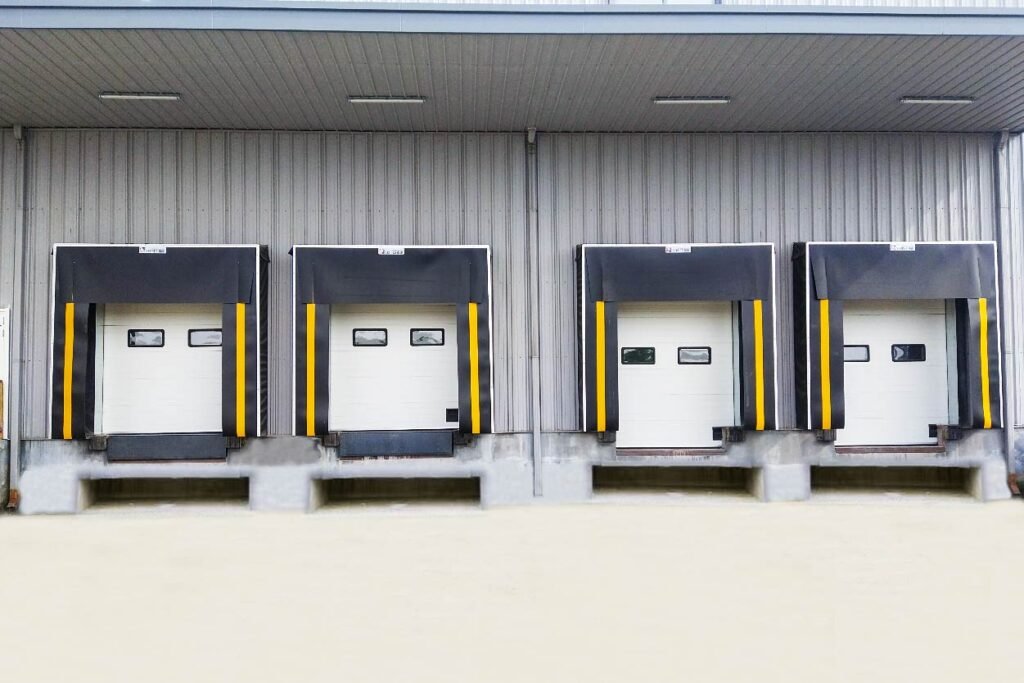
An inflatable sealing system is only one part of a complete loading bay. Many warehouse projects combine the dock sealing equipment with an industrial door, Niveleur de quai hydraulique, dock bumpers, and other safety equipment.
The industrial door closes the building opening when the dock is not in use, while the dock seal or shelter reduces gaps around a positioned truck. The dock leveler bridges the height difference between the warehouse platform and truck bed so forklifts and pallet trucks can move between them.
For cold storage and high-frequency logistics facilities, planning these components together can help improve loading efficiency, vehicle compatibility, environmental separation, and overall loading bay operation. You can explore more industrial door and loading dock solutions for warehouse projects.
Loading dock design should also consider safe vehicle movement, material handling, and warehouse operating procedures. For additional information about warehouse loading and unloading safety, refer to the les directives de sécurité pour l'entreposage de l'OSHA.
Choosing the Right Loading Dock Sealing System
Inflatable dock seals, inflatable dock shelters, and traditional foam dock seals are designed for different loading conditions. Inflatable systems are often considered for temperature-controlled facilities, mixed trailer fleets, and applications requiring closer environmental control, while foam dock seals remain a practical option for many standardized loading operations.
Before selecting a system, consider the dock opening dimensions, trailer size range, dock height, bumper projection, loading frequency, temperature requirements, and other loading dock equipment already installed at the site.
SEPPES provides customized loading dock equipment for warehouses, distribution centers, cold-chain facilities, food plants, and manufacturing sites. If you are planning a loading dock project, nous contacter with your opening dimensions, truck size range, quantity, operating conditions, and project location for a project-specific configuration and quotation.
FAQ About Inflatable Dock Seals
What are inflatable dock seals?
Inflatable dock seals use powered inflatable cushions to reduce the gap between a truck or trailer and the loading dock opening during loading and unloading.
What is the difference between an inflatable dock seal and a foam dock seal?
A foam dock seal is compressed by the trailer when it backs into the loading dock. An inflatable system remains retracted during vehicle positioning and expands after the truck is correctly docked.
What is the difference between inflatable dock seals and dock shelters?
The terminology varies between manufacturers, but inflatable dock shelters generally use inflatable side and top sections around the outer perimeter of the trailer. The exact sealing arrangement and trailer-opening clearance depend on the product design.
Are inflatable dock seals suitable for cold storage?
Yes. They are commonly used in refrigerated warehouses and cold-chain loading docks where reducing uncontrolled air exchange around parked trailers is important.
Do inflatable dock seals fit different truck sizes?
They can accommodate a range of trailer dimensions when the system is correctly designed and specified. Buyers should provide the minimum and maximum trailer width and height before ordering rather than assuming one system will fit every vehicle.
Do inflatable dock seals require power?
Most inflatable systems use a powered blower or fan to inflate the side and top sections. The required power supply and control method should be confirmed during project planning.
What information is needed for an inflatable dock seal quotation?
Provide the loading dock opening width and height, trailer width and height range, dock height, bumper projection, quantity, operating temperature, power supply, and project location. Photos or drawings of the loading bay can also help the manufacturer confirm the configuration.
Need help selecting an inflatable dock seal or dock shelter? Send your project details to SEPPES for a quotation.