
En la industria farmacéutica, las puertas de sala limpia son las barreras más importantes que preservan la integridad de los entornos controlados al mantener a raya la contaminación. La importancia del diseño y la funcionalidad de dichas puertas es un componente clave para mantener la seguridad del paciente, la garantía de calidad general de la industria y el cumplimiento de los rigurosos estándares del sector. En este artículo, analizamos la importancia de las puertas de sala limpia en la industria farmacéutica. Exploramos sus características que ayudan a mantener el control de la contaminación, su funcionalidad y cómo ayudan a las industrias a cumplir con los estándares del sector. Esta guía está diseñada para ayudarle a tomar las decisiones correctas, ya sea que esté trabajando para actualizar sus puertas de sala limpia o desee saber cómo cumplir con los estándares de cumplimiento que están cambiando.
Importancia de los entornos de sala limpia en farmacéutica
In the pharmaceutical industry, clean rooms are important in safeguarding the safety, quality, and effectiveness of the products. Clean rooms are environments where contamination is controlled. Some of the contaminations that clean rooms prevent are by controlling things like airborne particles, contamination by microorganisms and extremes in temperature. In particular, clean rooms are important for patient health because even the small contamination of a medication can render a medication ineffective and a serious health issue for the patient. Clean rooms also help in complying with the industry regulations that are in place for the protection of the public. These regulations are very particular in maintaining the health of the public. To protect the public and maintain the integrity of the products, it is very important to follow the industry standards.
Función de las puertas de sala limpia en el mantenimiento de los estándares
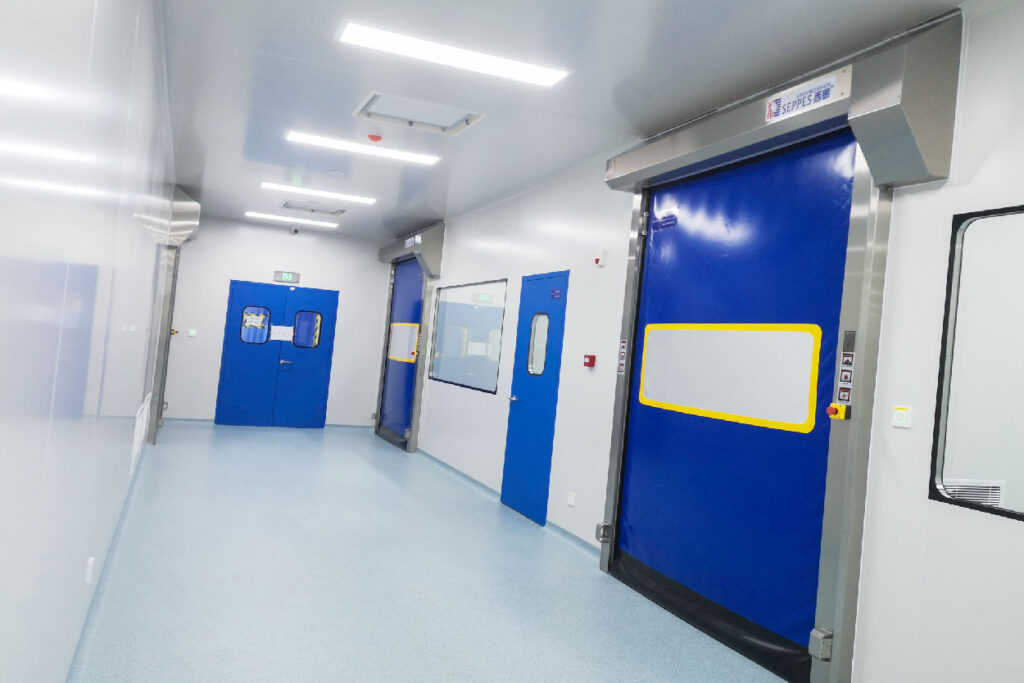
Clean room doors are extremely important for keeping high standards in contamination control. They act as barriers to prevent particulate matter, micro-organisms, and other environmental pollutants from compromising the controlled environment. Here are five functions and features of cleanroom doors, including double doors, that help maintain clean standards.
Sealing efficiency – Clean room doors are built to have a tight, pressure-sealed enclosure to aid in the filtration of dust, airborne particles, and other contaminants. Gaskets and sealants are of high quality to provide limited leaky locations.
Durability and hygiene – Constructed from materials such as stainless steel and high-grade plastics, the clean room doors can withstand the scrubbing of strong disinfectants. They are also corrosion-resistant and easy to maintain hygiene.
Pressure control – they help maintain pressure differentials between the zones of the clean room. This is crucial to keeping contamination at bay. For instance, a positive pressure is kept to eliminate contaminants from entering the clean room, a critical function of pharmaceutical doors.
Automated operations – automated swing or sliding doors help reduce manual contact and lower the risk of contamination introduced by people. These systems also allow the easy and quick passage of materials through the doors.
Standards Compliance – Our cleanroom doors adhere to industry standards such as ISO 14644 as well as GMP outlines. These standards ensure our doors comply with requirements regarding cleanliness and operational functionality.
Implementing these features also ensures our cleanroom doors help protect vital processes and meet regulatory standards.
Impacto de la limpieza en la producción farmacéutica
Dirtiness impacts safety and efficacy in pharmaceutical production. It also increases the risk to the patients and the finances of the manufacturers. Contamination can happen in the cheap production line. With the right cleanroom environment, contamination can be significantly minimized. This includes advanced air filters or even full sterilizing equipment. Standard cleanroom practices become the baseline to achieve cleanliness in the room. Standard ISO 14644 and GMP can be the way to achieve those sterility standards.
Automated cleaning has become a new emerging clean technology. Other emerging clean technologies are real-time contamination detection and air ionization devices. For example, in HEPA filters combined with technologically advanced ventilation, you can get the highest levels of airflow and particle filtration. Also, rigorous personnel washing practices and the use of coverings have minimized the levels of external contamination. This way, pharmaceutical manufacturers are also compliant with the standards to deliver the highest quality of medicines to the patients.
Resumen de los requisitos de cumplimiento
Doors in a pharmaceutical manufacturing clean room play a critical role in maintaining the controlled environment necessary for drug production. To achieve this, doors must comply with strict regulations, including FDA standards, EU GMP guidelines, and ISO 14644 requirements. In addition, the doors prevent cross-contamination and maintain differential pressure, ensuring the clean room operates effectively. As a result, these features keep the clean room intact and fully compliant with cGMP requirements.
The surfaces of clean room doors are made from non-porous materials that are easy to clean. Some of the materials have anti-microbial properties that discourage microorganisms from thriving, and clean rooms have doors that offer automated functionality to eliminate contact. The doors must have sensors that allow the doors to open and close without making contact. Also, clean room doors must be fire-rated and must have safety glazing while also maintaining the seals that are to the fire.
The doors must go through regular inspections and validation to prove that they will work under the conditions. Following the compliance factors reinforces patient safety by keeping the manufacturing quality consistent with what the patient deserves.
Estándares clave y requisitos regulatorios
Clasificaciones ISO y directrices cGMP
Doors for pharmaceutical cleanrooms must follow strict ISO standards and current good manufacturing practices (cGMP) in order to maintain control over levels of cleanliness and contamination. Based on the ISO 14644-1 standard, different levels of clean rooms (types) are categorized based on the number of airborne particles present in the cleanroom. Most pharmaceutical clean rooms are classified under ISO Class 5 to ISO Class 8.These classifications depend on the number of particles present in the cleanroom and directly influence cleanroom door design and functionality, as the doors must provide maximum sealing and minimize particle ingress.
Moreover, regulatory bodies (such as the FDA and EMA) have cGMP guidelines in place, and they place significant emphasis on the design of cross-contamination and clean room doors for product safety in the on-site construction of the facility. These guidelines take into consideration the selection of materials, construction of the doors, and the automation features, as well as the smooth surfaces (which are easier to clean), and the doors’ compliance (or the doors’ features) to (are compliant with fire safety standards. Clean room doors for the pharmaceutical industry are in great demand because they help manufacturers of the pharmaceutical industry adhere to the guidelines of ISO and cGMP.
Comprensión de los requisitos del USDA/FDA
The design and construction of pharmaceutical cleanroom door systems must comply with USDA and FDA guidelines. These agencies stress the importance of avoiding contamination, and the construction of the doors and frames should be from non-porous and corrosion-resistant materials, including stainless steel and/or high-grade plastic. The primary focus is on the doors and frames being constructed to be easily cleaned and sanitized.
Doors to pharmaceutical clean rooms must provide the ability to control the environment and maintain the pressure differential. The doors must prevent the ingress of germs and contain the air. These USDA and FDA guidelines include features such as doors that automate and provide hands-free access, air-tight door seals, and doors that comply with the Good Manufacturing Practices (GMP). The latest advancements have provided the integration of additional contamination control features, including the use of cleanroom roll up doors with advanced sealing systems and antimicrobial materials.
The cleanroom door manufacturers and the cleanroom contractors must use these guidelines to meet the regulatory and industry best practice requirements to protect public safety.
Importancia de las clasificaciones de clase de sala limpia
The cleanliness and contamination control classes for clean rooms are critical for pharmaceutical processes. Ratings are assigned for clear rooms based on the amount of particulate in the air and are regulated internationally using guidelines such as ISO 14644-1. The pharmaceutical clean room doors must meet the standard to keep the environment controlled.
Some of the cleanroom ratings are as follows, along with the selection of cleanroom doors that meet specific requirements.
Clase ISO 1
Particulates (>0.1 μm) – 10
Particulates (>0.2 μm) – 2
Use Case: Ultra-high precision manufacture such as semiconductor manufacturing.
Clase ISO 5
Particulates (>0.1 μm) – 100,000
Particulates (>0.5 μm) – 3,520
Use Case: Manufacture and filling of sterile drugs
Clase ISO 7
Particulates (≥0.5 μm) 352,000
Particulates (≥5.0 μm) 2,930
Use Case: Areas of non-sterile pharmaceutical production or quality control
Clase ISO 8
Particulates (>0.5 μm) – 3,520,000
Particulates (>5.0 μm) – 29,300
Use Case: Areas where raw pharmaceutical materials are stored and packaging.
Clase ISO 9
Particulates (>0.5 μm) – 35,200,000
Particulates (>5.0 μm) – No limit
Use Case: Areas with standard indoor air conditions, or places transitioning to controlled air conditions.
Manufacturers can manage contamination risks, protect product integrity, and stay within industry and government regulations by aligning pharmaceutical clean room doors with pertinent class rating requirements.
Características críticas de las puertas de sala limpia farmacéuticas
Sellado perimetral completo para el control de la contaminación
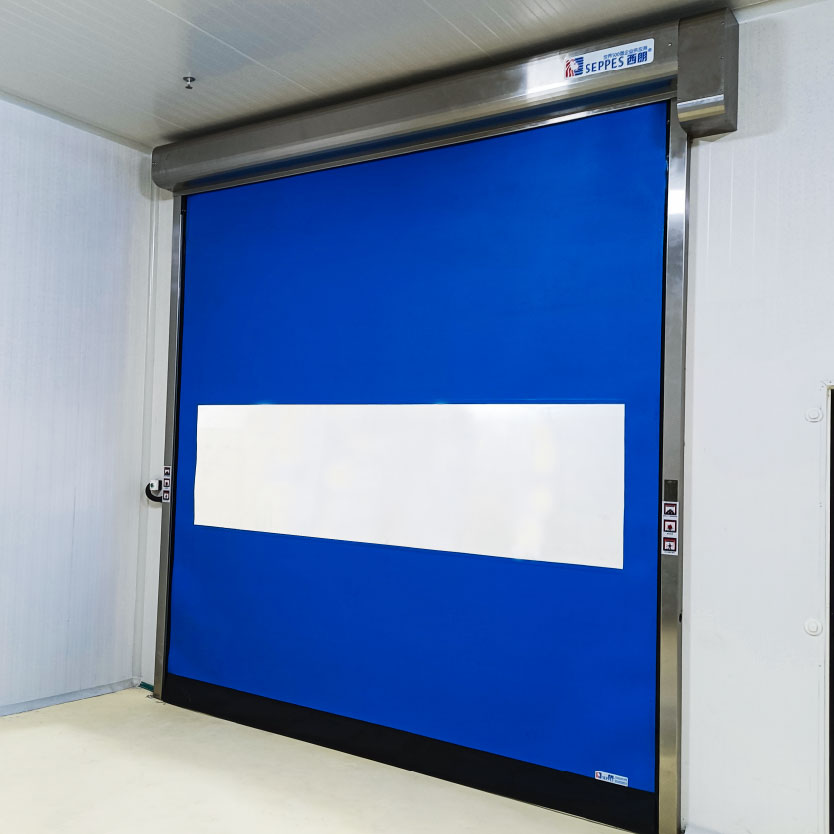
All doors for pharmaceutical cleanrooms are fully sealed to control contamination and maintain set levels of cleanliness. The sealing system keeps particulates, microbes, and contaminants from entering controlled environments. Here are five features and facts about full perimeter sealing:
Materiales de calidad para juntas
Ensures an even and airtight seal all around the door. Gaskets are made from materials like silicone and EPDM, which are resistant to chemicals and extreme temperatures.
Diseño de sellado continuo
Removes all gaps at corners and junctions to better seal all sections of the door. The seals compress uniformly around the perimeter of the door.
Sellados automáticos inferiores
These seals rest at the edge of the door and drop further when the door shuts. This closes the gap at the bottom of the door, minimizing the influx of particles through the ground-level opening.
Resistencia a diferencias de presión
These doors are able to endure the pressure differentials found in pharmaceutical cleanrooms. This keeps cross-contamination from adjacent rooms when their pressure levels differ.
Fácil mantenimiento y reemplazo
Inspection and replacement of sealing parts are less complex to ensure minimal downtimes.
All of these features assist in keeping the doors of pharmaceutical clean rooms in regulatory compliance and maintain the integrity of the products.
Superficies lisas, sin costuras y no porosas
The construction of pharmaceutical clean room doors includes smooth, non-porous, and seamless surfaces to support hygiene and contamination control. The surfaces make it difficult for contaminants such as microbes to build up. This helps maintain the standards of cleanliness required for the room. Below are some details of offenders of contamination.
Resistencia química
Materials like special polymers or stainless steel are able to withstand the harshest of cleaning agents or disinfectants.
Resistencia a los impactos
Durable finishes that resist scratches and impacts help maintain the smoothness of the surface.
Construcción sin costuras
When seams and joints are reduced, this creates areas that are easier to maintain and clean.
Baja desprendimiento de partículas
The construction materials are designed to shed no contaminants.
These surface characteristics meet contamination standards of a clean room.
Compatibilidad con automatización y control de acceso
Doors for pharmaceutical clean rooms are made to integrate with advanced access control and automation processes to help keep things safe and efficient. Here are five features that make sure there’s effective access control and automation, particularly in cleanroom roll up doors.
Operadores automáticos de puertas
These cleanroom doors use a precision motorized operator that opens and closes the doors smoothly and consistently, eliminating the need for manual contact and helping maintain a contamination-free cleanroom environment.
Sistemas de entrada sin contacto
These doors come with programmable logic controllers and integrate with motion sensors and proximity card readers to allow touchless access. This makes a clean room a safe and hygienic environment to be in.
Integración con sistemas de gestión de edificios
These doors work with the central BMS for monitoring, control, and emergency actions in real time. This makes facility management the most efficient.
Capacidades de interbloqueo
These clean room doors can be programmed for interlocking or airlock features. This way, one door cannot open until the other is closed, and that keeps the air pressure and cleanliness where it needs to be.
Control de acceso
These clean room doors come with biometric access control, keypad, or RFID access control to make sure only authorized individuals can enter the clean room. This keeps security tight and makes sure the facility is compliant with regulations.
All of these features of the clean room door help keep the regulations in both efficiency and security.
Tipos de puertas de sala limpia utilizadas en instalaciones farmacéuticas
Puertas enrollables de tela de alta velocidad

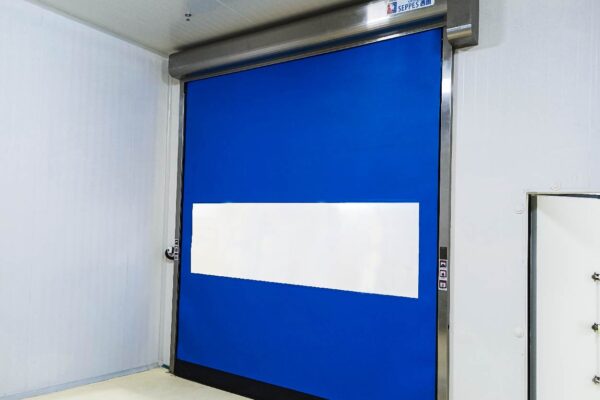
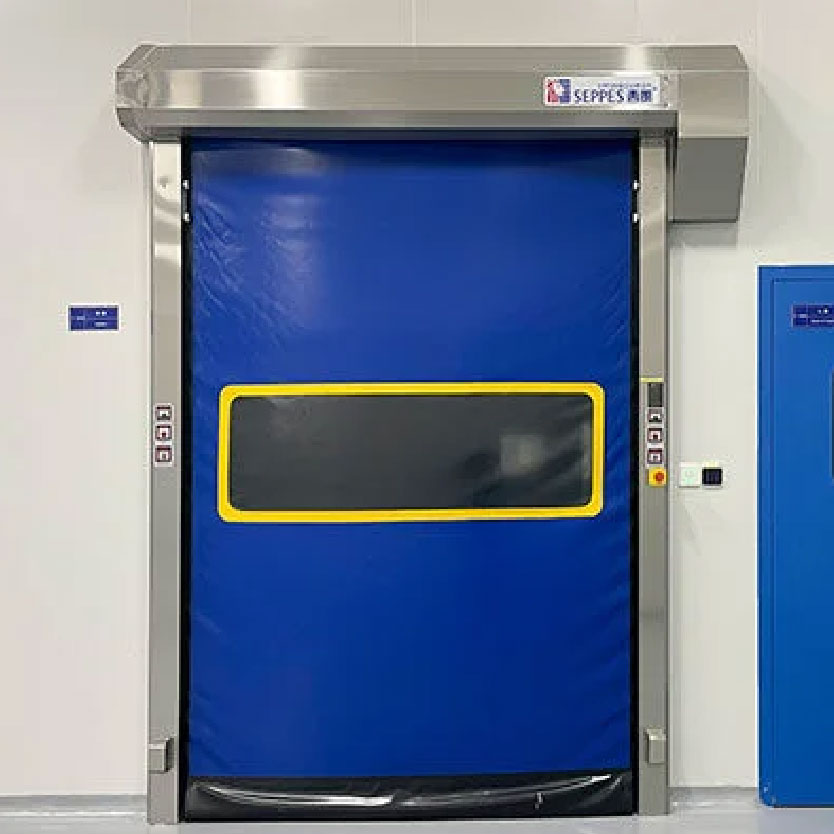
High-speed fabric roll-up doors are a necessity for pharmaceutical manufacturing and research facilities, along with being a key component for meeting the cleanliness and operational standards for door systems in this industry. These doors further safety and hygiene standards for the industry by having very quick open and close speeds and staying open for a reduced time. Their fabric is specially constructed with chemical-resistant and easy-to-clean materials that meet the very important cleanliness standards in the pharmaceutical industry.
High-speed roll-up doors have advanced sealing technologies that ensure that the doors remain closed and are able to keep the controlled environments that are needed. This allows the doors to remain closed in order to allow the air lock doors to function. Also, the air lock system is an access-controlled air lock. Access control doors also have an auto-open feature that assists in the controlled access that speeds up traffic. Integration with Automated systems is a common feature that assists in improving the workflow by allowing for the functions of the doors to remain closed and is able to keep the controlled environments.
Some innovations include advanced safety sensors and self-repairing mechanisms. With the longevity and safety of both the doors and controlled environments, one of the best features is the ability to further comply with GMP for high-speed fabric roll-up doors for new and existing pharmaceutical manufacturing and research environments.
Puertas corredizas: simples y de doble hoja
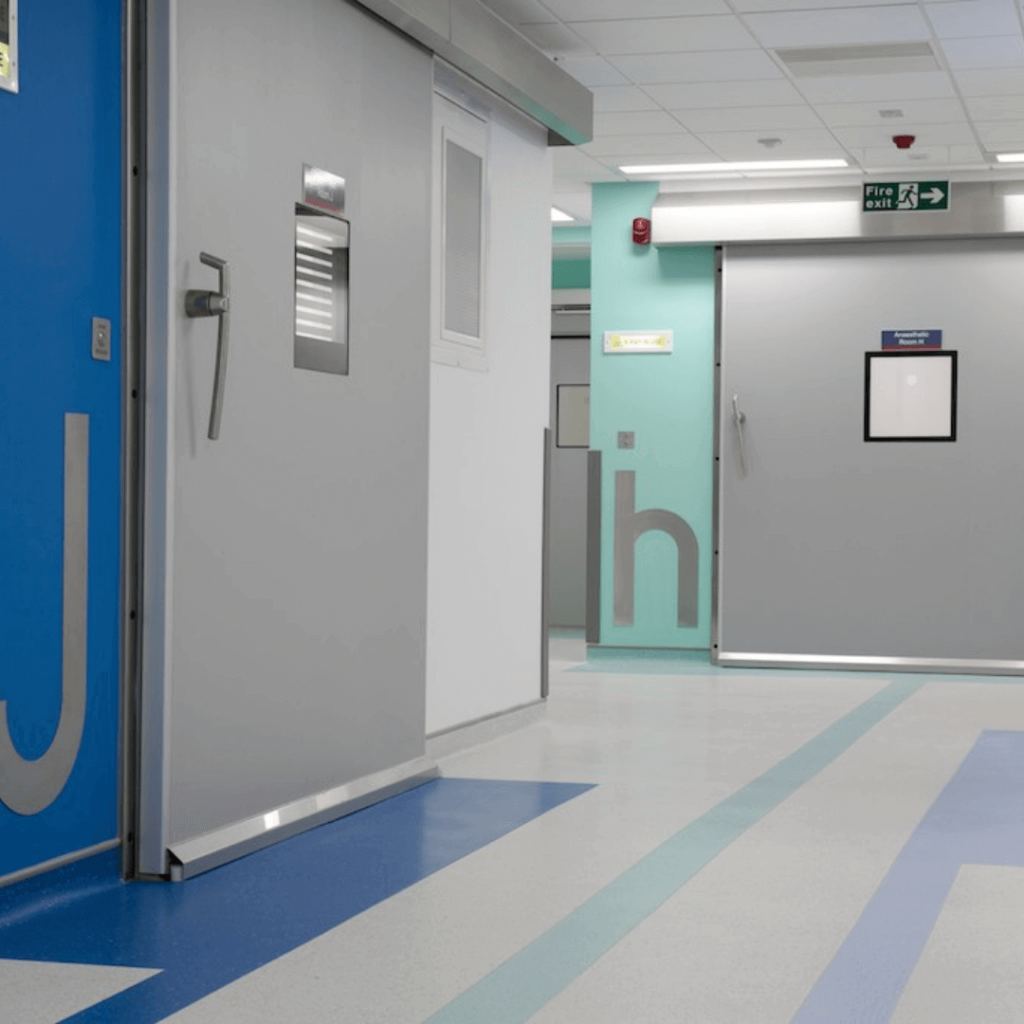
Sliding doors and bi-parting doors are efficient and space-saving features in pharmaceutical facilities. These doors are designed for optimum functionality in areas where air circulation and contamination control are critical, making them ideal for cleanroom environments. For clean rooms and production areas, these doors provide smooth and quiet operation. Recent advancements include features such as automation and a hermetic seal for contamination control, as well as integration with access control for increased security. These doors are also built with antimicrobial materials to meet the safety standards and long-term performance. These doors are essential for modern pharmaceutical facilities as they streamline workflows, ensure long-term performance, and meet the standards for contamination control.
Puertas con clasificación contra incendios y de PRFV
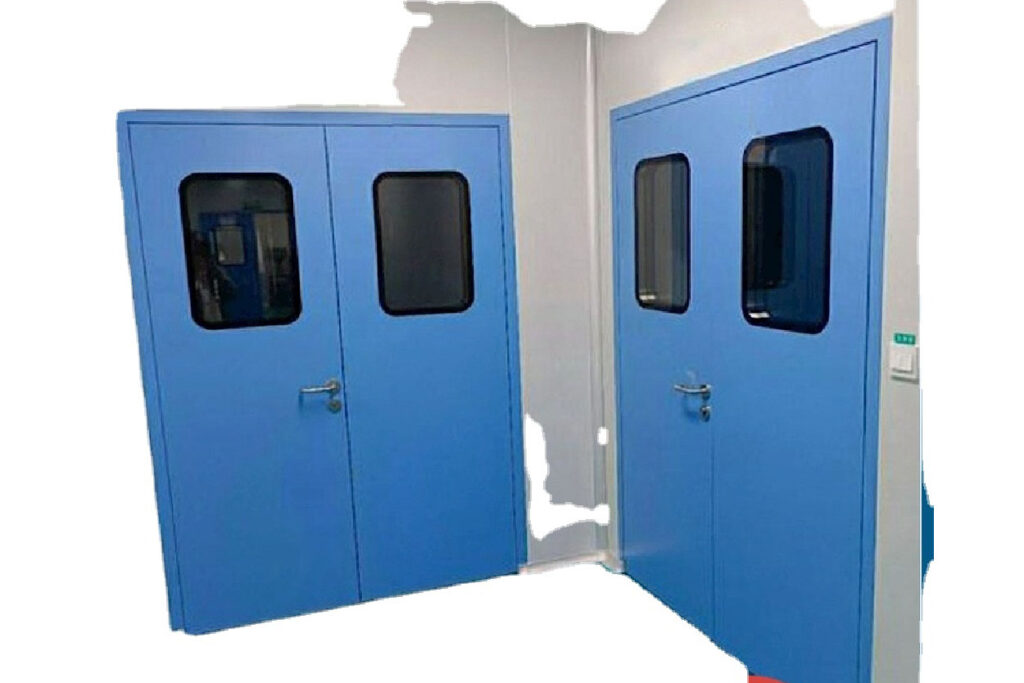
Fire-rated and reinforced glass polyester (GRP) doors are important for pharmaceutical departments because they help the industry meet high standards for safety and cleanliness. Fire doors are important because they contain fire and smoke, which keeps emergency exits clear and minimizes damage to the sensitive equipment and materials inside the facility. Fire-rated doors are constructed to very strict standards and help the facility meet its risk mitigation and regulatory compliance.
GRP doors are also very important because they are very durable and their easy-to-clean nature helps fight the spread of contaminants. They are made from strong, easy-to-clean materials and are resistant to chemicals, moisture, and impact, making them suitable for areas with high standards for cleanliness and contamination control. GRP doors are also very transportable and strong, which helps them have the ideal performance in high-traffic areas.
If you combine GRP doors and fire-rated doors, you get a powerful combination for providing pharmaceutical facilities with safety and efficiency. Advanced international standards also help their reliability, making them very necessary for modern cleanrooms and laboratories.
Innovaciones tecnológicas y opciones modernas
Características de funcionamiento sin manos
In today’s pharmaceutical plants, it is extremely important to have a fully sterile and contamination-free environment. Touch-free operation features on clean room doors assist in achieving this. Features like motion sensors, proximity card readers, and foot-pedal door openers let employees enter a room without touching the door, further reducing the risk of contamination. The latest automation technology works perfectly with these features, providing easy and reliable operation.
Voice control systems and touchless control panels are also becoming more common. Increased fuel efficiency and hygiene are additional benefits of these systems. Smart sensors that detect and respond to a variety of movements have become extremely common in the doors of pharmaceutical and clean room facilities. These are the most recent technological advances and are designed to improve efficiency in clean rooms.
Sistemas de seguridad avanzados para salas limpias
Pharmaceutical clean room doors have advanced safety systems that protect both the environment being controlled and the personnel working in the clean room. Smart clean room doors feature automated interlocking systems that stop the simultaneous opening of several doors in an airlock, which helps in avoiding contamination. Other features, such as pressure-resistant seals and self-closing mechanisms, help the clean room doors maintain their air pressure and increase the chances of unfiltered particles entering the environment, thus lessening.
In addition, the smart clean room doors integrated monitoring systems include the tracking of parameters of temperature, humidity, and air quality in real time, which helps in the regulation of set standards. Fireproof doors with emergency release systems let cleanroom personnel evacuate safely during emergencies while protecting sensitive areas.These systems help optimize the operations of the clean room and help in meeting the standards of the pharmaceutical manufacturing industry by ensuring the doors meet regulatory requirements.
Paquetes integrados con clasificación de estanqueidad
Integrated leakage-rated packages help with the sterility and contamination control requirements found in new cleanroom doors for the pharmaceutical industry. Because packages create barriers to controlled environments with sterile air circulation, leakage packages can contain zones with particulate air pollutants. They utilize perimeter gaskets, compression seals, and self-closing door controls.
Recently developed packages can also provide electronic monitoring capabilities to record pressure changes. The smart features help to provide environmental monitoring and automated record keeping for compliance with ISO and GMP clean room standards. The packages can also be constructed with corrosion-resistant and stainless steel anodized aluminum for long-lasting performance.
The best cleanroom door solutions come from the combination of innovative materials and advanced engineering. The investment from the pharmaceutical industry in leakage-rated packages can be seen in improved safety, sustainability, and operational efficiency.
Consideraciones de rendimiento
Velocidad de ciclo y gestión de frecuencia
Maintaining the cleanliness and safety of pharmaceutical clean rooms relies heavily on effectively managing cycle speed and frequency. Specifically, automatic clean room doors use high-speed opening and closing mechanisms, which reduce the time the doors stay open and minimize contamination opportunities. Moreover, high-speed motors and sophisticated controllers ensure reliable and consistent operation across many cycles, enhancing overall clean room safety and efficiency.
The spacing of open and closing cycles impacts door longevity. Increased or poorly timed cycles create counterproductive impacts on mechanical systems. To reduce these impacts, many cleanroom doors use programmable logic controllers (PLCs) that allow cycle customization. Automation then balances safety and cleanliness with speed and cycle time, ensuring door operation aligns with defined cleanliness requirements.
These technologies balance contamination control and operational efficiency, especially in sliding cleanroom doors that improve airflow management. ISO 14644 and Good Manufacturing Practices (GMP) standards guide the engineering of cleanroom doors and ensure full compliance. The above technologies also maintain or improve the level of cleanliness in the clean room and extend the operational life of the clean room door systems.
Durabilidad y fiabilidad en zonas de alto tráfico
Because pharmaceutical cleanrooms often experience heavy traffic and frequent equipment movement, engineers can customize high-traffic cleanroom doors to deliver optimal performance. Designers combine materials such as aluminum, stainless steel, and composite materials to protect the door systems from wear and maintain long-term structural integrity and functionality. They can also use advanced sealing technology in order to provide an airtight seal to improve performance throughout the systems.
Certain systems cleanroom doors can use certain automated features along with different sensor technologies, in order to provide enhanced reliability and durability throughout the systems. These systems also contain different technologies that help in motor peace systems, in order to improve functionality within the different programmable control systems. Certain motor peace systems can help in repeated performances within the same durable systems and motor peace technologies. These technologies help in meeting the industry standards like the ISO 14644 and GMP standards to provide a safe sterile environment throughout the systems. These doors are provided with highly needed durable advanced technology to provide a reliable, long-lasting performance within the clean room doors for busy facilities.
Factores de mantenimiento y longevidad
Pharmaceutical clean room doors have to be able to perform correctly, and to do that, require regular maintenance. These doors also have to follow strict operational and cleanliness standards. Routine inspections are able to recognize wear and tear on seals, hinges, and other parts that are crucial to ensuring the sterility of the room. Advanced materials like stainless steel are essential to the lifespan of the doors, and they stand up to the cleaning and sanitization processes.
Also, many smart technologies have integrated into clean room doors, such as programmable logic controllers (PLCs) and automated monitoring systems. These technologies allow monitoring of the doors to see how well they are working and to determine when maintenance is needed. This allows facilities to fix small problems to prevent larger problems and lessen the amount of time that the door goes unrepaired, along with the costs of the repairs. Technologies such as self-lubricating parts also reduce the amount of attention that the doors require.
The combination of all of these factors, along with the modern automation and careful proactive maintenance strategies, makes clean room doors the best long-term option for demanding clean room environments in the pharmaceutical manufacturing field.
Mejores prácticas para selección e instalación
Evaluación de requisitos específicos de la aplicación
Optimum pharmaceutical clean room doors should also comply with industry regulations to be operationally efficient. Industry regulations primarily depend on the type of clean room, the needed cleanliness, and the volume of workflow. The performance of the doors is especially important because the ISO Class system worldwide is the most used in rating the levels of cleanliness and circulation of particulate matter.
The circulation of particulate matter in the clean room will be determined by the construction and material of the door. The construction and material should also be able to resist the chemical cleaning agents used in the pharmaceutical industry to keep the environment clean. To maintain the starnal pressure and to prevent contamination, high-performance sealing mechanisms are needed on the doors. The volume in which clean room doors are used should also be considered. For heavy-duty use areas, clean room doors with beta automated sliding features, or rapid roll-up doors are the most suggested in order to minimize the exchange of air.
The newly available option of smart monitoring systems provides control and the ability to record and trace data to maintain hygiene and save energy. For improved operational results, the integrated clean room doors should be combined with the recommendations followed in the clean room design and the FDA GMP guidelines.
Integración con sistemas existentes de sala limpia
Pharmaceutical clean-room doors work seamlessly with the existing clean-room systems.This step ensures that the doors meet operational standards and deliver optimal performance. The doors work in coordination with HVAC and air pressure control systems to reduce contamination risks and keep all systems operating within defined parameters. Modern automation technology provides the capability of clean room doors to obtain and workflow with existing systems. For example, automated pressure-sealing systems that respond to pressure differential ensure that the level of air cleanliness is contained, particularly in sliding cleanroom doors.
In addition, the latest cleanroom doors are designed to work with prescriptive control systems that use a combination of biometrics and RFID for access control to improve the security and control of contamination. Productivity and security are the major driving factors for monitoring access control systems with smart IOT systems that the pharmaceutical industries are switching to. Real-time monitoring and reporting of door movement, environmental parameters, and systems status and performance greatly improve productivity, along with reducing security risks. This also greatly helps to maintain the ISO 14644, the Good Manufacturing Processes (GMP), and other complementary legislations. Also, Energy productivity is highly maintained to ensure the optimum productivity of clean room systems.
Personalización para necesidades de presión y tamaño
Pharmacies are built with very precise pressure differentials and size spec details. This leads to the highly clean and controlled environments necessary in these types of rooms. Doors also handle high pressure differentials, preventing air from escaping or entering cleanrooms. High-grade, pressure-specific gaskets and seals actively regulate pressure levels, control airborne contaminants, and maintain stable internal conditions.
Cleanroom doors can also accommodate different size requirements. Manufacturers offer these doors as standard single-leaf, larger double-leaf, or sliding designs. New features now enable high-speed operation, improving efficiency while further reducing the risk of air contamination. These features, along with the differentials and the solid ability to meet international standards, create a clean room door that is highly adaptable to the differentials of the pharmaceutical industry.
Estudios de caso y testimonios
Ejemplos reales de logros de cumplimiento
Let’s take a look at a leading biotech company’s clean room doors, which feature advanced airtight seals and high-speed operations. To help meet ISO 14644 standards for air cleanliness and protect workflow efficiency, the company engineered a tailored solution. As a result, they achieved a 25% reduction in particulate air contamination and observed a noticeable increase in the sterility of their products, demonstrating how improving clean room doors can directly enhance operational outcomes.
Another example is a global pharma company that replaced some of its cleanroom modules with fully automated seamless modular cleanroom doors and integrated them into its workflow systems.These doors meet the EU and FDA’s cGMP modular cleanroom specifications. After installing them, the company reduced product release times and increased the number of inspection approvals per period.
In addition, a mid size pharma company was able to improve compliance and sustain a global safety. These examples illustrate that the modern cleanroom door solution can achieve and exceed operational excellence in the pharma industry.
Comentarios de clientes sobre higiene y fiabilidad
The clients have highlighted the need for hygiene and reliability, and the customers appreciate the praise. Innovations like seamless design with antimicrobial coatings were able to seal the threat of contamination and maintain sterility for the important processes. Modern cleanroom doors also receive appreciation for being durable and performing the best to reduce maintenance and operational disruptions.
The latest safety and hygiene measures are sealed with the latest in automation technology. They shut on their own. The reports say customers like these the best because they are aligned with the ISO 14644 and GMP requirements. The customers state they have a demand for no contact/ touch operation. This also increases the cleanliness of the controlled environment. There are reports from the pharmaceutical industry about the flexibility of solutions integrating with the requirements of the industry, keeping it reliable and compliant.
Conclusión
Importancia de elegir la puerta de sala limpia correcta
Choosing the right cleanroom door is crucial for maintaining the cleanroom’s functionality, efficiency, and compliance. A quality door helps with contamination control, energy efficiency, durability, and workflow within the pharmaceutical and other sensitive industries. Here are five important factors to keep in mind when selecting a cleanroom door:
Control de la contaminación
Cleanroom doors with airtight seals ensure that no outside particulates and contaminants enter the cleanroom, maintaining air quality in compliance with the ISO 14644 standard. Well-sealed doors are statistically proven to reduce particulate infiltration by 98%.
Durabilidad del material
Cleanroom doors constructed with durable materials such as stainless steel and high-pressure laminate are corrosion and chemical-resistant as well as resistant to wear and tear from frequent cleaning. The durable materials not only increase the lifespan of the door but also decrease repair, maintenance, and replacement costs.
Facilidad de mantenimiento
Maintenance and repair are also important in the design of modular cleanroom doors. Many cleanroom doors come with empty horizontal channels that are pre-engineered for easy cleaning. Lower maintenance designs increase efficiency and reduce downtime.
Eficiencia energética
Some cleanroom doors help control energy costs and are energy efficient. Doors that automatically open and close or have a rapid door cycle help control the air exchange of the cleanroom, allowing for stable environmental conditions. Stable conditions require less frequent adjustments from the HVAC system.
Beneficios de la operación sin contacto
The use of advanced clean room doors with touchless automation minimizes the risk of physical contact and the risk of cross contamination. These doors are maximally hygienic. Touchless systems can improve workflow while reducing contamination levels by 60% based on studies!
Choosing the right cleanroom door does more than shield delicate operations; it also meets regulatory requirements and creates an overall safer and better working atmosphere.
Llamado a la acción: Consulte a expertos para sus necesidades de puertas de sala limpia farmacéuticas
Some important aspects must be taken into consideration when choosing your clean room doors, as your doors will ultimately be fitted to your primary needs as a business. Due to the importance of these aspects, the assistance of a professional is helpful. Here are some of the contributions that come with the assistance of a professional:
Modificaciones de diseño individualizadas
Having an industry professional design your clean room doors allows for adjustments to be made to the size, the materials, and the regulatory structures to be cohesive with the needs of your business.
Asistencia regulatoria
Professionals in the clean room industry help your business adhere to the various regulations set out by the FDA, GMP, and ISO.
Mejores opciones de materiales
Professionals will help choose the best materials for your situation, such as stainless steel, specialty coatings, and other materials that resist contamination, corrosion, and chemical reactions.
Recomendaciones de ahorro de costos energéticos
Professionals sometimes recommend the use of automation with your doors’ opening/closing function in order to save energy, along with other functions that are tailored to your needs.
Puertas de sala limpia sostenibles
Professionals give your business a plan to sustain the clean room doors and a plan to sustain the efficiency of the doors over the course of the business’s use.
El riesgo se reduce y se ahorra tiempo con la ayuda de profesionales de la industria, lo que conduce a las puertas de sala limpia de la mejor calidad diseñadas para el uso de su empresa. Contacte a sus profesionales hoy mismo.
Preguntas más frecuentes (FAQ)
Puerta de sala limpia: ¿Cuáles son las características básicas de una puerta de sala limpia farmacéutica?
Las puertas en salas limpias farmacéuticas siguen especificaciones estrictas de salas limpias y directrices cGMP, e incorporan sellos casi herméticos, paneles lisos resistentes a productos químicos y sistemas de sellado integrados para mantener la presión de la sala. Los fabricantes utilizan materiales compatibles con salas limpias, como acero inoxidable y paneles recubiertos, a menudo añadiendo ventanas de vidrio templado y opciones de operación automática o manual para garantizar un rendimiento fiable en entornos farmacéuticos y otros entornos controlados.
Diseño de puertas de sala limpia: ¿Cómo afectan las elecciones de diseño de puertas de sala limpia al control de la contaminación?
El diseño de las puertas de sala limpia influye directamente en la eficacia del control de contaminación farmacéutica, ya que limitan la generación de partículas no deseadas y la filtración del aire de la sala limpia. Ciertas características de diseño, como las puertas corredizas bipartidas y las puertas de alto rendimiento, permiten combinar sellos herméticos y marcos de puerta robustos para disminuir el nivel de contaminación durante el tránsito. Las puertas correctamente diseñadas mantendrán un sello casi hermético, preservarán la presión diferencial y cumplirán con las especificaciones de salas limpias para entornos farmacéuticos y otros entornos limpios.
Soluciones de puertas: ¿Qué soluciones de puertas son ideales para diferentes clasificaciones de salas limpias?
La elección de las puertas para salas limpias depende de la clasificación y las necesidades del proceso involucrado. Para puertas de sala limpia de alta velocidad, puertas enrollables para salas limpias y puertas de alto rendimiento que reducen el intercambio de aire, los estándares de la industria ISO y el sector farmacéutico son más estrictos. En términos de espacio y flujo de tránsito, las puertas batientes y corredizas, las puertas pre-ensambladas y las puertas bipartidas también son efectivas. Los fabricantes de puertas proporcionan especificaciones sobre la selección de puertas para salas limpias que mejor se adapten a las operaciones, cumpliendo al mismo tiempo con las directrices cGMP para puertas.
Door styles: Which door styles are most commonly used in pharmaceutical cleanrooms?
Algunos de los estilos de puertas para salas limpias más comunes son las puertas batientes, las puertas corredizas para salas limpias, las puertas enrollables y las puertas bipartidas. En situaciones donde se requiere poca perturbación del aire, las puertas corredizas y las puertas enrollables para salas limpias se utilizan ampliamente. Para accesos con enclavamiento o entrada de personal, las puertas batientes son adecuadas. Para alta actividad y transferencia de materiales, las puertas enrollables de alta velocidad para salas limpias son las mejores. Muchas puertas están diseñadas con vidrio templado para permitir la visibilidad manteniendo la higiene.
Door operation: What are the advantages of automatic cleanroom doors versus manual and automatic options?
El riesgo de contaminación es mínimo con las puertas para salas limpias. También mejoran las operaciones y el cumplimiento de los estándares de higiene. Estas puertas ofrecen la opción de ser manuales o automáticas. Las puertas automáticas (incluidas las puertas de alta velocidad para salas limpias) ofrecen un mejor control de las presiones diferenciales y ciclos más rápidos, mientras que las puertas manuales o de placa de empuje para salas limpias son adecuadas para áreas de bajo riesgo. Estas puertas incluyen características de seguridad contra incendios y enclavamientos que funcionan durante las operaciones farmacéuticas normales.
Controlled environment: How do cleanroom doors help maintain room pressure and environmental control?
Las puertas son críticas para mantener la presión y están construidas para evitar fugas. La presión de las salas se mantiene mediante los sellos precisos de los marcos de las puertas. Las puertas de operación rápida y las puertas estériles de presión de alto rendimiento minimizan los cambios de presión durante las aperturas, mejorando la eficiencia de la sala limpia. Las especificaciones correctas de las puertas, las instalaciones de fabricantes de puertas reputados y una selección apropiada de puertas para salas limpias ayudan a garantizar que el entorno controlado se mantenga para salas farmacéuticas y salas limpias.
Airtight: What does it mean that cleanroom doors feature an almost airtight seal, and why is it important?
Los sellos de las puertas, las juntas y los paneles de puerta superpuestos minimizan el intercambio de aire entre zonas. Esto también ayuda a controlar la contaminación por partículas y microbiológica, mantener las presiones diferenciales y respaldar el cGMP. La higiene y durabilidad de los paneles de las puertas se construyen con sellos de puerta integrados, fáciles de limpiar y resistentes a productos químicos, y están diseñados para ser compatibles con salas limpias en instalaciones farmacéuticas.
Hygienic: How do hygienic door materials and finishes improve cleanroom performance?
El uso de materiales higiénicos como vidrio templado, marcos de acero inoxidable y puertas recubiertas de polímero ayuda a reducir la infección microbiana y facilita la limpieza y desinfección. Las puertas están diseñadas con bordes lisos y sin costuras, y acabados resistentes a productos químicos con grietas y hendiduras mínimas, para que se puedan seguir los procedimientos y protocolos de limpieza. La reducción de puntos potenciales de contaminación durante las operaciones farmacéuticas, así como la capacidad de validar más fácilmente los protocolos de limpieza, respaldan el cumplimiento normativo en farmacia y salas limpias.
High-performance: How do high-performance doors and high-speed cleanroom doors differ, and when are they used?
La durabilidad, el aislamiento y la integridad del sello son el enfoque de las puertas de alto rendimiento, típicamente utilizadas donde es necesario un alto control del entorno. Las puertas de alta velocidad para salas limpias están diseñadas para tiempos de ciclo rápidos, reduciendo el tiempo que las puertas están abiertas, lo que las hace ideales para áreas de alto tránsito o zonas de transferencia de materiales. Ambos tipos de puertas pueden ser automáticas o manuales, y pueden ser corredizas, bipartidas o enrollables. Para mantener los requisitos de la sala limpia y la presión de la sala en equilibrio, los fabricantes de puertas especifican sus productos para satisfacer las necesidades particulares de la sala limpia en relación con la aplicación farmacéutica.
Fuentes de referencia
- Clasificación de salas limpias para la industria farmacéutica
Lea el artículo aquí - Diseño, instalación y puesta en marcha de salas limpias e instalaciones de HVAC para tecnologías de células madre y medicina regenerativa
Lea el artículo aquí - Superando los desafíos de contaminación en salas limpias de microbiología: lecciones de estudios recientes
Lea el artículo aquí