
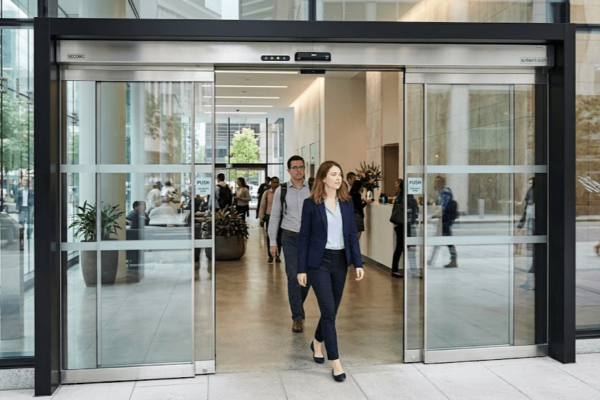
تجمع الأبواب الزجاجية الأوتوماتيكية بين الوصول دون استخدام اليدين، والتصميم المعماري الشفاف، والتحكم الآلي في المداخل للمباني التجارية. وتُستخدم على نطاق واسع في المكاتب والمتاجر والمستشفيات والفنادق ومراكز النقل وغيرها من المنشآت التي تكون فيها حركة المشاة وإمكانية الوصول والرؤية ومظهر المدخل أمورًا مهمة.
وفقًا للمشروع، قد يستخدم المدخل الزجاجي الأوتوماتيكي تكوينًا منزلقًا أحاديًا أو منزلقًا ثنائي الاتجاه أو تلسكوبيًا أو دوّارًا أو قابلًا للطي أو غير ذلك من التكوينات. وينبغي اختيار التصميم النهائي وفقًا للفتحة الصافية وحركة المشاة والمساحة المتاحة ونوع الزجاج وسعة المشغّل والاستشعار الأمني والتحكم في الوصول والظروف البيئية ومتطلبات التركيب المحلية.
يشرح هذا الدليل الأنواع الرئيسية من الأبواب الزجاجية الأوتوماتيكية, ، وكيف تعمل الأبواب الزجاجية المنزلقة الأوتوماتيكية ، وما يؤثر على أداء الطاقة والتكلفة، وما ينبغي للمشترين التجاريين تأكيده قبل طلب عرض سعر.
مقدمة عن الأبواب الزجاجية الأوتوماتيكية
الأبواب الزجاجية الأوتوماتيكية هي أنظمة مداخل آلية تستخدم مشغّلًا ونظام تحكم لفتح وإغلاق ألواح الأبواب الزجاجية تلقائيًا. ووفقًا لتصميم المدخل، يمكن تفعيل الفتح عن طريق الكشف الحركي أو أزرار الضغط أو المفاتيح اللمسية أو إشارات التحكم في الوصول أو غيرها من أدوات التحكم المتوافقة.
بالنسبة للمداخل التجارية الخارجية، يمكن للتشغيل الآلي أيضًا أن يساعد في الحد من مدة بقاء الباب مفتوحًا دون داعٍ. ومع ذلك، يعتمد أداء الطاقة الفعلي على حركة المشاة ومدة الفتح والزجاج وبناء الإطار وإحكام المحيط والمناخ وتصميم الردهة وظروف المبنى. والتشغيل الآلي وحده لا يضمن استهلاكًا أقل للطاقة مقارنة بكل مدخل تقليدي.
التعريف والاستخدامات الأساسية
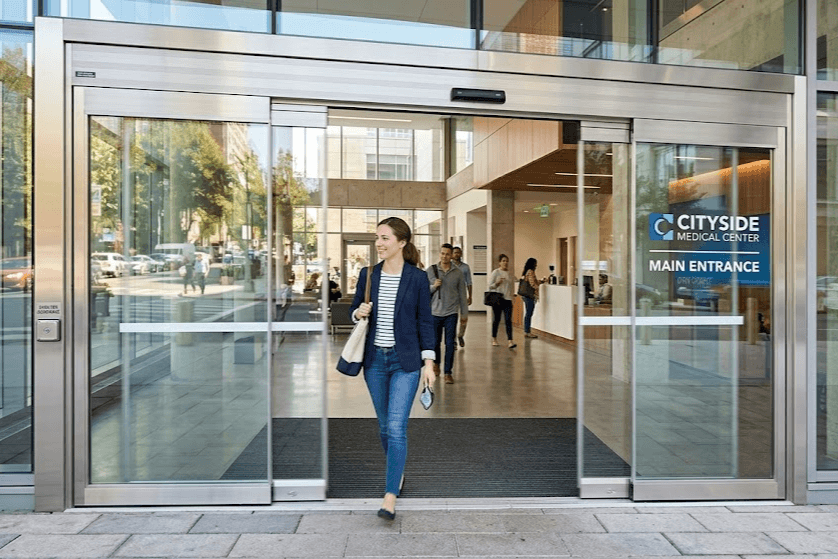
توفر الأبواب الزجاجية الأوتوماتيكية وصولًا للمشاة دون استخدام اليدين مع الحفاظ على المظهر الشفاف المرتبط بالمداخل التجارية الحديثة. وهي مفيدة بشكل خاص حيث تحتاج المنشآت إلى إدارة حركة المشاة المنتظمة دون مطالبة كل زائر بتشغيل الباب يدويًا.
تشمل التطبيقات النموذجية مباني المكاتب والمتاجر والمستشفيات والفنادق والمطارات والمباني العامة ومراكز النقل ومداخل سكنية مختارة من الفئة الممتازة أو متعددة الاستخدامات.
بالنسبة للمشاريع التي تراعي إمكانية الوصول، ينبغي تصميم المدخل بالكامل—بما في ذلك عرض الفتحة الصافية والعتبة وأدوات التحكم والتوقيت وحركة الباب ومساحة الحركة المحيطة والتركيب—وفقًا لمتطلبات إمكانية الوصول والسلامة المعمول بها. فالمشغّل الأوتوماتيكي بحد ذاته لا يثبت الامتثال للمدخل بالكامل.
بالنسبة للمشاريع التي تراعي الطاقة، ينبغي مراجعة الزجاج وبناء الإطار والأختام ومدة الفتح وأنماط الحركة معًا. وقد يحسّن الزجاج العازل أو منخفض الانبعاثية الأداء الحراري حيثما كان ذلك مناسبًا، لكن الحل الصحيح يعتمد على ظروف المبنى والمدخل الفعلية.
الشعبية في العمارة الحديثة
أصبحت الأبواب الزجاجية الأوتوماتيكية جزءًا مهمًا من العمارة التجارية المعاصرة لأنها تجمع بين تصميم المدخل الشفاف والوصول الآلي للمشاة. ويمكن للأسطح الزجاجية الكبيرة أن تخلق مداخل أكثر إشراقًا وانفتاحًا بصريًا، في حين يمكن للإطارات الألومنيوم أو الإطارات البسيطة أن تتكامل مع الواجهات الحديثة والردهات وواجهات المتاجر والقواطع الداخلية.
يتجه تصميم المداخل الحديث بشكل متزايد إلى مراعاة التشغيل دون لمس والتحكم في الوصول والاستشعار الأمني وتدفق الحركة والأداء الحراري وأتمتة المباني إلى جانب المظهر. ولذلك ينبغي النظر إلى الأبواب الزجاجية الأوتوماتيكية ليس فقط كعنصر معماري بل كنظام مدخل متكامل يجب تحديد مواصفاته بشكل صحيح لبيئة تشغيله.
أنواع الأبواب الزجاجية الأوتوماتيكية
الأبواب الزجاجية الأوتوماتيكية المنزلقة
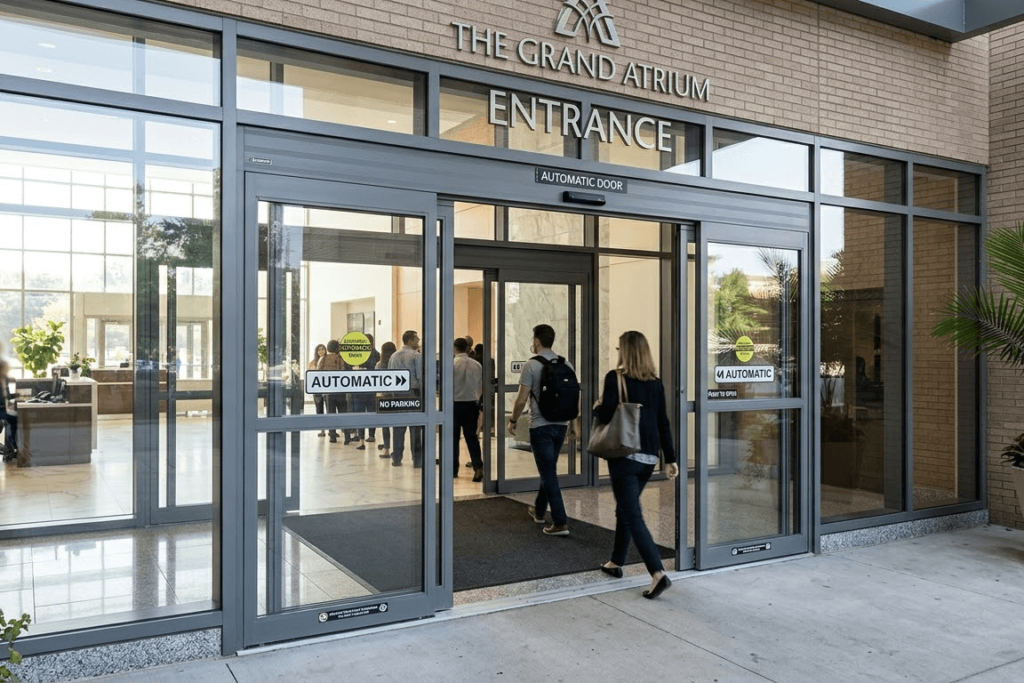
الأبواب الزجاجية المنزلقة الأوتوماتيكية هي من أكثر التكوينات شيوعًا للمداخل التجارية. فبدلًا من التأرجح نحو مساحة المشاة، تتحرك ألواح الباب أفقيًا على مسار، مما يجعل الأنظمة المنزلقة مفيدة بشكل خاص للمداخل المزدحمة والمواقع التي يكون فيها الاستخدام الفعّال لمساحة الأرضية مهمًا.
تشمل التكوينات التجارية الشائعة الانزلاق الأحادي والانزلاق ثنائي الاتجاه والانزلاق التلسكوبي والأبواب المنزلقة بدون إطار أو الزجاجية بالكامل. وعند اختيار باب زجاجي منزلق أوتوماتيكي، ينبغي للمشترين تأكيد الفتحة الصافية وأبعاد الألواح ووزنها وسعة المشغّل وإعدادات الفتح والإغلاق وحركة المشاة وطريقة التفعيل والاستشعار الوقائي ومتطلبات التحكم في الوصول وهيكل التركيب.
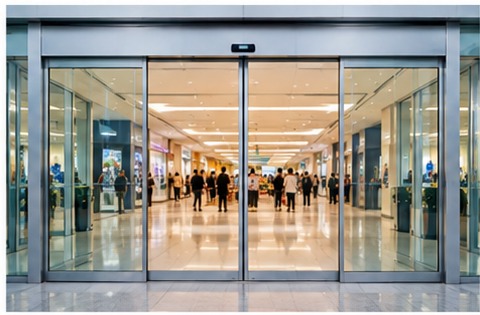
الأبواب الزجاجية الأوتوماتيكية المتأرجحة
تستخدم الأبواب الدوّارة الأوتوماتيكية مشغّلًا لتحريك ضلفة باب مفصلية. وقد تكون مفيدة حيث يحتاج مدخل مفصلي قائم إلى الأتمتة أو حيث يجعل التخطيط النظام المنزلق أقل ملاءمة.
وفقًا للنظام، قد تستخدم الأبواب الدوّارة الأوتوماتيكية تفعيلًا بأزرار الضغط أو تفعيلًا دون لمس أو إشارات التحكم في الوصول أو أوامر فتح متوافقة أخرى. وتشمل عوامل الاختيار المهمة وزن الباب ومسار التأرجح ومنطقة سلامة المشاة وسعة المشغّل وطريقة التفعيل والاستشعار الوقائي ومتطلبات التشغيل الطارئ أو اليدوي.
خيارات بدون إطار والتعتيم الذكي
غالبًا ما يتم اختيار الأبواب الزجاجية الأوتوماتيكية بدون إطار حيث تكون الشفافية المعمارية والتصميم البسيط مهمين. وتشمل التطبيقات النموذجية المكاتب والفنادق وصالات العرض والمتاجر الممتازة ومناطق الاجتماعات ومداخل تجارية داخلية مختارة.
يمكن للإطار المرئي المخفّض أن يخلق مظهرًا أكثر انفتاحًا، لكن الزجاج المختار وملحقات الزجاج والهيكل الداعم ووزن اللوح والمشغّل الأوتوماتيكي يجب أن تظل متوافقة مع النظام بالكامل.
يمكن أيضًا استخدام الزجاج القابل للتبديل أو الزجاج الذكي المعتم في مشاريع مختارة. ووفقًا للتقنية، يمكن للزجاج المتحكم فيه كهربائيًا أن يتغير بين حالات بصرية أكثر وضوحًا وأكثر خصوصية. وقد يكون ذلك مفيدًا لغرف الاجتماعات ومناطق الاستشارات الصحية والمكاتب التنفيذية ومساحات الضيافة حيث تتغير متطلبات الخصوصية أثناء الاستخدام.
التطبيقات الشائعة للأبواب الزجاجية الأوتوماتيكية في المساحات المختلفة
يمكن للأبواب الزجاجية الأوتوماتيكية أن تؤدي وظائف مختلفة وفقًا لنوع المبنى وحركة المشاة والمساحة المتاحة للمدخل والظروف البيئية ومتطلبات الوصول.
المباني التجارية والمساحات المكتبية
يمكن للأبواب الزجاجية الأوتوماتيكية أن توفر مدخلًا احترافيًا لمباني المكاتب والمقرات الرئيسية للشركات ومناطق الاستقبال والعقارات التجارية. ويمكن لتصميمها الشفاف الحفاظ على الاتصال البصري بين المساحات الداخلية والخارجية، في حين يدعم التشغيل الآلي الوصول المريح للمشاة.
يمكن للمشاريع التجارية أيضًا دمج قارئات البطاقات والأقفال الكهربائية وأدوات تحكم الاستقبال وأنظمة الأمن أو إشارات إدارة المباني حيثما يدعمها المشغّل ووحدة التحكم المختاران.
المتاجر ومراكز التسوق
غالبًا ما تشهد مداخل المتاجر أحجامًا متغيرة من المشاة على مدار اليوم. ويمكن للأبواب الزجاجية المنزلقة الأوتوماتيكية دعم حركة العملاء المتكررة دون مطالبة كل زائر بتشغيل المدخل يدويًا.
بالنسبة لتطبيقات المتاجر، ينبغي للمشترين مراعاة عرض الفتحة الصافية وعربات التسوق وفترات الذروة والتعرض للطقس الخارجي والاستشعار الوقائي والتحكم في الوصول ومتطلبات القفل.
المستشفيات والمنشآت الصحية
غالبًا ما تستخدم المرافق الصحية المداخل الأوتوماتيكية حيث يكون الوصول دون استخدام اليدين وحركة المشاة الفعّالة أمرين مهمين. وقد تشمل التطبيقات المداخل الرئيسية والممرات ومناطق العلاج ومناطق الموظفين أو غيرها من الممرات الخاضعة للتحكم.
يعتمد التكوين المطلوب على المنشأة. وقد تؤثر اعتبارات النظافة وإمكانية الوصول وتدفق الحركة والتشغيل الطارئ والتحكم في الوصول وقابلية التنظيف جميعها على المواصفات النهائية.
قطاعات الفخامة والضيافة
غالبًا ما تستخدم الفنادق والمنتجعات ومرافق المؤتمرات والمباني التجارية الممتازة مداخل زجاجية أوتوماتيكية للجمع بين الوصول الآلي والمظهر المعماري المنفتح.
حيثما كان الأداء الحراري مهمًا، ينبغي النظر في الزجاج وبناء الإطار والأختام ودورة التشغيل وتعرض المدخل وتصميم المبنى العام معًا بدلًا من افتراض أن التشغيل الآلي وحده سيقلل استهلاك الطاقة.
المباني السكنية قد تستخدم أيضًا أنظمة زجاجية أوتوماتيكية في مشاريع مختارة من الفئة الممتازة أو متعددة الاستخدامات. ومع ذلك، لا ينبغي تلقائيًا اعتبار نظام الباب الأوتوماتيكي التجاري مكافئًا لباب فناء سكني تقليدي. فيجب أن تتوافق سعة المشغّل وحماية المشاة والمتطلبات الهيكلية والحركة المتوقعة مع التطبيق المقصود.
المراكز العامة ومراكز النقل
قد تتطلب المطارات ومحطات السكك الحديدية ومحطات الحافلات والمباني العامة وغيرها من المرافق عالية الحركة مداخل أوتوماتيكية مصممة لحركة المشاة المتكررة. وتشمل العوامل المهمة عرض الفتحة الصافية وحركة الذروة والمتانة والاستشعار الأمني وإمكانية الوصول والتشغيل الطارئ ومراقبة المدخل والوصول للصيانة.
بالنسبة لهذه المشاريع، يكون التشغيل الموثوق أكثر أهمية من اختيار المدخل لمظهره فقط. وينبغي تقييم مشغّل الباب وأدوات التحكم والزجاج وأجهزة الاستشعار واستراتيجية الصيانة كنظام واحد.
جدول مقارنة لأنواع الأبواب الزجاجية
| النوع | الأفضل لـ | متطلبات المساحة | الحركة النموذجية | اعتبار الشراء الرئيسي |
|---|---|---|---|---|
| انزلاق أحادي | المداخل التجارية القياسية | يتطلب مساحة تجميع على جانب واحد | متوسط–عالي | المساحة الجانبية المتاحة والفتحة الصافية |
| انزلاق ثنائي الاتجاه | المداخل التجارية الواسعة | يتطلب مساحة تخزين على كلا الجانبين | عالية | تخطيط الألواح وعرض الفتحة المركزية |
| تلسكوبي | مداخل بمساحة تخزين محدودة | أكثر إحكاماً | عالية | أوزان متعددة للألواح وتوافق مع المشغلات |
| القابل للطي | تخطيطات مقيدة | مدمجة | متوسط | حركة الألواح ومتطلبات الأجهزة |
| متأرجح | مداخل مفصلية قائمة | يتطلب منطقة ارتداد خالية | متوسط | منطقة سلامة المشاة ووزن الباب |
| دوار | مداخل تجارية فاخرة كبيرة | يتطلب مساحة مخصصة | عالية | تخطيط المدخل واستراتيجية الحركة التي يمكن الوصول إليها |
| انزلاق بدون إطار | تصاميم داخلية تجارية فاخرة | يعتمد على التخطيط المختار | متوسط–عالي | أجهزة الزجاج وتوافق المشغل |
الميزات الرئيسية والتطورات
تقنيات الإغلاق الناعم والتشغيل الهادئ
يمكن تكوين مشغلات الأبواب الأوتوماتيكية الحديثة للتحكم في التسارع والحركة والتباطؤ وسلوك الإغلاق. يمكن أن تكون التشغيل السلس مهمًا بشكل خاص في المستشفيات والفنادق والمكاتب والمكتبات والبيئات الأخرى التي يجب فيها تقليل الضوضاء والتأثير غير الضروريين إلى الحد الأدنى.
تعتمد جودة التشغيل على النظام الكامل، بما في ذلك المشغل ووزن اللوح وحالة المسار والبكرات وإعدادات وحدة التحكم والمحاذاة والتركيب. لا ينبغي الخلط بين الحركة المتحكم بها وحماية المشاة: يظل الاستشعار المناسب وإعدادات التحكم الصحيحة جزءًا أساسيًا من تصميم المدخل.
يمكن دمج أجهزة القراءة البيومترية وقارئات البطاقات وأدوات التحكم بدون لمس وتقنيات الوصول الأخرى حيثما كانت متوافقة مع وحدة التحكم المختارة للباب الأوتوماتيكي. ينبغي تحديد هذه وفقًا لمتطلبات الأمان والوصول الفعلية بدلاً من اعتبارها معدات قياسية على كل باب زجاجي أوتوماتيكي.
تقنية الزجاج الذكي القابل للتعتيم
يوفر التعتيم الذكي أو الزجاج القابل للتبديل خصوصية قابلة للتعديل لتطبيقات معمارية مختارة. اعتمادًا على التقنية، تغير إشارة كهربائية الحالة المرئية للزجاج بين حالة أكثر وضوحًا وحالة أكثر خصوصية.
يمكن أن يكون هذا مفيدًا لغرف الاستشارات والمكاتب وغرف الاجتماعات والمساحات الصحية وتطبيقات الضيافة حيث تتغير متطلبات الخصوصية أثناء التشغيل مع بقاء الضوء الطبيعي مرغوبًا فيه.
يعتمد الأداء الحراري والطاقي للزجاج القابل للتبديل على منتج الزجاج الفعلي والطلاءات واتجاه الواجهة والمناخ وتصميم المبنى. لذلك لا ينبغي افتراض أن الزجاج ذو التعتيم الذكي ينتج تلقائيًا مستوى محددًا من توفير الطاقة.
ميزات السلامة والموثوقية
تستخدم الأبواب الزجاجية الأوتوماتيكية الحديثة أجهزة مختلفة لتفعيل الفتح وحماية المشاة. لا ينبغي التعامل مع هذه الوظائف على أنها الشيء نفسه.
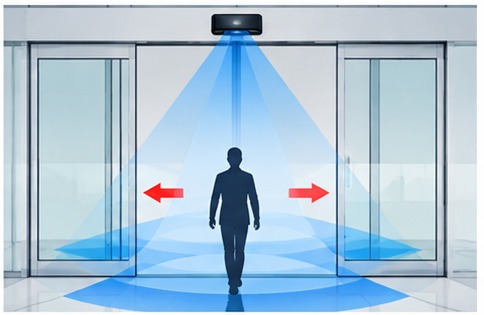
أجهزة التفعيل تطلب فتح الباب وقد تشمل اكتشاف الحركة أو أزرار الضغط أو مفاتيح بدون لمس أو قارئات بطاقات أو إشارات تحكم أخرى متوافقة. أجهزة استشعار الوجود والحماية تراقب منطقة المشاة ويمكن أن تساعد في منع الإغلاق غير الآمن أثناء بقاء شخص في المنطقة المحمية.
قد يتم أيضًا اختيار الزجاج الأمني المقسى أو المقسى والملصق وفقًا لمتطلبات المشروع. اعتمادًا على المشغل وتكوين المدخل، قد تتوفر التشغيل اليدوي أو وظائف الفتح للخروج أو النسخ الاحتياطي للبطارية أو التشخيص أو أحكام الطوارئ الأخرى.
المواد والبناء
أنواع الزجاج المستخدم
قد تستخدم الأبواب الزجاجية الأوتوماتيكية زجاجًا مقسى أو ملصقًا أو معزولًا أو زجاجًا آخر خاصًا بالمشروع اعتمادًا على السلامة والأمان والأداء الحراري وأبعاد الألواح وسعة المشغل والمتطلبات المعمارية.
الزجاج المقسى تتم معالجته حراريًا لزيادة قوته مقارنة بالزجاج الملدن العادي. عند كسره، تم تصميمه ليتفتت إلى قطع صغيرة نسبيًا بدلاً من شظايا كبيرة حادة.
الزجاج الملصق يستخدم طبقتين أو أكثر من الزجاج مرتبطة بطبقة وسيطة. عند كسره، يمكن أن تساعد الطبقة الوسيطة في الاحتفاظ بشظايا الزجاج، مما يجعله مفيدًا حيث يكون الاحتفاظ بالشظايا أو الأمان أو الأداء الصوتي مهمًا.
الزجاج المعزول يستخدم ألواحًا متعددة مفصولة بتجويف محكم. يمكن أن يحسن الأداء الحراري مقارنة بالزجاج المفرد الأساسي عند استخدامه كجزء من مدخل خارجي مصمم بشكل صحيح.
لا يوجد نوع زجاج واحد هو الأفضل تلقائيًا لكل باب أوتوماتيكي. تعتمد المواصفات المناسبة على المشروع وحجم اللوح ووزنه وتوافق المشغل والتعرض الخارجي والمتطلبات الحرارية واحتياجات السلامة والتصميم المعماري.
اعتبارات هياكل الإطارات للأبواب الزجاجية الأوتوماتيكية
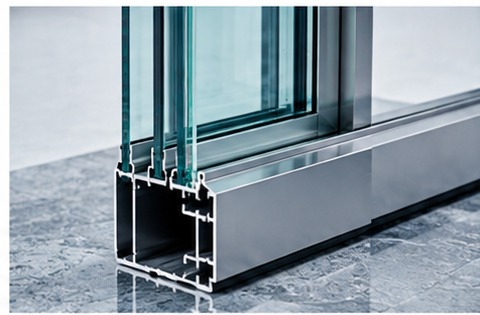
يؤثر بناء الإطار على الدعم الهيكلي والمظهر وأداء الطقس والإحكام والسلوك الحراري. يُستخدم الألومنيوم عادةً للمداخل الزجاجية الأوتوماتيكية التجارية لأنه يوفر وزنًا منخفضًا نسبيًا ومقاومة للتآكل ومرونة معمارية.
للمداخل الخارجية الأبواب الأوتوماتيكية الموفرة للطاقة, ، يجب على المشترين النظر في المدخل الكامل بدلاً من الزجاج وحده. يمكن أن تشمل العوامل ذات الصلة فواصل الإطار الحرارية والحشوات المحيطية والحشيات ومواصفات الزجاج وحالة العتبة والتعرض للطقس والصرف ومدة فتح الباب.
يجب أن يدعم الإطار والعتبة العلوية أيضًا الزجاج والمشغل الأوتوماتيكي والمسارات والأجهزة والأحمال الأخرى المحددة للمدخل.
ضمان السلامة باستخدام الزجاج عالي القوة
الزجاج الأمني هو جزء مهم من المدخل الزجاجي الأوتوماتيكي. يتصرف الزجاج المقسى والملصق بشكل مختلف عند تلفه، لذلك يجب أن تتوافق المادة المختارة مع متطلبات المشروع.
تم تصميم الزجاج المقسى ليتفتت إلى قطع أصغر عند كسره. يمكن أن ينكسر الزجاج الملصق بينما تساعد الطبقة الوسيطة في تماسك الشظايا. لذلك من غير الدقيق القول بأن الزجاج الملصق لا يمكن أن ينكسر أو أن الزجاج المقسى يتصرف تمامًا مثل الزجاج الأمامي الملصق للسيارة.
قبل الطلب، يجب على المشترين تأكيد سمك الزجاج وأبعاد الألواح ومتطلبات الزجاج الأمني ومتطلبات الأمان والتعرض للرياح الخارجية حيثما ينطبق والتوافق مع أجهزة الباب الأوتوماتيكي والمشغل المختار.
مواصفات الأبواب الزجاجية الأوتوماتيكية التي ينبغي للمشترين تأكيدها
نظرًا لأن سعة المشغل والمواصفات التقنية تختلف حسب النظام، يجب على المشترين التجاريين الحصول على بيانات تقنية خاصة بالمشروع بدلاً من افتراض أن مواصفة واحدة تنطبق على كل باب زجاجي أوتوماتيكي.
| المواصفات | ما يجب على المشتري تأكيده |
|---|---|
| الفتحة الصافية | Width × height |
| Door Configuration | Single slide, bi-parting, telescopic, swing, folding, or another configuration |
| Glass | Tempered, laminated, insulated, Low-E, or other specified glazing |
| Frame | Aluminum, stainless steel, or specified architectural finish |
| Panel Weight | Maximum weight supported by the selected operator |
| Opening / Closing Operation | Required operating behavior and adjustable settings |
| Activation | Motion detection, push button, touchless switch, card reader, or access control |
| Protective Sensing | Pedestrian presence and protected-area requirements |
| مصدر الطاقة | Voltage, phase, and frequency |
| التحكم في الوصول | Electric locking, card reader, security, or BMS requirements |
| التشغيل في حالات الطوارئ | Manual movement, breakout, backup power, or project-specific requirements |
| التركيب | Header support, wiring, clearances, fixing conditions, and site preparation |
التركيب والصيانة
عملية التركيب وفوائد الأنظمة المجمعة مسبقًا
Factory-prepared or partially assembled entrance systems can simplify some stages of site installation when the product and project allow this approach. Factory preparation can also improve manufacturing consistency and allow some components to be checked before shipment.
However, an automatic glass door still requires project-specific site work. Typical requirements can include structural preparation, header support, fixing and alignment, electrical connection, sensor positioning, access-control wiring, door-panel adjustment, controller configuration, operational testing, and safety checks.
Buyers should confirm which parts are delivered assembled, which work must be completed locally, and who is responsible for mechanical installation, electrical work, commissioning, and final testing.
اعتبارات الصيانة لطول العمر
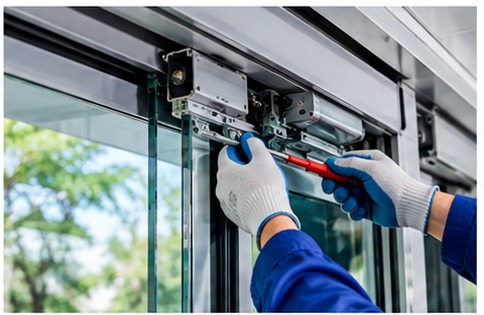
Regular maintenance helps automatic glass doors continue to operate consistently. Maintenance may include cleaning tracks and guide areas, cleaning glass panels, checking rollers and moving components, inspecting door alignment, testing activation devices, testing protective sensors, reviewing access-control functions, inspecting seals and hardware, and checking controller fault information where available.
Maintenance frequency should follow the selected manufacturer’s instructions and reflect traffic volume and operating environment. High-traffic commercial entrances generally require more frequent inspection than low-use doors.
فوائد الأبواب الزجاجية الأوتوماتيكية
الاستفادة من الضوء الطبيعي وكفاءة الطاقة
Glass entrances can increase daylight and visual connection between indoor and outdoor spaces, supporting the open appearance used in many modern commercial buildings.
Energy performance depends on much more than the presence of glass or an automatic operator. Pedestrian traffic, hold-open time, opening width, glazing, frame construction, seals, vestibule design, climate, and HVAC conditions all influence air exchange and heat transfer.
كيف يمكن للأبواب الأوتوماتيكية الموفرة للطاقة تقليل التبادل غير الضروري للهواء
For exterior commercial entrances, several design choices can support better energy performance:
- Appropriate hold-open time: the door should remain open long enough for safe passage without staying open unnecessarily.
- Correct opening width: the required pedestrian opening should be provided without unnecessarily exposing a larger area.
- Insulated or Low-E glazing: selected glazing can improve thermal performance where appropriate.
- Thermally improved framing: exterior frame design can influence heat transfer and condensation.
- Perimeter sealing: suitable seals help control unwanted air leakage when the entrance is closed.
- Vestibule design: some buildings use a vestibule to reduce direct indoor/outdoor air exchange.
- Correct activation zones: properly configured activation can reduce unnecessary opening caused by traffic outside the intended approach area.
The actual savings of an energy efficient automatic door depend on building conditions and usage, so a universal energy-saving percentage should not be assumed.
تحسين الجماليات وإمكانية الوصول
Automatic glass entrances combine architectural transparency with hands-free operation. They can make entrances easier to use for people carrying goods, pushing carts, using mobility aids, or otherwise benefiting from automated access.
However, accessibility depends on the complete installed entrance. Clear opening, threshold, controls, opening timing, door movement, and surrounding circulation space must meet applicable requirements for the project location.
تحسين ميزات السلامة والأمان
Pedestrian safety and building security are related but separate design requirements. An automatic entrance may use protective sensing and controlled door movement for pedestrian protection, while security functions may use electric locks, access-control readers, time schedules, security-system integration, monitoring signals, or specified security glazing.
Motion activation alone should not be described as a complete pedestrian-safety or security system. The proposed sensor arrangement and controller response should be confirmed for the actual entrance.
اعتبارات التكلفة
العوامل المؤثرة في تكلفة الأبواب المنزلقة الأوتوماتيكية
The cost of automatic sliding glass doors depends on the complete entrance configuration rather than the opening size alone. Buyers should compare the same technical scope when evaluating supplier quotations.
Material and Design: Glass type, frame material, architectural finish, hardware, and custom fabrication can affect cost.
Size and Configuration: Single sliding, bi-parting, telescopic, swing, and frameless arrangements require different components and hardware.
Door Operator: Operator requirements depend on the panel dimensions, panel weight, configuration, and intended operation.
Activation and Protective Sensors: A simple opening signal differs from a system with multiple protective sensors, touchless controls, access-control integration, or other specialized functions.
Glass Specification: Tempered, laminated, insulated, Low-E, switchable, or project-specific glazing can affect both panel weight and cost.
Access Control and Security: Electric locking, card readers, security-system integration, and monitoring functions can increase system complexity.
التركيب: Structural preparation, electrical work, wiring, mounting, adjustment, commissioning, and other site conditions affect the total installed cost.
الصيانة: High-traffic commercial entrances may require more frequent inspection and replacement of wear components.
For an accurate quotation, provide the supplier with the actual opening dimensions, quantity, configuration, glass requirements, activation and safety requirements, power supply, installation conditions, and destination.
القيمة طويلة الأجل للاستثمار
The long-term value of an automatic glass entrance depends on how well the selected system matches the building and traffic conditions.
A correctly specified system can support efficient pedestrian flow, hands-free access, controlled entrance operation, architectural transparency, access-control integration, and appropriate thermal performance. However, buyers should avoid assuming a fixed energy payback or maintenance saving without project-specific data.
Operator quality, installation, usage frequency, maintenance, sensor adjustment, replacement-parts availability, glass specification, and local service support can all influence total ownership cost.
المشكلات الشائعة والحلول
معالجة مشكلات المحاذاة والخدوش
Automatic sliding glass doors can develop operating problems if tracks become contaminated, rollers wear, panels move out of alignment, or hardware becomes loose. Possible symptoms include uneven movement, abnormal noise, door-panel contact, reduced clear opening, controller faults, or irregular closing.
Routine cleaning and inspection can help identify these issues early. If misalignment continues after basic cleaning and inspection, qualified technical personnel should check the system instead of repeatedly adjusting components without identifying the underlying cause.
Glass scratches are a separate issue. Minor cosmetic marks may sometimes be assessed by a glazing specialist, while deep scratches, chips, cracks, or edge damage may require replacement. Damaged safety glazing should be professionally evaluated before deciding whether it remains suitable for use.
أهمية التركيب الاحترافي
Automatic glass doors combine structural, mechanical, electrical, glazing, sensing, and control components. Incorrect installation can lead to poor alignment, abnormal wear, unreliable sensors, electrical problems, or unsafe door movement.
Professional installation should address header support, operator mounting, panel alignment, track level, electrical connection, sensor positioning, access-control integration, operating settings, protective sensing, emergency functions, and final operational testing.
Installation should also follow the applicable building, electrical, accessibility, glazing, and automatic-door requirements for the project location.
الاتجاهات المستقبلية في الأبواب الزجاجية الأوتوماتيكية
الابتكارات في التحكم الذكي بالخصوصية
Switchable glazing is increasingly available for architectural projects requiring flexible privacy. Offices, meeting rooms, healthcare spaces, and hospitality environments may use electrically controlled glazing when users need to alternate between transparency and privacy.
Selected systems may also integrate privacy control with broader building-management or room-control systems. The technology should be selected because it solves an actual privacy, daylight, or operational requirement rather than simply because it is a newer feature.
تحسين كفاءة الطاقة وتكامل الأتمتة
Future automatic entrance development is likely to place greater emphasis on connected controls, diagnostics, access management, efficient operators, and integration with wider building systems.
Depending on the selected controller and project, integrations may include building-management systems, access control, security systems, remote monitoring, door-position feedback, and maintenance diagnostics.
Claims involving AI, energy reduction, predictive operation, or real-time optimization should be based on the capabilities of the actual selected operator and control platform rather than applied to all automatic glass doors.
الخاتمة
ملخص الفوائد للمباني الحديثة
Automatic glass doors can provide an effective combination of automated pedestrian access and transparent architectural design for modern commercial buildings.
Depending on the configuration, they can support frequent pedestrian traffic, hands-free entrance operation, accessibility-oriented design, natural light, access-control integration, safety sensing, and appropriate thermal performance.
The performance of the final entrance depends on the complete system: glazing, framing, operator, controls, sensors, hardware, supporting structure, installation, and maintenance.
العوامل الواجب مراعاتها عند اختيار أنظمة الأبواب الزجاجية الأوتوماتيكية
Selecting an automatic glass door should begin with the operational and building requirements rather than with appearance alone.
آليات الباب
Choose the operating configuration according to available space and pedestrian traffic. Sliding doors are commonly used for busy commercial entrances. Telescopic systems can maximize the clear opening where stacking space is limited, while automatic swing doors may be more appropriate for some existing hinged entrances.
جودة الزجاج ومعايير السلامة
Confirm the required safety glazing and select the glass according to the actual project. Options may include tempered, laminated, insulated, Low-E, tinted, frosted, switchable, or other specified glazing. The correct choice depends on interior or exterior use, panel dimensions, thermal performance, security, safety, and operator capacity.
أجهزة الاستشعار وميزات الأتمتة
It is useful to separate automation requirements into three groups:
- Opening activation: motion detection, push button, touchless switch, card reader, or other access signal.
- Pedestrian protection: presence detection and door-zone monitoring.
- Building integration: electric locking, security systems, BMS signals, and door-position feedback.
This helps suppliers prepare comparable technical quotations and prevents opening sensors from being confused with protective devices.
كفاءة الطاقة والاستدامة
For an exterior entrance, energy performance should be evaluated as part of the building system. Consider hold-open time, glazing, thermal frame design, perimeter seals, vestibule configuration, pedestrian traffic, local climate, and HVAC conditions.
الصيانة وطول العمر
Ask the supplier about the recommended inspection schedule, wear components, rollers, sensors, operator parts, controller support, warranty scope, and local maintenance arrangements. A lower initial equipment price may not provide the lowest long-term cost if spare parts or service are difficult to obtain.
الجماليات وخيارات التخصيص
Automatic glass entrances may be customized with different frame finishes, glass types, glass colors, frosting, sidelites, transoms, door-panel layouts, and architectural details. Customization should remain compatible with the selected operator, panel weight, hardware, and entrance structure.
المعلومات الواجب تقديمها للحصول على عرض سعر لباب زجاجي أوتوماتيكي تجاري
To obtain a more accurate project quotation, prepare the following information:
- عرض الفتحة × الارتفاع
- الكمية
- 安装环境
- Interior or exterior application
- Preferred door configuration
- Glass requirements
- Frame requirements
- Expected pedestrian traffic
- Activation method
- Protective-sensor requirements
- Access-control requirements
- مزود الطاقة
- Site photographs or drawings
- Destination country
- Preferred trade terms: EXW, FOB, CIF, or DDP
A complete project brief helps the supplier select an appropriate operator, glazing, frame, sensors, and control configuration instead of quoting a generic automatic entrance.
Contact SEPPES for a project-specific quotation and include your opening dimensions, quantity, application, and destination.
الأسئلة الشائعة (FAQs)
ما هي خيارات التكوين المتاحة للأبواب الزجاجية الأوتوماتيكية التي يجب أن أفكر فيها؟
Common configurations include single sliding, bi-parting sliding, telescopic sliding, automatic swing, folding, and other project-specific entrance designs. The correct choice depends on available wall space, clear opening, pedestrian traffic, panel weight, sidelites, emergency requirements, and the building layout.
If partial or full breakout functionality is required, confirm that the selected entrance system is specifically designed for that function instead of assuming that it is included with every automatic sliding door.
ما هي ميزات الباب التي تجعل الأبواب الزجاجية المنزلقة الأوتوماتيكية عالية الأداء؟
A commercial automatic sliding glass door should be evaluated as a complete system. Relevant features can include suitable operator capacity, a durable track and roller system, correct panel alignment, adjustable operating settings, reliable activation, appropriate protective sensing, safety glazing, suitable frame construction, access-control compatibility, and diagnostics where supported.
High performance should be defined according to the project rather than attributed to one component or feature.
هل الأبواب الزجاجية الأوتوماتيكية التلسكوبية مناسبة للمداخل الضيقة والتطبيقات التجارية؟
Telescopic systems can be useful where a wider clear opening is required but the available stacking space is limited. Multiple sliding panels overlap as the door opens, allowing the entrance to use available side space differently from a conventional single sliding system.
The operator, panel weights, guides, sensors, supporting structure, and maintenance requirements should all be confirmed for the telescopic configuration.
ما هي الخيارات المتاحة للجمع بين التشغيل الأوتوماتيكي واليدوي؟
Available manual and emergency functions depend on the selected operator and door configuration. Some systems may allow manual sliding during a power interruption, while others use breakout functions or other emergency arrangements. Backup power may also be available for selected systems.
Do not assume that every automatic entrance provides the same manual operation or emergency sequence. Confirm the exact function with the selected manufacturer.
كيف تؤثر وظائف الفتح الكامل والفتح الكامل للطوارئ على السلامة والصيانة؟
Breakout systems allow specified panels to release or move in another direction when designed for emergency egress or another project requirement. Full breakout can involve additional hinges, pivots, latches, and hardware compared with a standard sliding entrance.
These components require inspection and maintenance according to the selected system. The required breakout function should therefore be defined before ordering because it affects the complete entrance configuration.
ما الذي يجب أن أعرفه عن مصدر الطاقة والتركيب وضمان التوافق؟
Before ordering an automatic glass door, confirm the required voltage, phase, and frequency together with header support, operator space, wiring routes, sensor mounting locations, panel weight, access-control interface, and emergency requirements.
The selected operator must be suitable for the specific sliding, telescopic, swing, or other door configuration. Installation should also account for structural support and any required connections to access-control, security, fire, or building-management systems.
كيف أختار خيارات التصميم والميزات القابلة للتخصيص لأبواب الفناء والمداخل؟
For commercial or premium entrance projects, start with the technical requirements and then select architectural options. These may include aluminum or stainless-steel finishes, tempered glass, laminated glass, insulated glazing, Low-E coatings, tinted or frosted glass, sidelites, transoms, security glazing, and switchable privacy glass.
A heavy or complex glazing specification should not be finalized before confirming that the selected operator and hardware can support the resulting panel weight.
ما هي خطوات استكشاف الأخطاء وإصلاحها وممارسات الصيانة الشائعة للحفاظ على تشغيل الأبواب الزجاجية المنزلقة الأوتوماتيكية؟
Basic inspection can include confirming that power is available, checking the doorway for physical obstructions, cleaning tracks, visually checking sensors, reviewing door alignment, and checking controller fault information where available.
Protective sensors should not be disabled and controller settings should not be repeatedly altered simply to keep a faulty entrance running. Continuing faults, damaged glazing, abnormal movement, or safety concerns should be inspected by qualified personnel.
المصادر المرجعية
- 自动平移门监控系统的开发与实施 – 侧重于自动平移门及相关技术。.
- 旋转门技术在减少阿拉斯加安克雷奇能源损失中的应用 – Discusses energy efficiency in entrance systems.