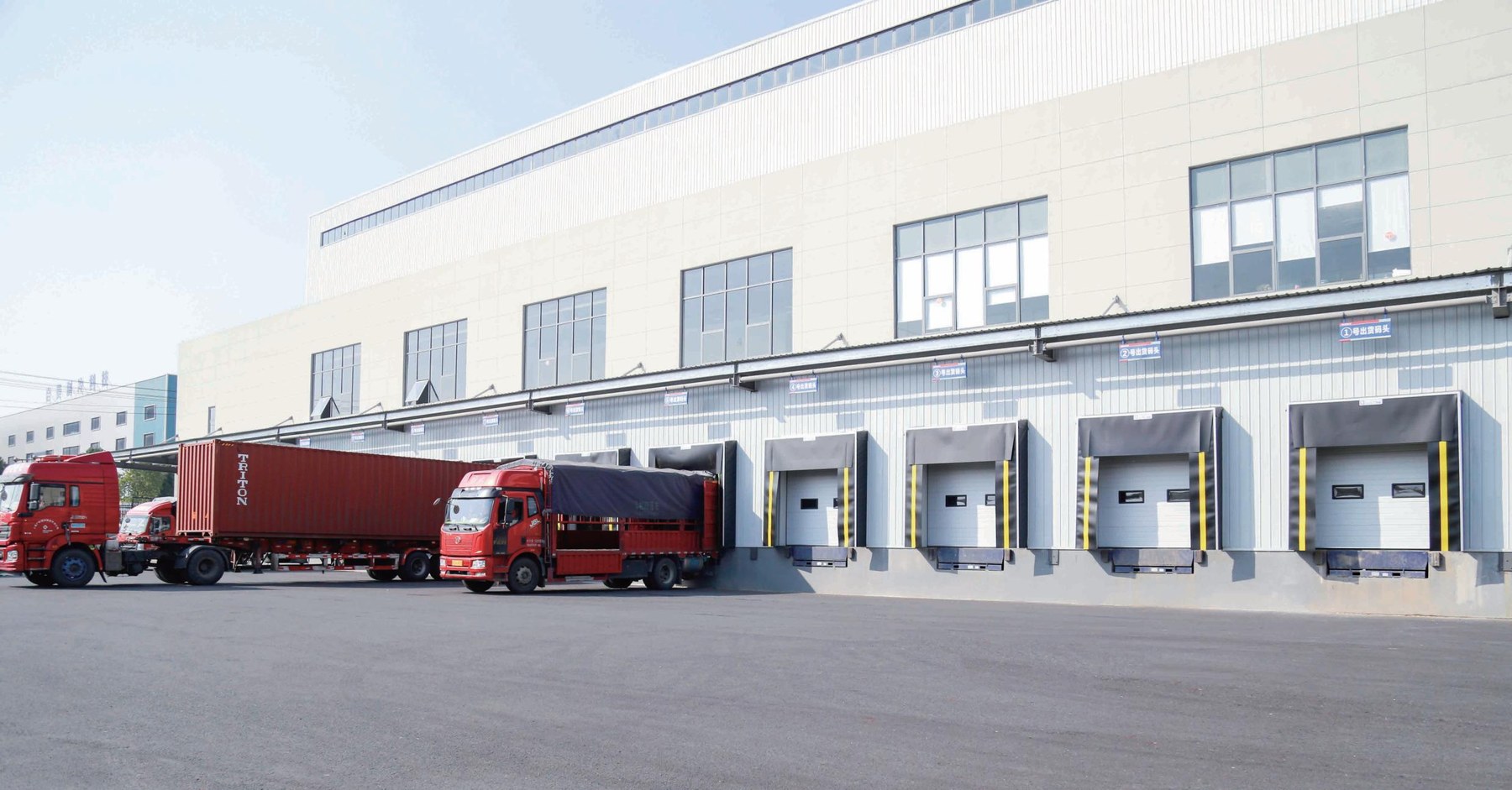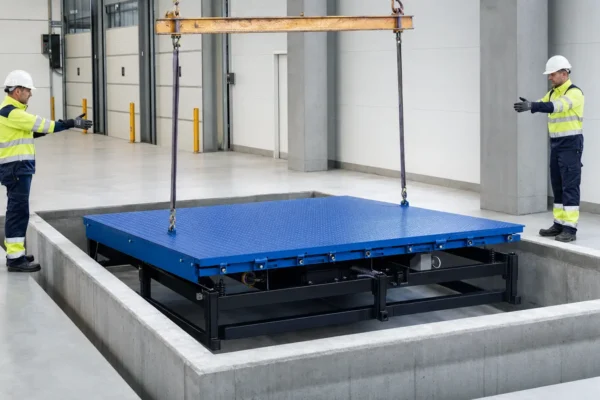
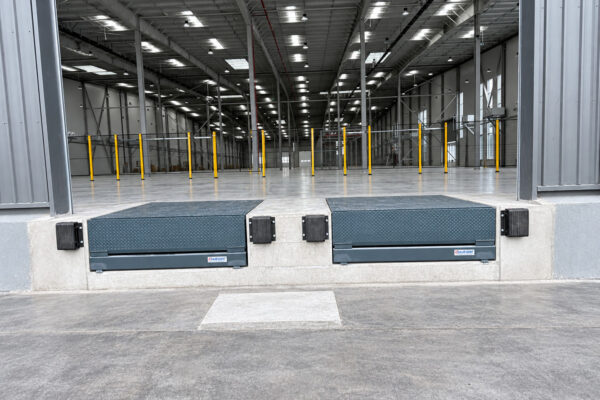
Choosing dock leveler equipment is not only a question of platform size or rated capacity. Hydraulic, mechanical and air-powered dock levelers all bridge the gap between a warehouse floor and a truck bed, but they use different lifting systems and create different trade-offs in operator effort, maintenance, initial investment and automation potential.

According to ANSI guidance, a dock leveling device is designed to span and compensate for the space and height difference between a stationary loading dock and a transport vehicle so freight can be transferred efficiently. The current U.S. performance and testing standard is ANSI MH30.1-2022.
The practical buying question is therefore not “Which type is universally best?” It is: Which operating system best matches your truck traffic, loading frequency, maintenance resources, budget and future control requirements?
For high-frequency logistics centers and manufacturing plants, hydraulic dock levelers are usually the strongest starting point. Mechanical units can make sense for simpler, lower-cycle docks where initial cost matters most. Air-powered designs sit between the two when powered operation is desired without a hydraulic lifting circuit.
Hydraulic vs Mechanical vs Air-Powered Dock Levelers: Quick Comparison
The table below summarizes the main differences. Cost and duty-cycle descriptions are relative rather than fixed rules because actual specifications vary by capacity, platform size, controls, manufacturer and project conditions.
| 项目 | 液压船坞平整机 | 机械式码头平整机 | 气动式卸货平台高度调节板 |
|---|---|---|---|
| 运行 | Powered push-button operation | Manual, spring / counterbalance assisted | Powered push-button operation |
| Typical upfront cost | Usually higher | Usually lower | Usually mid-range |
| Operator effort | 低 | 更高 | 低 |
| Power source | Electric motor + hydraulic power pack | Basic operation normally needs no electrical power | Electric blower / air system |
| High-frequency use | Strong fit | Better for lower-to-moderate cycles | Good for moderate powered operation |
| Main maintenance focus | Hydraulic fluid, seals, hoses, cylinders, power unit | Springs, chains, hold-downs, pivots, counterbalance parts | Airbag / bellows, blower, hose, filter, mechanical lip parts |
| Automation / interlocking | Strong potential | More limited because core operation is manual | Good potential for powered controls |
| Hydraulic fluid in lifting system | 是 | 无 | 无 |
| Best starting fit | Busy logistics, manufacturing, high-cycle docks | Simple lower-cycle docks with tighter initial budget | Powered moderate-cycle docks where non-hydraulic lifting is preferred |

How the Three Dock Leveler Types Work


All three systems ultimately need to create a stable transition from dock floor to trailer bed. However, how the deck gets there changes the operator experience, service requirements and ability to integrate the leveler into a wider loading-bay control sequence.
What Is a Hydraulic Dock Leveler?
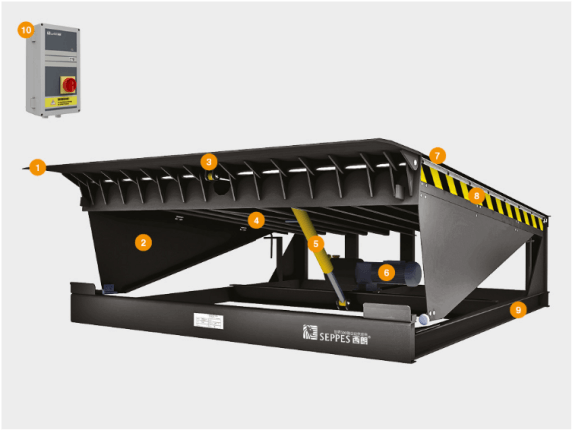
A hydraulic dock leveler uses an electric motor, hydraulic pump and one or more cylinders to raise the deck and operate the lip. The operator normally starts the cycle from a control station, which reduces the physical effort associated with manual deck activation.
For frequent loading environments, this powered operation is one reason hydraulic systems are widely selected for warehouses, distribution centers and manufacturing plants.
SEPPES currently offers a 液压码头平整机 with project-based options for platform size, rated capacity, controls and loading-bay integration.

优势
- Push-button powered operation
- Low operator effort
- Well suited to frequent truck loading
- Strong potential for door, restraint and PLC interlocking
- Available in different capacities and control configurations
Points to Consider
- Usually higher initial investment than a simple mechanical model
- Requires electrical power
- Hydraulic hoses, seals, cylinders and fluid need inspection
- Installation should match the approved pit and electrical design
If you are planning a hydraulic installation, the SEPPES dock leveler installation guide covers pit dimensions, truck heights, forklift data, voltage and commissioning checks.
What Is a Mechanical Dock Leveler?
A mechanical dock leveler uses springs and a counterbalance mechanism to help lift the deck. A pull chain or release mechanism typically activates the leveler, after which the operator positions the platform onto the trailer.
Because basic operation does not depend on an electric hydraulic power pack, a mechanical leveler can be attractive where the buyer wants a simpler system and lower initial equipment cost.
优势
- Usually the lowest upfront cost of the three main pit-leveler types
- Basic operation can avoid an electrical power requirement
- Long-established mechanical design
- Suitable for many lower-frequency loading docks
Points to Consider
- More physical operator involvement
- Springs and hold-down components need adjustment and inspection
- Less convenient for very high-cycle truck traffic
- Manual operation can limit integration with automated loading sequences
Mechanical does not automatically mean “low quality.” It simply means the operating concept is different. For a facility handling limited truck movements per day, the simplicity may be more valuable than powered automation.
What Is an Air-Powered Dock Leveler?
An air-powered dock leveler uses a blower to inflate an airbag or bellows beneath the deck. The expanding air system raises the platform, while the lip is positioned for contact with the trailer.
The ANSI Blog describes air dock levelers as push-button systems in which an airbag inflates to raise the deck and then deflates as the platform lowers onto the truck bed. You can review that overview in ANSI's dock leveling device guidance.
优势
- Push-button powered operation
- No hydraulic fluid in the lifting system
- Lower operator effort than a manual mechanical leveler
- Can provide a middle ground between mechanical simplicity and powered operation
Points to Consider
- Requires blower / air-system power
- Airbag, blower, hose and filters still require inspection
- Final duty rating depends on the specific manufacturer and model
- Service familiarity may vary by region
Which Type Is Easiest to Operate?
For operator convenience, hydraulic and air-powered dock levelers have an advantage because both can use push-button activation.
Mechanical units require more operator involvement. In a loading bay that cycles only occasionally, that difference may be minor. In a distribution center where the leveler operates repeatedly across multiple shifts, the accumulated effect on workflow and operator effort becomes much more important.
A small manual step repeated five times a day is different from the same step repeated hundreds of times across a high-volume dock operation.
Initial Cost vs Total Cost of Ownership
Mechanical dock levelers are often selected for their lower initial cost. Hydraulic levelers normally require a higher upfront investment because they include the hydraulic power unit, cylinders and electrical controls. Air-powered levelers usually sit between the two, although actual pricing depends on model, capacity and local supply.
But purchase price is only one part of the decision. Buyers should also consider:
- daily operating cycles;
- operator time;
- service labor;
- replacement parts;
- downtime cost;
- automation requirements;
- expected facility life;
- future expansion.
A lower-cost leveler is not automatically less expensive over ten years if the site later needs higher throughput or more automation. Likewise, an advanced hydraulic system can be unnecessary for a dock used only a few times per day.
How Maintenance Differs by Dock Leveler Type
液压式
- Check hydraulic fluid
- Inspect cylinders and seals
- Inspect hoses and fittings
- Check power unit and controls
- Inspect structural pivots and deck
机械式装卸平台
- Inspect springs
- Check chains and hold-down assembly
- Lubricate pivots
- Check lip activation parts
- Verify counterbalance condition
Air-Powered
- Inspect airbag / bellows
- Check blower and filter
- Inspect air hoses
- Check lip mechanism
- Inspect pivots and deck structure
Whichever system you choose, scheduled inspection matters more than the label on the equipment. See the SEPPES dock leveler maintenance guide for a broader inspection framework.
Which Dock Leveler Is Best for High-Frequency Loading?
For high-frequency truck traffic, hydraulic levelers are usually the strongest starting point because the cycle is powered, consistent and easier to integrate into controlled loading sequences.
Mechanical levelers are more attractive when loading frequency is lower and the facility accepts manual operation in exchange for lower initial cost.
Air-powered systems can suit moderate-frequency operations that still want push-button activation while avoiding a hydraulic lifting circuit.
Which Type Is Better for Automation and Interlocking?
Hydraulic and air-powered levelers are easier to integrate into powered loading-bay control logic because their operation already depends on electrical controls.
For example, a hydraulic loading bay can be engineered around a sequence such as:
Mechanical levelers can still be used safely, but the manual operating mechanism means the core leveler cycle is less suited to full automated sequencing.
For complete system planning, see the SEPPES loading dock equipment range 和 loading dock application solution.
How to Choose the Right Dock Leveler Type

Choose Hydraulic When...
- The dock handles frequent daily truck traffic.
- Low operator effort and push-button operation are priorities.
- The project may require door, restraint or control interlocking.
- The buyer wants a strong platform for future automation.
Choose Mechanical When...
- Truck cycles are lower or moderate.
- Initial budget is a major constraint.
- Manual operation is acceptable.
- The buyer prefers a simple system without hydraulic or blower power.
Choose Air-Powered When...
- Push-button powered operation is preferred.
- The buyer wants to avoid hydraulic fluid in the lifting mechanism.
- Traffic is moderate and an airbag / blower system fits local service capability.
- The project needs a powered middle-ground option.
Safety and Standards Still Apply to Every Type
Choosing hydraulic, mechanical or air-powered operation does not remove the need to verify rated capacity, trailer movement control, inspection and proper operating procedures.
In the United States, OSHA 29 CFR 1910.26 requires dockboards to support the maximum intended load and requires measures to prevent transport vehicles from moving while employees are using the dockboard.
ANSI MH30.1-2022 also provides performance and testing guidance for dock leveling devices and is intended to provide a uniform basis for comparison.
If safety is a major part of your purchasing review, also read the SEPPES dock leveler guide and our dock leveler installation checklist.
5 Common Buying Mistakes
1. Choosing Only by Purchase Price
A lower upfront price can be attractive, but it should be compared with operator effort, expected cycles, downtime risk, service costs and future automation plans.
2. Choosing Capacity from Cargo Weight Alone
The loading system carries the forklift or pallet truck as well as the cargo. The operating weight and real traffic conditions should be supplied to the manufacturer.
3. Ignoring the Truck-Bed Height Range
A leveler must work across the actual lowest and highest trailer-bed heights expected at the dock. Platform length and dock height directly affect the operating angle.
4. Ignoring Maintenance Capability
A technically suitable product can still become a poor choice if replacement parts or qualified local service are difficult to obtain.
5. Buying the Leveler Separately from the Loading Bay
The industrial door, dock shelter, bumpers, restraints and leveler should be reviewed as one system whenever the loading bay is being built or upgraded.
Which Type Does SEPPES Recommend?
For many logistics centers, factories and high-frequency warehouses, SEPPES normally starts the discussion with a hydraulic dock leveler because powered operation, capacity options and control integration match the needs of frequent industrial loading.
That does not mean hydraulic is automatically the right answer for every dock. A low-cycle facility with a limited budget may have a different priority. The correct selection should be based on the project rather than the product name.
Information to Send for a Dock Leveler Recommendation
- Dock height
- Pit width × length × depth
- Minimum and maximum truck-bed height
- Forklift / AGV weight
- Maximum cargo weight
- Daily loading cycles
- 电源
- Destination country
- Required safety devices
- Any door, PLC or automation interlocking requirements
Need Help Choosing Dock Leveler Equipment?
Send your pit dimensions, truck-bed range, forklift weight, required capacity and loading frequency. SEPPES can review whether a hydraulic dock leveler fits your warehouse or loading-bay project.
View Hydraulic Dock Leveler Request an Engineering Quote常见问题
Is a hydraulic dock leveler better than a mechanical dock leveler?
Not in every application. Hydraulic is usually more convenient for frequent loading and powered control, while mechanical can be suitable for lower-cycle docks where a simpler and lower-cost system is preferred.
Which dock leveler type is best for high-frequency warehouses?
Hydraulic is usually the strongest starting point for high-frequency operations because it provides powered push-button control and strong integration potential. Final selection still depends on capacity, truck heights and actual cycles.
Do air-powered dock levelers use hydraulic fluid?
No. Air-powered levelers use an airbag or bellows and blower to raise the platform. They still contain mechanical components and require inspection of the air system.
Which dock leveler has the lowest initial cost?
Mechanical levelers are typically the lowest-cost starting option, although final price depends on platform size, capacity, installation, controls and supplier.
What information is needed before buying a dock leveler?
Provide pit dimensions, dock height, truck-bed height range, forklift or AGV weight, cargo weight, daily loading frequency, power supply and any automation or safety requirements.
Do all dock levelers use the same pit?
No. Pit dimensions and structural requirements depend on the model and manufacturer. Always use the approved project drawing rather than assuming one leveler can replace another without checking dimensions and support details.