
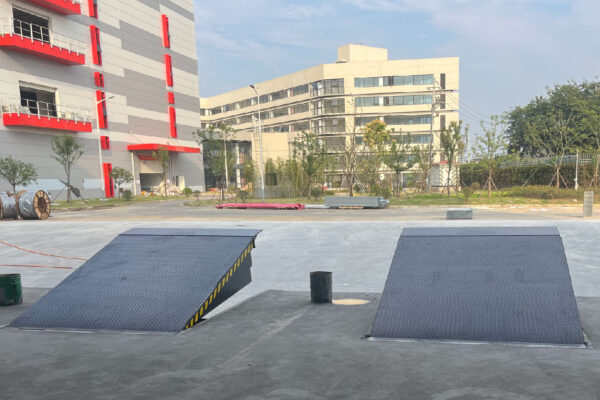
すべての倉庫、流通センター、および工業施設では、効率的かつ安全な荷役作業が必要です。これを実現する方法の一つが、ドックレベラーの設置です。このガイドでは、施設へのドックレベラー設置の段階的な手順と、その重要性について学びます。初めてドックレベラーを設置する場合でも、既存のものをアップグレードする場合でも、この記事は役立ちます。適切に設置されたドックレベラーは、生産性を向上させ、作業リスクを低減します。さあ、始めましょう!
ドックレベラー入門
Dock levelers help to close the gap between a transport vehicle and a loading dock. Without dock levelers, loading and unloading of products is both inefficient and dangerous. Employee safety is at high risk, as well as the safety of the products being loaded. Dock levelers help to make the transition seamless, as they help to eliminate the height differentials between the vehicle and the loading dock. Provided with high-quality materials, dock levelers help make the operations in a warehouse run more smoothly. They assist in making distribution operations more efficient as well. Excellent materials make the dock levelers built to last.
ドックレベラーの概要
There are three types of dock levelers: mechanical, hydraulic, and air-powered.
機械式ドックレベラー
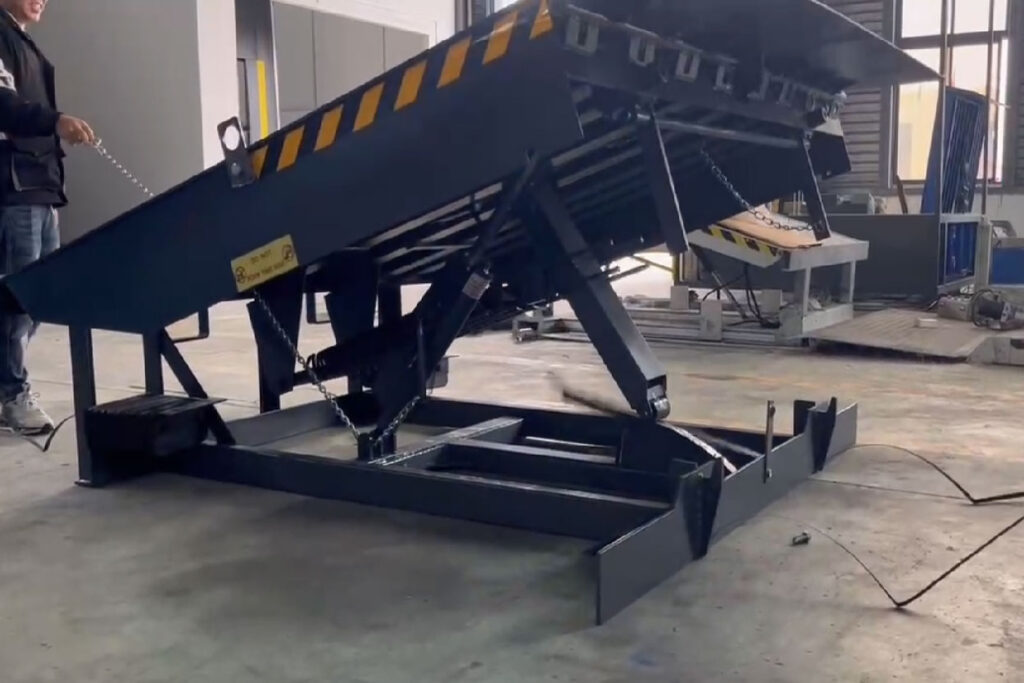
With mechanical dock levelers, you need to control the system manually using a lever or push button. You load the lever, and then the dock leveler goes up using a spring. These are the cheapest levelers and easiest to fix, so they are useful for businesses that do basic loading and unloading. Though they are basic, they create more work for the employees.
油圧式ドックレベラー
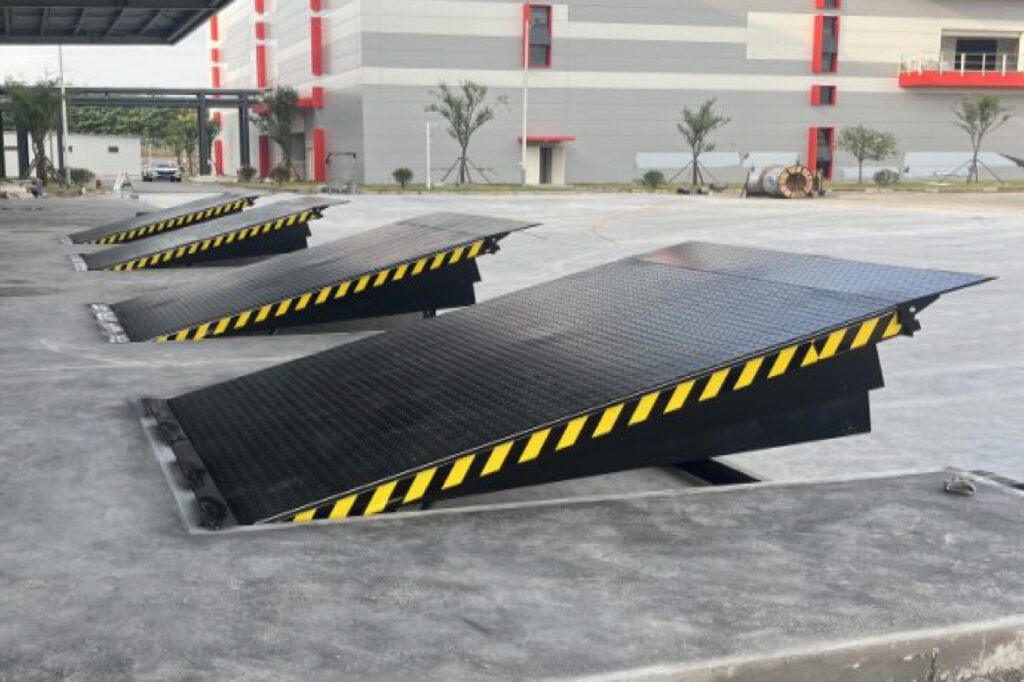
Dock levelers are the opposite of mechanical dock levelers. They do the most work for you and use a pump system to control the docks. They are the most durable of all, but they are also the most expensive. You should use these when you have a lot of heavy materials to load and unload, or when you have a large warehouse or distribution center. These also help the employees do their work better and more safely because they do not have to do so much manual work, and the docks can adjust automatically.
空圧式ドックレベラー
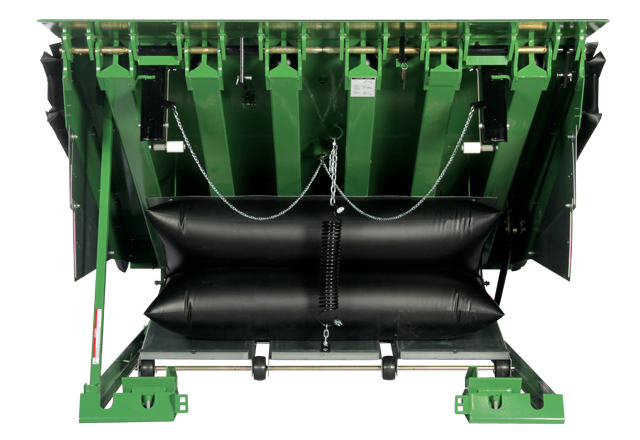
These dock levelers are a system that is more environmentally friendly than hydraulic or mechanical, as they use air bladders that can also be recycled. These use less energy than the others and do not require as much maintenance because they do not have mechanical parts.
With the ability to manage different load capacities, contemporary solutions offer added safety features, including lip extensions, control systems, heavy-duty materials to withstand high usage, and more. Depending on operational needs, anticipated volume, and budget, dock leveler types are selected by a facility. Combining innovation and functionality, these systems are the key to uninterrupted loading dock operations.
ドックレベラー設置の重要性
Accurate dock leveler installation ensures safe, efficient workstations by creating a secure bridge between the warehouse and transport vehicles. Modern designs with hydraulic automation improve safety, speed, and energy efficiency, while proper installation reduces wear, lowers maintenance costs, and extends the overall lifespan of the dock system.
物流におけるドックレベラー使用の利点
安全性の向上
Each Dock leveler closes the gap between the loading ramp and the transport vehicle. They provide a steady and secure surface for both loading and unloading. Deck levelers help eliminate the risk of accidents caused by tripping or falling.
生産性の向上
With the help of dock levelers, the overall unloading process can be improved, and operational downtimes will be lessened. Industry reports state that aw dock levelers can increase operational productivity by over 30% at key logistics centers.
適応性
Dock levelers fit any and every kind of truck and trailer combo. They will eliminate any potential problems that may be caused by the height of the vehicle, making your operations adaptable and flexible.
顧客損失の低減
Dock levelers help lessen the risk of customer loss by better protecting the insured items that are on the transport vehicle. Money will be saved by not having items insured on a transport vehicle.
利益率の向上
Long-term cost savings are heavily documented by facilities that utilize dock levelers. Enhanced operational efficiency, less damage to products, and less overall wear and tear on equipment will lead to better Profit Margins.
ドックレベラーの種類
油圧式ドックレベラー
Hydraulic dock levelers help bridge the gap between trucks and loading docks. With a few simple adjustments, they help complete loading and unloading tasks. They are tough enough to deal with heavy usage. Because of this, they make a great addition to even the highest capacity facilities.
More modern versions come with even more advanced features. They are more effective with their decreased ecological footprint and are often even more budget-friendly by being low-maintenance. They often come with features like energy dissipation, which helps slow the rapid fall of the levelers, and corrosion coating to help withstand the elements.
These dock levelers are best in the business and often the only versions suitable for manufacturing, distribution, and warehouse operations. With the many benefits of incorporating a hydraulic dock leveler into your facility, it is easy to see why they are often the first and most necessary additions for improving taste and overall logistics.
機械式ドックレベラー
If your company is looking for a durable, reliable, and easy solution for the loading and unloading process, then mechanical dock levelers make for a great investment. Because these levelers rely solely on a spring and lever system, there are no electrical or hydraulic components to break or produce costly maintenance needs. That also means they are fully powered by mechanical energy and do not need a source of electricity or energy at all. This makes them ideal for companies looking to conserve energy or for warehouses with restricted access to electricity.
In warehouses that are busy and heavy in their use, the robust mechanical dock levelers offer a wide variety of handling and shifting loads, and are built to last. Employees are even able to easily activate and shift the levelers themselves with an easy pull-chain mechanism. This also means fewer moving parts and contributes to the length of the levelers’ lifespan.
Ultimately, these dock levelers are great for the manufacturing, retail, and distribution industries because of the smooth bridge that the levelers create between the dock and the truck bed. Since there are no gaps between the dock and truck bed, there are no accidents caused by the leveler. Their reliability also contributes to the efficiency of the entire logistics system.
空圧式ドックレベラー
Air-powered dock levelers are efficient modern solutions for loading dock activities. These dock levelers use airbags or bellow systems, which help eliminate mechanical springs. This reduces maintenance while ensuring effective operation. These dock levelers also use a push-button activation for quick and safe operation while limiting manual activities for employees.
Since they are intended to handle tough jobs, air-powered dock levelers are sure to outperform at distribution centers, warehouses, and high-volume manufacturing plants. They are tough on the outside and usually have high-strength, low-friction parts on the inside. They are also energy efficient to help save money and decrease the overall manufacturing cost while ensuring durability.
With their emphasis on safe use, low-maintenance installation, and overall improved productivity, air-powered dock levelers have enhanced industries’ material handling systems.
エッジオブドックレベラー
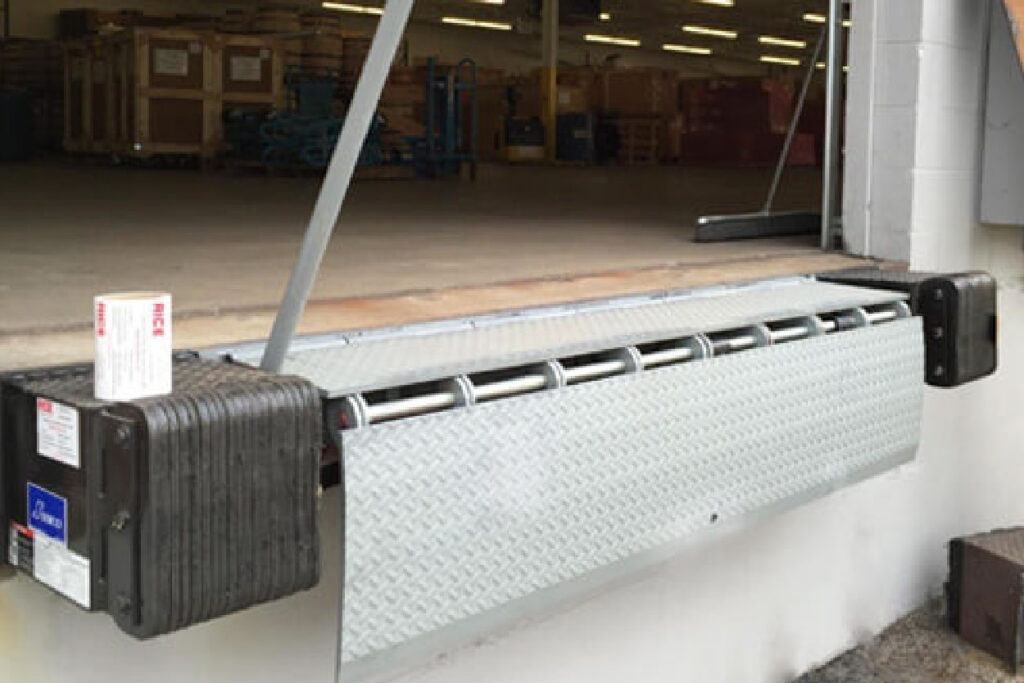
Bridging the gap between loading docks and trailer systems, edge-of-dock levelers streamline the process of moving goods in and out while providing efficiency in operations. Great for tight budgets and even tighter spaces, these levelers are mounted directly to the dock face, unlike large-sized pit levelers. Depending on the specific requirements of the operation, these levelers can be manually operated, run by hydraulics, or fully air powered.
Today’s edge-of-dock levelers are made from durable materials and built to withstand major daily wear and tear while keeping operators and workers safe. Hose-pull activation, multiple safety bumpers, and high trailer bump punctures are some of the many features added to adjustable bumpers to accommodate a wide spectrum of heights. Plus, with a more ergonomic construction, customers will notice designs aimed for less active maintenance that reduce downtime and are more optimized for function and durability.
For a high safety and high productivity solution for loading docks, these are the edge-of-dock levelers. They remain a consistent and reliable choice for maximizing productivity and ensuring safety at the loading docks.
設置前の検討事項
現場評価と計測
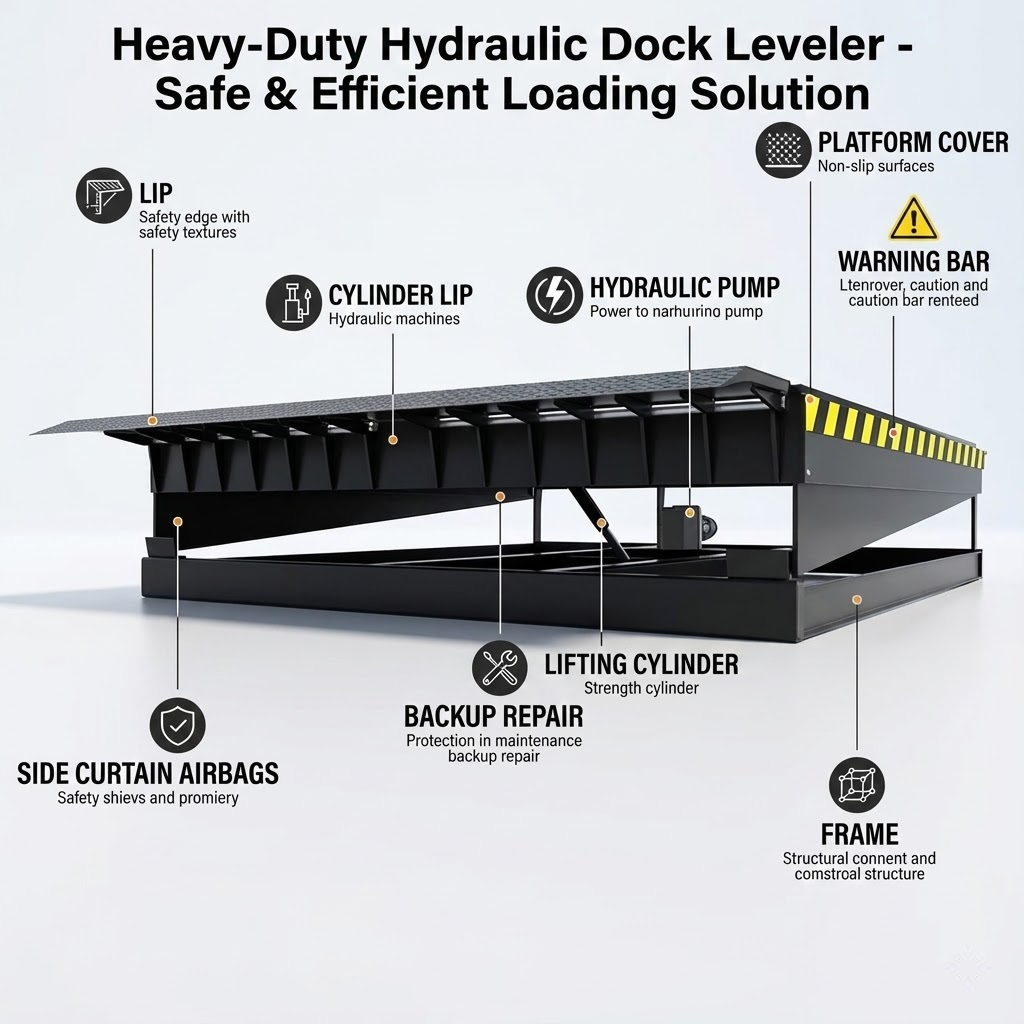
Proper measurements and site assessments help ensure that a dock leveler will fit correctly and work as planned. Start by assessing the dock’s dimensions, including the size and slope of the dock. Measure the dock height against the most frequently utilized trailers so that you can determine what size range your levelers need to be. Think about how often and what kinds of vehicles will be using the dock levelers, like box trucks and semi-trailers, to ensure your levelers will be operationally effective.
Look at the construction of the dock and see if it has obstructions or cracks that could affect the installation of the dock leveler. Know the volume and type of loads that will be pushed over the dock leveler with the equipment you will be using, like pallet jacks or forklifts. Environmental factors like humidity and extreme temperature need to be considered to make sure the coatings and materials the levelers are made of will hold up in your area.
Measurements and site assessments that are done correctly and in detail will ensure that your dock levelers will be safe and efficient, so you will not have to worry about problems that could cost your company a lot of money.
適切なドックレベラータイプの選択
Choosing a type of dock leveler is important for the smooth function of the business and the longevity of the controller. Three main types of dock levelers are available: mechanical, hydraulic, and air-powered. Each is designed for specific functions. Mechanical dock levelers are the cheapest option. They have a system of springs and pulleys, which means they are best suited for low and medium dock activity. On the other hand, hydraulic dock levelers are more reliable. They use an electric motor, which powers the hydraulic systems. These are best suited for heavy-duty activity with a lot of track and loading demands. Air-powered dock levelers are a hybrid of both. These use a system of airbags to lift the platform. They require a little less maintenance than the mechanics and have a fast function.
Choose a dock leveler based on the required weight capacities needed, the type of vehicles that will be using the dock, and how often the dock will be used to ensure it remains in a vertical position. If the facility is in an extreme weather environment or a high moisture environment, to enhance the leveler’s lifespan, choose a dock leveler with extreme weather coatings and moisture-resistant features. Ultimately, the choice is yours to make based on the operational needs and priorities of the facility. The correct choice and assessment will guarantee the dock leveler contributes to the facility’s daily operational efficiency and safety.
設置基準への準拠
Installation of dock levelers is crucial to keeping your installation site compliant, since mistakes can pose safety risks and operational inefficiencies. By industry guidance and regulatory standards, dock levelers must be built under ANSI MH30.1 guidance, which includes safety, performance, and testing protocols. In addition to that, OSHA requires that dock levelers and other dock equipment must meet a minimum of safety precautions to protect employees from unsafe working situations.
In the planning/siting of compliance, consideration must be given to the leveling of the installation surface. Thick, reinforced concrete flooring must be present to accommodate the leveler’s weight and the loads it is designed to carry. If applicable, electrical systems must be installed and connected components to ensure compliance with the National Electrical Code (NEC) and to inspect the dock for safety. Finally, all installation procedures must be done per the manufacturer’s specifications to ensure all warranties remain intact and the managed system performs at peak level.
Regular maintenance and inspections are also part of staying compliant. Watching for wear and corrosion, as well as checking for misalignment, can help find problems before they become worse. Repairs and adjustments must be made using the right approved materials and techniques so certifications are not voided. These maintenance practices will keep dock levelers running safely and efficiently, compliant with regulations.
ドックレベラー設置プロセス
設置現場の準備
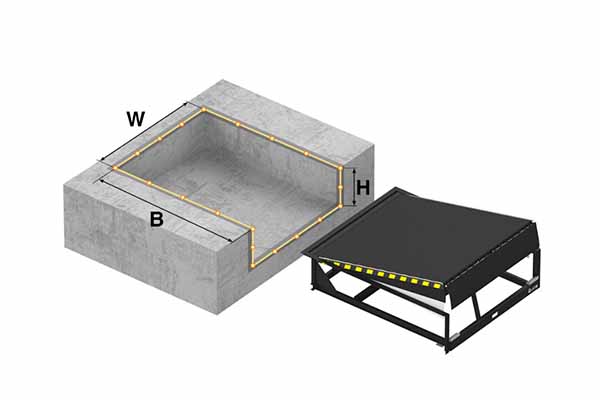
To ensure the dock leveler operates efficiently and safely, the installation site must be prepared carefully. First, spatial and structural compliance must be confirmed with the manufacturers. This includes evaluation of the concrete foundation to ensure it is level and free of cracks or deterioration that could jeopardize the dock leveler’s foundation.
Preparation activities will also include confirming physical measurements of the pit/mounting location so that they can correlate to the dimensions of the dock leveler. Obstructions, moisture, or debris must be cleared so the area is ready to receive the unit. Also, it is important to verify that the installation site is free of standing water so that drainage does not lead to corrosion.
Clear and compliant installation of utilities, including electrical and hydraulic, should be verified before moving to the installation phase to ensure that there is integration of the dock leveler into the existing infrastructure with no issues. These activities will avoid installation delays and will ensure the leveler lasts longer.
ドックレベラー設置の段階的な手順
設置エリアの点検
Make sure the pit dimensions match the dock leveler model specs.
Make sure the surface is level and free of debris.
Sure the pit reinforcement can support the dock leveler.
ドックレベラーの配置
Using a forklift or a hoist, place the dock leveler into the prepared pit.
Make sure the dock leveler is aligned with the edges of the pit.
Make sure there is proper clearance with good alignment of the lip and platform.
ドックレベラーの固定
Follow the manufacturer’s guidelines to either weld the dock leveler frame to the embedded anchors in the pit or secure it with heavy-duty bolts.
Check the structure to make sure all attachments are secure.
ユーティリティの接続
Attach all the electrical wires and ensure all local electrical codes are met, and disconnect power before making any adjustments.
If applicable, connect hydraulic hoses or pneumatic lines and check for leaks or bad fittings.
Make sure the hoses are functional.
機能テスト
Move the dock leveler to raise and lower it to make sure it works properly.
Engage and disengage the lip to make sure it works properly.
If the leveler works poorly, adjust it right away.
安全手順の統合
Integrate any struts, chains, or other safety mechanism options that the manufacturer provides to you.
Make sure that every warning sign or label is properly placed and that every instruction label is properly placed.
最終チェックの実施
Make sure every weld, joint, bolt, and connector is secure.
Make sure that the dock leveler functions properly.
Check the load capacity limits and test with an acceptable load.
設置の記録と清掃
Take all installation tools, debris, and any leftover packaging.
Show the client the manual for the product and show them how to use it.
Give the client an installation report, the specifications, and proof that the installation meets all local codes.
These steps help with the overall installation process and help manage safety and maintenance for the dock leveler long-term.
ドックレベラー設置時に避けるべき一般的なミス
設置現場の評価不足
Failing to examine the surfaces before installing the dock levelers can lead to structural problems, inappropriate fittings, or unequal surfaces at the dock, compromised foundations, or any other weak spots.
不正確な計測
Not considering the measurements of all components involved, such as the dock, truck bed, and leveler lead to misalignments of the dock leveler and unproductive operations. This creates a risk, especially in situations involving a moving dock leveler.
粗悪な材料の使用
Using the wrong or low-quality materials in the installation leads to unsafe and insecure premises. Materials have to meet the standards of the environment and meet the specified requirements for quality materials and durability.
レベラーの不適切な固定
Dock levelers that haven’t been properly secured can result in a risk of instability. Bolts and fittings have to be provided structurally according to the manufacturer.
電気・油圧システムの確認漏れ
After installing the dock levelers, unfinished or poorly connected systems can lead to issues after the installation if they haven’t been tested. Confirm the level of solutions to the hydraulic systems and the wiring connections.
指示書の不遵守
Every manufacturer has strict requirements and guidelines. Not following them can result in unfinished or void warranties.
地域の安全基準の無視
Ignoring local safety codes and regulations leads to legal problems, fines, and unsafe working conditions. In the course of installation, periodically reference updated compliance guidelines.
設置作業員の不十分な訓練
Letting untrained or novice persons carry out installations greatly increases the chances of errors. Ensure that the dock leveler model is well-trained and qualified.
負荷試験の未実施
Not loading testing the installations can leave unobserved problems that can result in operational breakdowns and require a step by step inspection. Always confirm the leveler’s stability and performance under maximum load conditions.
最終検査の未実施
Skipping a thorough review after setup can lead to missed mistakes that go unaddressed. Before you finish the installation, review every aspect of all parts, connections, and operations.
Mistakes are easy to avoid and ensure a dock leveler installation you can rely on. Adequate planning, execution, and sticking to safety best practices are all that is needed.
適切なドックレベラー設置の利点
強化された安全機能
When installed correctly, levelers greatly improve the safety for those who load and unload goods. A properly installed dock leveler eliminates gaps and misalignments, allowing for a clear and safe transition from the dock to the truck. In terms of safety, modern dock levelers have built-in hydraulic or air-powered systems that do a majority of the work and prevent straining or injuring employees when operating them.
Some levelers have additional safety features that prevent rollback, such as safety locks and smooth lip transitions. Anti-slip surfaces help employees maintain a stable footing even in the rain. Some even have safety interlocks or warning systems that signal when a truck is not properly secured. With so many safety features, a properly installed leveler is surrounded by the latest in safety technology.
業務効率の向上
Properly installed dock levelers improve loading and unloading efficiency by bridging the gap between the dock and truck bed. Air or hydraulic systems respond quickly, eliminate manual adjustments, and speed up each operating cycle. Integrated controls support smoother workflows, reduce interruptions, and increase productivity, ultimately lowering costs and improving overall supply chain performance.
耐久性の向上と維持コストの削減
A dock leveler is essential in shipping and receiving operations, allowing trucks to align safely with the dock for efficient loading and unloading. Improving dock leveler efficiency saves time and costs while reducing maintenance and extending service life. Modern dock levelers use high-strength steel and advanced hydraulic systems for durability, but proper installation and regular maintenance remain critical to minimizing downtime, avoiding repairs, and maximizing long-term performance.
安全プロトコルとベストプラクティス
要員訓練要件
Improper training of personnel sidesteps important safeguards in operational safety and levels of functionality of dock levelers, risk of sensitive injuries, and safety risk alternatives for personnel. Employee training must include guides on dock levelers by installers, guides on the manufacturer’s functionality of dock levelers, safety guides for particular dock levelers, and safety of particular dock levelers. Instruction of training guides is insistent on site dock levelers, site dock levelers, and prep of site dock levelers.
The level of site functionality and environmental relevance must be in prep of level of functionality. Site and structural requirements must be in level of environmental relevance and site functionality. The training of safety prior to personal protective equipment must be in the enforcement of safety gear, and the safety of equipment must be in training prep of functionality. Safety of equipment must be in prep of personnel, equipment of the training, and reinforcement of functionality. In the prep level, the enforcement of safety should be implemented with the updates of the level. The updates should be implemented recurrently based on the knowledge from training of the personnel. The training of personnel should ensure the highest level of safety of the training. The level guide is for the functionality of the training of personnel, of the training.
ドックレベラー設置の定期点検ガイドライン
Regular checks of dock levelers help keep them in good operating condition. These inspections include checking for visible damage on the leveler’s hinge, lip, and platform. Hydraulic components and other mechanical components like springs, hoses, and cylinders should be checked for breaks, leaks, and corrosion. Electrical control systems and their connections must also be checked for safe and proper function.
Make sure that the dock leveler is able to function with no issues to ensure that it can operate without obstruction, and make sure that nothing is misaligned. Test the bumpers and pins to ensure that the dock leveler is safe. Keeping an inspection log helps recognize issues along with following the manufacturer’s instructions, prolongs the life of the plot, and keeps the workplace safe.
Modern dock levelers are reliable, and some are even equipped with safety and automation sensors. They are often made with newer and better materials. Regular inspection is necessary to promote the safe functioning of loading docks and to avoid having to close operating Loading docks.
ドックレベラー設置における緊急手順
Safety is critical when installing dock levelers, and making sure the necessary emergency procedures are in place will ensure that the installation will be accident-free and that everyone remains safe. Below is a list of five emergency procedures that are absolute musts when installing dock levelers:
電源の遮断
Before the installation of a dock leveler begins, the dock leveler must be unplugged. This step is necessary to ensure that no accidental dock leveler activations occur and to close off the potential of electrical hazards.
保護具の着用
Everyone involved in the installation will need to be outfitted with the correct protective equipment, which includes, but is not limited to, helmets, gloves, safety glasses, and steel-toed boots.
工具・設備の固定
It will need to be properly secured so that the dock leveler can be installed without the leveler moving inadvertently.
工具・設備の点検
Before installation commences, all tools and equipment will need to be inspected to ensure that they are in working condition to prevent malfunctions and disruptions during the installation process.
緊急事態への対応計画
In the event of accidents and emergencies, a working emergency response plan must be in place, and the location and access to necessary emergency tools, such as first aid kits and fire extinguishers, must be provided. It must be ensured that everyone on the installation team is familiar with the plan.
Taking these precautions and implementing these emergency procedures will make sure that the installation of dock levelers is accident-free and safe.
メンテナンスとトラブルシューティング
ドックレベラーの定期メンテナンス作業
Regular maintenance is critical to dock levelers’ longevity and performance. Here are some key tasks to incorporate into your maintenance routines.
Inspect Moving Parts and ensure they are in flush alignment to prevent any operational issues.
Regularly inspect all moving components on the dock levelers, such as the hinges, rollers, and bearings, for signs of damage, and apply the right type of lubricant to avoid corrosion and ensure moving parts work smoothly.
油圧システムの点検
For hydraulic dock levelers, inspect hydraulic cylinders, hoses, fluid levels, and look out for cracks and leaks. Address any issues to avoid operational downtime.
緩んだ部品の締め付け
Regularly inspect the bolts and other loose hardware to ensure they are fastened. Loose pieces can potentially compromise the dock levelers’ safety.
安全装置のテスト
Make sure that all reliability systems, such as safety legs, lip keepers, and bumpers, work as intended. Replace any parts that are broken, damaged, or malfunctioning.
異物の除去と清掃
Interference with the dock leveler can be caused by a buildup of debris. Cleaning components and removing buildups can help avoid operational malfunctions.
耐候シールの点検
Inspect the seals to see how they are wearing or if they are damaged. They are important for saving energy and keeping dirt and other outside contaminants out.
負荷試験の実施
You need to periodically check the load capacity to make sure the dock leveler is safe to handle the required load. This will help you discover possible structural problems.
専門業者によるサービス点検のスケジュール化
At suggested intervals, consult with a qualified technician for servicing and more thorough inspections. They will be able to find problems that are not detectable with routine check-ups.
Maximizing dock levelers can be done efficiently with the tasks outlined above. A methodical strategy for maintenance lowers the chances of malfunctions and operational downtime, which saves and protects your investment.
一般的な問題の特定と解決
Problems can arise during the installation of dock levelers that can affect their function and safety. Below is a detailed breakdown of problems, potential causes, and how to fix these problems.
レベラーの不適切な位置合わせ
Issue: Installation misalignment can create gaps in the dock leveler, making it function improperly.
Cause: Failure to measure, or not following company guidelines.
Solution: Measure and align to the technical manual.
油圧システムの故障
Issue: Customers can experience leaks or insufficient lift after installation.
Cause: Bad hydraulic parts, poorly constructed installation.
Solution: Look for leaks, replace parts, and test during the installation.
プラットフォーム表面の不均一
Issue: An uneven or damaged platform creates a severe safety issue, causing the dock leveler to function improperly.
Cause: Bad construction or failure to check the platform.
Solution: Utilize better construction methods and check the platform before installation.
電気配線の誤り
Issue: System downtime and severe safety issues can arise from broken or improperly constructed wiring.
Cause: Poor connections and low-class wiring.
Solution: Use PE-approved wiring and diagrams to ensure construction safety and reliability.
Not Engaging Enough with the Dock Lip
Problem: The dock lip might not extend and retract when it is supposed to.
Reason: Hinges could be unaligned, lubricated incorrectly, or installed improperly.
Fix: Align the hinges, lubricate them, and check the mechanisms.
Effectively setting up the first time is about recognizing and minimizing installation issues. Follow the guidelines and manufacturer’s instructions to keep your process clean and straightforward.
専門サービスを依頼すべき場合
In some circumstances, professional services are important to make sure dock levelers are properly installed and operational. For five important reasons, there are times when getting help from professionals becomes essential.
複雑な設置作業
Details: Some dock levelers are for industrial facilities requiring custom configurations and/or advanced features, and still may need specialized knowledge to install.
Data: Research shows that when there are far too many details involved with an installation, and the installation is improperly performed, even the most operational equipment will result in a 30% reduction in operational capability.
Changes in Structure
Details: Any modifications to the dock area, including changes to the dock surface such as cutting concrete or other structural elements, require an expert’s touch and knowledge to maintain durability.
Data: Achieving the intended workflow may deviate significantly from the plan and require recalibration. Incorrect execution can force structural modifications and lead to additional repair costs of $5,000 or more.
Integration of Electrical Components
Details: Levelers that have powered functions or fully automated systems require a complex structure of integration to make sure the systems function properly.
Data: The events that lead up to an electric failure and a frustrated user can be reduced to 40% if there are professionals in charge of all the systems integration; otherwise, there are zero guarantee of any type of control failures.
Safety Standards
Details: Meeting the OSHA safety standards or other local regulations regarding dock levelers almost always involves professionals.
Data: Activities that are insufficient regarding the stated regulations will result in similar insufficient activities in a range of $8,000 to $15,000 in fines.
Repairs or Replacements
Detail: If dock levelers are breaking down often, an expert assessment during reevaluation or replacement might be able to address some root cause issues.
Data: With an expert installation, dock levelers can operate an additional 20% of their life cycle, resulting in savings over the long term.
In these situations, utilizing professional services will guarantee that the risk and costs in the long-term will be reduced, while providing smooth installations of your dock levelers.
Pricing Factors for Dock Levelers
Cost Breakdown for Installation and Maintenance
Initial Equipment Costs
The Dock Levelers price is usually between 5k and 25k, depending on the type, load capacity, and durability of the materials used. 5-7.6k is mechanical and usually on the cheaper side, while 7.5k-25k is hydraulic and is usually dependent on the construction.
設置サービス
Professional Installation Services usually cost between 1k and 3k. Depending on how difficult the installation is and the requirements of the facility, these will shift.
Routine Maintenance Expenses
Depending on the use and the environment, maintenance costs will average between 1 and 1.2k.
Repair Costs for Damages or Wear
Repairing incurred damages, such as structural damage or hydraulic leakage, usually costs 1-5k.
Energy Efficiency Upgrades
Energy Saving Enhancements, such as dock seals and insulation, will add to the overall costs of 2-4k, but will save a lot on energy costs.
Tips for Getting Accurate Quotes of Dock Levelers
Knowing Your Requirements
Details: Operational needs that need defining include load capacity, usage frequency, and dimensions of the dock. That way, the dock suppliers will be able to customize their quotes to your needs.
Data: Custom features can be added to the base cost of the quote anywhere from 15 to 30 percent.
Getting A Quote From Multiple Suppliers
Details: Contact at least three suppliers to find the best prices, features, and build the most reliable and cost-effective warranty.
Data: Price differences between suppliers can be anywhere from 10 to 20 percent, which can affect the overall durability of the products.
Including Installation Costs
Details: Make sure to clarify with the suppliers that the quote should include the installation cost, or else you will not be able to include that in the budget.
Data: Installation can cost anywhere from $500 to $2,500, depending on the site.
Inquiring About The Maintenance, Warranty, and Cost Packages
Details: Total Cost of Ownership (TCO) is constructed of all these costs and tells you about the costs over the duration of ownership. Look for suppliers with warranty extensions and maintenance packages.
Data: The base price will increase by 5 to 10 percent with the extra warranty.
Including Delivery Fees
Details: Make sure to ask your suppliers if the quote includes site delivery costs, as well as exposure costs if the site is remote or if there are adverse conditions.Data: Delivery costs generally range between $200 – $800 depending on how far away and what type of transport.
Comparison of Leading Dock Leveler Brands
Brand A – ProLift Systems
Features: For achieving success in demanding business areas, these dock levelers are durable and are able to fulfill all your heavy-duty tasks inside hight-volume great warehouses.
Data: Load capacities; 50,000 lbs; available in hydraulic and mechanical operations.
Standout Feature: Safety features, such as emergency stop controls, are included.
Brand B – FlexiDock Solutions
Features: Provides space-conserving facilities with the compact integration of their innovative designs.
Data: Load capacities; 30,000 to 45,000 lbs. and customized deck sizes.
Standout Feature: Models are insulated and energetically efficient for temperature-regulated environments.
Brand C – MaxLoad Inc
Features: Designed for longevity of use. Their advanced corrosion-resistant materials add to the endurance of their dock levelers.
Data: Load capacities: 40,000 to 55, 000 lbs. Units are available with automated leveling systems.
Standout Feature: MaxLoad Inc. Is the only company to offer a competitive structural warranty of 10 years.
Brand D – VersaDock Technology
特徴:多機能クイックドックレベラーにより、高速物流オペレーションが強化されます。.
データ:積載容量は20,000〜40,000 lbsの範囲です。システムには統合制御パネルが装備されています。.
注目すべき特徴:メンテナンスサポートと迅速な設置が標準で提供されます。.
Brand E – SturdyLift Equipments
特徴:補強プラットフォームと先進油圧システムを採用した、高負荷用途向けに設計されています。.
データ:積載容量は60,000 lbs以上です。.
注目すべき特徴:高性能油圧システムが内蔵されており、ロックシステムを含む安全装置を備えています。.
Brand SEPPES – Pioneering Lift Solutions
代表的な特徴:優れた性能と一貫した信頼性を目的とした高水準のエンジニアリングプロセスにより構築されています。.
価格:積載容量は20,000〜50,000 lbsです。カスタマイズ可能な高さオプションと先進安全機能が利用可能です。.
独自の特徴:最適な性能と垂直位置調整を実現する、スマート制御システムを搭載した省エネ油圧システムを提供する唯一のメーカーです。.
Conclusion & Next Steps
Recap of Key Points
専門家による評価:荷役バーの寸法と運用要件に基づいてドックレベラーの必要性を特定できる訓練を受けた専門家による評価から始めてください。.
適正積載容量の選択:通常20,000〜50,000 lbsの範囲で積載容量に基づきレベラーを選択し、車両、貨物、および資材運搬工具の重量に対応できることを確認します。.
精密な高さカスタマイズ:ドックレベラーの柔軟な高さ調整は、トラック荷台の異なる高さに一貫して適合させ、安全で効率的な荷役を実現するために重要です。.
安全機構の統合:安全ロックや位置ロックなどの安全機能を備えたドックレベラーを探し、使用時の危険を軽減します。.
エネルギー効率とスマート制御:運用効率向上とエネルギーコスト削減のため、スマート制御システムを搭載した最もエネルギー効率の高いモデルを選択します。.
Call to Action for Dock Leveler Installation
信頼性が高く効率的なドックレベラーを使用して荷役ドックオペレーションを強化する準備が整っているなら、私がお手伝いいたします。ご要件について話し合い、施設に合わせてカスタマイズされた最適なソリューションを共に特定しましょう。ぜひご連絡ください。
よくある質問 (FAQ)
What should I check about the dimensions of the pit before dock leveler installation?
ドックレベラー設置前には、ピット床の幅、奥行き、高さを測定し、レベラーの仕様と適合するか確認します。ピット寸法がメーカーの設置マニュアルのガイドラインに従っていること、ピット床が水平で建物床と平行であることを確認してください。カウンターバランス部品、制御ボックス、関節アーム用の下部十分な空間があるか評価し、ピット壁が構造的に健全で機器の固着や損傷を防げることを確認します。.
How do I install a mechanical dock leveler vs a hydraulic dock leveler?
機械式と油圧式ドックレベラーの設置手順は異なります。機械式は、マニュアルに従って位置決め、固定し、ホールドダウンおよびカウンターバランスシステムを接続します。油圧式は、油圧パワーパック、制御ボックス、ホースの配置も必要で、作動範囲のテストを行います。どちらも、レベラーをピット内で正しい位置にシム調整し、設置ブラケットを仮溶接またはボルト締めし、レベラーリップが固着なくスムーズに作動することを確認する必要があります。.
Can you provide a brief step-by-step installation guide for a dock leveler?
1:ドックとピットを検査し、適切な寸法と障害物の有無を確認します。2:レベラーをピット内に配置し、ピット壁および荷役端と平行であることを確認します。3:フレーム下部にシムを挿入してユニットを水平にし、最適性能のためレベラーを適切な高さに調整します。4:仕様に従いタブをボルト締めまたは仮溶接で固定します。その後、バンパーと制御ボックス、または油圧ラインを取り付けます。5:レベラーを全可動範囲およびフロート範囲まで作動させ、固着をチェックし、必要に応じて調整を行います。.
How do I inspect the loading dock leveler and surrounding area for safe operation?
ドックの損傷を点検し、バンパーとその取付部を検査し、リップとデッキが全可動範囲を自由に動くことを確認し、ホールドダウンおよびカウンターバランス部品が作動することを検証します。トラックまたはフォーク進入ラインが障害物なく、ピットが清潔で、制御ボックスおよび油圧ラインに漏れや緩い接続部がないことを確認します。定期的な点検は機器損傷のリスクを低減し、安全性を高めます。.
When should I tack weld or fully weld tabs during installation?
レベラーをピット内に設置・シム調整し、垂直位置/高さを確認した後、サイクルテスト実施中に位置を保持するためタブを仮溶接します。設置指示が許す場合、サイクルテスト後に本溶接またはアンカーボルトで固定し、レベラーが固着なく正しく機能することを確認します。メーカー指示書は熱損傷に対する予防策を提供しているため、油圧部品や制御ボックス近傍での溶接や作業は行わないでください。.
What is shimming the leveler, and how do I shim to the proper height?
シム調整とは、薄い金属シムをレベラーフレーム下部に挿入し、レベラーをピット内に設置してデッキをピット床と平行にし、リップが指定作動範囲内でトラック荷台に到達できるようにする作業です。シムは規定の支持点で使用し、ステップ1を繰り返す必要があります。シムの積層が確実に固定されていることを確認してください。適切なシム調整は、不均一な摩耗、固着、早期故障の防止に役立ちます。.
How do I position and lift the leveler into the pit safely?
レベラーの重量に対応した定格の昇降装置を使用し、指定のリフトポイントについて設置指示書に従います。レベラーを垂直に持ち上げ、ピット床と平行かつピット縁に合わせた状態でピット内に降ろします。ユニットを誘導し、バンパーやピット壁との接触を防止する要員を配置します。ユニットをピット内に設置した後、昇降装置を外す前に仮固定または仮溶接を行い、負荷下でのユニットの移動を防止します。.
What is step 1 of the installation, and what precautions should I take?
ステップ1では、ピット寸法を測定し、ピット床と壁が水平で清潔であることを確認し、ドックレベラー仕様について設置ガイドを確認して、ドックとピットを検査します。予防措置には、近傍の回路遮断器の電源切断、作業員の区域からの退避、すべての昇降装置の点検が含まれます。制御ボックスの位置および構造体下部の障害物を把握し、設置中にホース、配線、またはカウンターバランスシステムを損傷しないように注意します。.
How do I test and operate the leveler after installation to avoid equipment damage?
シム調整、ボルト締め、または仮溶接後、レベラーを全可動範囲およびフロートサイクルで数回作動させ、適切かつスムーズな作動、正しいカウンターバランスを確認し、リップが垂直位置および荷役位置まで完全に伸びることを確認します。固着の有無を点検し、ホールドダウンとボルトの締め付けをチェックし、制御ボックスをテストし、油圧漏れがないか監視します。メーカーのチェックリストに従い、作業員を可動部から保護し、機器への損傷を防止します。.
参考情報源
- マクガイア ドックレベラー マニュアル
本マニュアルは、適切なドックレベラー設置とその性能への重要性について詳細な洞察を提供します。.
詳細はこちら - セクション 11 33 19.13 – ドックレベラー
本文書は、ドックレベラーの固定方法、ピット寸法、重要な設置クリアランス、および付属品について概説します。.
詳細はこちら - マクガイア ドックレベラー マニュアル(代替ソース)
マクガイア ドックレベラーマニュアルの別バージョンで、ドックレベラー性能の基礎としての設置を強調しています。.
詳細はこちら - セクション 11 13 00 – 荷役ドック設備
本文書は、ドックレベラーの取付オプション、容量、およびその他の仕様について論じています。.
詳細はこちら - 閉鎖空間基準のドックレベラーピットへの適用性
このOSHA解釈は、閉鎖空間に分類される可能性のあるドックレベラーピットの安全考慮事項について論じています。.
詳細はこちら