
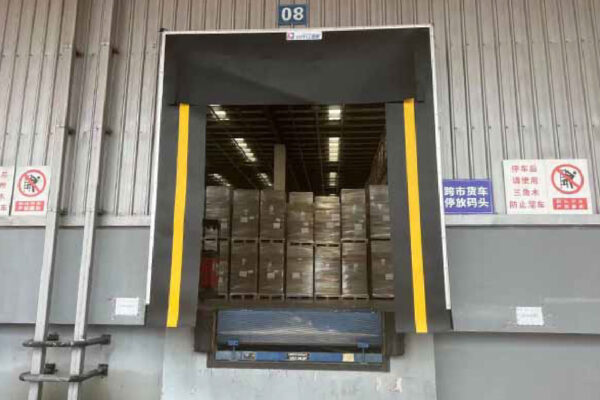
A معدات تسوية الرصيف يُستخدم لسد الفجوة في الارتفاع والمسافة بين رصيف التحميل والشاحنة، مما يسمح للرافعات الشوكية وعربات المنصات بنقل البضائع بأمان وكفاءة.
بالنسبة للمستودعات والمصانع ومراكز الخدمات اللوجستية ومرافق التوزيع، يعتمد اختيار موازن الرصيف المناسب بشكل أساسي على خمسة عوامل: ارتفاع الرصيف، ونطاق ارتفاع الشاحنة، وحجم المنصة، وقدرة التحمل، وتكرار التشغيل.
لمعظم أرصفة التحميل الصناعية ذات التشغيل اليومي المتكرر، يُعد جهاز تسوية الرصيف الهيدروليكي أحد الخيارات الأكثر عملية لأنه يوفر التشغيل التلقائي والرفع المستقر وجهد تشغيل منخفض نسبيًا.
جدول المحتويات
تبديلما هو منسق الرصيف؟
موازن الرصيف هو جهاز رصيف تحميل يُثبَّت بين أرضية المستودع وسرير الشاحنة.
نادرًا ما تكون ارتفاعات سرير الشاحنة مطابقة تمامًا لارتفاع رصيف التحميل. يُنشئ موازن رصيف التحميل جسرًا قابلًا للتعديل حتى تتمكن الرافعات الشوكية من التنقل بين المبنى والمركبة.
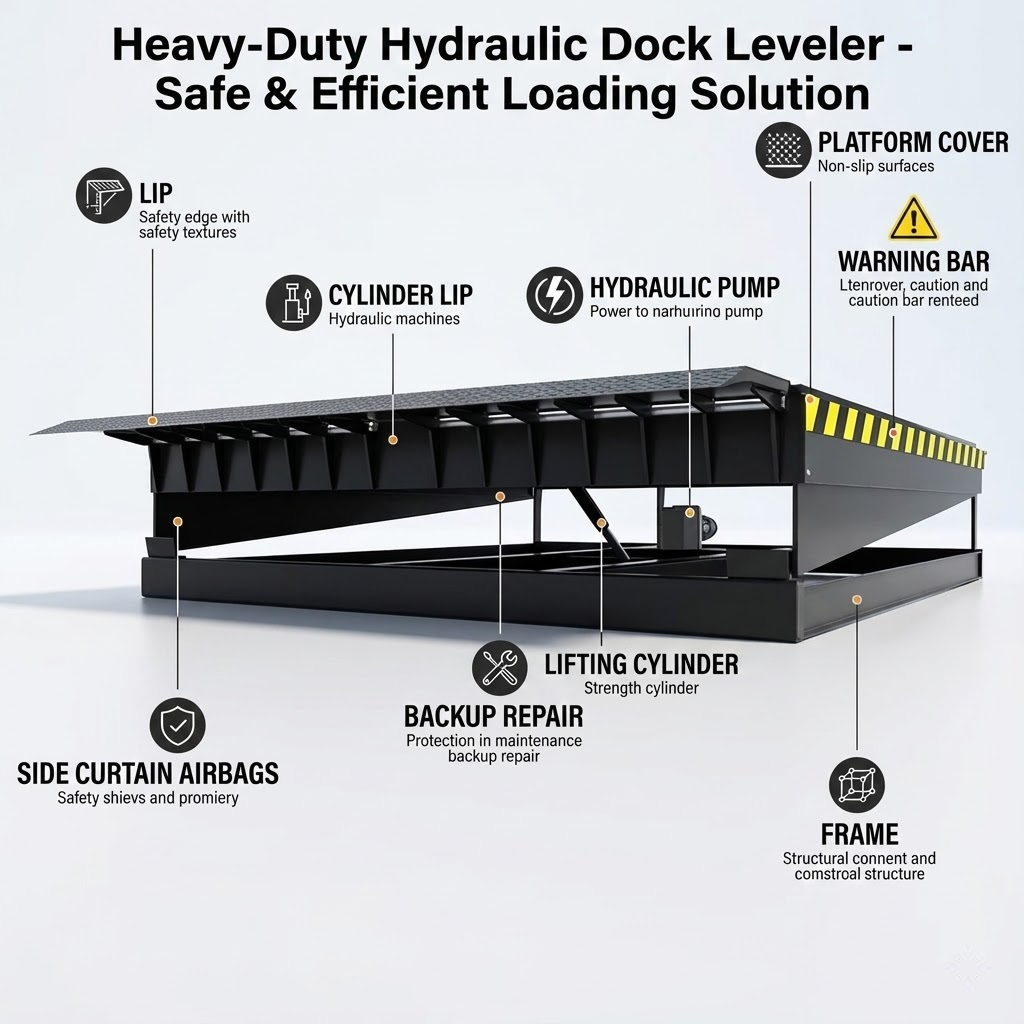
يتضمن موازن الرصيف النموذجي:
- منصة فولاذية
- شفة مفصلية
- نظام رفع هيدروليكي أو ميكانيكي
- نظام التحكم
- دعامات سلامة
- واقيات جانبية أو واقيات أصابع القدم
- إطار إنشائي
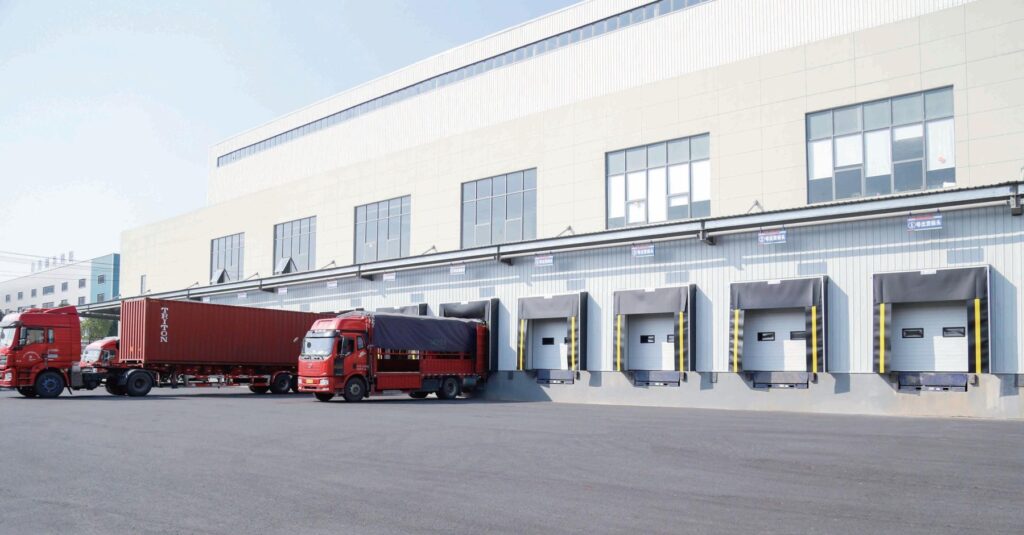
عادةً ما يتم تركيب موازنات الأرصفة مع الأبواب المقطعية ومظلات الأرصفة وأختام الأرصفة والمصدات وغيرها معدات الرصيف لإنشاء نظام رصيف تحميل متكامل.
المواصفات الشائعة لموازنات الأرصفة
| المعلمة | موازن رصيف هيدروليكي بشفة مفصلية | موازن رصيف هيدروليكي بشفة تلسكوبية |
|---|---|---|
| الحجم القياسي | عرض 1600 × طول 2000 × ارتفاع 600 مم | عرض 1600 × طول 2000 × ارتفاع 600 مم |
| تخصيص الحجم | أحجام مخصصة متاحة | أحجام مخصصة متاحة |
| الحمل المقنن | قياسي 6 طن؛ اختياري 8 طن / 10 طن / 15 طن / 20 طن | قياسي 8 طن |
| سعة الحمل النموذجية | الحمل الديناميكي 8 طن | الحمل الديناميكي 8 طن |
| اللون القياسي | RAL5005 أزرق | RAL9017 أسود |
| ألوان اختيارية | RAL5005 أزرق / RAL9017 أسود / RAL7016 رمادي | RAL5005 أزرق / RAL9017 أسود / RAL7016 رمادي |
| النظام الهيدروليكي | نظام KS الهيدروليكي | نظام KS الهيدروليكي |
| الأسطوانة الرئيسية | Ø65 × Ø40 × 450 مم | Ø75 × Ø50 × 250 مم |
| لوح المنصة الرئيسي | لوح فولاذي 8 مم | لوح فولاذي 8 مم |
| تقوية المنصة | تقوية على شكل L بسماكة 4 مم | هيكل فولاذي مربع مقوى |
| لوح الشفة | نموذج: سماكة 16 مم × طول 400 مم؛ قياسي 14 مم، اختياري 16 مم | شفة تلسكوبية: 8 مم × 700 مم + 16 مم × 400 مم |
| الامتداد التلسكوبي | — | حتى حوالي 1000 مم |
| صمام الأمان | مشمول | غير متضمن |
| صندوق التحكم | 380 فولت / 1.1 كيلوواط مع زر إيقاف طارئ | 380 فولت / 1.5 كيلوواط مع زر إيقاف طارئ |
| طول الكابل | قياسي 8 م | قياسي 8 م |
| واقيات الأصابع | لون مطابق قياسي | لون مطابق قياسي |
| شريط الختم | شريط إغلاق مطاطي | شريط إغلاق مطاطي |
قدرة التحمل وسماكة اللوح
| الحمل المقنن | لوح المنصة الرئيسي | لوح الشفة |
|---|---|---|
| شفة مفصلية 6 طن | 6 مم | 12 مم |
| شفة مفصلية 8 طن | 8 مم | 14 مم |
| شفة مفصلية 10 طن | 8 مم | 16 مم |
| شفة تلسكوبية 8 طن | 8 مم | 16 مم |
الأنواع الرئيسية لموازنات الأرصفة
1. معادل مستوى الرصيف الهيدروليكي
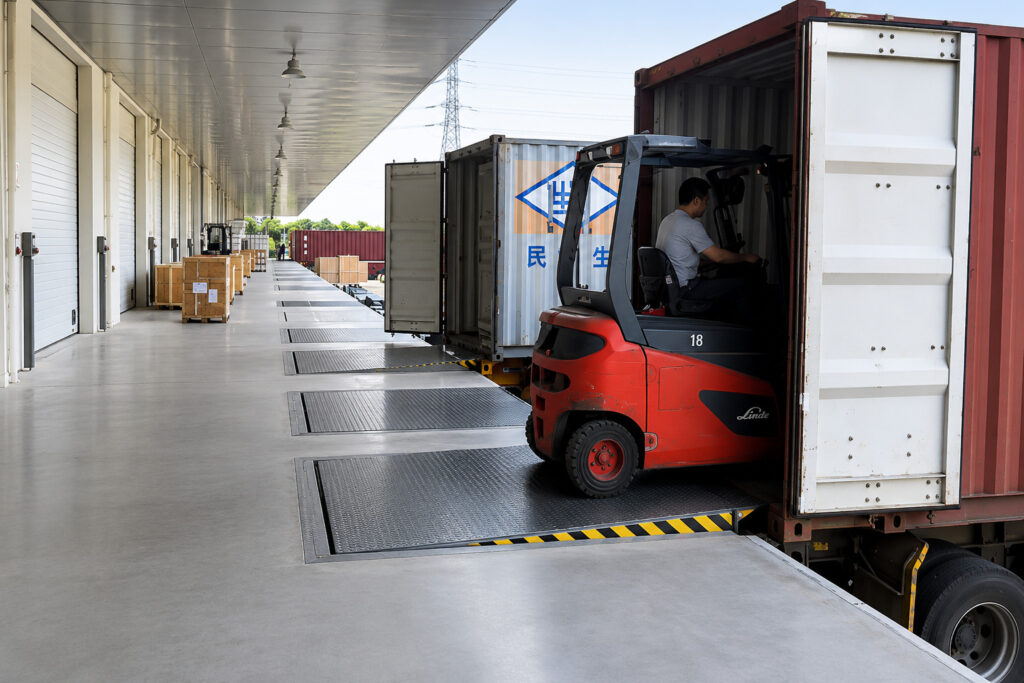
A جهاز تسوية الرصيف الهيدروليكي تستخدم أسطوانات هيدروليكية لرفع المنصة وتشغيل الشفة.
عادةً ما يضغط المشغل على زر التحكم لرفع المنصة. بعد امتداد الشفة، ينخفض موازن الرصيف onto سرير الشاحنة.
تُستخدم الطرازات الهيدروليكية على نطاق واسع في المستودعات ذات عمليات التحميل المتكررة.
تشمل المزايا الرئيسية:
- تشغيل بسيط بالضغط على الزر
- مناسب للتحميل اليومي المتكرر
- حركة منصة مستقرة
- جهد يدوي أقل
- مناسب للرافعات الشوكية وعربات المنصات
- سهولة الدمج في نظام رصيف التحميل
بالنسبة للعديد من المصانع الحديثة ومستودعات الخدمات اللوجستية، تُعد موازنات الأرصفة الهيدروليكية الخيار المفضل.
2. معادل مستوى الرصيف الميكانيكي
Mechanical dock levelers normally use springs and mechanical components instead of a hydraulic power unit.
They can be suitable for loading docks with lower operating frequency.
Advantages include:
- هيكل بسيط
- No hydraulic power unit
- Suitable for some lower-frequency applications
However, operation normally requires more manual effort and maintenance of springs and mechanical components.
3. موازن الرصيف الهيدروليكي بشفة تلسكوبية
A telescopic dock leveler uses a lip that extends horizontally toward the truck instead of simply rotating outward.
This provides more control over how far the lip reaches into the vehicle.
It can be useful when:
- Truck positions vary
- Precise lip positioning is required
- Different vehicle sizes use the same loading dock
- The loading dock requires a longer bridge range
Telescopic lip systems are often selected for more demanding logistics applications.
4. موازن حافة الرصيف
An edge-of-dock leveler is installed at the edge of the loading dock instead of inside a large recessed pit.
It requires less installation space but normally provides a smaller operating range.
It is more suitable when truck bed heights remain relatively close to the loading dock height.
الموازن الهيدروليكي مقابل الموازن الميكانيكي
The correct choice depends primarily on operating frequency and budget.
| الميزة | جهاز تسوية الرصيف الهيدروليكي | معدات تسوية الأرصفة الميكانيكية |
|---|---|---|
| العملية | زر ضغط | Mainly manual |
| Daily Frequency | متوسط إلى مرتفع | Low to medium |
| Operator Effort | منخفضة | أعلى |
| التكلفة الأولية | أعلى | عادةً أقل |
| الراحة | عالية | متوسط |
| الأتمتة | سهولة | محدودة |
| التطبيق النموذجي | Factory / logistics warehouse | Smaller warehouse |
For loading docks operating many times per day, a hydraulic loading dock leveler usually provides better convenience.
ما الحجم الذي تحتاجه من موازن الرصيف؟
Dock leveler dimensions should not be selected only according to the width of the loading dock door.
Several measurements need to be checked.
عرض موازن الرصيف
The platform must provide enough width for the forklift and cargo while maintaining sufficient safety clearance.
Common industrial platform widths are approximately:
- 1,800 mm
- 2,000 mm
- 2,200 mm
The correct width depends on forklift width, pallet size, vehicle opening, and dock layout.
طول موازن الرصيف
The platform length affects the operating angle between the warehouse floor and truck bed.
A longer platform generally creates a gentler slope when there is a larger height difference.
Common lengths may include:
- 2,000 mm
- 2,500 mm
- 3,000 mm
The required length should be calculated according to the loading dock height and the highest and lowest trucks using the dock.
ارتفاع رصيف التحميل مهم
Loading dock height is one of the most important measurements when selecting a dock leveler.
If the warehouse dock is significantly higher or lower than the truck bed, the platform angle becomes steeper.
A steeper angle can create problems for:
- Low-clearance forklifts
- Electric pallet trucks
- Heavy pallet loads
- Long-wheelbase material handling equipment
Before choosing a loading dock leveler, confirm:
- Finished warehouse floor height
- Loading dock height
- أدنى ارتفاع لسرير الشاحنة
- أعلى ارتفاع لسرير الشاحنة
- ارتفاع سرير الشاحنة النموذجي
- Forklift ground clearance
This information helps determine the correct platform length and operating range.
ما قدرة موازن الرصيف التي تحتاجها؟
Dock leveler capacity should not be selected based only on the cargo weight.
The total moving load may include:
Forklift + driver + cargo + attachments
على سبيل المثال:
Forklift weight: 4,000 kg
Cargo weight: 2,000 kg
Driver and equipment: 150 kg
Total moving load already exceeds 6,000 kg.
Repeated forklift movement also creates dynamic impact loads.
Therefore, capacity should include an appropriate safety margin.
Common industrial dock leveler capacities may include:
- 6 tons
- 8 tons
- 10 tons
- 12 tons
Higher capacities can be customized for special industrial applications.
موازن الرصيف مقابل صفيحة الرصيف
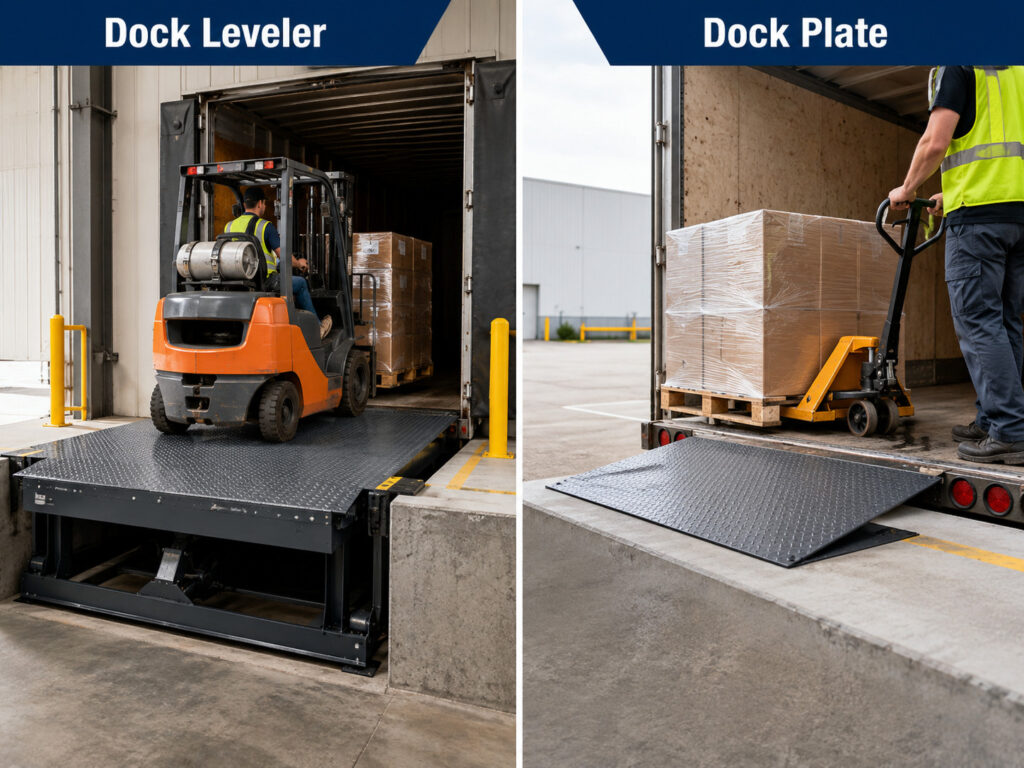
A dock plate and a dock leveler perform similar basic functions, but they are designed for different loading conditions.
| الميزة | أداة تسوية الرصيف | لوحة الرصيف |
|---|---|---|
| التركيب | Fixed | Usually portable |
| Capacity | أعلى | عادةً أقل |
| Height Adjustment | Larger range | محدودة |
| Forklift Use | Suitable | يعتمد على الطراز |
| معدل التشغيل | عالية | منخفضة |
| التطبيق النموذجي | Industrial loading dock | Light-duty loading |
For warehouses using forklifts frequently, a dock leveler usually provides a more permanent solution.
Dock plates are generally better for lighter and less frequent loading applications.
منحدر الرصيف مقابل موازن الرصيف
A dock ramp is different from a fixed dock leveler.
Dock ramps or yard ramps are often used where there is no permanent raised loading dock.
They allow forklifts to travel from ground level into a truck or container.
Choose a dock ramp when:
- No loading dock is available
- Loading locations change
- Ground-level forklift access is required
- Temporary loading operations are common
Choose a dock leveler when:
- The warehouse has a permanent raised loading dock
- Trucks regularly reverse into fixed loading bays
- Loading frequency is high
- A permanent dock equipment system is required
ميزات السلامة المهمة
Industrial loading operations involve forklifts, heavy cargo, vehicles, and moving equipment, so safety should be considered during dock leveler selection.
Useful safety features can include:
إيقاف الطوارئ
Allows the operator to immediately stop the system when abnormal operation occurs.
منصة مانعة للانزلاق
A textured steel surface helps improve forklift traction during loading and unloading.
دعامة السلامة
Maintenance support mechanisms prevent accidental platform movement during service work.
واقيات أصابع القدم الجانبية
These help reduce exposure to moving platform components.
مثبت الشاحنة أو أحجار تثبيت العجلات
These help reduce unintended truck movement during loading.
Dock bumpers can also protect the building structure when trucks reverse toward the loading dock.
متطلبات تركيب معدّل الرصيف
Most standard hydraulic dock levelers are installed inside a prepared concrete pit.
Before production, the supplier usually needs accurate pit dimensions.
تشمل الأبعاد المهمة:
- عرض الحفرة
- طول الحفرة
- عمق الحفرة
- Finished floor height
- ارتفاع الرصيف
- حجم فتحة الباب
For new warehouse construction, it is better to confirm the dock leveler dimensions before pouring the loading dock pit.
For existing warehouses, the current pit should be measured carefully before ordering replacement equipment.
تكامل موازن الرصيف مع الباب sectional
A complete loading bay commonly includes more than just a dock leveler.
A typical loading dock system may contain:
- باب قطاعي صناعي
- 平台高度调节板
- مأوى الرصيف أو مانع تسرب الرصيف
- 装卸货防撞块
- Vehicle restraint
- Safety barriers
- Traffic lights
- Loading dock control system
Integrating these components improves loading efficiency and creates a more organized loading process.
For example, a sectional door can remain closed until the truck reaches the loading position. After the vehicle is secured, the door opens and the dock leveler is activated.
This type of dock equipment combination is commonly used in warehouses, logistics centers, food factories, and manufacturing facilities.
كيفية اختيار موازن الرصيف المناسب
Before requesting a quotation, confirm the following information.
1. حجم فتحة الرصيف
Provide the loading bay width and height.
2. ارتفاع رصيف التحميل
Measure the distance from ground level to the finished warehouse floor.
3. نطاق ارتفاع سرير الشاحنة
Provide the minimum and maximum vehicle bed heights.
4. القدرة المطلوبة
Confirm forklift weight plus maximum cargo weight.
5. تكرار التحميل اليومي
Tell the manufacturer approximately how many loading cycles occur each day.
6. نوع الشاحنة
Different trucks and containers may require different lip lengths and operating ranges.
7. أبعاد الحفرة الموجودة
For replacement projects, provide accurate pit width, length, and depth.
With these measurements, a dock leveler manufacturer can recommend a suitable platform size, capacity, and operating range.
تطبيقات موازنات الأرصفة
Dock levelers are widely used in:
- المستودعات
- مراكز التوزيع
- مصانع التصنيع
- مراكز الخدمات اللوجستية
- مصانع تجهيز الأغذية
- 冷库仓库
- مراكز تلبية طلبات التجارة الإلكترونية
- Automotive plants
- 制药设施
- Transportation hubs
Facilities with frequent forklift loading normally benefit most from a permanent hydraulic dock leveler.
الأسئلة الشائعة
ما هو موازن الرصيف؟
A dock leveler is an adjustable platform installed between a loading dock and a truck. It bridges differences in height and distance so forklifts and pallet trucks can move safely between the warehouse and vehicle.
ما هو الحجم القياسي لموازن الرصيف؟
There is no universal size for every project. Common industrial dock levelers are approximately 1,800–2,200 mm wide and 2,000–3,000 mm long, but final dimensions should be selected according to loading dock height, truck dimensions, and forklift requirements.
كم وزن يمكن لموازن الرصيف تحمله؟
Common industrial capacities include approximately 6, 8, 10, and 12 tons. Higher capacities can also be designed for heavy-duty applications.
هل موازن الرصيف الهيدروليكي أفضل من الموازن الميكانيكي؟
For warehouses with frequent loading operations, hydraulic dock levelers normally provide easier operation and lower operator effort. Mechanical models may still be suitable for lower-frequency applications.
ما الفرق بين موازن الرصيف وصفيحة الرصيف؟
A dock leveler is normally permanently installed and provides a greater height adjustment range. A dock plate is generally used for lighter-duty applications and smaller height differences.
ما الفرق بين منحدر الرصيف وموازن الرصيف؟
A dock leveler is normally installed at a permanent raised loading dock. A dock ramp or yard ramp allows forklifts to travel between ground level and a truck when no raised loading dock is available.
ما هي المعلومات اللازمة للحصول على عرض سعر لمعدّة رصيف التحميل؟
Normally the supplier needs the dock opening size, dock height, truck bed height range, required capacity, forklift weight, existing pit dimensions, quantity, and operating frequency.
هل يمكن تخصيص موازنات الأرصفة؟
Yes. Platform dimensions, capacity, lip design, operating range, control configuration, and other specifications can be customized according to the loading dock project.
The right dock leveler should match the loading dock height, truck bed range, forklift weight, cargo capacity, and daily operating frequency.
For most high-frequency industrial loading bays, a hydraulic dock leveler provides a practical combination of easy operation, high load capacity, and reliable performance.
Instead of choosing a dock leveler only by platform size or price, evaluate the entire loading process, including the truck, forklift, sectional door, dock shelter, pit dimensions, and safety requirements.
A properly configured loading dock system can improve loading efficiency, reduce unnecessary forklift movement, and create a safer connection between the warehouse and the truck.